Kirjojen hintavertailu – 12 903 725 kirjaa ja 27 kauppaa

Kirjailija

Manuel Hinds

Kirjat ja teokset yhdessä paikassa: 4 kirjaa, julkaisuja vuosilta 2003–2025, suosituimpiin kuuluu Money, Markets, and Sovereignty. Vertaile teosten hintoja ja tarkista saatavuus suomalaisista kirjakaupoista.

4 kirjaa

Kirjojen julkaisuvuodet: 2003–2025.

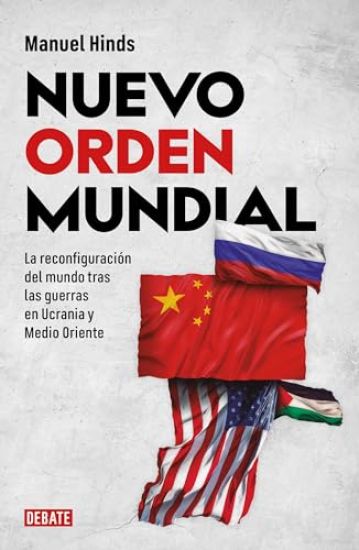
Nuevo Orden Mundial / New World Order
La reconfiguraci n del mundo tras las guerras en Ucrania y Medio Oriente En dos a os, el mundo ha cambiado de un modo que tardaremos d cadas en entender. La invasi n rusa a Ucrania y las matanzas en Gaza han provocado una serie de transformaciones a escala planetaria con infinidad de repercusiones: ya cambi el peso pol tico y econ mico de Estados Unidos y China, se renov el protagonismo de Mosc y su eje de influencia, se desat una carrera armamentista, el populismo se fortaleci y los balances de poder en Latinoam rica se han transfigurado. Incluso el boom de la inteligencia artificial debe leerse en clave de los grandes choques sociopol ticos que hoy vivimos. Qu explica esta revoluci n? Qu din micas estaba transitando el mundo que terminaron en esto? Qu sigue y c mo nos preparamos para ello? En esta obra, contundente y l cida, el economista Manuel Hinds nos presenta un panorama que trae luz a la complejidad que estamos atravesando, nos detalla los hitos que nos llevaron a esta encrucijada y nos hace ver los grandes riesgos que nos acechan. ENGLISH DESCRIPTION How the wars in Ukraine and the Middle East are reshaping the world. In the last two years, the world has changed in ways it will take us decades to understand. Russia's invasion of Ukraine and the tragedy in Gaza have wrought a series of transformations on a global scale, with potentially infinite repercussions: shifting political and economic roles for the United States and China, an expanded sphere of influence for Russia, a renewed arms race, a resurgence in populism, and a new balance of power in Latin America. Even the artificial intelligence boom should be read in the context of the world's current sociopolitical conflicts. How can we explain this revolution? What underlying dynamics were in place that led to this? What comes next, and how should we prepare? Economist Manuel Hinds offers this lucid and illuminating clarification of the complex phenomena affecting the world today, the events that brought us to this point, and the challenges still to come.
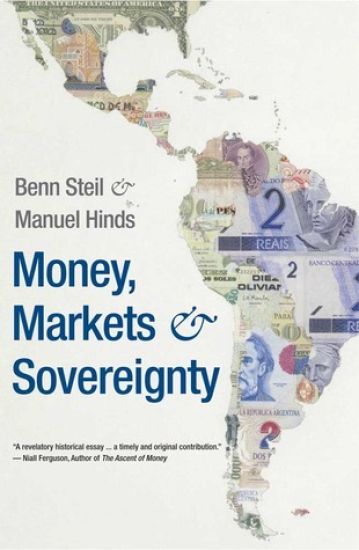
Money, Markets, and Sovereignty

Money, Markets, and Sovereignty

Benn Steil; Manuel Hinds

Yale University Press
2010
pokkari
Winner of the 2010 Hayek Book Prize given by the Manhattan Institute "Money, Markets and Sovereignty is a surprisingly easy read, given the complicated issues covered. In it, Mr. Steil and Mr. Hinds consistently challenge today's statist nostrums."—Doug Bandow, The Washington Times In this keenly argued book, Benn Steil and Manuel Hinds offer the most powerful defense of economic liberalism since F. A. Hayek published The Road to Serfdom more than sixty years ago. The authors present a fascinating intellectual history of monetary nationalism from the ancient world to the present and explore why, in its modern incarnation, it represents the single greatest threat to globalization. Steil and Hinds describe the current state of international economic relations as both unusual and precarious. Eras of economic protectionism have historically coincided with monetary nationalism, while eras of liberal trade have been accompanied by a universal monetary standard. But today, the authors show, an unprecedentedly liberal global trade regime operates side by side with the most extreme doctrine of monetary nationalism ever contrived—a situation bound to trigger periodic crises. Steil and Hinds call for a revival of the political and economic thinking that underlay earlier great periods of globalization, thinking that is increasingly under threat by more recent ideas about what sovereignty means.
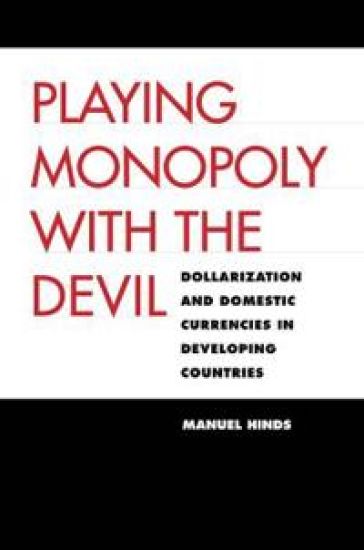
Playing Monopoly with the Devil

Playing Monopoly with the Devil

Manuel Hinds

Yale University Press
2006
sidottu
Why should a developing country surrender its power to create money by adopting an international currency as its own? This comprehensive book explores the currency problems that developing countries face and offers sound, practical advice for policy makers on how to deal with them. Manuel Hinds, who has extensive experience in real-world economic policy making, challenges the myths that surround domestic currencies and shows the clear rationality for dollarization or the use of a standard international currency. The book opens with an entertaining story of the Devil, who, through a series of common macroeconomic maneuvers, coaches the president of a mythical country into financial ruin. This ruler’s path is not unlike that taken in several real developing countries, to their detriment. Hinds goes on to introduce new ways of thinking about financial systems and monetary behavior in Third World countries.
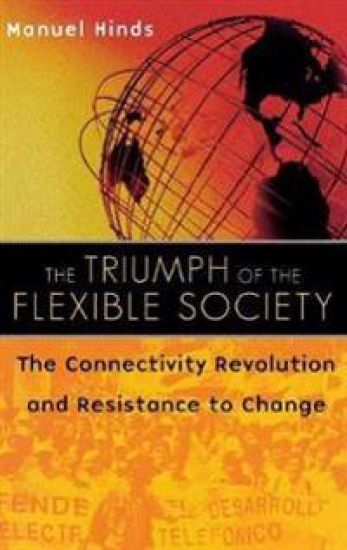
The Triumph of the Flexible Society

The Triumph of the Flexible Society

Manuel Hinds

Praeger Publishers Inc
2003
sidottu
Hinds takes offers a fresh perspective on the social, political, and economic disturbances now affecting our world. This book looks at those disturbances not as separate problems, but rather as the coherent symptoms of a deep technological revolution that is changing the shape of society on the scale of the Industrial Revolution: the Connectivity Revolution, the basis of the New Economy. Analyzing the resistance to change that erupted violently in response to that last major economic upheaval, Hinds shows how Communism, Nazism, and fundamentalism owe their triumphs not to the prevalence of poverty or oppression but to the rigidity of societies threatened by profound social changes prompted by rapid technological progress. Demonstrating that their rigidity was caused by the same kind of state intervention in the economy that is now being proposed to stop globalization, he argues persuasively that only a horizontal, flexible society can smoothly manage change in such a way that the pain of transformation—and therefore, the risk of giving birth to new varieties of destructive regimes—is minimized.