Kirjojen hintavertailu – 12 903 725 kirjaa ja 27 kauppaa

Kirjailija

Manuel London

Kirjat ja teokset yhdessä paikassa: 25 kirjaa, julkaisuja vuosilta 1988–2018, suosituimpiin kuuluu Social Entrepreneurship. Vertaile teosten hintoja ja tarkista saatavuus suomalaisista kirjakaupoista.

25 kirjaa

Kirjojen julkaisuvuodet: 1988–2018.

Self and Interpersonal Insight

Self and Interpersonal Insight

Manuel London

OXFORD UNIVERSITY PRESS INC
1995
sidottu
This book is about how people learn about themselves and others in organizations. It explores the meaning of insight as a way to enhance not only individual effectiveness, but also interpersonal relationships. The book addresses boss-subordinate relationships, group development, negotiation processes, and offers methods for training and development.
Achieving Performance Excellence in University Administration
Human resource strategies for organization development include team-building methods to improve communication and reduce interpersonal conflict among university administrators. London describes the formation of a team of top administrators who focus on how to resolve conflict, develop employees, and involve them in decision making. The book considers performance problems such as marginal performance and abusive managers. It describes methods for enhancing attention to employee development through appraisal and feedback. New techniques such as the ratingless appraisal and 360 degree feedback are covered. Overall, it shows how to maintain and enhance organizational vitality in an environment of tight resources and external pressures.
Human Resource Development in Changing Organizations

Human Resource Development in Changing Organizations

Manuel London; Richard A. Wueste

Praeger Publishers Inc
1992
sidottu
This book recognizes that organizations do all they can to increase their chances for survival and growth, especially in changing and often tough economic times. The book shows how human resource development can help by being action-oriented and tailored to the organization's changing requirements. Close working relationships are needed between human resource professionals and corporate executives to ensure that employee development policies support the organization and that organizational initiatives take human resource considerations into account. The authors, who have considerable management and administrative experience in dynamic organizations, show how to establish and refine human resource policies and programs to meet the needs of changing organizations. The book begins by examining directions for organizational change, including mergers, downsizing, restructuring, expansion to new markets, and using new technologies. Individual motivation is described as a way of understanding employees' career goals in relation to changing organizational opportunities. New roles for managers are outlined, including the roles of educator, developer, experimenter, and facilitator. The book then outlines human resource programs that facilitate organizational transformation. These include ways to create a comprehensive human performance system that ties together personnel selection, training, goal-setting, appraisal, feedback, and compensation. Recognizing the changing demographics of the workforce, programs for managing diversity are reviewed. The book concludes with ways to diagnose organizational needs and establish new human resource and training strategies that create a continuous learning environment. The book will be useful to human resource and training departments. Overall, the book offers guidelines for developing people--oneself and one's subordinates--in changing organizational environments.
Human Resource Forecasting and Strategy Development

Human Resource Forecasting and Strategy Development

Emily S. Bassman; John P. Fernandez; Manuel London

Praeger Publishers Inc
1990
sidottu
A collection of original articles by leading practitioners and researchers, this volume examines methods for human resource forecasting and planning to meet the strategic needs of the organization. As the editors note at the outset, changing characteristics of the workforce and new skill demands mean that human resource planning must become an integral part of corporate strategy development and implementation. In order to compete successfully in an era of rapid technological change, organizations must be able to adequately forecast their needs for different types of employees, consider the extent to which current employees have the needed skills, and examine labor force availability. This book describes ways to collect the necessary environmental data and formulate human resource strategies that recognize current and anticipated changes both in the organization and in the environment in which it operates. The volume begins with a discussion of environmental scanning techniques. The contributors demonstrate how to identify environmental trends, including labor force demographics, and how to apply this information to the development of human resource strategies. The second section considers ways to analyze the organization's future human resource needs by examining employee demographics and job attitudes. In Part Three, the contributors describe how organizations formulate human resource strategies in response to environmental trends and organizational goals. The next group of chapters offers examples of the human resource implications of organizational change. This section includes separate chapters on job loss and employee assistance programs and the effects of a corporate merger, as well as two case studies of the relationship between human resource planning and corporate strategic goals. The contributors conclude by describing organizational reactions to changing environments brought about by an aging workforce, work-at-home jobs, new computer and telecommunications technologies, and the increasing cultural diversity of the workforce. Indispensable for human resource managers and corporate planning executives, this book will also be of significant value to researchers and students in human resource and strategic planning programs.
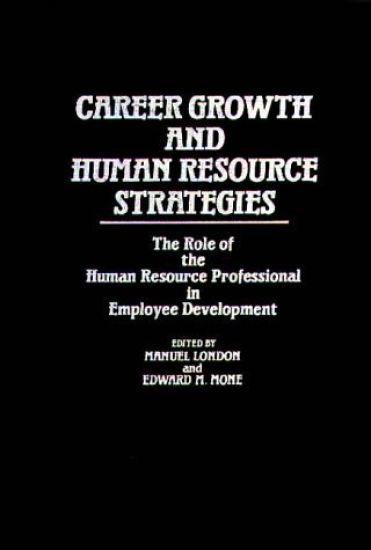
Career Growth and Human Resource Strategies

Career Growth and Human Resource Strategies

Manuel London; Edward Mone

Praeger Publishers Inc
1988
sidottu
This collection of original essays, written by experienced human resource professionals, is a major contribution to the maturing field of organizational career planning and development. Collectively, the contributors stress the need to integrate employee career interests with the current and anticipated personnel requirements of their employers, and they describe a variety of strategies and programs for accomplishing this objective. . . . Career development specialists, personnel managers, human resource planners, and students of the career development field will find this book to be of considerable interest. ChoiceSince its rise to prominence nearly twenty years ago, the field of career planning and development has undergone significant change. From an emphasis on the individual's personal needs, the focus in recent years has shifted to a concern for the individual's needs in relation to an organization's current and future position. This collection of original essays reflects this new trend. Written by experienced human resources specialists, the essays present current issues and problems, together with effective programs and strategies for dealing with them. Divided into five parts, this book begins with a focus on career processes in early, middle, and late stages--such as newcomer commitment, exploring career alternatives, and career plateaus. The chapters go on to describe organizational strategies for career enhancement and corporate philosophies of employee development, as well as tools, techniques, and programs for individual employee self-assessment. Examples of work experiences are examined, highlighting opportunities and barriers for minorities and women, executive development, and the impact of job loss. A final chapter is devoted to the role of human resource professionals in career development for the future.