Kirjojen hintavertailu – 12 859 819 kirjaa ja 27 kauppaa

Kirjailija

Manuela Caiani

Kirjat ja teokset yhdessä paikassa: 9 kirjaa, julkaisuja vuosilta 2009–2025, suosituimpiin kuuluu Populism and (Pop) Music. Vertaile teosten hintoja ja tarkista saatavuus suomalaisista kirjakaupoista.

9 kirjaa

Kirjojen julkaisuvuodet: 2009–2025.

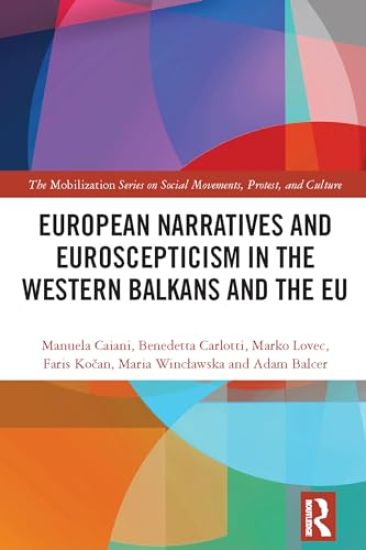
European Narratives and Euroscepticism in the Western Balkans and the EU

European Narratives and Euroscepticism in the Western Balkans and the EU

Manuela Caiani; Benedetta Carlotti; Marko Lovec; Maria Winclawska; Faris Kocan; Adam Balcer

TAYLOR FRANCIS LTD
2025
nidottu
Moving from a social movement perspective, this timely volume examines narratives on Euroscepticism and frames on Europe from below, at the party and social movement levels. Revealing perspectives from both the Right and the Left, it unpacks the emergence, re-emergence and increase in critical ‘voices’ and opposition towards Europe. Based on extensive fieldwork in two candidate countries for accession to the EU and three member states, it offers insight from analysis of focus groups, interviews with Eurosceptic and pro-European political actors and ordinary citizens, together with frame analysis and scrutiny of archival material, electoral manifestoes and organisational documents. Revealing the development of Eurocritical frames, it demonstrates the differences and similarities in narratives used to address Europe and the conceptualisation of Euroscepticism. Key cases examined include the rise of illiberalism in post-transition Slovenia; complex Euroscepticism in Poland; the path from strong support to harsh opposition in Italy; indecision over membership in North Macedonia; anticipating the future while revisiting the past in Bosnia and Herzegovina. Offering guidelines for the direction of future research and policy, European Narratives and Euroscepticism in the Western Balkans and the EU is essential reading for scholars and students of political sociology, political science, European studies and international relations, as well as policy makers concerned with trajectories pro and against Europe and the European integration process.
European Narratives and Euroscepticism in the Western Balkans and the EU

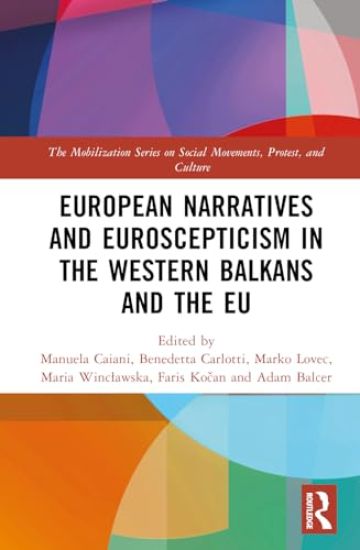
European Narratives and Euroscepticism in the Western Balkans and the EU

Manuela Caiani; Benedetta Carlotti; Marko Lovec; Maria Winclawska; Faris Kocan; Adam Balcer

TAYLOR FRANCIS LTD
2024
sidottu
Moving from a social movement perspective, this timely volume examines narratives on Euroscepticism and frames on Europe from below, at the party and social movement levels. Revealing perspectives from both the Right and the Left, it unpacks the emergence, re-emergence and increase in critical ‘voices’ and opposition towards Europe. Based on extensive fieldwork in two candidate countries for accession to the EU and three member states, it offers insight from analysis of focus groups, interviews with Eurosceptic and pro-European political actors and ordinary citizens, together with frame analysis and scrutiny of archival material, electoral manifestoes and organisational documents. Revealing the development of Eurocritical frames, it demonstrates the differences and similarities in narratives used to address Europe and the conceptualisation of Euroscepticism. Key cases examined include the rise of illiberalism in post-transition Slovenia; complex Euroscepticism in Poland; the path from strong support to harsh opposition in Italy; indecision over membership in North Macedonia; anticipating the future while revisiting the past in Bosnia and Herzegovina. Offering guidelines for the direction of future research and policy, European Narratives and Euroscepticism in the Western Balkans and the EU is essential reading for scholars and students of political sociology, political science, European studies and international relations, as well as policy makers concerned with trajectories pro and against Europe and the European integration process.
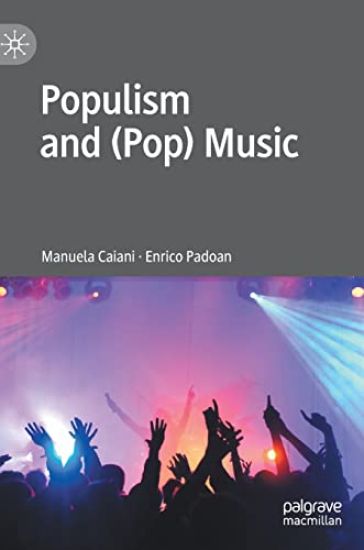
Populism and (Pop) Music

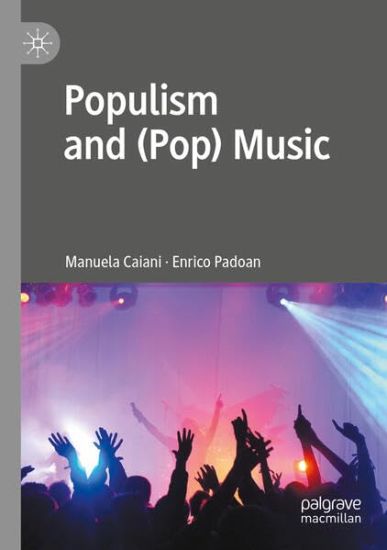
Populism and (Pop) Music

Manuela Caiani; Enrico Padoan

Springer International Publishing AG
2024
nidottu
This book launches a proposal: to fill some empirical and theoretical gaps that presently exists in populism studies by looking at the potential nexus between populist phenomena and popular culture. It provides a detailed account of the multiple mechanisms linking the production of pop music (as a form of popular culture) to the rise and reproduction of populism. The authors use a case study of Italy to interrogate these mechanisms because of its long-lasting populist phenomena and the contextual importance of pop music. The book’s mixed-methods strategy assesses three different aspects of the potential relationship between pop music and populist politics: the cultural opportunity structure generated and reproduced by the production of music, the strategies political actors use to exploit music for political purposes, and, crucially, the ways fans and ordinary citizens understand the relationship between pop music and politics, and subsequent debates and identities. Moving from the case study, the book in its last chapter offers a more general understanding of the associations between pop music and populism.
Populism and (Pop) Music

Populism and (Pop) Music

Manuela Caiani; Enrico Padoan

Springer International Publishing AG
2023
sidottu
This book launches a proposal: to fill some empirical and theoretical gaps that presently exists in populism studies by looking at the potential nexus between populist phenomena and popular culture. It provides a detailed account of the multiple mechanisms linking the production of pop music (as a form of popular culture) to the rise and reproduction of populism. The authors use a case study of Italy to interrogate these mechanisms because of its long-lasting populist phenomena and the contextual importance of pop music. The book’s mixed-methods strategy assesses three different aspects of the potential relationship between pop music and populist politics: the cultural opportunity structure generated and reproduced by the production of music, the strategies political actors use to exploit music for political purposes, and, crucially, the ways fans and ordinary citizens understand the relationship between pop music and politics, and subsequent debates and identities. Moving from the case study, the book in its last chapter offers a more general understanding of the associations between pop music and populism.
European and American Extreme Right Groups and the Internet
How do right-wing extremist organizations throughout the world use the Internet as a tool for communication and recruitment? What is its role in identity-building within radical right-wing groups and how do they use the Internet to set their agenda, build contacts, spread their ideology and encourage mobilization? This important contribution to the field of Internet politics adopts a social movement perspective to address and examine these important questions. Conducting a comparative content analysis of more than 500 extreme right organizational web sites from France, Germany, Italy, Spain, the United Kingdom and the United States, it offers an overview of the Internet communication activities of these groups and systematically maps and analyses the links and structure of the virtual communities of the extreme right. Based on reports from the daily press the book presents a protest event analysis of right wing groups’ mobilisation and action strategies, relating them to their online practices. In doing so it exposes the new challenges and opportunities the Internet presents to the groups themselves and the societies in which they exist.
European and American Extreme Right Groups and the Internet

European and American Extreme Right Groups and the Internet

Manuela Caiani; Linda Parenti

Ashgate Publishing Limited
2013
sidottu
How do right-wing extremist organizations throughout the world use the Internet as a tool for communication and recruitment? What is its role in identity-building within radical right-wing groups and how do they use the Internet to set their agenda, build contacts, spread their ideology and encourage mobilization? This important contribution to the field of Internet politics adopts a social movement perspective to address and examine these important questions. Conducting a comparative content analysis of more than 500 extreme right organizational web sites from France, Germany, Italy, Spain, the United Kingdom and the United States, it offers an overview of the Internet communication activities of these groups and systematically maps and analyses the links and structure of the virtual communities of the extreme right. Based on reports from the daily press the book presents a protest event analysis of right wing groups’ mobilisation and action strategies, relating them to their online practices. In doing so it exposes the new challenges and opportunities the Internet presents to the groups themselves and the societies in which they exist.
Mobilizing on the Extreme Right

Mobilizing on the Extreme Right

Manuela Caiani; Donatella della Porta; Claudius Wagemann

Oxford University Press
2012
sidottu
Research on the extreme right is rare, and the extreme right has even more rarely been analysed as a social movement. In this volume, the extreme right is compared in Italy, Germany, and the United States using concepts and methods developed in social movement studies. In particular, the book describes the discourse, action, and organizational structures of the extreme right, and explains these on the basis of the available discursive and political opportunities. Three main empirical methods are used in the research. Firstly, the frame analysis looks at the cognitive mechanisms that are relevant in influencing organizational and individual behaviour. Second, network analysis looks at the (inter-) organizational structural characteristics of right-wing organizations. Finally, protest event analysis allows for an empirical summary of the actions undertaken by right-wing extremists over the last decade. The substantive chapters address the organizational structure of the extreme right, their action repertoires, the framing of protest events, the definition of 'us', the struggle against modernity, old and new forms of racism, opposition to globalization, and populism.
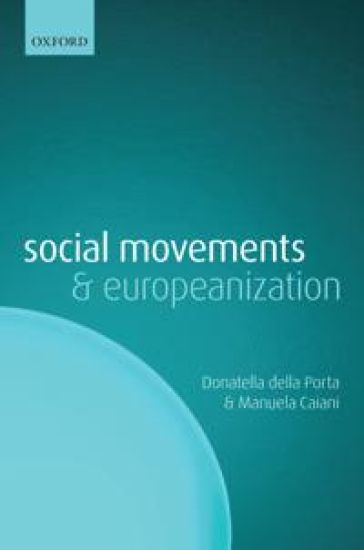
Social Movements and Europeanization

Social Movements and Europeanization

Donatella della Porta; Manuela Caiani

Oxford University Press
2011
nidottu
Are social movement organizations euro-sceptical, euro-pragmatic, or euro-opportunist? Or do they accept the EU as a new level of governance to place pressure on? Do they provide a critical capital, necessary for the political structuring of the EU, or do they disrupt the process of EU integration? This book includes surveys of activists at international protest events targeting the European Union (for a total of about 5000 interviews); a discourse analysis of documents and transcripts of debates on European politics and policies conducted during the four European social forums held between 2002 and 2006 and involving hundreds of social movement organizations and tens of thousands of activists from all European countries; about 320 interviews with representatives of civil society organizations in six EU countries (France, Germany, the United Kingdom, the Netherlands, Spain, and Italy) and one non-member state (Switzerland), and a systematic claims analysis of the daily press in selected years between 1990 and 2003. The empirical research shows the different paths of Europeanization taken by social movements and civil society organizations.
Social Movements and Europeanization

Social Movements and Europeanization

Donatella Della Porta; Manuela Caiani

Oxford University Press
2009
sidottu
Are social movement organizations euro-sceptical, euro-pragmatic, or euro-opportunist? Or do they accept the EU as a new level of governance to place pressure on? Do they provide a critical capital, necessary for the political structuring of the EU, or do they disrupt the process of EU integration? This book includes surveys of activists at international protest events targeting the European Union (for a total of about 5000 interviews); a discourse analysis of documents and transcripts of debates on European politics and policies conducted during the four European social forums held between 2002 and 2006 and involving hundreds of social movement organizations and tens of thousands of activists from all European countries; about 320 interviews with representatives of civil society organizations in six EU countries (France, Germany, the United Kingdom, the Netherlands, Spain, and Italy) and one non-member state (Switzerland), and a systematic claims analysis of the daily press in selected years between 1990 and 2003. The empirical research shows the different paths of Europeanization taken by social movements and civil society organizations.