Kirjojen hintavertailu – 12 859 828 kirjaa ja 27 kauppaa

Kirjailija

Marc Bekoff

Kirjat ja teokset yhdessä paikassa: 34 kirjaa, julkaisuja vuosilta 1999–2027, suosituimpiin kuuluu Love in Their Hearts. Vertaile teosten hintoja ja tarkista saatavuus suomalaisista kirjakaupoista.

34 kirjaa

Kirjojen julkaisuvuodet: 1999–2027.

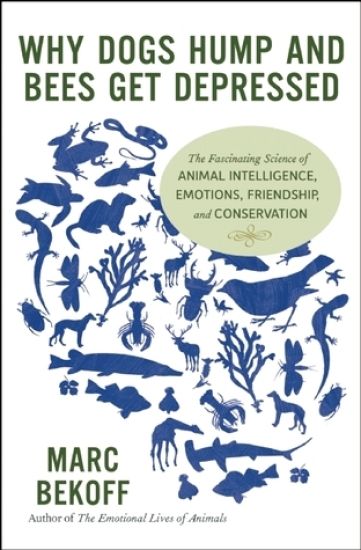
Why Dogs Hump and Bees Get Depressed

Why Dogs Hump and Bees Get Depressed

Marc Bekoff

New World Library
2013
nidottu
In 2009, Marc Bekoff was asked to write on animal emotions for Psychology Today. Some 500 popular, jargon-free essays later, the field of anthrozoology -- the study of human-animal relationships -- has grown exponentially, as have scientific data showing how smart and emotional nonhuman animals are. Here Bekoff offers selected essays that showcase the fascinating cognitive abilities of other animals as well as their empathy, compassion, grief, humor, joy, and love. Humpback whales protect gray whales from orca attacks, combat dogs and other animals suffer from PTSD, and chickens, rats, and mice display empathy. This collection is both an updated sequel to Bekoff 's popular book The Emotional Lives of Animals and a call to begin the important work of "rewilding" ourselves and changing the way we treat other animals.
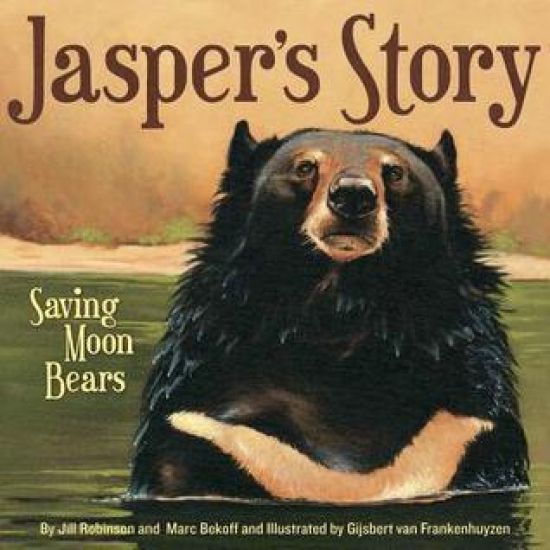
Jasper's Story: Saving Moon Bears

Jasper's Story: Saving Moon Bears

Jill Robinson; Marc Bekoff

Sleeping Bear Press
2013
sidottu
For years Jasper, a moon bear, lived a miserable existence, held captive in a cage by bear farmers in rural China. The farmers extracted the bile from Jasper's body and sold it to be used in traditional medicines. It's a horrific practice and conducted on thousands of moon bears each year. But now Jasper has the chance to be free and live a life away from pain and torture. In 2000, Animals Asia, an animal welfare organization, rescued Jasper and other captive moon bears, taking them to its Moon Bear Rescue Centre. Here veterinarians attended to the bears' wounds, hoping to give them some chance of a peaceful existence in the animal sanctuary. But after so many years of abuse Jasper's wounds, both physical and mental, are extensive. Can Jasper mend his body and mind and finally enjoy the life he was meant to live?
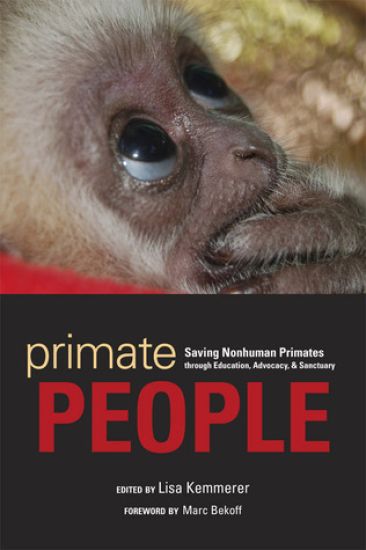
Primate People

Primate People

Marc Bekoff

University of Utah Press,U.S.
2012
nidottu
In the last 30 years the bushmeat trade has led to the slaughter of nearly 90 percent of West Africa’s bonobos, perhaps our closest relatives, and has recently driven Miss Waldron’s red colobus monkey to extinction. Earth was once rich with primates, but every species—except one—is now extinct or endangered because of one primate—Homo sapiens. How have our economic and cultural practices pushed our cousins toward destruction? Would we care more about their fate if we knew something of their individual lives and sufferings? Would we help them if we understood how our choices threaten their existence? This anthology helps to answer these questions. The first section of Primate People introduces forces that threaten nonhuman primates, such as the entertainment and “pet” industries, the bushmeat trade, habitat destruction, and logging. The second section exposes the exploitation of primates in research facilities, including the painful memories of an undercover agent, and suggests models of more enlightened scientific methods. The final section tells the stories of those who lobby for change, educate communities, and tenderly care for our displaced cousins in sanctuaries. Sometimes shocking and disturbing, sometimes poignant and encouraging, Primate People always draws the reader into the lives of nonhuman primates. Activists around the world reveal the antics and pleasures of monkeys, the tendencies and idiosyncrasies of chimpanzees, and the sufferings and fears of macaques. Charming, difficult, sensitive—these testimonies demonstrate that nonhuman primates and human beings are, indeed, closely related. Woven into the anthology’s lucid narratives are the stories of how we harm and create the conditions that endanger primates, and what we can and must do to prevent their ongoing suffering and fast-approaching extinction.

Integral Ecology

Integral Ecology

Sean Esbjorn-Hargens; Michael E. Zimmerman; Marc Bekoff

Integral Books
2011
pokkari
Presents a theoretical framework for integrating insights about ecology - based on Ken Wilber's Integral Theory. This work examines real-life applications of Integral Ecology in use, and provides personal practices of transformation you can use to increase your own integral ecological awareness.
Wild Justice

Wild Justice

Marc Bekoff; Jessica Pierce

University of Chicago Press
2010
nidottu

Halvin toimitettuna 30,00 €

Scientists have long counseled against interpreting animal behavior in terms of human emotions, warning that such anthropomorphizing limits our ability to understand animals as they really are. With "Wild Justice", Marc Bekoff and Jessica Pierce unequivocally challenge this long-held view. Marrying years of behavioral and cognitive research with compelling and moving anecdotes, Bekoff and Pierce reveal that animals exhibit a broad repertoire of moral behaviors, including fairness, empathy, trust, and reciprocity. Animals, in short, are incredibly adept social beings, relying on rules of conduct to navigate intricate social networks that are essential to their survival. Ultimately, Bekoff and Pierce draw the astonishing conclusion that there is no moral gap between humans and other species: morality is an evolved trait that we unquestionably share with other social mammals.
Wild Justice

Wild Justice

Marc Bekoff; Jessica Pierce

University of Chicago Press
2009
sidottu
Scientists have long counseled against interpreting animal behavior in terms of human emotions, warning that such anthropomorphizing limits our ability to understand animals as they really are. With "Wild Justice", Marc Bekoff and Jessica Pierce unequivocally challenge this long-held view. Marrying years of behavioral and cognitive research with compelling and moving anecdotes, Bekoff and Pierce reveal that animals exhibit a broad repertoire of moral behaviors, including fairness, empathy, trust, and reciprocity. Animals, in short, are incredibly adept social beings, relying on rules of conduct to navigate intricate social networks that are essential to their survival. Ultimately, Bekoff and Pierce draw the astonishing conclusion that there is no moral gap between humans and other species: morality is an evolved trait that we unquestionably share with other social mammals.
Minding Animals

Minding Animals

Marc Bekoff; Jane Goodall

Oxford University Press Inc
2003
nidottu

Halvin toimitettuna 22,50 €

The emotional world of animals is revealed by a biologist who shares the breadth of his experience with the natural world to provide examples of cognition, intelligence, and consciousness in animals.
Minding Animals

Minding Animals

Marc Bekoff

Oxford University Press Inc
2002
sidottu
The emotional world of animals is revealed by a biologist who shares the remarkable breadth of his experience with the natural world to provide examples of cognition, intelligence, and consciousness in animals.
Species of Mind

Species of Mind

Colin Allen; Marc Bekoff

Bradford Books
1999
pokkari
The heart of this book is the reciprocal relationship between philosophical theories of mind and empirical studies of animal cognition. Colin Allen (a philosopher) and Marc Bekoff (a cognitive ethologist) approach their work from a perspective that considers arguments about evolutionary continuity to be as applicable to the study of animal minds and brains as they are to comparative studies of kidneys, stomachs, and hearts. Cognitive ethologists study the comparative, evolutionary, and ecological aspects of the mental phenomena of animals. Philosophy can provide cognitive ethology with an analytical basis for attributing cognition to nonhuman animals and for studying it, and cognitive ethology can help philosophy to explain mentality in naturalistic terms by providing data on the evolution of cognition. This interdiscipinary approach reveals flaws in common objections to the view that animals have minds. The heart of the book is this reciprocal relationship between philosophical theories of mind and empirical studies of animal cognition. All theoretical discussion is carefully tied to case studies, particularly in the areas of antipredatory vigilance and social play, where there are many points of contact with philosophical discussions of intentionality and representation. Allen and Bekoff make specific suggestions about how to use philosophical theories of intentionality as starting points for empirical investigation of animal minds, and they stress the importance of studying animals other than nonhuman primates.