

Kirjailija
Marc Bungenberg
Kirjat ja teokset yhdessä paikassa: 6 kirjaa, julkaisuja vuosilta 2007–2023, suosituimpiin kuuluu From Bilateral Arbitral Tribunals and Investment Courts to a Multilateral Investment Court. Vertaile teosten hintoja ja tarkista saatavuus suomalaisista kirjakaupoista.
6 kirjaa
Kirjojen julkaisuvuodet: 2007–2023.


From Bilateral Arbitral Tribunals and Investment Courts to a Multilateral Investment Court
Marc Bungenberg; August Reinisch
Springer-Verlag Berlin and Heidelberg GmbH Co. K
2020
nidottu
This open access book considers the potential setup for a future Multilateral Investment Court (MIC). The option of an MIC was first discussed by the EU Commission in 2016 and has since been made an official element of the EU Common Commercial Policy. In 2017, UNCITRAL also decided to discuss the possibility of an MIC, and on 20 March 2018, the Council of the EU gave the EU Commission the mandate to negotiate the creation of an MIC. The “feasibility study” presented here is intended to contribute to a broader discussion on the options for a new international court specialized in investment protection. The cornerstones of such a new permanent court are a strict orientation on the rule of law, reduced costs of investment protection, transparency considerations, aspects of consistency in case law, and the effective enforceability of MIC decisions.

From Bilateral Arbitral Tribunals and Investment Courts to a Multilateral Investment Court
Marc Bungenberg; August Reinisch
Springer Nature Switzerland AG
2019
nidottu
This book considers the potential setup for a future Multilateral Investment Court (MIC). The option of an MIC was first discussed by the EU Commission in 2016 and has since been made an official element of the EU Common Commercial Policy. In 2017, UNCITRAL also decided to discuss the possibility of an MIC, and on 20 March 2018, the Council of the EU gave the EU Commission the mandate to negotiate the creation of an MIC. The “feasibility study” presented here is intended to contribute to a broader discussion on the options for a new international court specialized in investment protection. The cornerstones of such a new permanent court are a strict orientation on the rule of law, reduced costs of investment protection, transparency considerations, aspects of consistency in case law, and the effective enforceability of MIC decisions.

From Bilateral Arbitral Tribunals and Investment Courts to a Multilateral Investment Court
Marc Bungenberg; August Reinisch
Springer-Verlag Berlin and Heidelberg GmbH Co. K
2019
sidottu
This open access book considers the potential setup for a future Multilateral Investment Court (MIC). The option of an MIC was first discussed by the EU Commission in 2016 and has since been made an official element of the EU Common Commercial Policy. In 2017, UNCITRAL also decided to discuss the possibility of an MIC, and on 20 March 2018, the Council of the EU gave the EU Commission the mandate to negotiate the creation of an MIC. The “feasibility study” presented here is intended to contribute to a broader discussion on the options for a new international court specialized in investment protection. The cornerstones of such a new permanent court are a strict orientation on the rule of law, reduced costs of investment protection, transparency considerations, aspects of consistency in case law, and the effective enforceability of MIC decisions.
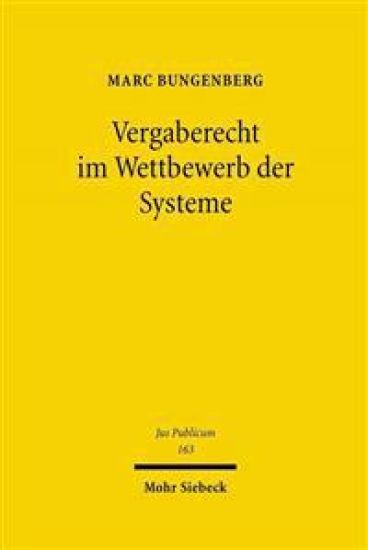
Auf Grund von Systemwettbewerb, immer stärkerer Privatisierungstendenzen und der Einführung marktwirtschaftlicher Parameter im Bereich der öffentlichen Aufgabenbewältigung hat das Recht der öffentlichen Auftragsvergabe in den vergangenen Jahren zunehmend an Bedeutung gewonnen. Angesichts der Grundsätze der Offenheit und des Vorrangs der deutschen Wirtschaftsverfassung müssen Europäisierung und Internationalisierung bei der Ermittlung verfassungsrechtlicher Grundprinzipien des öffentlichen Beschaffungswesens umfassender einbezogen werden. Unter Berücksichtigung der relevanten völker- und europarechtlichen Vorgaben untersucht Marc Bungenberg die das Recht der öffentlichen Beschaffungen prägenden Prinzipien. In einer rechtsebenenübergreifenden Analyse macht er deutlich, dass die Wirtschaftlichkeit der öffentlichen Aufgabenbewältigung das prägende Leitmotiv für die Auftragsvergabe darstellt. Er arbeitet einzelne rechtliche und ökonomische Komponenten heraus, welche die "wirtschaftliche Auftragsvergabe" umsetzen. Dabei werden unter anderem die grundsätzlichen Anforderungen an Vergabeverfahren und Rechtsschutz auch unterhalb der sogenannten Schwellenwerte deutlich. Zur Wirtschaftlichkeit der Auftragsvergabe tragen insbesondere die Gewährleistung wirtschaftlicher Freiheiten der potentiellen Auftragnehmer bei. Zudem bezieht er in die Effizienzanalyse der Auftragsvergabe ökologische und soziale Gesichtspunkte ein. Abschließend wird erörtert, inwieweit die Erarbeitung und Verabschiedung eines multilateralen Beschaffungsabkommens sinnvoll erscheint.