
Kirjailija
Marc H Ellis
Kirjat ja teokset yhdessä paikassa: 35 kirjaa, julkaisuja vuosilta 1994–2023, suosituimpiin kuuluu Finding Our Voice. Vertaile teosten hintoja ja tarkista saatavuus suomalaisista kirjakaupoista.
Nimi esiintyy myös muodoissa: Marc H. Ellis
35 kirjaa
Kirjojen julkaisuvuodet: 1994–2023.
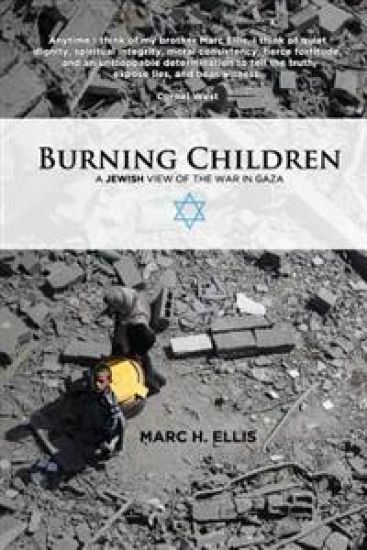
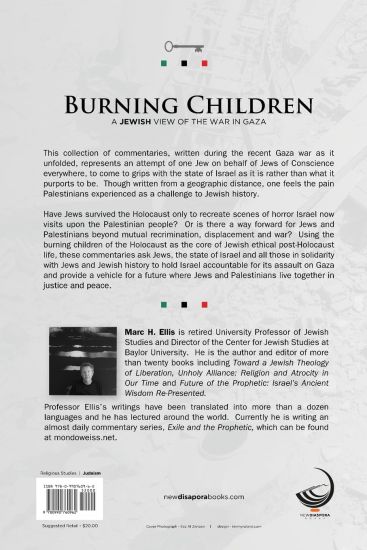
Burning Children - A Jewish View of the War in Gaza
Marc H. Ellis
Foundation University Press USA
2014
nidottu
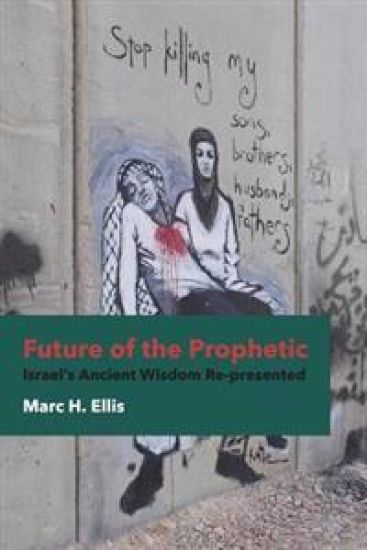
Future of the Prophetic argues that in the persistence of the prophetic, the legacy of the ancient Jewish world spread beyond the boundaries of the Jewish community and took root throughout the world. As a way of wisdom and hope, this dual rooting - its grounding in the tradition of ancient Israel and its uncontained itinerancy-unveils a startling but promising new context: a re-presentation of the prophetic from outside the Jewish world to the Jewish community. The new situation of contemporary prophetic challenges the fixed religious landscape by reversing traditional boundaries, eschewing power and privilege, and brokering peace through solidarity and common struggle in ecumenical and interfaith contexts.
Muslim, Christian, Jew
Arthur G Gish; Mohammed Abu-Nimer; Lydia Neufeld Harder; Marc H Ellis
Cascade Books
2012
sidottu
Turmoil still grips the Middle East and fear now paralyzes post-9/11 America. The comforts and challenges of this book are thus as timely as when first published in 1987. With new reflections on the future of Judaism and Israel, Ellis underscores the enduring problem of justice. Ellis' use of liberation theology to make connections between the Holocaust and contemporary communities from the Third World reminds both Jews and oppressed Christians that they share common ground in the experiences of abandonment, suffering, and death. The connections also reveal that Jews and Christians share a common cause in the battle against idolatry--represented now by obsessions for personal affluence, national security, and ethnic survival. According to Ellis, Jews and Christians must never allow the reality of anti-Semitism to become an excuse for evading solidarity with the oppressed peoples--be they African, Asian, Latin American or, especially, Palestinian.
Marc Ellis maintains that the most vital questions about Judaism are prefigured in the work of Elie Wiesel, Martin Buber, Abraham Joshua Heschel, Hannah Arendt, and Emmanuel Levinas. Ellis's work is framed by encounters with each thinker's work, focusing on topics of God, the Holocaust, the prophetic legacy, philosophical and ethical standpoints, and Jewish empowerment and dissent. Two generations after the Holocaust and Israel's founding, Ellis argues that the uncertain future of Judaism requires a deeply personal and intellectual exploration of Jewish tradition and identity, in conversation with the best philosophical and theological minds of recent years.
Revolutionary Forgiveness is a startling series of essays challenging the prevailing sensibilities of both Jews and Christians. In the call for accountability and commitment, Ellis asks whether the current boundaries that Jews and Christians claim continue to provide the foundations for faith and the embrace of the covenant.
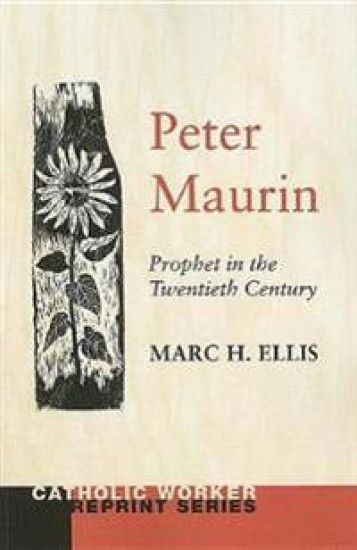
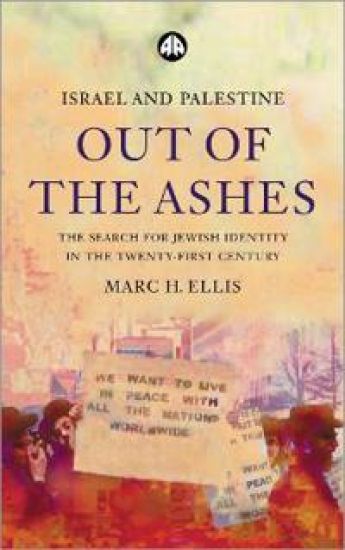
As the world watches with horror the unfolding events in Palestine and Israel, Marc Ellis, a Jewish American scholar, examines what he sees as a crisis point in Jewish identity. In this book, Ellis offers a vision of Judaism that testifies to an ethical life in our era, based on the principles of justice and community upon which the Jewish faith was founded. Only by addressing the way in which those original principles are being squandered by a miltarised state of Israel and a complicit Jewish establishment in America, he argues, can there be hope for peace in the future. Israel and Palestine: Out of the Ashes is a deeply personal, philosophical account of contemporary Jewish identity. Looking beyond the legacy of the Holocaust and beyond the portrayal of Jews as either victims or persecutors, Ellis forges a new vision of what it means to be Jewish today.
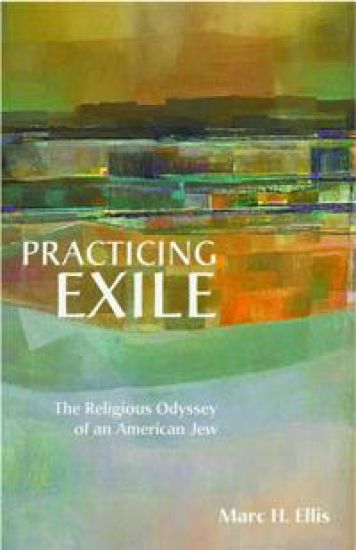
As a post-Holocaust Jewish thinker, Marc Ellis inhabits the land between homes that we call exile. In this intensely personal work he explores how the religious landscape looks from the perspective of an exile -- and how religious searching continually leads away from the domestic comforts of received Jewish and Christian platitudes and into new struggles for religious authenticity. At once a memoir and an examination of conscience, Ellis' autobiographical starting points spark reflections on Jewish-Christian relations, liberation theology, religion and politics, and issues of justice in Israel and Palestine. His experiences also occasion meditations on solitude and solidarity, gratitude and alienation, memory and responsibilty. They exemplify how religiously committed persons, though exiled forever from yesterday's certitudes, can yet practice covenantal fidelity.
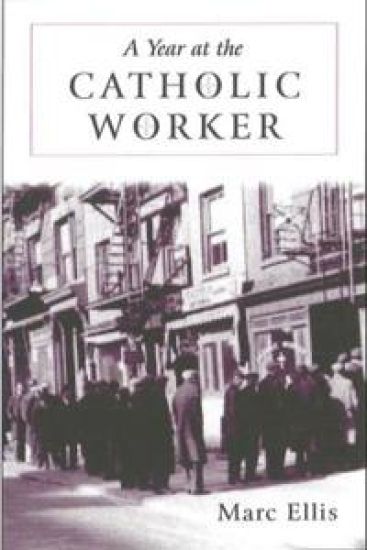
Sixty-six years ago the Catholic Worker movement began with the opening of a shared aprtment as a house of hospitality and the selling of the Catholic Worker newspaper for a penny a copy in Union Square. It began amidst the Great Depression with millions out of work and the foundation of American capitalism crumbling. Most of all, however, the Catholic Worker began with the meeting of two persons: Dorothy Day and Peter Maurin. Their meeting was the effective beginning of the Catholic Worker movement and remains to this day the source of its inspiration. In this diary Marc H. Ellis recounts his spiritual journey among the poor in New York City in the early 1970s. What he witnessed at the Catholic Worker continues to increase in our world today: homelessness, destitution, and other forms of poverty. Yet, the spiritual life he experienced is even more real today as well: commitment, hope, and faith among the poor.
The peril and promise of contemporary Jewish identity.
Tragically, religion has often been associated with violence, repression, war, and vengeance. In this searing work Marc Ellis asks, is there God beyond violence? Ellis's personal quest for religious integrity in the face of evil leads him to probe religious dimensions of both historical violence (in the colonizing of the Americas and the Holocaust) and contemporary eruptions of barbarism in Bosnia, Rwanda, or the Mideast. He also queries the works of prominent contemporary theologians from Moltmann and Ruether to Wiesel and Fackenheim, questioning whether reformist movements might ultimately merely gloss over religious distortions. His uncompromising moral sensitivity poses a frank examination of conscience for all Christians and Jews who seek honestly to engage their tradition and their God.
In this book, Marc Ellis wrestles with some of the critical issues of contemporary Jewish and Christian life, in particular the issues of Jewish and Christian religiosity after Auschwitz and 1492, two events that are historical and contemporary in their relevance. Both mark Jewish and Christian religiosity in deep and compelling ways. Ellis does not attempt to offer an exhaustive account of either the Holocaust or 1492 or their political, cultural, and religious consequences. Rather, he attempts to share with the reader a point of view that comes from his own experience of these two events as a Jew born in the first generation after the Holocaust, one who has also experienced some aspects of contemporary Christian life. Recorded here are some of the author's reflections that crystallized on and after what became for him, a journey of endings and, as significant, new beginnings.