Kirjojen hintavertailu – 12 859 829 kirjaa ja 27 kauppaa

Kirjailija

Marc Raboy

Kirjat ja teokset yhdessä paikassa: 9 kirjaa, julkaisuja vuosilta 1990–2022, suosituimpiin kuuluu Marconi. Vertaile teosten hintoja ja tarkista saatavuus suomalaisista kirjakaupoista.

9 kirjaa

Kirjojen julkaisuvuodet: 1990–2022.

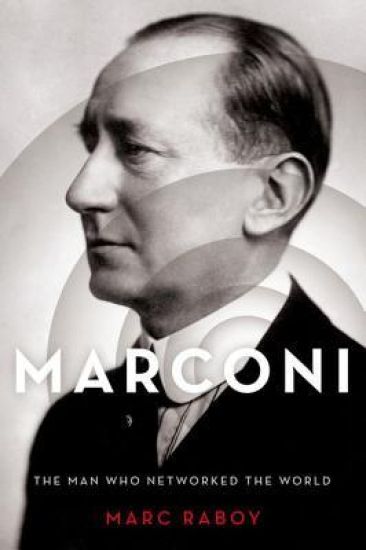
Marconi

Marconi

Marc Raboy

Oxford University Press Inc
2019
nidottu
A little over a century ago, the world went wireless. Cables and all their limiting inefficiencies gave way to a revolutionary means of transmitting news and information almost everywhere, instantaneously. By means of "Hertzian waves," as radio waves were initially known, ships could now make contact with other ships (saving lives, such as on the doomed S. S. Titanic); financial markets could coordinate with other financial markets, establishing the price of commodities and fixing exchange rates; military commanders could connect with the front lines, positioning artillery and directing troop movements. Suddenly and irrevocably, time and space telescoped beyond what had been thought imaginable. Someone had not only imagined this networked world but realized it: Guglielmo Marconi. As Marc Raboy shows us in this enthralling and comprehensive biography, Marconi was the first truly global figure in modern communications. Born to an Italian father and an Irish mother, he was in many ways stateless, working his cosmopolitanism to advantage. Through a combination of skill, tenacity, luck, vision, and timing, Marconi popularized--and, more critically, patented--the use of radio waves. Soon after he burst into public view at the age of 22 with a demonstration of his wireless apparatus in London, 1896, he established his Wireless Telegraph & Signal Company and seemed unstoppable. He was decorated by the Czar of Russia, named an Italian Senator, knighted by King George V of England, and awarded the Nobel Prize for Physics--all before the age of 40. Until his death in 1937, Marconi was at the heart of every major innovation in electronic communication, courted by powerful scientific, political, and financial interests. He established stations and transmitters in every corner of the globe, from Newfoundland to Buenos Aires, Hawaii to Saint Petersburg. Based on original research and unpublished archival materials in four countries and several languages, Raboy's book is the first to connect significant parts of Marconi's story, from his early days in Italy, to his groundbreaking experiments, to his protean role in world affairs. Raboy also explores Marconi's relationshps with his wives, mistresses, and children, and examines in unsparing detail the last ten years of the inventor's life, when he returned to Italy and became a pillar of Benito Mussolini's fascist regime. Raboy's engrossing biography, which will stand as the authoritative work of its subject, proves that we still live in the world Marconi created.
Marconi

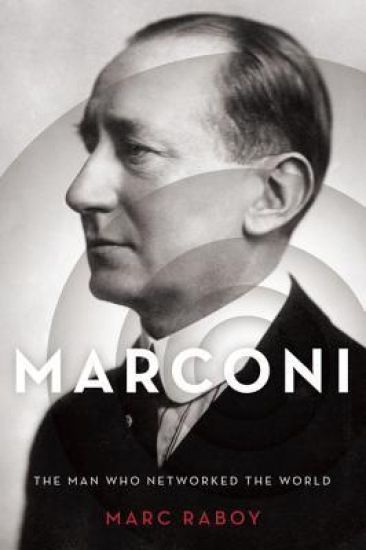
Marconi

Marc Raboy

Oxford University Press Inc
2016
sidottu
A little over a century ago the world went wireless. Cables and all their limiting inefficiencies gave way to a revolutionary means of transmitting news and information almost everywhere, instantaneously. By means of "Hertzian waves," as radio waves were initially known, ships could now make contact with other ships (saving lives, such as on the doomed R. M. S. Titanic); financial markets could coordinate with other financial markets, establishing the price of commodities and fixing exchange rates; military commanders could connect with the front lines, positioning artillery and directing troop movements. Suddenly and irrevocably, time and space telescoped beyond what had been thought imaginable. Someone had not only imagined this networked world but realized it: Guglielmo Marconi. As Marc Raboy shows us in this enthralling and comprehensive biography, Marconi was the first truly global figure in modern communications. Born to an Italian father and an Irish mother, he was in many ways stateless, working his cosmopolitanism to advantage. Through a combination of skill, tenacity, luck, vision, and timing, Marconi popularized-and, more critically, patented-the use of radio waves. Soon after he burst into public view with a demonstration of his wireless apparatus in London at the age of 22 in 1896, he established his Wireless Telegraph & Signal Company and seemed unstoppable. He was decorated by the Czar of Russia, named an Italian Senator, knighted by King George V of England, and awarded the Nobel Prize for Physics-all before the age of 40. Until his death in 1937, Marconi was at the heart of every major innovation in electronic communication, courted by powerful scientific, political, and financial interests, and trailed by the media, which recorded and published nearly every one of his utterances. He established stations and transmitters in every corner of the globe, from Newfoundland to Buenos Aires, Hawaii to Saint Petersburg. Based on original research and unpublished archival materials in four countries and several languages, Raboy's book is the first to connect significant parts of Marconi's story, from his early days in Italy, to his groundbreaking experiments, to his protean role in world affairs. Raboy also explores Marconi's relationships with his wives, mistresses, and children, and examines in unsparing detail the last ten years of the inventor's life, when he returned to Italy and became a pillar of Benito Mussolini's fascist regime. Raboy's engrossing biography, which will stand as the authoritative work of its subject, proves that we still live in the world Marconi created.

Looking for Alicia

Looking for Alicia

Marc Raboy

OXFORD UNIVERSITY PRESS INC
2022
sidottu
The life and legacy of a young Argentinian woman whose disappearance in 1976 haunts those she left behind Marc Raboy always felt a "subliminal interest" in Argentina. His grandfather had left his village in Ukraine in 1908 as a young man and spent a year in Buenos Aires, before returning home, marrying, and then emigrating to Canada, where Raboy was raised. While planning a trip of his own to Argentina, Raboy did an Internet search of his surname there, on the off-chance that he might discover some tie to his grandfather. In the process he found Alicia Raboy. Her story immediately seized him and wouldn't let him go. In June 1976, Alicia, a journalist and member of a militant underground leftwing group, the Montoneros, was ambushed by a security death squad while driving with her family in the city of Mendoza. Alicia's partner, the celebrated poet and fellow Montonero Francisco "Paco" Urondo, was killed on the spot. Their 11-month-old daughter, Ángela, was taken and placed in an orphanage. Her daughter ultimately was rescued; Alicia was never heard from again. In Looking for Alicia, Raboy pursues her story not simply to learn what happened when the post-Perón government in Argentina turned to state terror, but to understand what drove Alicia and others to risk their lives to oppose it. Whatever their distant ancestral kinship, author and subject were born a month apart, sharing not only a surname but youthful rebellion, journalistic ambition, and the radical politics that were a hallmark of the 1960s everywhere. Their destinies diverged through a combination of choice and circumstance. Using family archives, interviews with those who knew Alicia, and transcripts from the 2011 trial of former Argentine security forces personnel involved in her disappearance, Raboy reassembles Alicia's story. He supplements his narrative with documents from Argentina's attempts to deal with the legacy of the military dictatorship, such as the 1984 report of the National Commission on the Disappearance of Persons, Nunca Más ("Never Again"), as well as secret diplomatic correspondence recently made public through the U. S. State Department's Argentina Declassification Project. Looking for Alicia immerses readers in these dark years, which, decades later, cast their shadow still. It puts an unforgettably human face to the many thousands who disappeared, those they left behind, and the haunting power of the memories that bind us all to them.
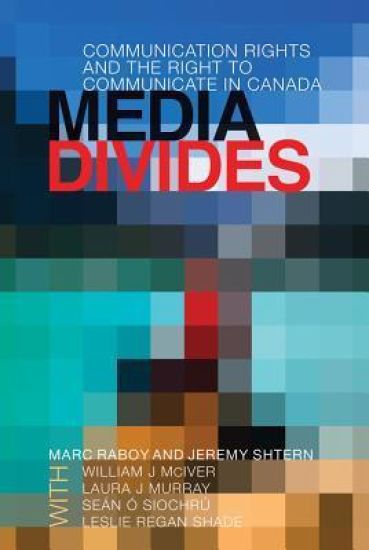
Media Divides

Media Divides

Marc Raboy; Jeremy Shtern

University of British Columbia Press
2011
pokkari
Media Divides offers a comprehensive democratic audit of communications law and policy. Using the concept of communications rights as a framework for analysis in five key domains – media, access, the Internet, privacy, and copyright – leading analysts reveal that Canada's failure to respond adequately to a host of pressures and developments has left its citizens with unequal access to the nation's communications system and the freedom of expression it promises. Media Divides not only offers the first up-to-date account of the democratic deficits in Canada's communications policy, it formulates recommendations – including the establishment of a Canadian right to communicate – for the future.
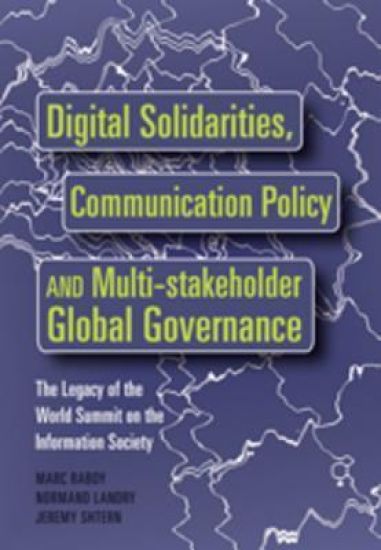
Digital Solidarities, Communication Policy and Multi-stakeholder Global Governance

Digital Solidarities, Communication Policy and Multi-stakeholder Global Governance

Marc Raboy; Normand Landry; Jeremy Shtern

Peter Lang Publishing Inc
2010
sidottu
In 2003 and again in 2005, the international community was called by the United Nations to take part in a World Summit on the Information Society (WSIS). This two-phased summit placed an unprecedented global spotlight on information and communication issues. At the same time, the WSIS represented a grand experiment in global governance: the active participation of non-governmental stakeholders in the development of public policies at the international level. Digital Solidarities, Communication Policy and Multi-stakeholder Global Governance examines the actors, structures and themes that shaped the WSIS with a particular focus on the role played by civil society. The book investigates how civil society self-organization has continued post-WSIS through the Internet Governance Forum (IGF) and other policymaking venues, and reflects on what the WSIS experience reveals about the challenges and opportunities embedded in the notion of multi-stakeholder governance and its implications for understanding global communication.
Media Divides

Media Divides

Marc Raboy; Jeremy Shtern

University of British Columbia Press
2010
sidottu
Media Divides offers a comprehensive democratic audit of communications law and policy. Using the concept of communications rights as a framework for analysis in five key domains – media, access, the Internet, privacy, and copyright – leading analysts reveal that Canada's failure to respond adequately to a host of pressures and developments has left its citizens with unequal access to the nation's communications system and the freedom of expression it promises. Media Divides not only offers the first up-to-date account of the democratic deficits in Canada's communications policy, it formulates recommendations – including the establishment of a Canadian right to communicate – for the future.
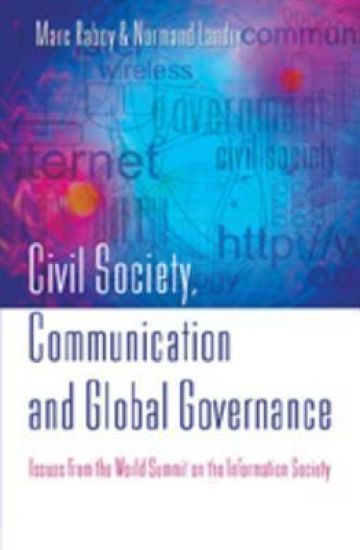
Civil Society, Communication and Global Governance

Civil Society, Communication and Global Governance

Marc Raboy; Normand Landry

Peter Lang Publishing Inc
2005
sidottu
In 2003 and again in 2005, the international community was called to take part in a World Summit on the Information Society (WSIS). This two-phase United Nations summit placed an unprecedented global spotlight on information and communication issues. "Civil Society, Communication and Global Governance" provides a sweeping portrait of the players, structures and themes of the WSIS, as well as a critical analysis of the summit's first phase, the issues it raised and the groundbreaking role played by civil society. Including an extensive bibliography, list of relevant web sites and key documents, this will be a basic reference source for everyone interested in the role of information and communication on shaping twenty-first-century societies.
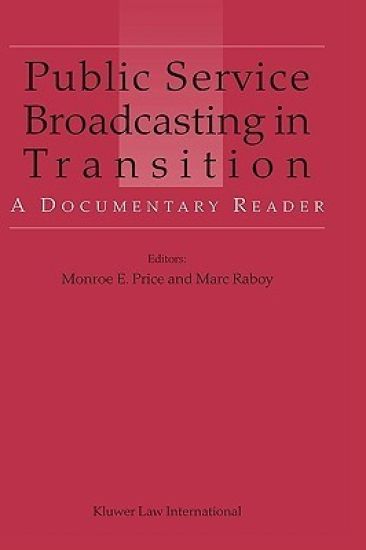
Public Service Broadcasting in Transition

Public Service Broadcasting in Transition

Monroe E. Price; Marc Raboy

Kluwer Law International
2003
sidottu
Few will deny that public service broadcasting--broadcasting that is controlled neither by the state nor by private media corporations--is an essential ingredient in modern democracy. But, as a number of initiatives in transition economies have shown, the inception and development of a strong public broadcasting system is a Herculean task that is easily sidetracked by politics or ideology, or stalled by lack of funding. Especially when state budgets are stretched, the expense is hard to justify. This collection of documents, comments, and cases brings all the major issues in public service broadcasting policy into focus and sets the problems to be addressed in sharp relief. It draws on white papers from NGOs and broadcasters, legislation from a wide range of countries (and a model law), accounts of public broadcasting efforts in transition states, analyses of evolving policy in established systems, government regulatory guidelines, and a great deal more. Among the matters touched upon are the following: the principles of public service broadcasting and their cultural and economic justification; limiting state interference; the place of public broadcasting in a multi-channel, "market-driven" world; the appropriate mix of public and private revenues; objectivity and impartiality in broadcasting; how institutional structures can shape programming strategies; the use of competition law to adjust relations between public and private broadcasting; EU accession standards for public service broadcasting; and the impact of digital broadcasting.
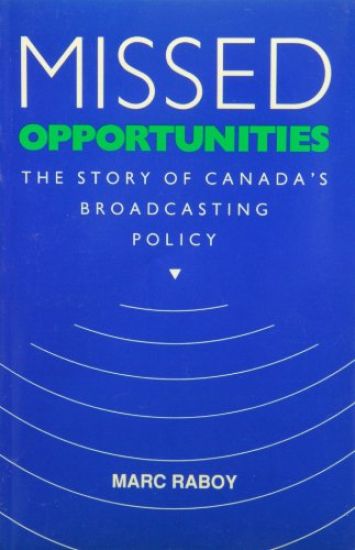
Missed Opportunities

Missed Opportunities

Marc Raboy

McGill-Queen's University Press
1990
nidottu
Toward the end of his career, Graham Spry used the phrase "missed opportunities" in reference to Canadian broadcasting. Raboy shows which opportunities have been missed and clarifies the relationship between the evolution of Canadian broadcasting policy over the past sixty years and the changes in Canadian society during the same period.