Kirjailija
Marc Treib
Kirjat ja teokset yhdessä paikassa: 16 kirjaa, julkaisuja vuosilta 2005–2026, suosituimpiin kuuluu Pietro Porcinai and the Landscape of Modern Italy. Vertaile teosten hintoja ja tarkista saatavuus suomalaisista kirjakaupoista.
16 kirjaa
Kirjojen julkaisuvuodet: 2005–2026.
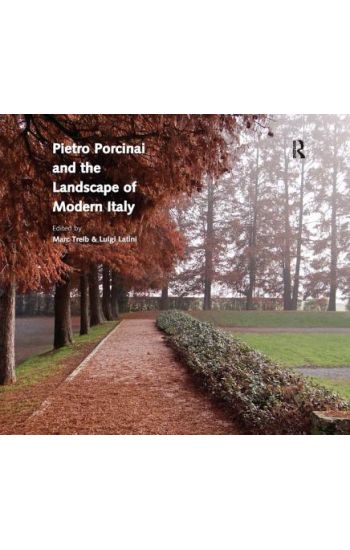
Born in Florence in 1910, Pietro Porcinai grew up on the classic grounds of the Villa Gamberaia in Settignano where his father served as head gardener. Although he studied agriculture in college, Porcinai’s true interest lay in the landscape architecture practice he founded in 1938. Early projects centered in the area of Arezzo, whose style reflected modernÂized traditional models. In the postwar era the office flourished, producing modern gardens of remarkable design and use of plants. In these works, Porcinai convincingly demonstrated the affinity between historical architecture and landscapes unÂcompromisingly modern. During his long and productive career he also consulted on autostrada planning, and designed public parks, memorials, and even a Pinocchio theme park-at times collaborating with noted architects such as Renzo Piano, Carlo Scarpa and Oscar Niemeyer. This book, the first English-language study on Pietro Porcinai provides a comprehensive and richly illustrated overview of his life and remarkable achievements.
Alexandre Chemetoff: Landscapes & Urbanism: Changing Everything Without Changing Everything
Marc Treib
Oro Editions
2026
sidottu
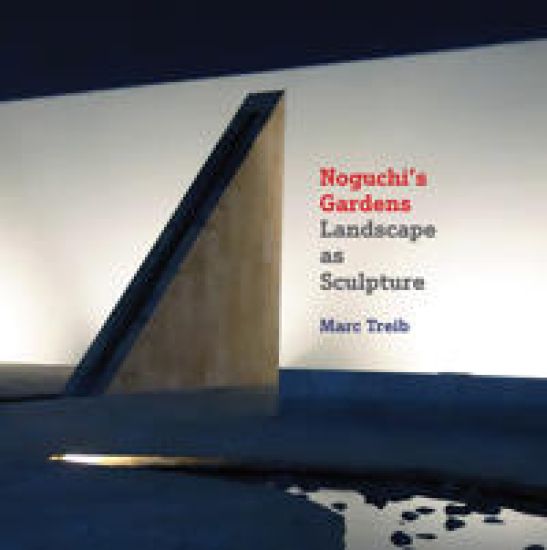
While sculpture remained central to his artistic practice, Isamu Noguchi’s (1904–1988) interests and production spanned an exceptionally broad terrain that included furniture and lamps, stage sets for dance, plazas, courtyards — and gardens. Noguchi made no distinction between design, craft, and the so-called fine arts: in his view all of these could all be considered art should their aesthetic qualities sufficiently transcend those generated by the simple address of need. Although his gardens include several of the twentieth century’s most iconic landscape designs and have received almost universal praise, Noguchi nonetheless occupies a place removed from the normal practice of landscape architecture. As an artist he relied more on intuition - bolstered by focused study where required - than on objective analysis, and he shaped his landscapes as sculpture, with space as their primary vehicle. To Noguchi landscape design was a spatial and formal art, and from his earliest environmental projects to the works of his later maturity, he succeeded in conceiving and constructing a series of remarkable places. In this comprehensive and richly illustrated study of Noguchi's gardens, noted landscape historian Marc Treib describes and critiques projects that date from his early unrealised projects for playgrounds and monuments to a large park in Sapporo, Japan, whose construction was completed only posthumously. The story begins with the discussion of Noguchi sculpture that relate in some way to actual landscapes, then moves to the dance set designs for Martha Graham, finally entering the realm of actual landscapes with his gardens for the Reader's Digest offices in Tokyo and UNESCO House in Paris. Many more projects followed in the United States, Japan, and Israel. Varying in their content and structure, several chapters collectively treat subjects such as landform, water, and the courtyard, while others focus on the major gardens monographically. Accompanied by stunning images from the archives of Isamu Noguchi Foundation and Garden Museum archives and the author's own photographs, the story of Noguchi's Gardens: Landscape as Sculpture will reward those interested in landscape architecture, art history, garden design, and art more broadly.
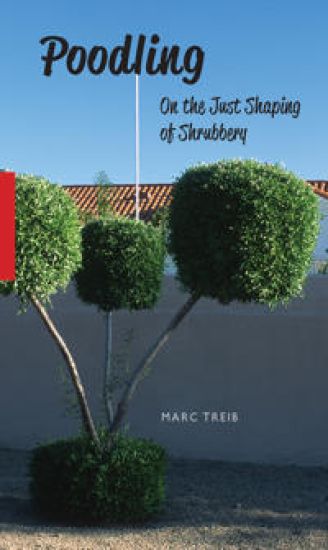
Poodling is a vernacular approach to pruning shrubbery: a negotiation between gardener and shrub that pits human aesthetic intention against the genetic forces that guide the plant's natural development. Topiary shears shrubs into a singular form geometric or figure; poodling, in contrast, treats each branch individually and shapes its leaves or needles into the forms that remain at their ends. In this informed, if light-hearted, telling of the story, noted landscape historian Marc Treib traces the evolution and characteristics of topiary, espalier, and other forms of plant guidance such as poodling, proposing that what began as functional horticultural practices was transformed into a vehicle for artistic expression. Poodling catalogues the forms of pruning we encounter today and their probable origin in Japan during the 18th century. Noting the parallels, he compares the forms of poodling (vegetal) with those of the canine species poodle (animal), and the manners by which the dog's hair has been clipped. Richly illustrated with photographs by the author taken in many countries over three decades, this is an informative book that everyone can enjoy.
For almost 30 years Claude Cormier et Associés has designed landscapes daring in scope while earnest in execution, courting controversy while inviting public accord. Produced under the leadership of Claude Cormier, the range of these projects has spanned the creation of parks and squares, the renovation of historical landscapes, and the conversion of industrial sites. While always serious in the address of function, their designs often display a touch of humour in both method and form—in all, these are works marked by “serious fun.” It is a practice unique in Canada, arguably in the world. That people use, and may even love, these urban landscapes testifies to the pleasure afforded by their designs and the humanistic dimensions of the practice. This, the first book exclusively dedicated to the landscapes of Claude Cormier and his team, provides a broad overview of their ideas and methods with insightful discussions of selected projects and the thinking behind them.
The complex story of modern landscape architecture remains to be written, as does its precise definition. Thinking a Modern Landscape Architecture, West & East, written by one of the field's most prolific and insightful authors, provides a rare cross-cultural study that examines the written and design contributions made by two of the movement's most influential early protagonists: Christopher Tunnard (1910-1979) in England - and later the United States, and Sutemi Horiguchi (1896-1984) in Japan. Tunnard's pioneering manifesto, Gardens in the Modern Landscape, first published in 1938, laid out the thinking and provided the direction for a landscape architecture engaged more strongly with contemporary life, adopting ideas from modern art as well as the historical gardens of Japan. Rather than a book, it was the architect Horiguchi's 1934 essay The Garden of Autumn Grasses that initiated a new direction for garden making in Japan, with a considered and artful use of seasonal plants and a stronger connection to the modern architecture it accompanied. Unlike Tunnard, who sought inspiration and sources in contemporary art, Horiguchi looked to the eighteen-century Rimpa School of painting for insights into the composition of the new garden by carefully placing individual plants against a simple background. Although the two theorists-practitioners never met, Tunnard's interest in Japan, and use of Horiguchi's work as illustrations, links them in a shared quest for a landscape architecture appropriate to their times and respective countries.
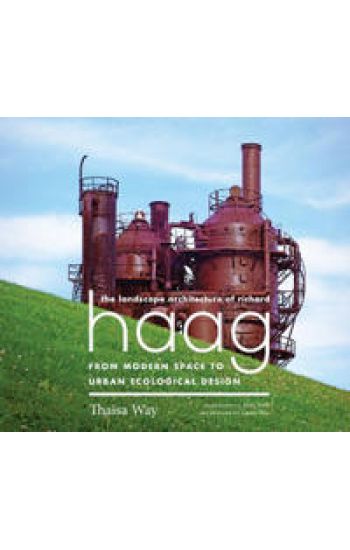
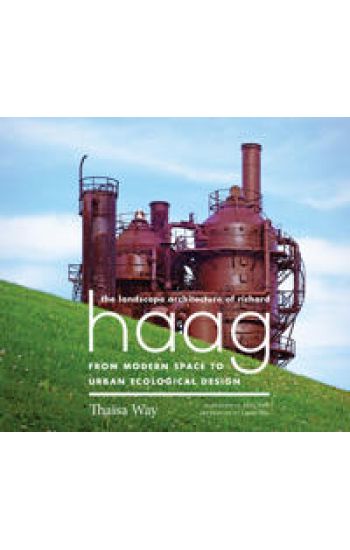
The Landscape Architecture of Richard Haag
Thaïsa Way; Laurie Olin; Marc Treib
University of Washington Press
2019
pokkari
Richard Haag is best known for his rehabilitation of Gas Works Park in Seattle and for a series of remarkable gardens at the Bloedel Reserve on Bainbridge Island. He reshaped the field of landscape architecture as a designer, teacher, and activist. In 1964, Haag founded the landscape architecture department at the University of Washington, and his innovative work contributed to the increasingly significant design approach known as urban ecological design, which encourages thinking beyond the boundaries of gardens and parks to consider the broader roles that landscapes play within urban ecosystems, such as storm water drainage and wildlife habitat. Gas Works Park is studied in every survey of twentieth-century landscape architecture as a modern work that challenged the tenets of modernism by engaging a toxic site and celebrating an industrial past. Haag's work with ecologists and soil scientists in his landscape remediation and reclamation projects opened new areas of inquiry into the adaptive reuse of post-industrial sites. Thaïsa Way places Haag's work within the context of changes in the practice of landscape architecture over the past five decades in the Pacific Northwest and nationally. The book should be of interest to specialists as well as to readers who are interested in the changes in urban landscapes inspired by Haag's work. Watch the book trailer: https://www.youtube.com/watch?v=fUBeOCA8-kQ
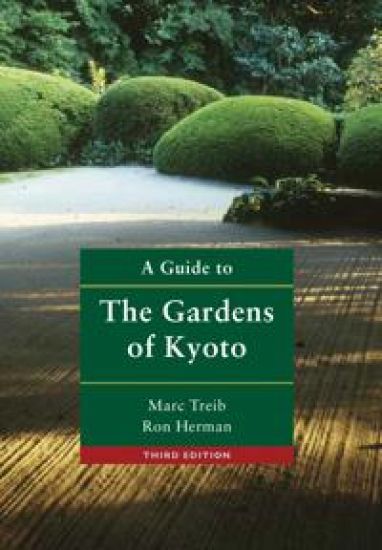
Designed for the layman as well as the professional, this concise yet comprehensive guide provides both practical information and theoretical insights into the design of the Japanese garden. Kyoto, the capital of Japan for over one thousand years, possesses a richness of garden art without equal as a living chronicle of Japanese cultural history and environmental design. Following the introductory essays are individual entries for more than 50 temple and palace gardens. The text is augmented by an excellent selection of photographs, historical prints, maps, and colour plates.
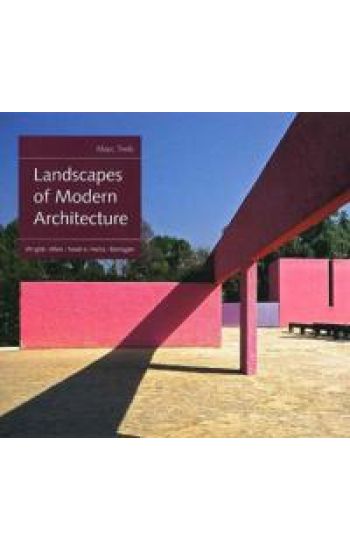
An authoritative study of the interrelationship between modern architecture, landscape, and site strategy as viewed through the work of five prominent architects Modern architects are often condemned for a seeming disregard of site considerations such as climate, topography, and existing vegetation. Noted landscape and architectural historian Marc Treib counters this prevailing view in an authoritative and unprecedented survey of 20th-century buildings and their landscapes. Exploring a range of architectural, philosophical, and theoretical approaches, Treib investigates the site strategies of five prominent modern-period architects: Frank Lloyd Wright (1867–1959), Ludwig Mies van der Rohe (1886–1969), Richard Neutra (1892–1970), Alvar Aalto (1898–1976), and Luis Barragán (1902–1988). The character of the sites on which these architects worked dramatically affected their architecture and gardens, a fact illustrated by Wright’s “organic” regard of the desert; Mies’s evolving divorce of building from terrain; Neutra’s transformation of the “realities” of the site; Aalto’s use of the forest metaphor and interior landscapes; and Barragán’s architectonic conversion of the land. Fully illustrated with rarely published archival drawings and plans, accompanied by the author’s own exceptional photographs, this book presents the spectrum of architectural responses to the constraints of site, climate, client, program, building material, region, and nation. Taken as a group, the work of these five architects sheds important light on the consideration and influence of the site and landscape on the practice of architecture during the 20th century.
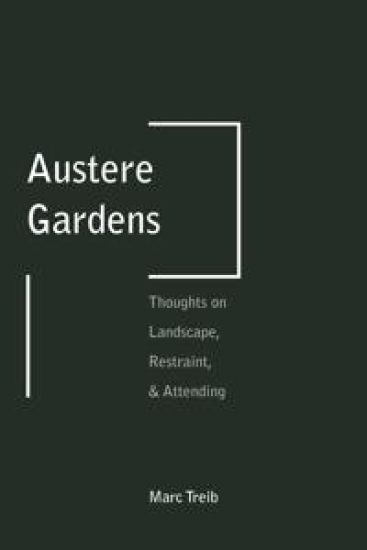
Austere Gardens suggests that being open to other ways of observing and sensing can yield new insights and rewards, and that interest is found in places unassuming and overlooked as well as those complex and assertive. Perceiving is only one half of the story, however. Realising places using simple acts and reduced means is the other half. The history of garden-making reveals continued attempts to create an Eden, to surpass our given environment in abundance and delight, and by selected instruments transcend the constraints of site, topography, and climate. The alternative to this garden of inclusion lies in the landscapes of reduction and compression, for example the dry gardens of Japan. These might be termed austere gardens. The word austere, as used in this essay, does not imply asceticism, but merely modesty and restraint. Austere landscapes may first appear devoid of interest if noticed at all. To those who do not look beyond their surfaces, these sites, and the world outside them, usually appear plain and uninteresting, or even lacking of the very properties by which we define a garden. But there are sensual, aesthetic, and even philosophical, pleasures to be gained from these seemingly dull fields should we attempt to appreciate them. These qualities, normally associated with abundance and complexity, may be found in a different way, and at a different level, in austere terrain. Although the subject of the small book is gardens, or more broadly taken, landscapes that may be read as gardens, many of the examples are nonetheless drawn from art and architecture, from history as well as contemporary times. The images that accompany the text tell their own stories, illustrating what can be accomplished using frugal means or through basic acts like digging, piling, planting, cutting, and clearing. In an era where resources appear to be dwindling and populations growing, attitudes that value simplicity and reduction also gain a moral dimension.
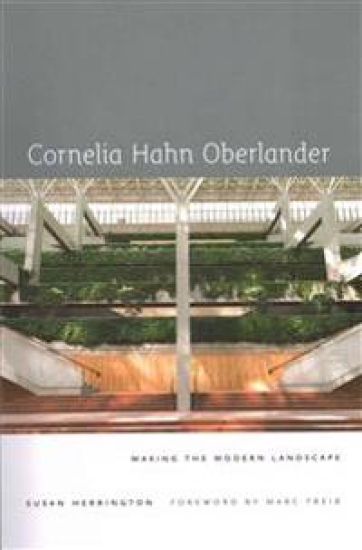
Cornelia Hahn Oberlander
Susan Herrington; Marc Treib
University of Virginia Press
2015
nidottu
Halvin toimitettuna 29,80 €
Cornelia Hahn Oberlander is one of the most important landscape architects of the twentieth century, yet despite her lasting influence, few outside the field know her name. Her work has been instrumental in the development of the late-twentieth-century design ethic, and her early years working with architectural luminaries such as Louis Kahn and Dan Kiley prepared her to bring a truly modern?and audaciously abstract?sensibility to the landscape design tradition. In Cornelia Hahn Oberlander: Making the Modern Landscape, Susan Herrington draws upon archival research, site analyses, and numerous interviews with Oberlander and her collaborators to offer the first biography of this adventurous and influential landscape architect. Born in 1921, Oberlander fled Nazi Germany at the age of eighteen with her family, going on to become one of the few women to graduate from Harvard University’s Graduate School of Design in the late 1940s. For six decades she has practiced socially responsible and ecologically sensitive planning for public landscapes, including the 1970s design of the Robson Square landscape and its adjoining Provincial Law Courts?one of Vancouver’s most famous spaces. Herrington places Oberlander within a larger social and aesthetic context, chronicling both her personal and professional trajectory and her work in New York, Philadelphia, Vancouver, Seattle, Berlin, Toronto, and Montreal. Oberlander is a progenitor of some of the most significant currents informing landscape architecture today, particularly in the area of ecological focus. In her thorough biography, Herrington draws much-deserved attention to one of the truly important figures in landscape architecture.
The Landscape Architecture of Richard Haag
Thaïsa Way; Laurie Olin; Marc Treib
University of Washington Press
2015
sidottu
Richard Haag is best known for his rehabilitation of Gas Works Park in Seattle and for a series of remarkable gardens at the Bloedel Reserve on Bainbridge Island. He reshaped the field of landscape architecture as a designer, teacher, and activist. In 1964, Haag founded the landscape architecture department at the University of Washington, and his innovative work contributed to the increasingly significant design approach known as urban ecological design, which encourages thinking beyond the boundaries of gardens and parks to consider the broader roles that landscapes play within urban ecosystems, such as storm water drainage and wildlife habitat. Gas Works Park is studied in every survey of twentieth-century landscape architecture as a modern work that challenged the tenets of modernism by engaging a toxic site and celebrating an industrial past. Haag's work with ecologists and soil scientists in his landscape remediation and reclamation projects opened new areas of inquiry into the adaptive reuse of post-industrial sites. Thaïsa Way places Haag's work within the context of changes in the practice of landscape architecture over the past five decades in the Pacific Northwest and nationally. The book should be of interest to specialists as well as to readers who are interested in the changes in urban landscapes inspired by Haag's work. Watch the book trailer: https://www.youtube.com/watch?v=fUBeOCA8-kQ
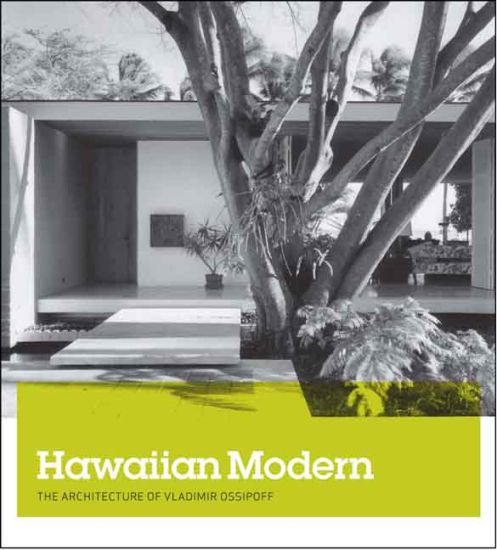
An illuminating study of the architecture of one of the 20th century’s most important tropical modernists Vladimir Ossipoff (1907–1998), known as the “master of Hawaiian architecture,” was at the forefront of the postwar phenomenon known as tropical modernism. Although he practiced at a time of rapid growth and social change in Hawai`i, Ossipoff criticized large-scale development and advocated environmentally sensitive designs, developing a distinctive form of architecture appropriate to the lush topography, microclimates, and vernacular traditions of the Hawaiian islands. This stunning book, now available for the first time in paperback, surveys Ossipoff’s buildings, which demonstrate a striking interplay of indoor and outdoor space, as well as a vibrant and glamorous architectural style that has proven delightfully particular to its place and durable over time. Published in association with the Honolulu Museum of Art Exhibition Schedule: Honolulu Academy of Arts, Hawaii (November 29, 2007 – January 27, 2008) Yale School of Architecture, New Haven (Fall 2008) Deutsches Architekturmuseum, Frankfurt (Spring 2009)
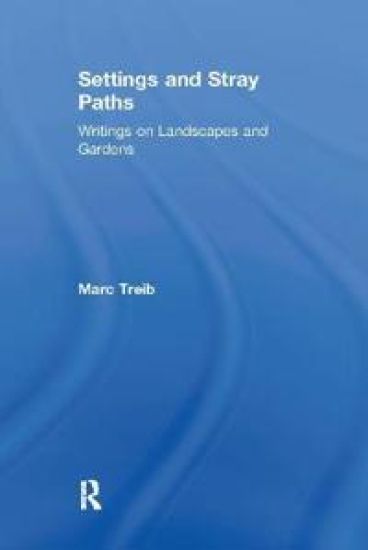
These collected works represent twenty-five years of study of the designed landscape which the author here takes to include gardens, cemeteries, plazas and other shared spaces. Asking essential questions about the nature of order and its perception, this book includes in its impressive scope analyses of both historic and modern works with a geographical distribution that extends across Europe, Asia and North America. With unique depth in many areas of study, Treib brings his expertise to bear on a range of inter-related and mutually influential issues within the subject, taking in an assessment of the lives and contributions of a number of leading figures in the field, the contents of a landscape and the meanings ascribed to it, and a theoretical formulation of the ideas from which or by which landscape architecture is produced.