

Kirjojen hintavertailu – 12 859 818 kirjaa ja 27 kauppaa

Kirjailija

Marc Woodworth

Kirjat ja teokset yhdessä paikassa: 2 kirjaa, julkaisuja vuosilta 2002–2006, suosituimpiin kuuluu Arcade. Vertaile teosten hintoja ja tarkista saatavuus suomalaisista kirjakaupoista.

2 kirjaa

Kirjojen julkaisuvuodet: 2002–2006.

Guided By Voices' Bee Thousand

Guided By Voices' Bee Thousand

Marc Woodworth

Continuum International Publishing Group Ltd.
2006
nidottu
Marc Woodworth's book covers the album's long and unorthodox period of writing, recording, sequencing, and editing. It includes interviews with members of the band, manager Pete Jamison, web-master and GBV historian Rich Turiel and Robert Griffin of Scat Records. At least sixty-five songs were recorded and considered for the album and five distinct concepts were rejected before the band hit upon the records final form. One late version, very nearly released, contained only a few of Bee Thousand's definitive songs. The rest were left out and nearly ended up in the boxes of cassette out-takes cluttering up Robert Pollard's basement. The story of Guided By Voices transformation from an occasional and revolving group of complete unknowns to indie-rock heroes is very much part of the story behind the making of "Bee Thousand". In addition to providing a central account of how the record was made, Woodworth devotes another substantial chapter to the album's lyrics. Robert Pollard's lyrics are described by critics, when they're described at all, as a brand of tossed-off surrealism, as if his verbal sensibility is somehow incidental to the songs themselves. Nothing could be further from the truth. I want to offer a sustained discussion of Pollard's work as a writer of often sublime, beautiful, and very human lyrics. I won't miss the chance to consider the pleasures of the absurd in this context and, of course, the contributions to "Bee Thousand" of Tobin Sprout. The third key section of the book covers aesthetics. Woodworth considers the great appeal of the do-it-yourself nature of "Bee Thousand" and reflects on the larger importance of the strain of alternative rock for which this record is a touchstone. The focus is on "Bee Thousand", of course, but also includes discussion on the rise of a lo-fi aesthetic and its continuing influence. This chapter would also provide the context for an account of rock that exists because of passion, love, and compulsive need rather than formula, money, and marketing.
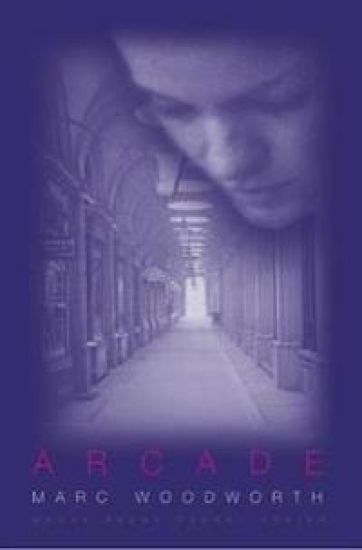
Arcade

Arcade

Marc Woodworth; Richard Howard

Grove Press / Atlantic Monthly Press
2002
pokkari
From Richard Howard's Foreword: "The burden . . . of this poet's responsibility . . . rests on his eloquence, his way of making us see. For him, . . . the significance of an event or a place is not to be found within it, as within a nutshell, but without, enveloping the language which has generated it, as a light generates a vapor." Writing both narrative and lyric, love poem and elegy, the poems in Marc Woodworth's debut collection, ARCADE, are alternately severe and feverish, contemplative and intimate, novelistic and hauntingly stark. ARCADE opens with a sequence entitled "The City" set in an unnamed and compellingly imagined continental metropolis between the world wars. Early poems in the sequence were featured in The Paris Review's new writers issue and take their place here in what Frank Bidart calls a "fantasia on and hymn to the city," one that evokes the private desires and public scale of urban life where walkers disappear "in a spell of edges" and "two hearts [beat] in every chest,/ one fleshy and inert with familiarity, the other/ a shadow heart unmarred by grieving." This city-with its Weimar decadence, it's Parisian grace-is inhabited by a poet-protagonist equipped with "the accoutrements of the Romantic," who is both guide to the beauty and brutality of this lost world and the center of the poem's haunted, lyrical evocation of it. In other poems, Woodworth enters the grieving mind of Sophia Tolstoy as she mourns at her husband's grave, exposes a self-mortifying erotic episode in the life of Adrian Leverkühn from Thomas Mann's novel Doktor Faustus, and depicts the mythical German film-maker Herr Soma's strangely generative breakdown before the making of his best film. In ARCADE, Marc Woodworth creates a rare and intimate world that is as intoxicating as it is intellectually rewarding.