Kirjojen hintavertailu – 12 859 819 kirjaa ja 27 kauppaa

Kirjailija

Marcel Gauchet

Kirjat ja teokset yhdessä paikassa: 5 kirjaa, julkaisuja vuosilta 1999–2024, suosituimpiin kuuluu What Is To Be Done?. Vertaile teosten hintoja ja tarkista saatavuus suomalaisista kirjakaupoista.

5 kirjaa

Kirjojen julkaisuvuodet: 1999–2024.

Robespierre

Robespierre

Marcel Gauchet

PRINCETON UNIVERSITY PRESS
2024
pokkari
How Robespierre’s career and legacy embody the dangerous contradictions of democracyMaximilien Robespierre (1758–1794) is arguably the most controversial and contradictory figure of the French Revolution, inspiring passionate debate like no other protagonist of those dramatic and violent events. The fervor of those who defend Robespierre the “Incorruptible,” who championed the rights of the people, is met with revulsion by those who condemn him as the bloodthirsty tyrant who sent people to the guillotine. Marcel Gauchet argues that he was both, embodying the glorious achievement of liberty as well as the excesses that culminated in the Terror. In much the same way that 1789 and 1793 symbolize the two opposing faces of the French Revolution, Robespierre’s contradictions were the contradictions of the revolution itself. Robespierre was its purest incarnation, neither the defender of liberty who fell victim to the corrupting influence of power nor the tyrant who betrayed the principles of the revolution. Gauchet shows how Robespierre’s personal transition from opposition to governance was itself an expression of the tragedy inherent in a revolution whose own prophetic ideals were impossible to implement. This panoramic book tells the story of how the man most associated with the founding of modern French democracy was also the first tyrant of that democracy, and it offers vital lessons for all democracies about the perpetual danger of tyranny.
Robespierre

Robespierre

Marcel Gauchet

PRINCETON UNIVERSITY PRESS
2022
sidottu
How Robespierre’s career and legacy embody the dangerous contradictions of democracyMaximilien Robespierre (1758–1794) is arguably the most controversial and contradictory figure of the French Revolution, inspiring passionate debate like no other protagonist of those dramatic and violent events. The fervor of those who defend Robespierre the “Incorruptible,” who championed the rights of the people, is met with revulsion by those who condemn him as the bloodthirsty tyrant who sent people to the guillotine. Marcel Gauchet argues that he was both, embodying the glorious achievement of liberty as well as the excesses that culminated in the Terror. In much the same way that 1789 and 1793 symbolize the two opposing faces of the French Revolution, Robespierre’s contradictions were the contradictions of the revolution itself. Robespierre was its purest incarnation, neither the defender of liberty who fell victim to the corrupting influence of power nor the tyrant who betrayed the principles of the revolution. Gauchet shows how Robespierre’s personal transition from opposition to governance was itself an expression of the tragedy inherent in a revolution whose own prophetic ideals were impossible to implement. This panoramic book tells the story of how the man most associated with the founding of modern French democracy was also the first tyrant of that democracy, and it offers vital lessons for all democracies about the perpetual danger of tyranny.

What Is To Be Done?

What Is To Be Done?

Alain Badiou; Marcel Gauchet

Polity Press
2015
sidottu
The fall of the Berlin wall was seen by many as the final triumph of liberal democracy over communism. But now, in the wake of the great financial crisis of 2008 and its aftermath, things look a little different. New questions are arising about capitalism and democracy, new social movements are challenging established institutions and new political possibilities are emerging. Is democracy an inevitable hostage of capitalism, or can it reinvent itself to meet the challenge of globalization? In an exclusive, previously unpublished dialogue, Alain Badiou, a key figure of the radical left and a leading advocate of the communist idea, and Marcel Gauchet, a major exponent of anti-totalitarianism and a champion of liberal democracy, confront one another. Together, they take stock of history, interrogate one another?s views and defend their respective projects: on the one side, the revival of ?the communist hypothesis,? and on the other, the radical reform of a contested democratic model.
What Is To Be Done?

What Is To Be Done?

Alain Badiou; Marcel Gauchet

Polity Press
2015
nidottu
The fall of the Berlin wall was seen by many as the final triumph of liberal democracy over communism. But now, in the wake of the great financial crisis of 2008 and its aftermath, things look a little different. New questions are arising about capitalism and democracy, new social movements are challenging established institutions and new political possibilities are emerging. Is democracy an inevitable hostage of capitalism, or can it reinvent itself to meet the challenge of globalization? In an exclusive, previously unpublished dialogue, Alain Badiou, a key figure of the radical left and a leading advocate of the communist idea, and Marcel Gauchet, a major exponent of anti-totalitarianism and a champion of liberal democracy, confront one another. Together, they take stock of history, interrogate one another?s views and defend their respective projects: on the one side, the revival of ?the communist hypothesis,? and on the other, the radical reform of a contested democratic model.
The Disenchantment of the World

The Disenchantment of the World

Marcel Gauchet; Charles Taylor

Princeton University Press
1999
pokkari

Halvin toimitettuna 60,40 €

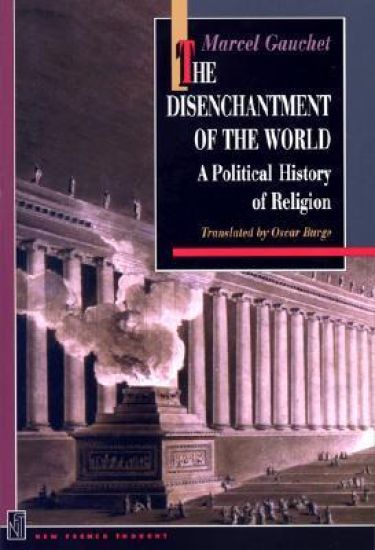
Marcel Gauchet has launched one of the most ambitious and controversial works of speculative history recently to appear, based on the contention that Christianity is "the religion of the end of religion." In The Disenchantment of the World, Gauchet reinterprets the development of the modern west, with all its political and psychological complexities, in terms of mankind's changing relation to religion. He views Western history as a movement away from religious society, beginning with prophetic Judaism, gaining tremendous momentum in Christianity, and eventually leading to the rise of the political state. Gauchet's view that monotheistic religion itself was a form of social revolution is rich with implications for readers in fields across the humanities and social sciences. Life in religious society, Gauchet reminds us, involves a very different way of being than we know in our secular age: we must imagine prehistoric times where ever-present gods controlled every aspect of daily reality, and where ancestor worship grounded life's meaning in a far-off past. As prophecy-oriented religions shaped the concept of a single omnipotent God, one removed from the world and yet potentially knowable through prayer and reflection, human beings became increasingly free. Gauchet's paradoxical argument is that the development of human political and psychological autonomy must be understood against the backdrop of this double movement in religious consciousness--the growth of divine power and its increasing distance from human activity. In a fitting tribute to this passionate and brilliantly argued book, Charles Taylor offers an equally provocative foreword. Offering interpretations of key concepts proposed by Gauchet, Taylor also explores an important question: Does religion have a place in the future of Western society? The book does not close the door on religion but rather invites us to explore its socially constructive powers, which continue to shape Western politics and conceptions of the state.