Kirjojen hintavertailu – 12 859 818 kirjaa ja 27 kauppaa

Kirjailija

Marco Caracciolo

Kirjat ja teokset yhdessä paikassa: 17 kirjaa, julkaisuja vuosilta 2014–2026, suosituimpiin kuuluu Figures of Complexity in Contemporary Fiction. Vertaile teosten hintoja ja tarkista saatavuus suomalaisista kirjakaupoista.

17 kirjaa

Kirjojen julkaisuvuodet: 2014–2026.

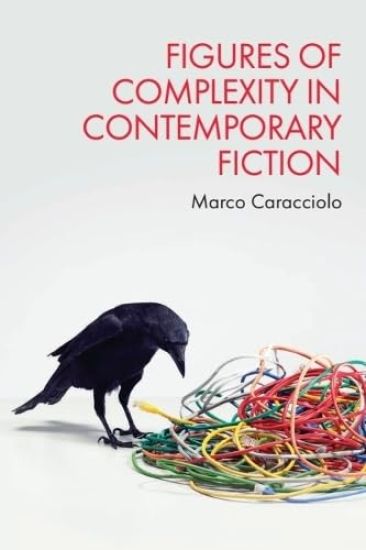
Figures of Complexity in Contemporary Fiction

Figures of Complexity in Contemporary Fiction

Marco Caracciolo

EDINBURGH UNIVERSITY PRESS
2026
sidottu
Explores the manifold ways that complexity is framed, understood and negotiated in contemporary Anglophone fiction How does fiction—including both print books and digital literature in the video game medium—imagine the complexity of issues such as migration or climate change? How does it envisage our societies’ dependence on technological networks and supply chains that most of us don’t understand? Figures of Complexity shows how fiction pushes complexity beyond its associations with desirable nuance and instead links it to material, psychological and ethical pitfalls that are distinctive of the present moment—a sense of reality getting out of hand, being difficult or overpowering, or facing us with unsolvable moral dilemmas. Through its engagement with works by authors such as Omar El Akkad, Lauren Groff, Yaa Gyasi and Hanya Yanagihara, the book examines a wide range of imaginative responses to these challenges.
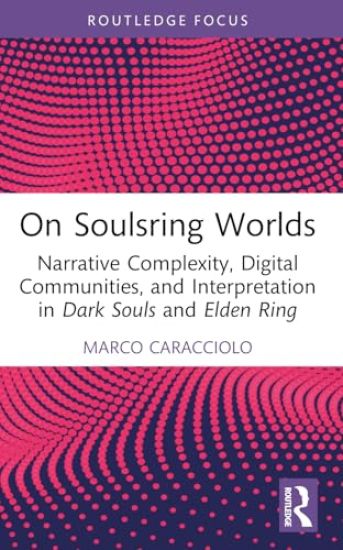
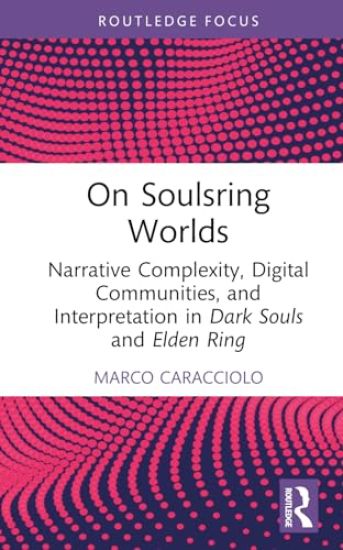
On Soulsring Worlds

On Soulsring Worlds

Marco Caracciolo

TAYLOR FRANCIS LTD
2025
nidottu
The first book-length study devoted to FromSoftware games, On Soulsring Worlds explores how the Dark Souls series and Elden Ring are able to reconcile extreme difficulty in both gameplay and narrative with broad appeal. Arguing that the games are strategically positioned in relation to contemporary audiences and designed to tap into the new forms of interpretation afforded by digital media, the author situates the games vis-à-vis a number of current debates, including the posthuman and the ethics of gameplay. The book delivers an object lesson on the value of narrative (and) complexity in digital play and in the interpretive practices it gives rise to. Cross-fertilizing narrative theory, game studies, and nonhuman-oriented philosophy, this book will appeal to students and scholars of game studies, media studies, narratology, and video game ethnography.
On Soulsring Worlds

On Soulsring Worlds

Marco Caracciolo

TAYLOR FRANCIS LTD
2024
sidottu
The first book-length study devoted to FromSoftware games, On Soulsring Worlds explores how the Dark Souls series and Elden Ring are able to reconcile extreme difficulty in both gameplay and narrative with broad appeal. Arguing that the games are strategically positioned in relation to contemporary audiences and designed to tap into the new forms of interpretation afforded by digital media, the author situates the games vis-à-vis a number of current debates, including the posthuman and the ethics of gameplay. The book delivers an object lesson on the value of narrative (and) complexity in digital play and in the interpretive practices it gives rise to. Cross-fertilizing narrative theory, game studies, and nonhuman-oriented philosophy, this book will appeal to students and scholars of game studies, media studies, narratology, and video game ethnography.
Contemporary Fiction and Climate Uncertainty

Contemporary Fiction and Climate Uncertainty

Marco Caracciolo

BLOOMSBURY PUBLISHING PLC
2023
nidottu
This open access book argues that storytelling is an important resource in coming to terms with the loss of the feeling of living a grounded existence where the future remains relatively stable and predictable. Faced with the specter of climate catastrophe, we lose confidence in the future—a well-documented response in the environmental movement, for example. Yet stories, and in particular sophisticated fictional stories, can help us negotiate that uncertainty: they offer affective and imaginative tools that channel the instability of our climate future and invite audiences to accept its fundamental uncertainty. In all, this book represents a serious contribution to the environmental humanities that brings a flexible formal approach to bear on central questions of our time. Its commentary on contemporary works of prose and digital narrative is an aid for navigating climate uncertainty and appreciating the more-than-human scale—but also the tragic ramifications—of the ecological crisis. The ebook editions of this book are available open access under a CC BY-NC-ND 4.0 licence on bloomsburycollections.com. Open access was funded by The European Research Council and the University of Ghent.
Contemporary Narrative and the Spectrum of Materiality
How do physical things differ from non-things—human subjects, animals, abstract ideas, or processes? Those questions, which are as old as philosophy itself, have inspired contemporary debates in ecocriticism, thing theory, and in the interdisciplinary field of new materialism. This book argues that contemporary narrative is well placed to map out and work through the spectrum of the material and the philosophical questions that underlie it. This is because narrative does not resolve the tensions at the heart of conceptions of materiality but rather reframes them, envisioning their implications and exploring their relevance to concrete contexts of human interaction. This monograph is structured around a number of novels, experimental fiction, films, and video games that imagine the inherent agency of things but also interrogate the affective and ethical significance of materiality in human terms. Its aim is to demonstrate the power of formal narrative analysis to foster conceptually and ethically sophisticated ways of thinking about thingness in times of ecological crisis—that is, times in which "stuff" can no longer be taken for granted.
Embodiment and the Cosmic Perspective in Twentieth-Century Fiction
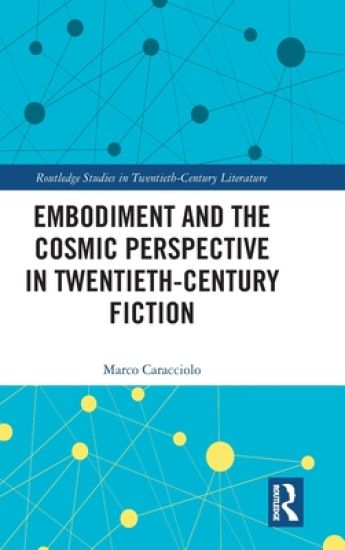
In dialogue with groundbreaking technologies and scientific models, twentieth century fiction presents readers with a vast mosaic of perspectives on the cosmos. The literary imagination of the world beyond the human scale, however, faces a fundamental difficulty: if, as researchers in both cognitive science and narrative theory argue, fiction is a practice geared toward the human embodied mind, how can it cope with scientific theories and concepts— the Big Bang, quantum physics, evolutionary biology, and so on—that resist our common-sense intuitions and appear discontinuous, in spatial as well as temporal terms, with our bodies? This book sets out to answer this question by showing how the embodiment of mind continues to matter even as writers— and readers—are pushed out of their terrestrial comfort zone. Offering thoughtful commentary on work by both mainstream literary authors and science fiction writers (from Primo Levi to Jeanette Winterson, from Olaf Stapledon to Pamela Zoline), Embodiment and the Cosmic Perspective in Twentieth-Century Fiction explores the multiple ways in which narrative can radically defamiliarize our bodily experience and bridge the gap with cosmic realities. This investigation affords an opportunity to reflect on the role of literature as it engages with science and charts its epistemological and ethical ramifications.
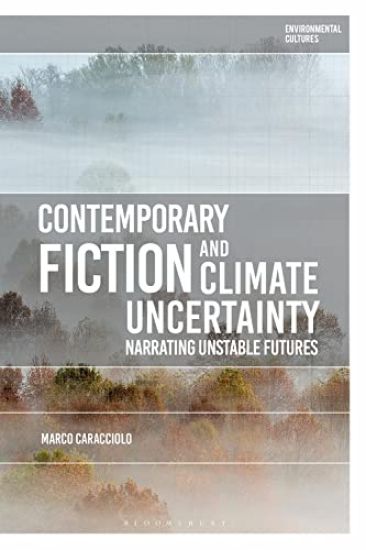
Contemporary Fiction and Climate Uncertainty

Contemporary Fiction and Climate Uncertainty

Marco Caracciolo

BLOOMSBURY PUBLISHING PLC
2022
sidottu
This open access book argues that storytelling is an important resource in coming to terms with the loss of the feeling of living a grounded existence where the future remains relatively stable and predictable. Faced with the specter of climate catastrophe, we lose confidence in the future—a well-documented response in the environmental movement, for example. Yet stories, and in particular sophisticated fictional stories, can help us negotiate that uncertainty: they offer affective and imaginative tools that channel the instability of our climate future and invite audiences to accept its fundamental uncertainty. In all, this book represents a serious contribution to the environmental humanities that brings a flexible formal approach to bear on central questions of our time. Its commentary on contemporary works of prose and digital narrative is an aid for navigating climate uncertainty and appreciating the more-than-human scale—but also the tragic ramifications—of the ecological crisis. The ebook editions of this book are available open access under a CC BY-NC-ND 4.0 licence on bloomsburycollections.com. Open access was funded by The European Research Council and the University of Ghent.
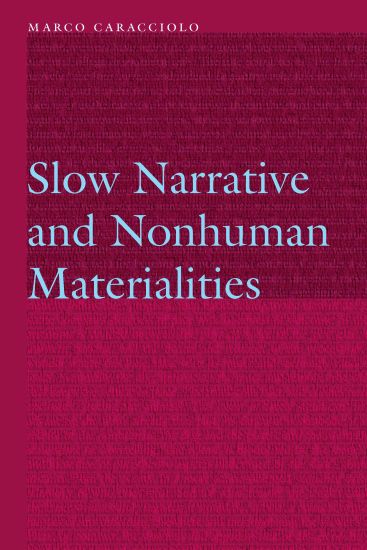
Slow Narrative and Nonhuman Materialities

Slow Narrative and Nonhuman Materialities

Marco Caracciolo

University of Nebraska Press
2022
sidottu
Winner of the 2024 Barbara Perkins and George Perkins PrizeSlow Narrative and Nonhuman Materialities investigates how the experience of slowness in contemporary narrative practices can create a vision of interconnectedness between human communities and the nonhuman world. Here, slowness is not a matter of measurable time but a transformative experience for audiences of contemporary narratives engaging with the ecological crisis. While climate change is a scientific abstraction, the imagination of slowness turns it into a deeply embodied and affective experience. Marco Caracciolo explores the value of slowness in dialogue with a wide range of narratives in various media, from prose fiction to comic books to video games. He argues that we need patience and an eye for complex patterns in order to recognize the multiple threads that link human communities and the slow-moving processes of climate and geological history. Decelerating attention offers important insight into human societies’ relations with the nonhuman materialities of Earth’s physical landscapes, ecosystems, and atmosphere. Caracciolo centers the experiential effects of narrative and offers a range of theoretically grounded readings that complement the formal language of narrative theory. These close readings demonstrate that slowness is not a matter of measurable time but a “thickening” of attention that reveals the deeply multithreaded nature of reality. The importance of this realization cannot be overstated: through an investment in the here and now of experience, slow narrative can help us manage the uncertainty of living in an era marked by dramatically shifting climate patterns.
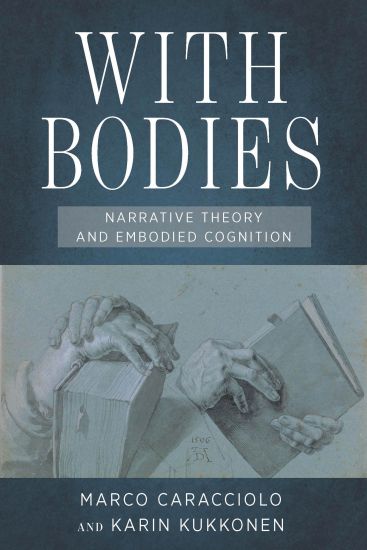
With Bodies

With Bodies

Marco Caracciolo; Karin Kukkonen

OHIO STATE UNIVERSITY PRESS
2021
pokkari

Halvin toimitettuna 49,20 €

We read not only with our eyes and minds, but with our entire body. In With Bodies, Marco Caracciolo and Karin Kukkonen move systematically through all elements of narrative and put them into dialogue with recent research in neuroscience, cognitive psychology, cognitive linguistics, and philosophy of mind to investigate what it means to read literary narratives bodily. They draw their findings from a wide corpus of material-narratives from antiquity to the present and composed in various languages, from Apuleius's Metamorphoses to Hilary Mantel's Wolf Hall-and craft their embodied narratology to retool current theories about authors, narrators and characters, time and space in storyworlds, and plot. Their investigation serves as a foundation for wider discussions on embodied narratology's contributions to literary history, computation and AI, posthumanism, gender studies, and world literature.
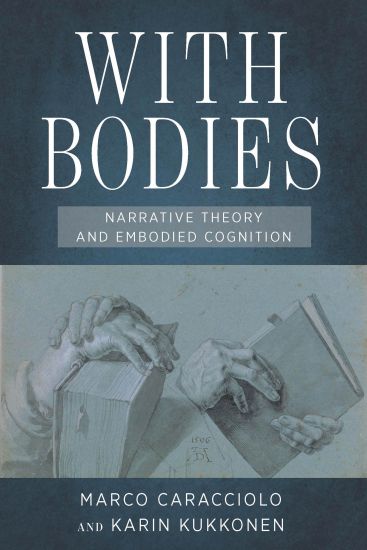
With Bodies

With Bodies

Marco Caracciolo; Karin Kukkonen

OHIO STATE UNIVERSITY PRESS
2021
sidottu
We read not only with our eyes and minds, but with our entire body. In With Bodies, Marco Caracciolo and Karin Kukkonen move systematically through all elements of narrative and put them into dialogue with recent research in neuroscience, cognitive psychology, cognitive linguistics, and philosophy of mind to investigate what it means to read literary narratives bodily. They draw their findings from a wide corpus of material-narratives from antiquity to the present and composed in various languages, from Apuleius's Metamorphoses to Hilary Mantel's Wolf Hall-and craft their embodied narratology to retool current theories about authors, narrators and characters, time and space in storyworlds, and plot. Their investigation serves as a foundation for wider discussions on embodied narratology's contributions to literary history, computation and AI, posthumanism, gender studies, and world literature.
Narrating the Mesh

Narrating the Mesh

Marco Caracciolo

University of Virginia Press
2021
nidottu
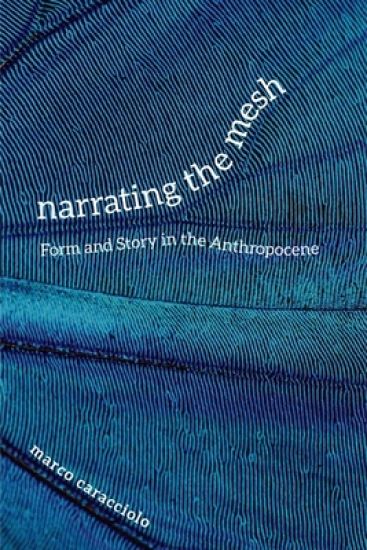
A hierarchical model of human societies' relations with the natural world is at the root of today's climate crisis; Narrating the Mesh contends that narrative form is instrumental in countering this ideology. Drawing inspiration from Timothy Morton's concept of the ""mesh"" as a metaphor for the human-nonhuman relationship in the face of climate change, Marco Caracciolo investigates how narratives in genres such as the novel and the short story employ formal devices to effectively channel the entanglement of human communities and nonhuman phenomena. How can narrative undermine linearity in order to reject notions of unlimited technological progress and economic growth? What does it mean to say that nonhuman materials and processes from contaminated landscapes to natural evolution can become characters in stories? And, conversely, how can narrative trace the rising awareness of climate change in the thick of human characters' mental activities? These are some of the questions Narrating the Mesh addresses by engaging with contemporary works by Ted Chiang, Emily St. John Mandel, Richard Powers, Jeff VanderMeer, Jeanette Winterson, and many others. Entering interdisciplinary debates on narrative and the Anthropocene, this book explores how stories can bridge the gap between scientific models of the climate and the human-scale world of everyday experience, powerfully illustrating the complexity of the ecological crisis at multiple levels.
Narrating the Mesh

Narrating the Mesh

Marco Caracciolo

University of Virginia Press
2021
sidottu
A hierarchical model of human societies' relations with the natural world is at the root of today's climate crisis; Narrating the Mesh contends that narrative form is instrumental in countering this ideology. Drawing inspiration from Timothy Morton's concept of the ""mesh"" as a metaphor for the human-nonhuman relationship in the face of climate change, Marco Caracciolo investigates how narratives in genres such as the novel and the short story employ formal devices to effectively channel the entanglement of human communities and nonhuman phenomena. How can narrative undermine linearity in order to reject notions of unlimited technological progress and economic growth? What does it mean to say that nonhuman materials and processes from contaminated landscapes to natural evolution can become characters in stories? And, conversely, how can narrative trace the rising awareness of climate change in the thick of human characters' mental activities? These are some of the questions Narrating the Mesh addresses by engaging with contemporary works by Ted Chiang, Emily St. John Mandel, Richard Powers, Jeff VanderMeer, Jeanette Winterson, and many others. Entering interdisciplinary debates on narrative and the Anthropocene, this book explores how stories can bridge the gap between scientific models of the climate and the human-scale world of everyday experience, powerfully illustrating the complexity of the ecological crisis at multiple levels.
Embodiment and the Cosmic Perspective in Twentieth-Century Fiction
In dialogue with groundbreaking technologies and scientific models, twentieth century fiction presents readers with a vast mosaic of perspectives on the cosmos. The literary imagination of the world beyond the human scale, however, faces a fundamental difficulty: if, as researchers in both cognitive science and narrative theory argue, fiction is a practice geared toward the human embodied mind, how can it cope with scientific theories and concepts— the Big Bang, quantum physics, evolutionary biology, and so on—that resist our common-sense intuitions and appear discontinuous, in spatial as well as temporal terms, with our bodies? This book sets out to answer this question by showing how the embodiment of mind continues to matter even as writers— and readers—are pushed out of their terrestrial comfort zone. Offering thoughtful commentary on work by both mainstream literary authors and science fiction writers (from Primo Levi to Jeanette Winterson, from Olaf Stapledon to Pamela Zoline), Embodiment and the Cosmic Perspective in Twentieth-Century Fiction explores the multiple ways in which narrative can radically defamiliarize our bodily experience and bridge the gap with cosmic realities. This investigation affords an opportunity to reflect on the role of literature as it engages with science and charts its epistemological and ethical ramifications.
The Experientiality of Narrative

The Experientiality of Narrative

Marco Caracciolo

De Gruyter
2017
isokokoinen pokkari

Halvin toimitettuna 29,60 €

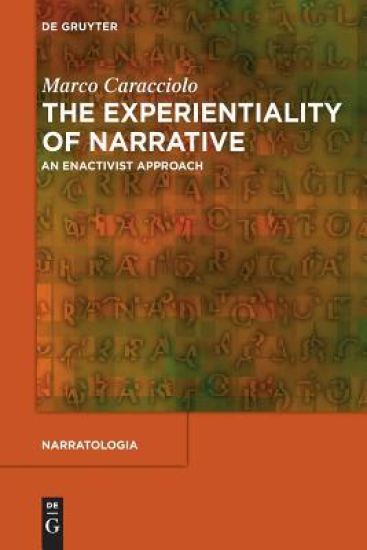
Recent developments in cognitive narrative theory have called attention to readers' active participation in making sense of narrative. However, while most psychologically inspired models address interpreters' subpersonal (i.e., unconscious) responses, the experiential level of their engagement with narrative remains relatively undertheorized. Building on theories of experience and embodiment within today's "second-generation" cognitive science, and opening a dialogue with so-called "enactivist" philosophy, this book sets out to explore how narrative experiences arise from the interaction between textual cues and readers' past experiences. Caracciolo's study offers a phenomenologically inspired account of narrative, spanning a wide gamut of responses such as the embodied dynamic of imagining a fictional world, empathetic perspective-taking in relating to characters, and "higher-order" evaluations and interpretations. Only by placing a premium on how such modes of engagement are intertwined in experience, Caracciolo argues, can we do justice to narrative's psychological and existential impact on our lives. These insights are illustrated through close readings of literary texts ranging from Émile Zola's Germinal to José Saramago's Blindness.
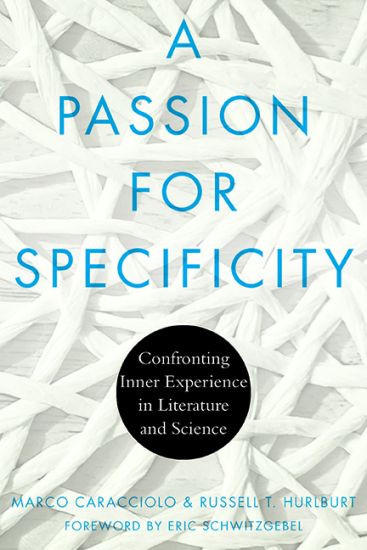
A Passion for Specificity

A Passion for Specificity

Marco Caracciolo; Russell Hurlburt

Ohio State University Press
2016
pokkari
In an analytical yet increasingly intimate conversation, A Passion for Specificity: Confronting Inner Experience in Literature and Science investigates the differences between experience as conveyed in literature and experience as apprehended through scientific method. Can experiences be shared? How much do language and metaphor shape experiential reports? Where is the dividing line between a humanistic and a scientific approach to experience? In a series of exchanges, Marco Caracciolo and Russell Hurlburt demonstrate that those are necessarily personal issues, and they don't flinch--they relentlessly examine whether Caracciolo's presuppositions distort his understanding of reading experiences and whether Hurlburt's attachment to the method he invented causes him to take an overly narrow view of experience. Delving ever more personally, they aim Hurlburt's experience sampling methods--beeping people to discover what was in their stream of inner experience at the moment immediately before the beep--at Caracciolo's own experiences, an exercise that puts Caracciolo's presuppositions to the test and leads him to discover things about experience (his own and literature's) that he had thought impossible. A Passion for Specificity, with its personal revelations, unexpected twists, and confrontational style, reads like an epistolary novel, but it is a serious exploration of ideas at the heart of literature and science. It is a thoughtful attempt at advancing the emerging "cognitive humanities," clarifying a number of core issues in the cross-pollination of literature, psychology, philosophy, and consciousness science.
Strange Narrators in Contemporary Fiction

Strange Narrators in Contemporary Fiction

Marco Caracciolo

University of Nebraska Press
2016
sidottu
A storyteller’s craft can often be judged by how convincingly the narrative captures the identity and personality of its characters. In this book, the characters who take center stage are “strange” first-person narrators: they are fascinating because of how they are at odds with what the reader would wish or expect to hear-while remaining reassuringly familiar in voice, interactions, and conversations. Combining literary analysis with research in cognitive and social psychology, Marco Caracciolo focuses on readers’ encounters with the “strange” narrators of ten contemporary novels, including Bret Easton Ellis’s American Psycho, Haruki Murakami’s Hard-Boiled Wonderland and the End of the World, and Mark Haddon’s The Curious Incident of the Dog in the Night-Time. Caracciolo explores readers’ responses to narrators who suffer from neurocognitive or developmental disorders, who are mentally disturbed due to multiple personality disorder or psychopathy, whose consciousness is split between two parallel dimensions or is disembodied, who are animals, or who lose their sanity. A foray into current work on reception, reader-response, cognitive literary study, and narratology, Strange Narrators in Contemporary Fiction illustrates why any encounter with a fictional text is a complex negotiation of interlaced feelings, thoughts, experiences, and interpretations.
The Experientiality of Narrative

The Experientiality of Narrative

Marco Caracciolo

De Gruyter
2014
sidottu
Recent developments in cognitive narrative theory have called attention to readers' active participation in making sense of narrative. However, while most psychologically inspired models address interpreters' subpersonal (i.e., unconscious) responses, the experiential level of their engagement with narrative remains relatively undertheorized. Building on theories of experience and embodiment within today's "second-generation" cognitive science, and opening a dialogue with so-called "enactivist" philosophy, this book sets out to explore how narrative experiences arise from the interaction between textual cues and readers' past experiences. Caracciolo's study offers a phenomenologically inspired account of narrative, spanning a wide gamut of responses such as the embodied dynamic of imagining a fictional world, empathetic perspective-taking in relating to characters, and "higher-order" evaluations and interpretations. Only by placing a premium on how such modes of engagement are intertwined in experience, Caracciolo argues, can we do justice to narrative's psychological and existential impact on our lives. These insights are illustrated through close readings of literary texts ranging from Émile Zola's Germinal to José Saramago's Blindness.