Kirjojen hintavertailu – 12 859 828 kirjaa ja 27 kauppaa

Kirjailija

Marco Kamiya

Kirjat ja teokset yhdessä paikassa: 7 kirjaa, julkaisuja vuosilta 2017–2024, suosituimpiin kuuluu Global Industry Chains: Creating a Networked City Planet. Vertaile teosten hintoja ja tarkista saatavuus suomalaisista kirjakaupoista.

7 kirjaa

Kirjojen julkaisuvuodet: 2017–2024.

Global Urban Value Chain in History of Human Civilization

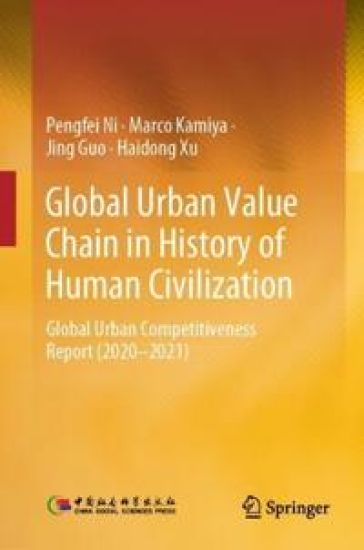
Global Urban Value Chain in History of Human Civilization

Pengfei Ni; Marco Kamiya; Jing Guo; Haidong Xu

SPRINGER VERLAG, SINGAPORE
2024
sidottu
This study was designed and the book prepared by the National Academy of Economics Strategy of the Chinese Academy of Social Sciences (CASS) and the United Nations Human Settlements Programme. By applying the indicator system and objective data, it evaluates the competitiveness of 1006 cities around the world in detail, measures the development pattern of global city competitiveness as a whole, and discusses theoretical and practical issues in the development of a global city. The report proposes the key concept of the “global urban value chain” which runs through the history of human civilization. It provides a detailed study of the relationship between urban competition and SDG and analyzes Sustainable Development Goal 11 and typical cases to clarify which cities meet the Sustainable Development Goals. The annual competitiveness report provides a detailed analysis of the economic competitiveness, sustainable competitiveness, and distribution patterns of 9 sub-competitiveness of 1006 cities worldwide.
The World: 300 Years of Urbanization Expansion

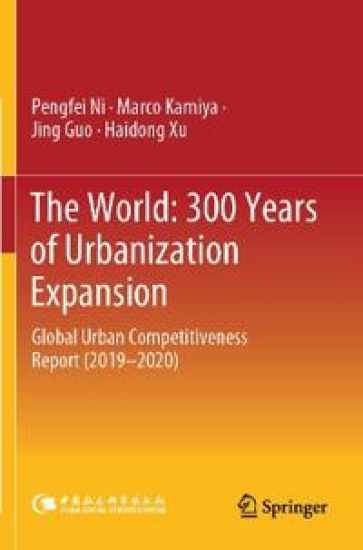
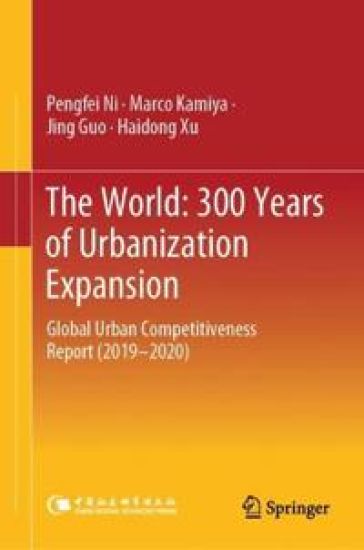
The World: 300 Years of Urbanization Expansion

Pengfei Ni; Marco Kamiya; Jing Guo; Haidong Xu

SPRINGER VERLAG, SINGAPORE
2023
sidottu
This book was jointly launched by the National Academy of Economic Strategy of the Chinese Academy of Social Sciences and UN-HABITAT. It uses the indicator system and objective data to evaluate the competitiveness of 1006 cities in the world and measures the overall development pattern of global punishment and competitiveness. The important theoretical and practical issues in the development of global cities are discussed. The book looks at the world from the perspective of cities and believes that the world will be fully urbanized in the 300 years from 1750 to 2050. The book points out the challenges faced by global municipal financing and systematically summarizes the experience and methods of municipal financing and concludes that the average competitiveness of global cities declined slightly due to the decline of the average competitiveness of cities in China, the USA and Europe. In addition, this book also launched the new global urban classification standard of the Institute of Finance and Strategy of the Chinese Academy of Social Sciences and the United Nations Human Settlements Programme for the first time and rated 1006 cities in the world.
Global Industry Chains: Creating a Networked City Planet

Global Industry Chains: Creating a Networked City Planet

Pengfei Ni; Marco Kamiya; Jianfa Shen; Weijin Gong

SPRINGER VERLAG, SINGAPORE
2022
nidottu
This report presents the outcomes of a survey project of the National Academy of Economic Strategy of the Chinese Academy of Social Sciences and the United Nations Human Settlements Programme. The project evaluated and ranked the competitiveness of 1,007 global cities, with a combined population of over 500,000, based on a number of selected indicators. The report provides an overview of the global urbanization pattern and areas of improvements in the selected cities. The outcomes of the project confirm that the formation and changes of global value chains have caused profound changes in economic structures in some countries and affected the development of cities in these countries, thereby reshaping the city planet. In addition to comparative analysis of competitiveness of cities, this report also sheds light on the global pattern and trends of economic and human development. It reveals four new findings regarding the development of cities around the world: First, over the past four decades, human societies are transitioning quickly from agricultural societies which are characterized by scattered settlements to industrial societies which are characterized by city clusters, interconnectivity, and resource sharing. The planet where we are living has become a city planet. Second, globalization and the advancements of smart and networking technologies have accelerated urbanization across the world in the past four decades. Third, cities are becoming increasingly metropolitan, interconnected, and smart. Fourth, sustainability scores of the selected global cities show olive-shaped distribution on the world map and sustainability performance of Asia cities has improved continuously.
Global Industry Chains: Creating a Networked City Planet

Global Industry Chains: Creating a Networked City Planet

Pengfei Ni; Marco Kamiya; Jianfa Shen; Weijin Gong

Springer Verlag, Singapore
2021
sidottu
This report presents the outcomes of a survey project of the National Academy of Economic Strategy of the Chinese Academy of Social Sciences and the United Nations Human Settlements Programme. The project evaluated and ranked the competitiveness of 1,007 global cities, with a combined population of over 500,000, based on a number of selected indicators. The report provides an overview of the global urbanization pattern and areas of improvements in the selected cities. The outcomes of the project confirm that the formation and changes of global value chains have caused profound changes in economic structures in some countries and affected the development of cities in these countries, thereby reshaping the city planet. In addition to comparative analysis of competitiveness of cities, this report also sheds light on the global pattern and trends of economic and human development. It reveals four new findings regarding the development of cities around the world: First, over the past four decades, human societies are transitioning quickly from agricultural societies which are characterized by scattered settlements to industrial societies which are characterized by city clusters, interconnectivity, and resource sharing. The planet where we are living has become a city planet. Second, globalization and the advancements of smart and networking technologies have accelerated urbanization across the world in the past four decades. Third, cities are becoming increasingly metropolitan, interconnected, and smart. Fourth, sustainability scores of the selected global cities show olive-shaped distribution on the world map and sustainability performance of Asia cities has improved continuously.
Cities Network Along the Silk Road

Cities Network Along the Silk Road

Pengfei Ni; Marco Kamiya; Ruxi Ding

Springer Verlag, Singapore
2018
nidottu
By empirically assessing the competitiveness of 505 cities around the world from regional, national and other perspectives, this book not only ranks these cities but also presents a treasure trove of information with regard to each city’s relative strengths and weaknesses. This unique resource draws on a wealth of data sources, all of which are described and assessed, and involve urban economics, geography, regional economics and many other fields. Using a concise indexing system, sophisticated methodology, and extensive figures and tables, it provides a comprehensive analysis of global urban competitiveness in 2015. Given the scope of its coverage, the book will be of great interest to readers such as local authorities, decision-makers and economic planners in cities throughout the world.
Cities Network Along the Silk Road

Cities Network Along the Silk Road

Pengfei Ni; Marco Kamiya; Ruxi Ding

Springer Verlag, Singapore
2017
sidottu
By empirically assessing the competitiveness of 505 cities around the world from regional, national and other perspectives, this book not only ranks these cities but also presents a treasure trove of information with regard to each city’s relative strengths and weaknesses. This unique resource draws on a wealth of data sources, all of which are described and assessed, and involve urban economics, geography, regional economics and many other fields. Using a concise indexing system, sophisticated methodology, and extensive figures and tables, it provides a comprehensive analysis of global urban competitiveness in 2015. Given the scope of its coverage, the book will be of great interest to readers such as local authorities, decision-makers and economic planners in cities throughout the world.
The World: 300 Years of Urbanization Expansion

The World: 300 Years of Urbanization Expansion

Pengfei Ni; Marco Kamiya; Jing Guo; Haidong Xu

SPRINGER VERLAG, SINGAPORE
2024
nidottu
The book points out the challenges faced by global municipal financing and systematically summarizes the experience and methods of municipal financing and concludes that the average competitiveness of global cities declined slightly due to the decline of the average competitiveness of cities in China, the USA and Europe.