Kirjojen hintavertailu – 12 903 725 kirjaa ja 27 kauppaa
Kirjailija
Marco Pierini
Kirjat ja teokset yhdessä paikassa: 4 kirjaa, julkaisuja vuosilta 2017–2020, suosituimpiin kuuluu Taddeo di Bartolo. Vertaile teosten hintoja ja tarkista saatavuus suomalaisista kirjakaupoista.
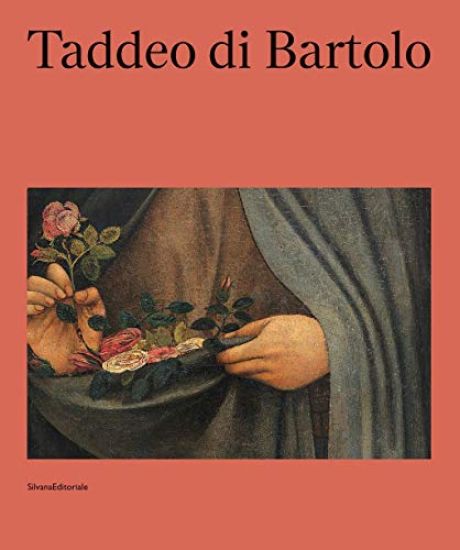
This volume is dedicated to Taddeo di Bartolo (c. 1362-1422), painter of Sienese origin who, as the travelling master he was, spent a good part of his career moving between Tuscany, Liguria and Umbria, serving politically and economically powerful families, public authorities, large religious orders and brotherhoods. He was responsible for imposing altar polyptychs, a sacred art form of which he was the undisputed master: the re-composition of some of these apparatuses, such as the now dismembered altarpiece of San Francesco al Prato in Perugia, constitutes the fulcrum of the studies gathered in these pages. The book also documents Taddeo's other fields of activity: from the creation of processional banners to small tables of private devotion, up to the important role as fresco painter with the decoration of the chapel of the Palazzo Pubblico in Siena. With historical essays and documentary apparatuses, the volume edited by Marco Pierini and Gail Solberg - the painter's most accredited scholar - is therefore a complete and updated monograph on the figure of the artist. Authors of the essays: Gail Solberg, Marco Pierini, Emanuele Zappasodi, Veruska Picchiarelli, Donal Cooper, Alberto Sartore, Machtelet Brüggen Istraëls, Christa Gardner von Teuffel, Daniele Costanti. Text in English and Italian.
This book is published on the occasion of an exhibition in Milan, which was first shown in Murcia (Spain) and after in Siena (September 2009 - January 2010), featuring a selection of 114 pictures, some of which are previoiusly unpublished, almost all of small size, by the famous American photographer Francesca Woodman. Born in Denver in 1958, daughter of the ceramist Betty and the painter George Woodman, Francesca started to work with the camera when she was only thirteen, by making her first self-portrait. In the nine following years, before her suicide in January 1981 when she was only twenty-three, she kept on taking pictures of herself at home, in the midst of nature, on her own or with friends, while in action shots or in studied poses. With texts by Isabel Tejeda, Marco Pierini and Lorenzo Fusi, a biography of the artist and a complete bibliography, this book is the most recent and most complete publication of the artist's work. Text in English and Italian.
Covers the brief but groundbreaking career of the self-proclaimed 'anarchitect' Gordon Matta-Clark (1943-1978), one of the most influential American artists of the 1970s. The immense ambition and scale of Gordon Matta-Clark's projects, and their fearless reimagining of the urban landscape, challenged city-dwellers to reconsider the very notion of built structure and the fragility of seemingly unassailable edifices. Matta-Clark's first interventions took place in abandoned, derelict structures, upon which he performed his famous 'building cuts' and 'intersects'. First published in 2008 (for a show at SMS Contemporanea in Siena), and organised thematically and chronologically, this substantial volume looks at these and other bodies of work, such as the Food restaurant, the performances, the 'estates' and the artist's pursuit of alternative economical housing. The catalogue also includes a filmography and critical essays, plus an interview done by Judith Russi Kirshner in 1978. Text in English and Italian.
My name is Marco Pierini, The Rum Historian. My field of research is the history of rum, and in particular its origins. The results of this research can be found in "Got Rum?" magazine, and in some websites about rum. Many articles are about Great Britain and the British Empire, owing to the early, massive diffusion of rum among British people. The very word Rum is generally held to be English, even though its origins are uncertain, and I freely admit that, after the long research carried out in order to write this book, my uncertainties have even increased. Anyway, while I was studying the history of British rum, I came to realize with astonishment that rum had had an enormous importance in Early America. More, the very birth of the new American Republic was dripping in rum. As a matter of fact, colonials drank a lot, and they drank mainly rum. Rum was not only a very popular commodity, but a lubricant of social life. In early America, taverns were the focus of political and social life and what most people drank in taverns was rum. Moreover, rum was present in all the rituals which mark life: births, weddings, all kinds of festivals and celebrations, funerals. I already knew that American colonists imported great quantities of rum from the West Indies, but I discovered that they became also great producers of it. In the Continental Colonies, rum was so important that, as money was always scarce, rum often replaced it as currency and the real indicator of the value of goods. Rum is also generally thought to have played a pivotal role in the infamous slave trade and in the subjugation and destruction of American Indians. Above all, sugar, molasses and rum are largely considered among the real reasons of the rebellion of the American colonists against their Homeland. Therefore it is not without a reason that it has often been written that rum is the real Spirit of 1776. All this kindled my interest in the role that rum played in the birth of the United States. At the same time, I had become aware that something extremely interesting was happening in the US around rum. First of all, for some years rum had been produced again in the US, after a long period of neglect. There were already hundreds of rum distilleries in the US. They were usually small craft enterprises, with a strong territorial bond, which often used locally grown sugar cane. New ones were starting, month after month. Each of them produced small quantities, but all together they already represented a considerable, and ever growing, proportion of rum consumption in the US. It was also evident that there was a substantial growth in the sales of quality rums, with higher prices, the so called Premium Sector, and I think the two things are connected. This in itself is of great interest to the rum enthusiast. But as a historian I am truly impressed also by the political demands of many of these small producers. To put it simply, and I apologize to them and to the readers for this oversimplification, American small producers of rum are coming up against the great multinationals and asking for lower taxation and greater freedom of enterprise. Their pressure is growing, and all these trends are increasing day by day. In short, prompted by the importance that rum had in the past, and the renewed importance it has in the present, I became convinced that the history of rum in early America, from the first settlers until the decline of rum and the surge of whiskey around 1830, deserved a book. So, I decided to write that book.