
Kirjailija
Marcus Aurelius
Kirjat ja teokset yhdessä paikassa: 345 kirjaa, julkaisuja vuosilta 1890–2027, suosituimpiin kuuluu Itselleni. Vertaile teosten hintoja ja tarkista saatavuus suomalaisista kirjakaupoista.
345 kirjaa
Kirjojen julkaisuvuodet: 1890–2027.

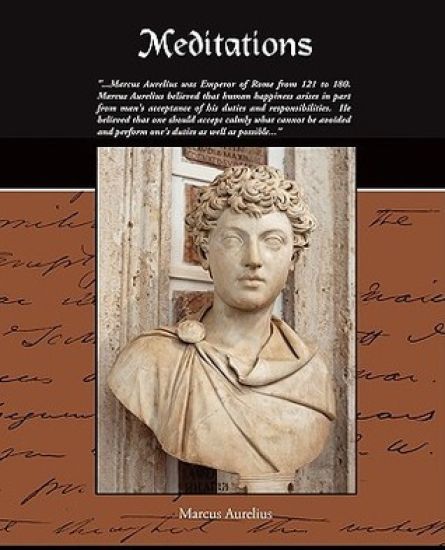
Constantly regard the universe as one living being, having one substance and one soul; and observe how all things have reference to one perception, the perception of this one living being; and how all things act with one movement; and how all things are the cooperating causes of all things which exist; observe too the continuous spinning of the thread and the contexture of the web. A" Marcus Aurelius - 'Meditations' Marcus Aurelius is considered to one of the great Emperors of Rome who was not only a skilled military leader but also a great philosopher in the Stoic tradition. He was born in 121 AD and both of his parents came from wealthy backgrounds. His father died when Marcus was 3 years old and by the time he was 6 he had gained the attention of the Emperor Hadrian who oversaw his education. Hadrian ensured that Marcus was taught by some of the greatest scholars in Rome who educated him in literature, drama, geometry, Greek oratory, Greek and Latin. Marcus later abandoned most of those subjects in favor of philosophy, with the work of the Greek philosopher Epictetus being a major influence on his thinking. In 138, while still a young man, the Emperor Antoninus Pius adopted Marcus, and in 161 he himself became Emperor. Marcus insisted he would only take up the Emperorship if Lucius Verus were also installed. Marcus's insistence on Lucius joining him as Emperor was a military one. At that time Rome was fighting wars on multiple fronts and Marcus wanted someone he could trust to marshal the troops who he knew would not at some point lead a revolt against him. Lucius and Marcus were loyal to each other up until Lucius's death in 169 AD. After Lucius's death, Marcus was the sole Emperor and due to the incessant wars in the provinces he was unable to spend much time indulging his philosophical pursuits. He did manage to found four Chairs of Philosophy in Athens, one for each of the main philosophical schools of thought, Aristotelian, Epicurean, Platonic and Stoic. Although Marcus spent almost all of his reign on campaigns in foreign territories, he managed to write down his thoughts and these became what are now considered a masterpiece of Roman philosophy, the discourses 'Meditations'. Marcus wrote 'Meditations' around 170 - 180, whilst on a campaign in central Europe, most probably in what is now Serbia, Hungary and Austria. The 12 books that make up 'Meditations' were not written as an exercise in explaining his philosophy but rather as a personal notebook for self-improvement and study. 'Meditations' illustrates just how important Epictetus was to Marcus as he quotes the Greek philosopher's famed 'Discourses' on more than one occasion. Epictetus was a legendary figure in Greek philosophy and many claim he is the greatest of the Stoics; texts that remain in existence from the period suggest that in his native Greece, he was even more popular than Plato. As was previously mentioned, 'Meditations' was not written for public consumption but rather as an aid to personal development. Marcus wanted to change his way of living and thinking and to do this he embarked on a set of philosophical exercises. He would reflect on philosophical ideas and by writing them down and by repeating them he hoped to re-programme his mind and find his own philosophy to live by. One of the key exercises in the book discusses Marcus attempting to look at the world from 'the point of view of the cosmos' in a bid to try and look at life and the universe outside of the common and limited parameters of individual concerns. You have the power to strip away many superfluous troubles located wholly in your judgment, and to possess a large room for yourself embracing in thought the whole cosmos, to consider everlasting time, to think of the rapid change in the parts of each thing, of how short it is from birth until dissolution, and how the void before birth and that after dissolution are equally infinite. A" Marcus Aurelius died on March 17, 180, in the city of Vindobona which was situated where Vienna is today. History remembers him as the last of the 'Five Good Emperors' of the Nervan-Antonian dynasty. Marcus' son Commodus replaced his father as Emperor and although he reigned over a relatively stable period in Roman history, in terms of war and peace, his personal behavior and antics were not in the spirit of those Emperors that came immediately before him. Commodus was eventually murdered in a plot that involved his mistress Marcia, thus bringing to an end the highly regarded Nervan-Antonian dynasty.
One measure, perhaps, of a book's worth, is its intergenerational pliancy: do new readers acquire it and interpret it afresh down through the ages? The Meditations of Marcus Aurelius, translated and introduced by Gregory Hays, by that standard, is very worthwhile, indeed. Hays suggests that its most recent incarnation--as a self-help book--is not only valid, but may be close to the author's intent. The book, which Hays calls, fondly, a "haphazard set of notes," is indicative of the role of philosophy among the ancients in that it is "expected to provide a 'design for living.'" And it does, both aphoristically ("Think of yourself as dead. You have lived your life. Now take what's left and live it properly.") and rhetorically ("What is it in ourselves that we should prize?"). Whether these, and other entries ("Enough of this wretched, whining monkey life.") sound life-changing or like entries in a teenager's diary is up to the individual reader, as it should be. Hays's introduction, which sketches the life of Marcus Aurelius (emperor of Rome A. D. 161-180) as well as the basic tenets of stoicism, is accessible and jaunty. --H. O'Billovich --This text refers to the Hardcover edition.
Reflexions Morales De L'Empereur Marc Antonin V1-2
Marcus Aurelius
KESSINGER PUBLISHING, LLC
2009
pokkari
'Their icy blasts are refreshing and restorative. They tell you the worst. And having heard the worst, you feel less bad' Blake MorrisonWritten in Greek by the only Roman emperor who was also a philosopher, without any intention of publication, the Meditations of Marcus Aurelius offer a remarkable series of challenging spiritual reflections and exercises developed as the emperor struggled to understand himself and make sense of the universe. While the Meditations were composed to provide personal consolation and encouragement, Marcus Aurelius also created one of the greatest of all works of philosophy: a timeless collection that has been consulted and admired by statesmen, thinkers and readers throughout the centuries. Translated with notes by MARTIN HAMMOND with an Introduction by DISKIN CLAY
A Penguin Great Ideas edition of timeless Stoic philosophy in practical aphorisms that have inspired luminaries like The Daily Stoic author Ryan Holiday, and influenced countless others to use philosophy as a tool for self-improvement and resilience to live a better life. Few ancient works have been as influential as the Meditations of Marcus Aurelius, philosopher and emperor of Rome (A. D. 161-180). A series of spiritual exercises filled with wisdom, practical guidance, and profound understanding of human behavior, it remains one of the greatest works of spiritual and ethical reflection ever written. Marcus's insights and advice--on everything from living in the world to coping with adversity and interacting with others--have made the Meditations required reading for statesmen and philosophers alike, while generations of ordinary readers have responded to the straightforward intimacy of his style. For anyone who struggles to reconcile the demands of leadership with a concern for personal integrity and spiritual well-being, the Meditations remains as relevant now as it was two thousand years ago. Throughout history, some books have changed the world. They have transformed the way we see ourselves--and each other. They have inspired debate, dissent, war and revolution. They have enlightened, outraged, provoked and comforted. They have enriched lives--and destroyed them. Now, Penguin brings you the works of the great thinkers, pioneers, radicals and visionaries whose ideas shook civilization, and helped make us who we are. Penguin's Great Ideas series features twelve groundbreaking works by some of history's most prodigious thinkers, and each volume is beautifully packaged with a unique type-drive design that highlights the bookmaker's art. Offering great literature in great packages at great prices, this series is ideal for those readers who want to explore and savor the Great Ideas that have shaped the world.
Throughout history, some books have changed the world. They have transformed the way we see ourselves - and each other. They have inspired debate, dissent, war and revolution. They have enlightened, outraged, provoked and comforted. They have enriched lives - and destroyed them. Now Penguin brings you the works of the great thinkers, pioneers, radicals and visionaries whose ideas shook civilization, and helped make us who we are.
Meditations (Barnes & Noble Library of Essential Reading)
Marcus Aurelius
Barnes Noble Inc
2003
pokkari
"Meditations" is Marcus Aurelius' private book of reflections, written over a series of years in far-flung places as he led the Romans in military campaigns, quashed revolts, and dealt with the other tribulations of governing the Empire. It is best described as a spiritual journal, containing a record of Marcus' philosophical exercises. The book is interesting as an example of Stoic thought and is valuable for historical reasons as a document of the inner life of a remarkable Roman emperor. It remains compelling, however, because it bears witness to a profound journey of the human spirit and speaks to us across the millennia about perennial human problems.
Offers a modern translation of the Roman philosopher's journal.
Few ancient works have been as influential as the Meditations of Marcus Aurelius, philosopher and emperor of Rome (A. D. 161–180). A series of spiritual exercises filled with wisdom, practical guidance, and profound understanding of human behavior, it remains one of the greatest works of spiritual and ethical reflection ever written. Marcus’s insights and advice—on everything from living in the world to coping with adversity and interacting with others—have made the Meditations required reading for statesmen and philosophers alike, while generations of ordinary readers have responded to the straightforward intimacy of his style. For anyone who struggles to reconcile the demands of leadership with a concern for personal integrity and spiritual well-being, the Meditations remains as relevant now as it was two thousand years ago. In Gregory Hays’s new translation—the first in thirty-five years—Marcus’s thoughts speak with a new immediacy. In fresh and unencumbered English, Hays vividly conveys the spareness and compression of the original Greek text. Never before have Marcus’s insights been so directly and powerfully presented. With an Introduction that outlines Marcus’s life and career, the essentials of Stoic doctrine, the style and construction of the Meditations, and the work’s ongoing influence, this edition makes it possible to fully rediscover the thoughts of one of the most enlightened and intelligent leaders of any era.
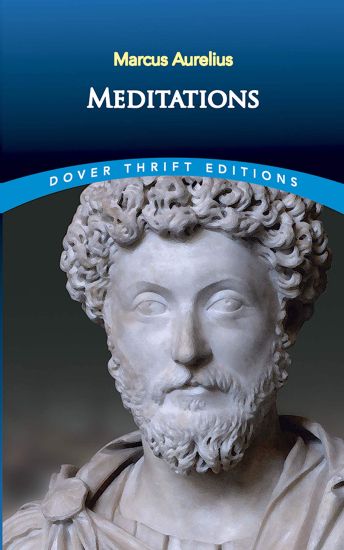
Stirring reflections on the human condition from a warrior and emperor provide a fascinating glimpse into the mind and personality of a highly principled Roman of the 2nd century. Recognizing that suffering is at the core of life, he counsels stoic detachment in the face of inevitable pain, loss and death.
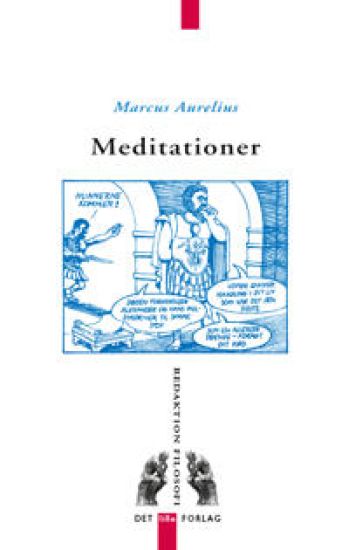
Marcus Aurelius (121-180) var romersk kejser fra 161 til 180. Han var samtidig intellektuelt skolet og tog den antikke og især den stoiske filosofi til sig. I ledige stunder nedskrev han sine tanker til sig selv, og det er dem, der er gengivet i "Meditationer". Teksterne er præget af stoicismens accept af skæbnen, altings forkrænkelighed samt en beskeden og besindig livsførelse. På den baggrund øver Aurelius ofte streng kritik af sig selv, både som privatperson og som politiker, men altid med et alment og filosofisk perspektiv for øje. Oversat af J. A. Bundgaard og med forord af Villy Sørensen.
The Roman emperor Marcus Aurelius Antoninus (a.d. 121--180) embodied in his person that deeply cherished, ideal figure of antiquity, the philosopher-king. His Meditations are not only one of the most important expressions of the Stoic philosophy of his time but also an enduringly inspiring guide to living a good and just life. Written in moments snatched from military campaigns and the rigors of politics, these ethical and spiritual reflections reveal a mind of exceptional clarity and originality, and a spirit attuned to both the particulars of human destiny and the vast patterns that underlie it.
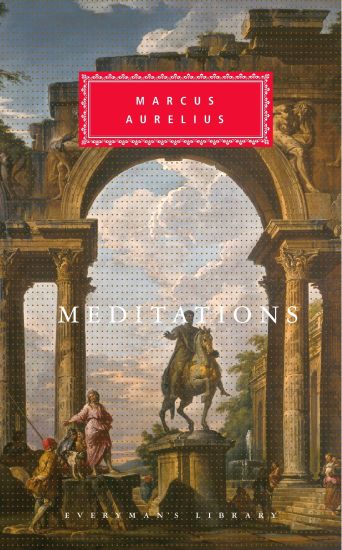
Marcus Aurelius Antoninus (a.d. 121 180) succeeded his adoptive father as emperor of Rome in a.d. 161 and Meditations remains one of the greatest works of spiritual and ethical reflection ever written. With a profound understanding of human behavior, Marcus provides insights, wisdom, and practical guidance on everything from living in the world to coping with adversity to interacting with others. Consequently, the Meditations have become required reading for statesmen and philosophers alike, while generations of ordinary readers have responded to the straightforward intimacy of his style.