Kirjojen hintavertailu – 12 903 724 kirjaa ja 27 kauppaa

Kirjailija

Marcus Schulzke

Kirjat ja teokset yhdessä paikassa: 11 kirjaa, julkaisuja vuosilta 2016–2022, suosituimpiin kuuluu The Politics of New Atheism. Vertaile teosten hintoja ja tarkista saatavuus suomalaisista kirjakaupoista.

11 kirjaa

Kirjojen julkaisuvuodet: 2016–2022.

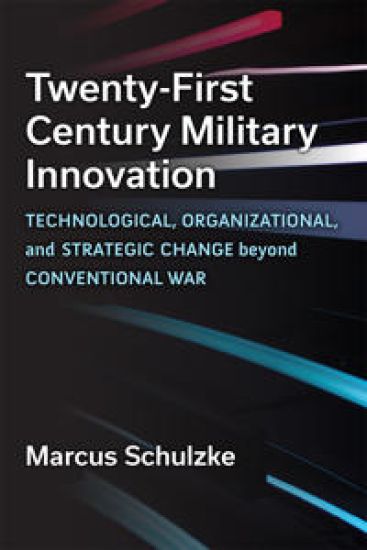
Twenty-First Century Military Innovation

Twenty-First Century Military Innovation

Marcus Schulzke

THE UNIVERSITY OF MICHIGAN PRESS
2022
sidottu

Halvin toimitettuna 100,70 €

Contemporary war is as much a quest for decisive technological, organizational, and doctrinal superiority before the fighting starts as it is an effort to destroy enemy militaries during battle. Armed forces that are not actively fighting are instead actively reengineering themselves for success in the next fight and imagining what that next fight may look like. Twenty-First Century Military Innovation outlines the most theoretically important themes in contemporary warfare, especially as these appear in distinctive innovations that signal changes in states’ warfighting capacities and their political goals. Marcus Schulzke examines eight case studies that illustrate the overall direction of military innovation and important underlying themes. He devotes three chapters to new weapons technologies (drones, cyberweapons, and nonlethal weapons), two chapters to changes in the composition of state military forces (private military contractors and special operations forces), and three chapters to strategic and tactical changes (targeted killing, population-centric counterinsurgency, and degradation). Each case study includes an accessible introduction to the topic area, an overview of the ongoing scholarly debates surrounding that topic, and the most important theoretical implications. An engaging overview of the themes that emerge with military innovation, this book will also attract readers interested in particular topic areas.
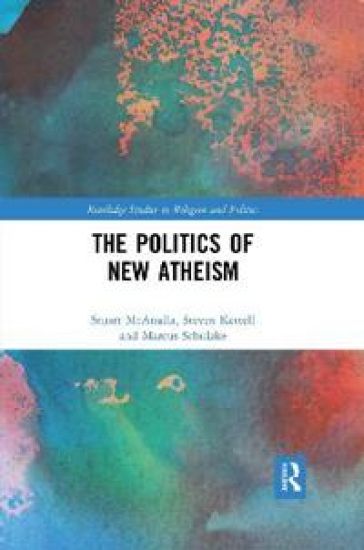
The Politics of New Atheism

The Politics of New Atheism

Stuart McAnulla; Steven Kettell; Marcus Schulzke

Routledge
2020
nidottu
New atheism is best known as a literary and media phenomenon which has resulted in the widespread discussion of the anti-religious arguments of authors such as Richard Dawkins, Sam Harris and Christopher Hitchens, yet it also has strongly political dimensions. This book analyses the political aspects of new atheism and offers an analysis that is informed by insights from political science and political theory. The authors locate new atheism within a diverse history of politically-oriented atheisms. It is argued the new atheist movement itself contains a considerable variety of political viewpoints, despite coalescing around forms of secularist campaigning and identity politics. New atheist views on monotheism, public life, morality and religious violence are examined to highlight both limitations and strengths in such perspectives. Conservative, feminist and Marxist responses to new atheism are also evaluated within this critical analysis. The book rejects claims that new atheism is itself a form of fundamentalism and argues that the issues it grapples with often reflect wider dilemmas in liberal-left thought which have ongoing relevance in the era of Trump and Brexit. It will be of great interest to researchers and scholars in the fields of new atheism, political atheism, secularism, non-religion, and secular-religious tensions.
Simulating Good and Evil

Simulating Good and Evil

Marcus Schulzke

Rutgers University Press
2020
sidottu
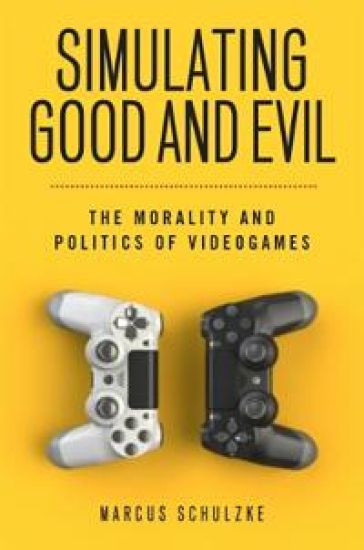
Simulating Good and Evil shows that the moral panic surrounding violent videogames is deeply misguided, and often politically motivated, but that games are nevertheless morally important. Simulated actions are morally defensible because they take place outside the real world and do not inflict real harms. Decades of research purporting to show that videogames are immoral has failed to produce convincing evidence of this. However, games are morally important because they simulate decisions that would have moral weight if they were set in the real world. Videogames should be seen as spaces in which players may experiment with moral reasoning strategies without taking any actions that would themselves be subject to moral evaluation. Some videogame content may be upsetting or offensive, but mere offense does not necessarily indicate a moral problem. Upsetting content is best understood by applying existing theories for evaluating political ideologies and offensive speech.
Simulating Good and Evil

Simulating Good and Evil

Marcus Schulzke

Rutgers University Press
2020
nidottu
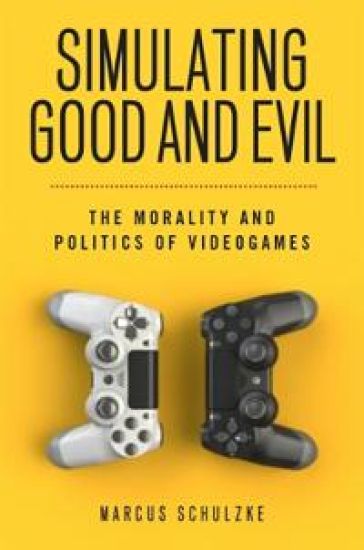
Simulating Good and Evil shows that the moral panic surrounding violent videogames is deeply misguided, and often politically motivated, but that games are nevertheless morally important. Simulated actions are morally defensible because they take place outside the real world and do not inflict real harms. Decades of research purporting to show that videogames are immoral has failed to produce convincing evidence of this. However, games are morally important because they simulate decisions that would have moral weight if they were set in the real world. Videogames should be seen as spaces in which players may experiment with moral reasoning strategies without taking any actions that would themselves be subject to moral evaluation. Some videogame content may be upsetting or offensive, but mere offense does not necessarily indicate a moral problem. Upsetting content is best understood by applying existing theories for evaluating political ideologies and offensive speech.
Just War Theory and Civilian Casualties

Just War Theory and Civilian Casualties

Marcus Schulzke

Cambridge University Press
2020
pokkari
There are strong moral and legal pressures against harming civilians in times of conflict, yet neither just war theory nor international law is clear about what responsibilities belligerents have to correct harm once it has been inflicted. In this book, Marcus Schulzke argues that military powers have a duty to provide assistance to the civilians they attack during wars, and that this duty is entailed by civilians' right to life. Schulzke develops new just war principles requiring belligerents to provide medical treatment and financial compensation to civilian victims, and then shows how these principles can be implemented in governmental, military, and international practice. He calls for a more individual-focused conception of international law and post-war justice for victims - as opposed to current state- or group-based reconstruction and reparation programs - which will provide a framework for protecting civilian rights.
Pursuing Moral Warfare

Pursuing Moral Warfare

Marcus Schulzke

Georgetown University Press
2019
pokkari
During combat, soldiers make life-and-death choices dozens of times a day. These individual decisions accumulate to determine the outcome of wars. This work examines the theory and practice of military ethics in counterinsurgency operations. Marcus Schulzke surveys the ethical traditions that militaries borrow from; compares ethics in practice in the US Army, British Army and Royal Marines Commandos, and Israel Defense Forces; and draws conclusions that may help militaries refine their approaches in future conflicts. The work is based on interviews with veterans and military personnel responsible for ethics training, review of training materials and other official publications, published accounts from combat veterans, and observation of US Army focus groups with active-duty soldiers. Schulzke makes a convincing argument that though military ethics cannot guarantee flawless conduct, incremental improvements can be made to reduce war’s destructiveness while improving the success of counterinsurgency operations.
Pursuing Moral Warfare

Pursuing Moral Warfare

Marcus Schulzke

Georgetown University Press
2019
sidottu
During combat, soldiers make life-and-death choices dozens of times a day. These individual decisions accumulate to determine the outcome of wars. This work examines the theory and practice of military ethics in counterinsurgency operations. Marcus Schulzke surveys the ethical traditions that militaries borrow from; compares ethics in practice in the US Army, British Army and Royal Marines Commandos, and Israel Defense Forces; and draws conclusions that may help militaries refine their approaches in future conflicts. The work is based on interviews with veterans and military personnel responsible for ethics training, review of training materials and other official publications, published accounts from combat veterans, and observation of US Army focus groups with active-duty soldiers. Schulzke makes a convincing argument that though military ethics cannot guarantee flawless conduct, incremental improvements can be made to reduce war’s destructiveness while improving the success of counterinsurgency operations.
Drones and Support for the Use of Force

Drones and Support for the Use of Force

James Igoe Walsh; Marcus Schulzke

The University of Michigan Press
2018
sidottu
Combat drones are transforming attitudes about the use of military force. Military casualties and the costs of conflict sap public support for war and for political and military leaders. Combat drones offer an unprecedented ability to reduce these costs by increasing accuracy, reducing the risks to civilians, and protecting military personnel from harm. These advantages should make drone strikes more popular than operations involving ground troops. Yet many critics believe drone warfare will make political leaders too willing to authorize wars, weakening constraints on the use of force. Because combat drones are relatively new, these arguments have been based on anecdotes, a handful of public opinion polls, or theoretical speculation. Drones and Support for the Use of Force uses experimental research to analyze the effects of combat drones on Americans’ support for the use of force. The authors’ findings—that drones have had important but nuanced effects on support for the use of force—have implications for democratic control of military action and civil-military relations and provide insight into how the proliferation of military technologies influences foreign policy.
The Politics of New Atheism

The Politics of New Atheism

Stuart McAnulla; Steven Kettell; Marcus Schulzke

Routledge
2018
sidottu
New atheism is best known as a literary and media phenomenon which has resulted in the widespread discussion of the anti-religious arguments of authors such as Richard Dawkins, Sam Harris and Christopher Hitchens, yet it also has strongly political dimensions. This book analyses the political aspects of new atheism and offers an analysis that is informed by insights from political science and political theory. The authors locate new atheism within a diverse history of politically-oriented atheisms. It is argued the new atheist movement itself contains a considerable variety of political viewpoints, despite coalescing around forms of secularist campaigning and identity politics. New atheist views on monotheism, public life, morality and religious violence are examined to highlight both limitations and strengths in such perspectives. Conservative, feminist and Marxist responses to new atheism are also evaluated within this critical analysis. The book rejects claims that new atheism is itself a form of fundamentalism and argues that the issues it grapples with often reflect wider dilemmas in liberal-left thought which have ongoing relevance in the era of Trump and Brexit. It will be of great interest to researchers and scholars in the fields of new atheism, political atheism, secularism, non-religion, and secular-religious tensions.
Just War Theory and Civilian Casualties

Just War Theory and Civilian Casualties

Marcus Schulzke

Cambridge University Press
2017
sidottu
There are strong moral and legal pressures against harming civilians in times of conflict, yet neither just war theory nor international law is clear about what responsibilities belligerents have to correct harm once it has been inflicted. In this book, Marcus Schulzke argues that military powers have a duty to provide assistance to the civilians they attack during wars, and that this duty is entailed by civilians' right to life. Schulzke develops new just war principles requiring belligerents to provide medical treatment and financial compensation to civilian victims, and then shows how these principles can be implemented in governmental, military, and international practice. He calls for a more individual-focused conception of international law and post-war justice for victims - as opposed to current state- or group-based reconstruction and reparation programs - which will provide a framework for protecting civilian rights.
The Morality of Drone Warfare and the Politics of Regulation
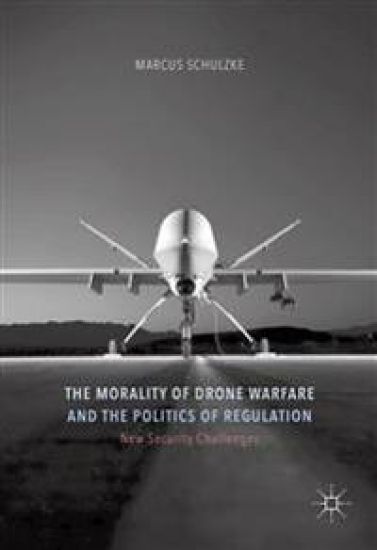
This book discusses the moral and legal issues relating to military drones, focusing on how these machines should be judged according to the principles of just war theory. The author analyses existing drones, like the Predator and Reaper, but also evaluates the many types of drones in development. The book presents drones as not only morally justifiable but having the potential to improve compliance with the principles of just war and international law. Realizing this potential would depend on developing a sound regulatory framework, which the book helps to develop by considering what steps governments and military forces should take to promote ethical drone use. It also critically evaluates the arguments against drones to show which should be abandoned and which raise valid concerns that can inform regulations.