Kirjailija
Marcus Tullius Cicero
Kirjat ja teokset yhdessä paikassa: 1 147 kirjaa, julkaisuja vuosilta 1804–2026, suosituimpiin kuuluu Keskusteluja Tusculumissa. Vertaile teosten hintoja ja tarkista saatavuus suomalaisista kirjakaupoista.
1 147 kirjaa
Kirjojen julkaisuvuodet: 1804–2026.
Reproduction of the original. The publishing house Megali specialises in reproducing historical works in large print to make reading easier for people with impaired vision.
De Finibus Bonorum Et Malorum
Marcus Tullius Cicero; H. (Harris) 1868-1944 Rackham
Hassell Street Press
2023
sidottu
De Finibus Bonorum Et Malorum
Marcus Tullius Cicero; H. (Harris) 1868-1944 Rackham
Hassell Street Press
2023
nidottu
Retorikern, advokaten och politikern Marcus Tullius Cicero, som blev mördad på order av triumviren Marcus Antonius år 43 före Kristus, är för eftervärlden mest känd för sina tal och brev. Talen har uppfattats som ett mönster av kraftfull framställningskonst och breven låter oss komma personen Cicero inpå livet på ett sätt som saknar motstycke i den bevarade antika litteraturen. Men Cicero skrev också mycket annat, inte minst filosofiska dialoger. Han gjorde inte anspråk på att vara filosof utan uppfattade sig själv som en sorts popularisator på området – han ville helt enkelt förmedla den grekiska filosofin till en romersk läsekrets. Men detta innebär inte att dialogerna ifråga saknar filosofisk relevans eller kulturhistoriskt intresse. "Om staten" och "Om lagarna" är Ciceros första betydande filosofiska dialoger och hans mest originella bidrag till filosofin. Båda dialogerna behandlar centrala ämnen inom politisk filosofi, som styrelseskickets utformning och lagarnas grundvalar. Den inflytelserika naturrättstanken får en tidig formulering här. Cicero lutar sig i sina resonemang mot både Platon och stoisk filosofi, men har samtidigt en tydlig förankring i en romersk politisk ordning och tradition som ger hans perspektiv en annan konkretion än de grekiska föregångarnas. Cicero är alltid praktiskt – och ibland också dagspolitiskt – inriktad. Denna utgåva av de båda dialogerna innehåller även ett antal fristående fragment från dem, ingen av dialogerna har nämligen bevarats i fullständig form. Magnus Wistrand, professor emeritus vid Göteborgs universitet, svarar för översättningen och en orienterande inledning. Han har för Daidalos räkning tidigare översatt Ciceros "Om plikterna" samt Senecas "Om livets korthet" och "Breven till Lucilius". Den tyske filosofen Otfried Höffe belyser i sitt efterord till volymen Ciceros filosofiska betydelse.
Letters of Marcus Tullius Cicero has been regarded as significant work throughout human history, and in order to ensure that this work is never lost, we have taken steps to ensure its preservation by republishing this book in a contemporary format for both current and future generations. This entire book has been retyped, redesigned, and reformatted. Since these books are not made from scanned copies, the text is readable and clear.
Schicksal oder eigene Steuerung - was ist das Wesen der Dinge? K nnen wir unseren Lebensweg beeinflussen, oder haben wir nur den Eindruck, dass das m glich sei? Das Thema mag gerade aktuell die Hirnforschung und die Philosophie der Gegenwart bestimmen, doch Ciceros Schrift - hier in der bersetzung von Dr. Georg Moser - zeigt: Das Thema hat uns immer schon schon bewegt, ist also eine der ltesten Fragen der Menschheit. Gr ls-Klassiker (Edition Kleine Klassiker)
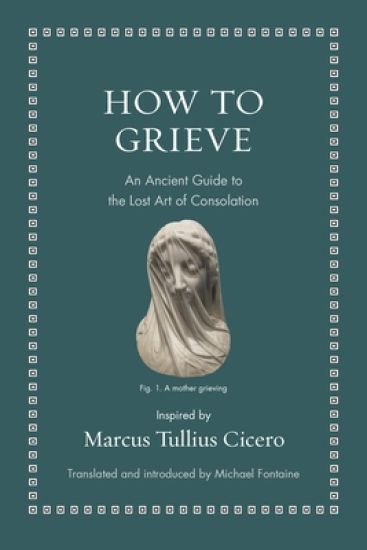
An engaging new translation of a timeless masterpiece about coping with the death of a loved oneIn 45 BCE, the Roman statesman Cicero fell to pieces when his beloved daughter, Tullia, died from complications of childbirth. But from the depths of despair, Cicero fought his way back. In an effort to cope with his loss, he wrote a consolation speech—not for others, as had always been done, but for himself. And it worked. Cicero’s Consolation was something new in literature, equal parts philosophy and motivational speech. Drawing on the full range of Greek philosophy and Roman history, Cicero convinced himself that death and loss are part of life, and that if others have survived them, we can, too; resilience, endurance, and fortitude are the way forward. Lost in antiquity, Cicero’s Consolation was recreated in the Renaissance from hints in Cicero’s other writings and the Greek and Latin consolatory tradition. The resulting masterpiece—translated here for the first time in 250 years—is infused throughout with Cicero’s thought and spirit. Complete with the original Latin on facing pages and an inviting introduction, Michael Fontaine’s engaging translation makes this searching exploration of grief available to readers once again.