Kirjailija
Margaret Alice Murray
Kirjat ja teokset yhdessä paikassa: 32 kirjaa, julkaisuja vuosilta 2003–2026, suosituimpiin kuuluu The Witch-cult in Western Europe. Vertaile teosten hintoja ja tarkista saatavuus suomalaisista kirjakaupoista.
32 kirjaa
Kirjojen julkaisuvuodet: 2003–2026.




A journey to Central Africa Or, Life and landscapes from Egypt to the Negro kingdoms of the White Nile (Edition1)
Margaret Alice Murray
Alpha Editions
2025
nidottu
Margaret Alice Murray's "The Witch-cult in Western Europe: A Study in Anthropology" remains a cornerstone text for understanding historical beliefs about witchcraft. This meticulously prepared print edition makes Murray's influential work accessible to a new audience. Delving into the social sciences through an anthropological lens, Murray explores the theory of a widespread, organized witch cult in Western Europe, particularly focusing on Great Britain. Examining historical records and folklore, "The Witch-cult in Western Europe" presents a detailed picture of alleged pagan practices and societal structures related to witchcraft. Murray's study offers insights into the history of witchcraft accusations and the enduring fascination with witches and their purported rituals. This book is essential reading for anyone interested in the history of witchcraft, paganism, and the cultural and social anthropology surrounding these beliefs. A landmark work in its field, it provides a crucial perspective on a complex and often misunderstood aspect of European history. This work has been selected by scholars as being culturally important, and is part of the knowledge base of civilization as we know it. This work is in the public domain in the United States of America, and possibly other nations. Within the United States, you may freely copy and distribute this work, as no entity (individual or corporate) has a copyright on the body of the work. Scholars believe, and we concur, that this work is important enough to be preserved, reproduced, and made generally available to the public. We appreciate your support of the preservation process, and thank you for being an important part of keeping this knowledge alive and relevant.
Margaret Alice Murray's "The Witch-cult in Western Europe: A Study in Anthropology" remains a cornerstone text for understanding historical beliefs about witchcraft. This meticulously prepared print edition makes Murray's influential work accessible to a new audience. Delving into the social sciences through an anthropological lens, Murray explores the theory of a widespread, organized witch cult in Western Europe, particularly focusing on Great Britain. Examining historical records and folklore, "The Witch-cult in Western Europe" presents a detailed picture of alleged pagan practices and societal structures related to witchcraft. Murray's study offers insights into the history of witchcraft accusations and the enduring fascination with witches and their purported rituals. This book is essential reading for anyone interested in the history of witchcraft, paganism, and the cultural and social anthropology surrounding these beliefs. A landmark work in its field, it provides a crucial perspective on a complex and often misunderstood aspect of European history. This work has been selected by scholars as being culturally important, and is part of the knowledge base of civilization as we know it. This work is in the public domain in the United States of America, and possibly other nations. Within the United States, you may freely copy and distribute this work, as no entity (individual or corporate) has a copyright on the body of the work. Scholars believe, and we concur, that this work is important enough to be preserved, reproduced, and made generally available to the public. We appreciate your support of the preservation process, and thank you for being an important part of keeping this knowledge alive and relevant.
"The Witch-Cult in Western Europe" is a 1921 anthropological book by Margaret Murray. At the time of its publication, it gained attention due to the success of Frazer's "Golden Bough." However, Murray's theories were widely discredited. Her central hypothesis, known as the witch-cult hypothesis, suggests that the accusations made against "witches" in Europe were actually based on a real, though clandestine, pagan religion that worshiped a horned god.

The Witch-Cult in Western Europe is a 1921 anthropological book by Margaret Alice Murray, published at the height of the success of Frazer's Golden Bough. Certain university circles subsequently celebrated Margaret Murray as the expert on western witchcraft, though her theory, also known as "the witch-cult hypothesis" remains controversial: it suggests that the accusations made towards "witches" in Europe were in fact based on a real, though clandestine, pagan religion worshiped a horned god. In this book and the subsequent The God of the Witches (1931), Murray explained her theory as follows. Until the 17th century there was a religion, much older than Christianity, which all over Western Europe had supporters both among ordinary people and the ruling classes. Central to the worship stood a horned god with two faces, known to the Romans as Janus or Dianus. (This cult of Dianus was of the type James Frazer described in detail in The Golden Bough). The horned god represented the cycle of seasons and harvests. It was believed that he died and periodically returned to life. On earth, the horned god was represented by chosen human beings. There were some celebrities among them, such as William Rufus, Thomas Becket, Joan of Arc and Gilles de Rais. They each died a tragic death as a ritual sacrifice to insure the resurrection of the god and the renewal of the earth. In the villages, the witches' meetings were presided over by the horned god. Christian observers of these events might have thought the witches were worshiping the devil, when in reality they were celebrating the pre-Christian god Dianus. The preservation of this ancient religion was entrusted to a variety of indigenous peoples, small in stature, who were driven out from their land with each new invasion. This would also explain the stories about fairies, gnomes and other 'small people'. These creatures were very shy but were able to pass the knowledge of their religion to ordinary people. The witches were their pupils and thus the heirs of the ancient religion. According to Murray, local covens consisted of thirteen members: twelve ordinary men and women, and an officer. All members were required to hold a weekly meeting (named 'esbat' by Murray) and to attend the larger Sabbats. There was a strict discipline in the covens, and whoever missed a meeting could be severely punished and was sometimes put to death. The organization and structure were so good that Christianity had to wait until the Reformation before taking wide notice of the hidden religion. The great witch persecutions were thus Chrisianity's attack on a powerful rival.(Excerpted from wikipedia w/ modifications)
This work has been selected by scholars as being culturally important and is part of the knowledge base of civilization as we know it. This work is in the public domain in the United States of America, and possibly other nations. Within the United States, you may freely copy and distribute this work, as no entity (individual or corporate) has a copyright on the body of the work. Scholars believe, and we concur, that this work is important enough to be preserved, reproduced, and made generally available to the public. To ensure a quality reading experience, this work has been proofread and republished using a format that seamlessly blends the original graphical elements with text in an easy-to-read typeface. We appreciate your support of the preservation process, and thank you for being an important part of keeping this knowledge alive and relevant.
This book has been considered by academicians and scholars of great significance and value to literature. This forms a part of the knowledge base for future generations. So that the book is never forgotten we have represented this book in a print format as the same form as it was originally first published. Hence any marks or annotations seen are left intentionally to preserve its true nature.
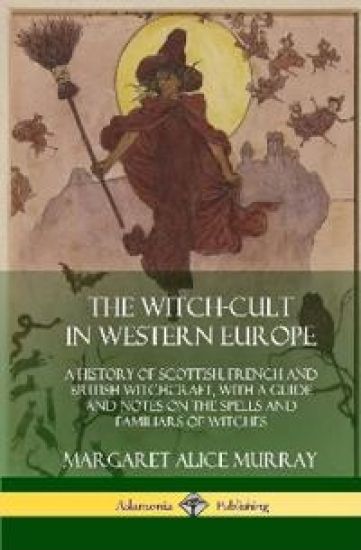
Margaret Alice Murray's acclaimed history of European witchcraft is accompanied by descriptions of the rituals performed and concoctions made by witches centuries ago. The author's burgeoning knowledge is a service to the subject; what might otherwise be overly dry or arcane is revealed in a manner both exciting and thought-provoking. We are offered historical observations of the witchcraft tradition, with the life and times of the women accused of its practice examined in the context of the era. Readers will be left in no doubt about the traditions, ceremonies and magical rites practiced by witches. Although Murray was later found to be overstating the influence and magnitude of the witchcraft tradition - she considered it to be a popular successor to paganism - she explains its origins, growth and persecution of witches with astute narration. Murray posits that witches were thought to be worshiping the devil; a grave crime in the fervently Christian Europe of yore.
Margaret Alice Murray's acclaimed history of European witchcraft is accompanied by descriptions of the rituals performed and concoctions made by witches centuries ago. The author's burgeoning knowledge is a service to the subject; what might otherwise be overly dry or arcane is revealed in a manner both exciting and thought-provoking. We are offered historical observations of the witchcraft tradition, with the life and times of the women accused of its practice examined in the context of the era. Readers will be left in no doubt about the traditions, ceremonies and magical rites practiced by witches. Although Murray was later found to be overstating the influence and magnitude of the witchcraft tradition - she considered it to be a popular successor to paganism - she explains its origins, growth and persecution of witches with astute narration. Murray posits that witches were thought to be worshiping the devil; a grave crime in the fervently Christian Europe of yore.
The Esoteric Library: The Witch-Cult in Western Europe
Margaret Alice Murray
Createspace Independent Publishing Platform
2015
nidottu
The Witch-Cult in Western Europe
Margaret Alice Murray
Iaegca - Portuguese Institute of Higher Studi
2015
nidottu
Halvin toimitettuna 20,30 €
This book has been professionally retyped and reformatted to fit modern day standards by officials of the Portuguese Institute of Higher Studies in Geopolitics and Auxiliary Sciences. The mass of existing material on this subject is so great that I have not attempted to make a survey of the whole of European 'Witchcraft', but have confined myself to an intensive study of the cult in Great Britain. In order, however, to obtain a clearer understanding of the ritual and beliefs I have had recourse to French and Flemish sources, as the cult appears to have been the same throughout Western Europe. The New England records are unfortunately not published in extenso; this is the more unfortunate as the extracts already given to the public occasionally throw light on some of the English practices. It is more difficult to trace the English practices than the Scotch or French, for in England the cult was already in a decadent condition when the records were made; therefore records in a purely English colony would probably contain much of interest. The sources from which the information is taken are the judicial records and contemporary chroniclers. In the case of the chroniclers I have studied their facts and not their opinions. I have also had access to some unpublished trials among the Edinburgh Justiciary Records and also in the Guernsey Greffe.