Kirjojen hintavertailu – 12 859 818 kirjaa ja 27 kauppaa

Kirjailija

Margaret B. Blackman

Kirjat ja teokset yhdessä paikassa: 5 kirjaa, julkaisuja vuosilta 1992–2015, suosituimpiin kuuluu During My Time. Vertaile teosten hintoja ja tarkista saatavuus suomalaisista kirjakaupoista.

5 kirjaa

Kirjojen julkaisuvuodet: 1992–2015.

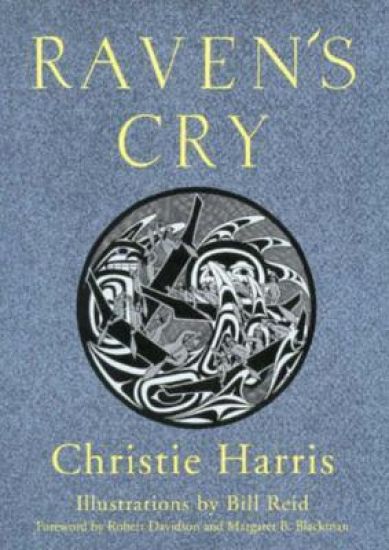
Raven's Cry

Raven's Cry

Christie Harris; Robert Davidson; Margaret B. Blackman

University of Washington Press
2015
sidottu
Raven's Cry is a Northwest Coast classic -- a moving and powerful work that is a fictionalized retelling of the near destruction of the Haida nation. The Haida are a proud and cultured people, whose home is Haida Gwaii (the Queen Charlotte Islands) off the coast of northern British Columbia. Until the first Europeans arrived in 1775, the Haida were the lords of the coast. The meeting of cultures was a fateful one: the Europeans had the advantages of firearms and immunity to their own deadly diseases. In just 150 years, the Haida and their culture were pushed to the edge of extinction. Christie Harris recreates this tale of tragedy and the ultimate survival of native spirit with dignity, beauty and ethnographic accuracy.
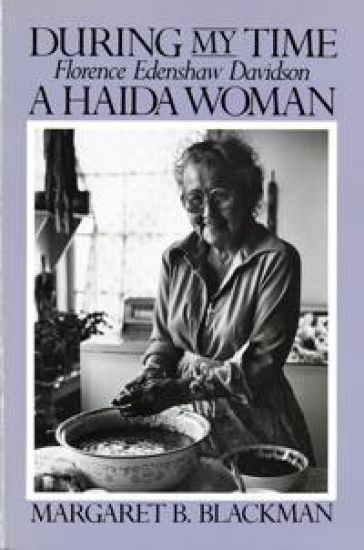
During My Time

During My Time

Margaret B. Blackman

University of Washington Press
2015
sidottu
This book is the first life history of a Northwest Coast Indian woman. Florence Davidson, daughter of noted Haida carver and chief Charles Edenshaw, was born in 1896. As one of the few living Haida elders knowledgeable bout the culture of a bygone era, she was a fragile link with the past. Living in Masset on the Queen Charlotte Islands, some fifty miles off the northwest coast of British Columbia, Florence Davidson grew up in an era of dramatic change for her people. On of the last Haida women to undergo the traditional puberty seclusion and an arranged marriage, she followed patterns in her life typical of women of her generation. Florence's narrative -- edited by Professor Blackman from more than fifty hours of tape recordings -- speaks of girlhood, of learning female roles, of the power and authority available to Haida women, of the experiences of menopause and widowhood. Blackman juxtaposes comments made by early observes of the Haida, government agents, and missionaries, with appropriate portions of the life history narrative, to portray a culture neither traditionally Haida nor fully Canadian, a culture adapting to Christianity and the imposition of Canadian laws. Margaret Blackman not only preserves Florence Davidson's memories of Haida ways, but with her own analysis of Davidson's life, adds significantly to the literature on the role of women in cross-cultural perspective. The book makes an important contribution to Northwest Coast history and culture, to the study of culture change, to fieldwork methodology, and to women's studies.
Raven's Cry

Raven's Cry

Christie Harris; Robert Davidson; Margaret B. Blackman

University of Washington Press
1992
pokkari
Raven's Cry is a Northwest Coast classic -- a moving and powerful work that is a fictionalized retelling of the near destruction of the Haida nation. The Haida are a proud and cultured people, whose home is Haida Gwaii (the Queen Charlotte Islands) off the coast of northern British Columbia. Until the first Europeans arrived in 1775, the Haida were the lords of the coast. The meeting of cultures was a fateful one: the Europeans had the advantages of firearms and immunity to their own deadly diseases. In just 150 years, the Haida and their culture were pushed to the edge of extinction. Christie Harris recreates this tale of tragedy and the ultimate survival of native spirit with dignity, beauty and ethnographic accuracy.
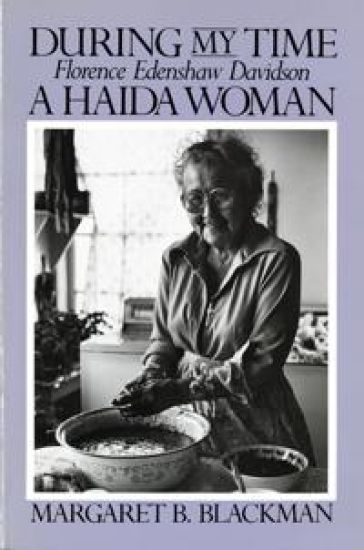
During My Time

During My Time

Margaret B. Blackman

University of Washington Press
1992
pokkari
This book is the first life history of a Northwest Coast Indian woman. Florence Davidson, daughter of noted Haida carver and chief Charles Edenshaw, was born in 1896. As one of the few living Haida elders knowledgeable bout the culture of a bygone era, she was a fragile link with the past. Living in Masset on the Queen Charlotte Islands, some fifty miles off the northwest coast of British Columbia, Florence Davidson grew up in an era of dramatic change for her people. On of the last Haida women to undergo the traditional puberty seclusion and an arranged marriage, she followed patterns in her life typical of women of her generation. Florence's narrative -- edited by Professor Blackman from more than fifty hours of tape recordings -- speaks of girlhood, of learning female roles, of the power and authority available to Haida women, of the experiences of menopause and widowhood. Blackman juxtaposes comments made by early observes of the Haida, government agents, and missionaries, with appropriate portions of the life history narrative, to portray a culture neither traditionally Haida nor fully Canadian, a culture adapting to Christianity and the imposition of Canadian laws. Margaret Blackman not only preserves Florence Davidson's memories of Haida ways, but with her own analysis of Davidson's life, adds significantly to the literature on the role of women in cross-cultural perspective. The book makes an important contribution to Northwest Coast history and culture, to the study of culture change, to fieldwork methodology, and to women's studies.
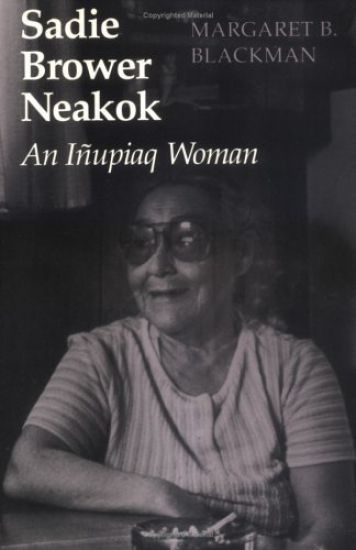
Sadie Brower Neakok

Sadie Brower Neakok

Margaret B. Blackman

University of Washington Press
1992
pokkari
This is the life history of the daughter of Asianggataq, an Eskimo woman, and her husband Charles Bower, the first white settler in Alaska's northernmost community of Barrow. One of ten children, Sadie Brower (1916-2004) was raised with a mixture of Inupiat and white traditions. Sent Outside for modern schooling, she returned to Barrow to use her education on behalf o her people. She devoted a lifetime to public service, first as a Bureau of Indian Affairs schoolteacher, than as a health aide, a foster parent, a welfare worker, and, for twenty years, as Barrow's magistrate. She became a key figure in the introduction of the American legal system to bush Alaska as well as an outspoken advocate for people, eventually winning the right for the native language to be the language of the court in cases where the defendants could not speak English. Equally important, she was the mother of thirteen children and wife to Nate Neakok, an Inupiaq hunter and whaling captain who, she states emphatically, "never went to school, but know more than I did, a college student, a teacher." Professor Blackman places Sadie Neakok's vivid narrative within the context of the recent history of Barrow and Alaska' North Slope, interweaving cultural and historical data from various sources with Sadie's own perspectives on herself, her people, and the outside world that has increasingly affected them. Blackman's concluding chapter offers a perceptive critical evaluation of the life history process itself. The book makes an important contribution to Alaskan cultural and legal history, to life history methodology, and to studies of women in cross-cultural perspective.