Kirjojen hintavertailu – 12 859 819 kirjaa ja 27 kauppaa

Kirjailija

Margaret Fletcher

Kirjat ja teokset yhdessä paikassa: 14 kirjaa, julkaisuja vuosilta 1951–2025, suosituimpiin kuuluu Discovering the Design Process. Vertaile teosten hintoja ja tarkista saatavuus suomalaisista kirjakaupoista.

14 kirjaa

Kirjojen julkaisuvuodet: 1951–2025.

Discovering the Design Process

Discovering the Design Process

Courtney Windham; Margaret Fletcher

TAYLOR FRANCIS LTD
2025
sidottu
Designers seek moments of creative bliss when everything aligns, stress dissolves, and decisions flow effortlessly. These ‘in the zone’ experiences keep creatives inspired. This book uncovers the dynamic nature of the design process, shedding light on the various modes of thinking that shape creative work. The design process is often taught through a linear framework: define the problem, do the research, generate ideas, prototype, test, and refine. This structure offers a shared language across disciplines—from architecture to fashion design—providing a roadmap for clarity and progress. However, as any practicing designer knows, the real process is far more fluid. With time and experience, designers learn to embrace the nonlinear nature of their work. Iteration becomes second nature, and space is made for unexpected, creative leaps—spontaneous breakthroughs where new connections emerge. These moments arise from the intersection of conscious and unconscious thought, resulting in surprising and powerful ideas. Within this intersection, the ‘beautiful mess’ of the designer’s natural state emerges. This mess isn’t disorder—it’s the dynamic interplay between structured methods and spontaneous inspiration, revealing the fascinating tangle of creative thinking. This book celebrates that vibrant, messy process. Through rich photography of everyday studios and thoughtful conversations with artists, designers, and makers from across disciplines, it offers an intimate glimpse into how ideas are formed and refined. Whether you're a student, an emerging creative, or an experienced practitioner, this book invites you to recognize—and embrace—the unique nature of your own design journey, and find inspiration in the glorious chaos of making.

Discovering the Design Process

Discovering the Design Process

Courtney Windham; Margaret Fletcher

TAYLOR FRANCIS LTD
2025
nidottu

Halvin toimitettuna 50,30 €

Designers seek moments of creative bliss when everything aligns, stress dissolves, and decisions flow effortlessly. These ‘in the zone’ experiences keep creatives inspired. This book uncovers the dynamic nature of the design process, shedding light on the various modes of thinking that shape creative work. The design process is often taught through a linear framework: define the problem, do the research, generate ideas, prototype, test, and refine. This structure offers a shared language across disciplines—from architecture to fashion design—providing a roadmap for clarity and progress. However, as any practicing designer knows, the real process is far more fluid. With time and experience, designers learn to embrace the nonlinear nature of their work. Iteration becomes second nature, and space is made for unexpected, creative leaps—spontaneous breakthroughs where new connections emerge. These moments arise from the intersection of conscious and unconscious thought, resulting in surprising and powerful ideas. Within this intersection, the ‘beautiful mess’ of the designer’s natural state emerges. This mess isn’t disorder—it’s the dynamic interplay between structured methods and spontaneous inspiration, revealing the fascinating tangle of creative thinking. This book celebrates that vibrant, messy process. Through rich photography of everyday studios and thoughtful conversations with artists, designers, and makers from across disciplines, it offers an intimate glimpse into how ideas are formed and refined. Whether you're a student, an emerging creative, or an experienced practitioner, this book invites you to recognize—and embrace—the unique nature of your own design journey, and find inspiration in the glorious chaos of making.
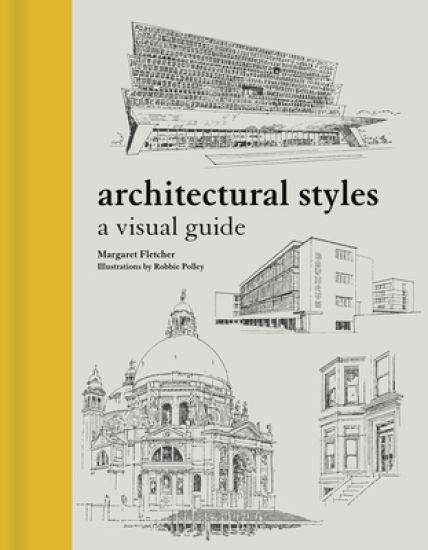
Architectural Styles: A Visual Guide

Architectural Styles: A Visual Guide

Margaret Fletcher; Robbie Polley

PRINCETON UNIVERSITY PRESS
2020
sidottu
A hand-drawn guide to architectural styles throughout history Architectural Styles is an incomparable guide to architectural styles across the centuries and around the world. Modeled after an architect's plein air sketchbook, the volume features hundreds of detailed drawings by esteemed architectural illustrator Robbie Polley alongside incisive and informative descriptions. This unique guidebook takes readers from Europe and the Americas to Egypt, China, and India. It covers a host of historical and contemporary architectural styles, from ancient and classical to Pre-Columbian, Romanesque, Renaissance, Palladian, art nouveau, Brutalist, and biomorphic. It describes the histories and characteristics of the building traditions of each era and region of the world, and looks at key architectural elements such as buttresses, spandrels, curtain walls, and oculi. The book also includes a section on building parts--from domes and columns to towers, arches, roofs, and vaulting--along with a detailed glossary and bibliography. Comprehensive and authoritative, Architectural Styles is an essential resource for architects and designers and a must-have illustrated guide for anyone interested in architecture or drawing.
Visual Communication for Architects and Designers
Visual Communication for Architects and Designers teaches you the art of designing a concise, clear, compelling and effective visual and verbal presentation. Margaret Fletcher has developed a reference manual of best practices that gives you the necessary tools to present your work in the best way possible. It includes an impressive 750 presentation examples by over 180 designers from 24 countries in North America, South America, Europe, the Middle East, Asia, Oceania and Africa. This book offers actionable advice to solve a variety of complex presentation challenges. You will learn how to: Understand differences in communication design, representation design and presentation design and know how to use these skills to your advantage; Structure the visual and verbal argument in your presentation; Design your presentation layouts, architectural competitions, boards and digital presentations; Manage issues related to the presentation of architectural and design ideas; Present yourself professionally. Your ability to communicate your design ideas to others is an invaluable and important skill. Visual Communication for Architects and Designers shows you how to develop and implement these skills and gain command of your presentations.
Light for New Times: A Book for Catholic Girls

Light for New Times: A Book for Catholic Girls

Margaret Fletcher

Independently Published
2020
nidottu
The nineteenth century, era of change and of unexpected developments as it was, has brought about no change greater than the present altered position of English women. That certain fixed peculiarities must differ­entiate the sexes will always be true, and these must largely shape their respective pathways in life. A new era for women was beginning, and what model could be more appropriate than Mary? In every change there is contained more or less of a reaction; the reaction comes about by the awakening of forces hitherto inoperative, and in the new-born vigor of new forces there is apt to be too much of a reaction. There is a gap in our Catholic literature for girls which needs filling up, and all earnest and practical and intelligent efforts to fill this gap should receive the welcome they deserve. Margaret Fletcher
Constructing the Persuasive Portfolio

Constructing the Persuasive Portfolio

Margaret Fletcher

Routledge
2016
nidottu
Constructing the Persuasive Portfolio helps you learn the art of designing a compelling and effective architectural portfolio. Margaret Fletcher categorizes the architectural portfolio design process into a step-by-step method that you can manage and understand. The full-color book includes 400 portfolio examples from 55 designers, along with more than 50 diagrams, and a set of 48 design actions that are marked throughout. You will learn how to:-Identify your readership-Collect, document, and catalog your work-Organize your portfolio-Visually structure your portfolio-Design your layout-Manage both printed and digital portfolio formatsAs your ultimate persuasive tool, your portfolio is the single most important design exercise of your academic and professional career. Constructing the Persuasive Portfolio shows you everything you need to know to create your portfolio and is the only portfolio design book you will ever need!
Constructing the Persuasive Portfolio

Constructing the Persuasive Portfolio

Margaret Fletcher

Routledge
2016
sidottu
Constructing the Persuasive Portfolio helps you learn the art of designing a compelling and effective architectural portfolio. Margaret Fletcher categorizes the architectural portfolio design process into a step-by-step method that you can manage and understand. The full-color book includes 400 portfolio examples from 55 designers, along with more than 50 diagrams, and a set of 48 design actions that are marked throughout. You will learn how to:-Identify your readership-Collect, document, and catalog your work-Organize your portfolio-Visually structure your portfolio-Design your layout-Manage both printed and digital portfolio formatsAs your ultimate persuasive tool, your portfolio is the single most important design exercise of your academic and professional career. Constructing the Persuasive Portfolio shows you everything you need to know to create your portfolio and is the only portfolio design book you will ever need!
Farm Girl Leaves Home: An American Narrative of Inspiration and Transformation
In this down-to-earth American narrative, Margaret Fletcher recounts her life's journey, with all its hard-won wisdom, for her granddaughter. This is the inspiring story of a determined human being who was able to transcend family hardships, including her mother's illness and suicide, and go on to have a remarkable career as a top surgeon. Endowed with a strong sense of purpose, Margaret Fletcher came of age in the 1950s and 60s. She recounts stories of growing up on a farm in upper Michigan, leaving home at the age of 16, getting herself through medical school, raising a family, building a career, and finally confronting her own darkness and illness. By claiming the writer's role as one of an explorer of personal experience, she manifests for her granddaughter, and for all who read her book, a portrait of growing and changing with enduring love.
The Adult and the Nursery School Child

The Adult and the Nursery School Child

Margaret Fletcher

University of Toronto Press
1974
pokkari
This book grew out of Margaret Fletcher's many years' experience with nursery school children. The first edition, reprinted five times following publication in 1958, has proven an extremely useful working guide for both experienced and novice teachers and for parents of nursery school children. This new edition contains an epilogue by Professor Dorothy Millichamp entitled 'Preschool Teaching: An Historical Perspective', which concentrates particularly on developments in the 1960s and on the goals of pre-school education in the 1970s. An introduction by Dr Mary L. Northway of the Brora Centre, and an updated, expanded bibliography are other features of this new edition. The author discusses the qualities of the ideal nursery school teacher, and describes how daily life in the school can be planned so that good human relations develop between adults and children. The goals to be sought include the development of independence and the growth of the ability to recognize when help is needed and the willingness to seek and accept it.
Twenty-five Years of Child Study

Twenty-five Years of Child Study

Karl Bernhardt; Margaret Fletcher; Frances Johnson; Dorothy Millichamp; Mary Northway

University of Toronto Press
1951
pokkari
This is the story of the Institute of Child Study, University of Toronto, from its beginning in 1926 to the present. To honour the Director, W. E. Blatz, it has been written by members of the staff and its publication financed by parents of children who have attended the Nursery School and by students, graduates, and friends of the Institute. The book is centred around the research programme which the Institute has conducted during the quarter century. It contains abstracts of all its scientific papers and publications and reviews these to indicate the significant trends. The stories of the Institute's foundation, of its programmes of parent education and nursery school procedures, form a setting from which the research has emerged and to which its discoveries have contributed. Thus research is described as no abstract pursuit but as an activity arising out of social need and reflecting its achievements to the social good. The book will of course be of interest to everyone to who knows the Institute or its Director. It will be of value, we believe, also to all teachers and students in child study centres; they will find it a handbook of research papers in this field. To those in the social sciences it will serve as an illustration of the growth and organization of an Institution peculiar to the twentieth century and specific in its formulated purposes. Although the book has been created to pay tribute to the Director and to mark the event of the Institute's twenty-fifth year, it is in no way an eulogy extolling past achievements. Rather, as the Preface states, "we have attempted to be as honest, in this volume, as we have insisted we should be in our scientific researches. We have tried, indeed to tell the truth. 'Truth is such a rare thing, it is delightful to tell it.' We have expected the authors of each chapter to give an accurate picture of the topic as they evaluate it; we believe it is through the unique slants of the individual writers we attain a true vision of the whole. Nothing is here but that which we believe; the significance of the project has been 'in the fulfilling rather than the fulfillment.' "The activities of the past provide us with hope for the future. This attempt to solidify our previous efforts has led us to re-affirm our belief that to increase human understanding is the most satisfying of all possible enterprises."