
Kirjailija
Margaret Gatty
Kirjat ja teokset yhdessä paikassa: 19 kirjaa, julkaisuja vuosilta 1855–2025, suosituimpiin kuuluu The Human Face Divine. Vertaile teosten hintoja ja tarkista saatavuus suomalaisista kirjakaupoista.
19 kirjaa
Kirjojen julkaisuvuodet: 1855–2025.
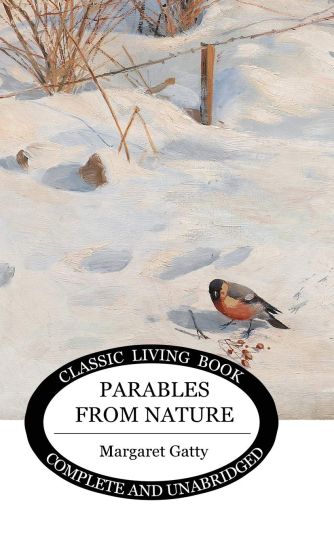
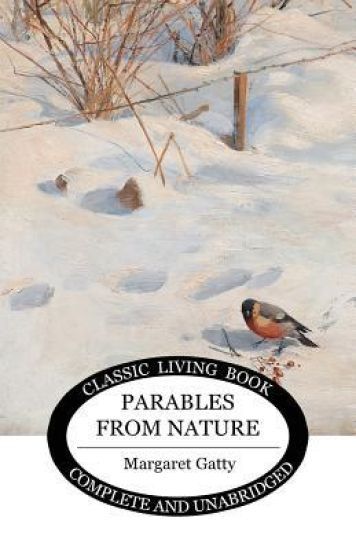
"There are two books," says Sir Thomas Browne, in his Religio Medici, "from whence I collect my divinity; besides that written one of God, another of his servant, Nature-that universal and public manuscript that lies expanded unto the eyes of all: those that never saw Him in the one have discovered Him in the other." Each timeless story uses nature to reveal God in a beautiful way. This edition of Parables From Nature collects the first four series of Margaret Gatty's collection and re-orders them to fit in with the Ambleside Online homeschool curriculum.
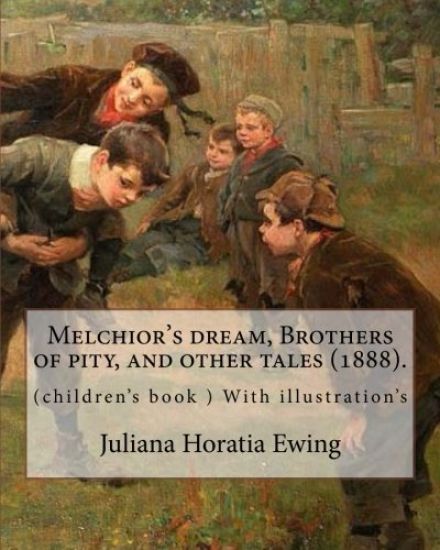
Melchior's dream, Brothers of pity, and other tales (1888). By: Juliana Horatia Ewing, edited By: Margaret Gatty (née Scott, 3 June 1809 - 4 October 1
Margaret Gatty; Juliana Horatia Ewing
Createspace Independent Publishing Platform
2018
nidottu
Margaret Gatty (nee Scott, 3 June 1809 - 4 October 1873) was an English children's author and writer on marine biology. Life: Gatty was born in Burnham on Crouch, Essex, the daughter of the Rev. Alexander John Scott, D. D., a Royal Navy chaplain, who served under and was the trusted friend of Lord Nelson on board the HMS Victory before and during the Battle of Trafalgar. She married the Rev. Alfred Gatty, D. D., Ecclesfield, Yorkshire, in 1839 and moved into the vicarage of Church of St. Mary shortly after. She became a highly useful and popular writer of tales for young people. While her tales were targeted at young people, she hoped that they would influence the minds of adults as well. Among her other books are Parables from Nature, Worlds not Realized, Proverbs Illustrated, and Aunt Judy's Tales. She also conducted Aunt Judy's Magazine, a family publication written by various members of Margaret's large family............... Juliana Horatia Ewing (nee Gatty) (3 August 1841 - 13 May 1885) was an English writer of children's stories. She displayed sympathetic insight into children's lives, admiration for things military, and strong religious faith. Youth and marriage: Known as Julie, she was the second of ten children of the Reverend Alfred Gatty, vicar of Ecclesfield in Yorkshire, and Margaret Gatty, who was herself a children's author. The children were educated mainly by her mother, but Julie was often the driving force behind their various activities: drama, botany etc. Later she was responsible for setting up a village library in Ecclesfield and helped out in the parish with her three sisters. Early stories of hers appeared in Charlotte Yonge's magazine Monthly Packet. On 1 June 1867, she married Major Alexander Ewing (1830-1895) of the army pay department. He was also a keen churchgoer, who shared his wife's interest in literature. Within a week of their marriage, the Ewings left England for Fredericton, New Brunswick, Canada, where he had received a new posting. They remained there for two years, before returning to England in 1869 and spending eight years in the army town of Aldershot. Although her husband was sent overseas again, to Malta in 1879 and Sri Lanka in 1881, Ewing's poor health would not allow her to accompany him. The Ewings moved to Trull, Somerset, on his return in 1883, and in 1885, to Bath, in the hopes that the change of air would do her good. However, her health continued to deteriorate, and after two operations, she died there on 13 May 1885. She was given a military funeral at Trull three days later. Her sister Horatia Katharine Frances Gatty (1846-1945) published a memorial of Julie's life and works which includes a publication history of her stories. A later selection includes some of Julie's letters and drawings about Canada. A biography by Gillian Avery appeared in 1961. "Child-novels" Roger Lancelyn Green calls her works the "first outstanding child-novels" in English literature. Her works are notable for their sympathetic insight into child life, their admiration for things military, and their reflection of her strong Anglican faith. They include Mrs. Overtheway's Remembrances (1869), A Flat Iron for a Farthing (1872), Six to Sixteen (1875), Jackanapes (1884), Daddy Darwin's Dovecot (1884), and The Story of a Short Life (1885). The latter story inspired Grace Kimmins to start the Guild of the Poor Brave Things to help children with disabilities in London. Grace (and later Ada Vachell took their motto Laetus sorte mea (Happy in my lot) from Ewing's book. Rudyard Kipling claimed to know her novel Jan of the Windmill (1872-3, 1876) almost by heart.....
The Fairy Godmothers and Other Tales
Margaret Gatty
Createspace Independent Publishing Platform
2015
nidottu
The Mother's Book of Poetry ... with Fifteen Plates.
Margaret Gatty
British Library, Historical Print Editions
2011
pokkari
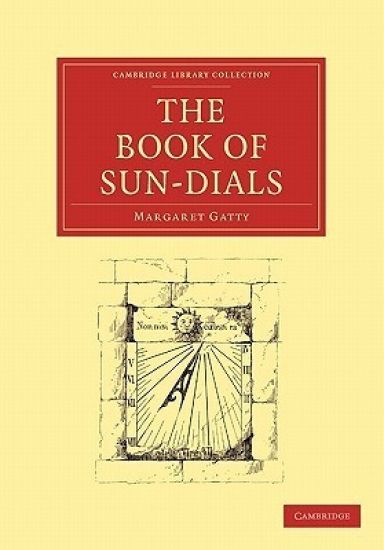
Margaret Gatty (1809–1873) was an English writer best known for her researches on sundials and British seaweeds. After marrying the Rev. Alfred Gatty in 1839, she moved to Ecclesfield, Yorkshire, where she pursued her literary and scientific studies. This volume, first published in 1872, contains detailed descriptions of various styles of sundials, many taken from Gatty's own collection. Over 350 sundials from across Britain and Europe are described, and each sundial's location is noted in this work, which was one of the first popular books on the subject. Examples included range from portable sundials to early Saxon sundials, as well as the more familiar church sundials. This volume is one of Gatty's best known works, and remains a valuable reference for the various types of sundials and the variations and similarities in their mottoes. For more information on this author, see http://orlando.cambridge.org/public/svPeople?person_id=gattma
A Book Of Emblems, With Interpretations Thereof (1872)
Margaret Gatty
KESSINGER PUBLISHING, LLC
2008
nidottu
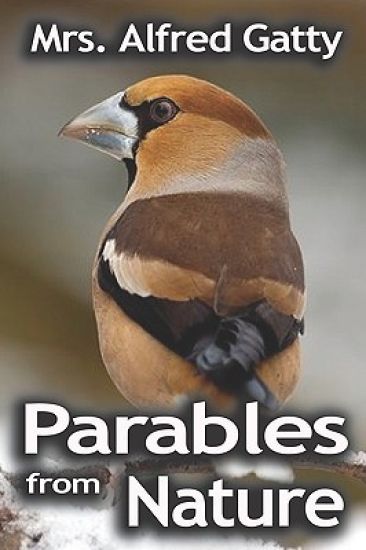
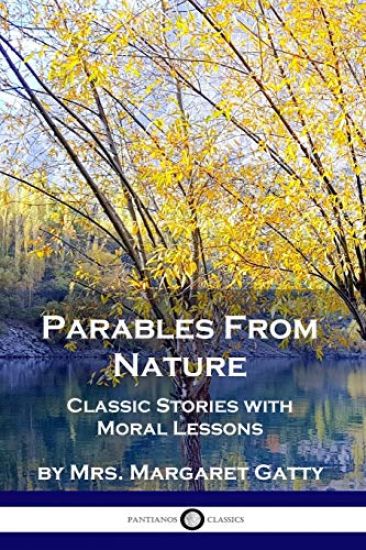
Margaret Gatty's parables celebrate the natural world and provision life guidance: wise and attentive, their moral lessons are valuable for persons of all ages. Many of the stories within contain memorable and commonsense examples of acting the right way. Using the beauty of nature as a medium for expression, the author demonstrates the importance of good conduct and living a life by firm principles. While the teachings are simple to grasp, the author lavishes her stories with expressive language and vocabulary, which serves to make the narrations easier to recall, while offering a challenge for younger readers eager to improve their English skills. Unconstrained by preconceived notions of teaching, Margaret Gatty's fullest talents and instinctive abilities are displayed in these parables. Not content merely with dispensing lessons, the author wants readers to think and appreciate the greatness of the outdoors and the majesty of nature. An overarching lesson in most of these tales is having respect and taking joy in the Earth in which we are born. Born in England in 1809, Margaret Gatty realized her interests in both writing and the natural world from a young age. In adulthood, she was a notable contributor in the field of marine biology - in the modern day, it is for these parables that she is best remembered.