Kirjojen hintavertailu – 12 859 827 kirjaa ja 27 kauppaa

Kirjailija

Margaret Gibson

Kirjat ja teokset yhdessä paikassa: 31 kirjaa, julkaisuja vuosilta 1977–2024, suosituimpiin kuuluu Living and Dying in a Virtual World. Vertaile teosten hintoja ja tarkista saatavuus suomalaisista kirjakaupoista.

31 kirjaa

Kirjojen julkaisuvuodet: 1977–2024.

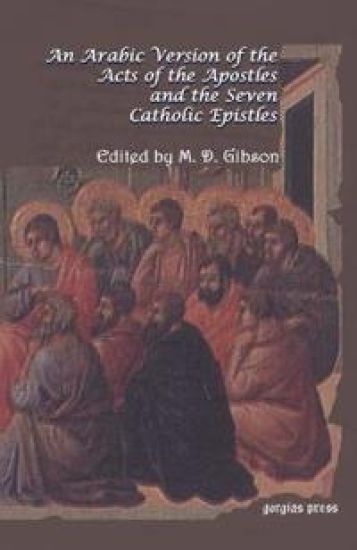
An Arabic Version of the Acts of the Apostles and the Seven Catholic Epistles
The variety of Arabic versions of the New Testament is bewildering. In this work, Gibson provides one particular text of the Acts of the Apostles, as well as those of the Minor Catholic Epistles, based on an eighth or ninth century manuscript, preserved at the Convent of St. Catharine in Sinai. The volume also includes a treatise on the Triune nature of God, with an English translation.
Autumn Grasses

Autumn Grasses

Margaret Gibson

Louisiana State University Press
2003
nidottu
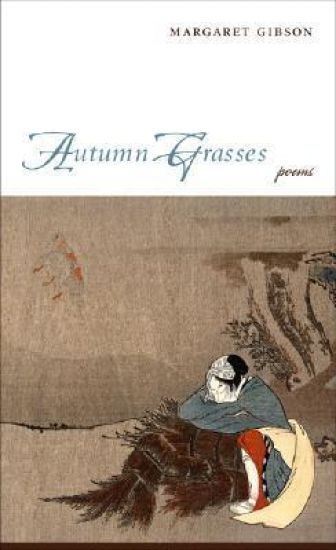
The inspiration for most of the poems in Autumn Grasses was a daily engagement calendar that features the art of Japan- screens, hanging scrolls, painted silks, wood-block prints. In the dynamic stillness of this new visual field, Margaret Gibson steps away from the merely personal- ""No one's home""- to write poems that dip and swoop with the unguarded ease of birds in flight, verse as fluid and seamless as the movement of day to night, season to season. Trusting the power of unknowing, of imagination, these poems are delicate reminders of English-based forms filled with the spirit of Zen. Autumn Grasses is both elegant and spontaneous, vivid and wise. Gibson's rapt engagement with Japanese art has produced swift insight, detail that dazzles, a voice that can range from the serene to the earthy, always with a commitment to seeing each thing as it is, entering each moment with presence and zest.
Icon and Evidence

Icon and Evidence

Margaret Gibson

Louisiana State University Press
2001
nidottu
With Icon and Evidence, Margaret Gibson gives us poems grounded in reverence and inquiry and sensuous delight. She extends and enriches the lyric poem, finding it capacious and durable enough to embrace short and longer meditations, epistles, persona poems, and narratives. Whether their concerns are intimate, spiritual, or social, these are poems of atonement essentially faithful to experience and its revelations, more so than to any specific creed or doctrine. The task to be faithful is both aesthetic and spiritual; to use words faithfully is how Gibson clarifies her encounters with the Absolute within the relative and mutable things of this world. The opening poem situates the poet beneath an endless sky of stars and dark emptiness: ""But dear God, all I want is to be here, / my tiny anguish and my joy / a moment's notice, an equivalent cry."" The book divides into four sections: Canticle, Complaint, Confession, and Compline. Like the Psalms, the poems praise with one voice, then turn to note human failure, error, and injustice. They contemplate the ways of desire, then enter ""the mission of solitude,"" turning from social practice to meditative practice, ""summoned / into pain and darkness by an intrepid joy.""Traditionally, one who makes an icon does so in an attitude of contemplation, the finished icon uniting image and spirit in a presence that challenges and confronts the one who stands before it. Evidence has the force of both data and document, but it also includes ""the evidence of things not seen."" In this rich and powerful collection, Gibson uses both icon and evidence to probe the human heart- its entanglements and its freedom.
Earth Elegy

Earth Elegy

Margaret Gibson

Louisiana State University Press
1997
nidottu
To poems selected from Margaret Gibson's five previous volumes, Earth Elegy adds a book-length collection of new verse. Together they trace the workings of a sensibility that focuses emotional intensity like light through a magnifying glass, bringing its subjects alive in blazes of almost unbearable clarity. Earth Elegy, writes Carolyn Forché, ""partakes of Rilke's apprehension of poetry as 'the natural prayer of the human soul,' issuing from a radiant knowledge of the radical contingency of all life, in the precariousness of its presence and futurity. These are requia of resistance, reminding us that life itself, our sojourn on earth, is the deepest spiritual practice.""Earth Elegy demonstrates Gibson's mastery and powerful reach. Here is a body of work richly rooted in meditative solitude and social struggle, compassionate in its belief in human dignity, passionate in its exploration of the dynamics of radiance and grief in our psychic and social lives.
Earth Elegy

Earth Elegy

Margaret Gibson

Louisiana State University Press
1997
sidottu
To poems selected from Margaret Gibson's five previous volumes, Earth Elegy adds a book-length collection of new verse. Together they trace the workings of a sensibility that focuses emotional intensity like light through a magnifying glass, bringing its subjects alive in blazes of almost unbearable clarity. Earth Elegy, writes Carolyn Forché, ""partakes of Rilke's apprehension of poetry as 'the natural prayer of the human soul,' issuing from a radiant knowledge of the radical contingency of all life, in the precariousness of its presence and futurity. These are requia of resistance, reminding us that life itself, our sojourn on earth, is the deepest spiritual practice.""Earth Elegy demonstrates Gibson's mastery and powerful reach. Here is a body of work richly rooted in meditative solitude and social struggle, compassionate in its belief in human dignity, passionate in its exploration of the dynamics of radiance and grief in our psychic and social lives.
The Vigil

The Vigil

Margaret Gibson

Louisiana State University Press
1993
nidottu
Margaret Gibson is a writer who extends the scope of poetry beyond its accustomed boundaries. Her previous work has ranged from lyric celebrations of natural world to poems that speak out against political injustice and violence. She can turn from a creative reimagining of the life of the photographer and revolutionary Tina Modotti in Mexico to write sensuous meditations influenced by Buddhist and Christian thought. In her newest book, The Vigil, Gibson adroitly interweaves the voices of four women, mothers and daughters of three generations, who, during the course of a single day, reveal the depths of the legacy of alcoholism in their family.""There's nothing wrong here: don't tell anyone"", that has been the guiding principle of these women's lives, enmeshed in patterns of silence and denial, secrecy and lies. But on this one day of startling revelations, the full extent of the family's secrets, kept still in the sweep of years, begins to emerge. As the history of loss and regret unfolds, the women begin to sense those have passed down from mother to daughter. In the end, we see the four women poised, however precariously, on the thresholds of trust, candor, forgiveness, and love. In The Vigil, the lyric and meditative qualities that readers have long since come to expect from the work of Margaret Gibson combine with an unexpected dramatic and narrative unity. The result is a work that is daring and accomplished, a remarkable tour de force of imagination and technical skill, a ringing affirmation of Philip Booth's earlier assessment that Gibson is ""a poet profoundly empowered.
‘Artes’ and Bible in the Medieval West
The articles in this volume fall into two main groups, the one dealing with secular learning and especially grammar and logic, the other with biblical scholarship, while the final articles look at the work of particular scholars. Margaret Gibson, however, would see them all as closely interrelated. Scholars in the Latin West, from the end of Antiquity right through the 12th century, were united in the belief that all knowledge, if true, was compatible and that sapientia was one and coherent. In the same way, she would hold, it is impossible to study only the ’artes’ given their implication for Bible, nor only Bible, when every commentator thought within the context of the ’artes’. Les articles contenus dans ce volume se divisent en deux catégories principales: la première traitant du savoir séculaire et, plus particulièrement, de la grammaire et de la logique; la seconde s’attachant au savoir biblique avec, pour finir, un nombre d’articles examinant l’oeuvre de certains érudits. Margaret Gibson considère toutes ces études comme étant interdépendantes. Les érudits de l’Occident latin, de la fin de l’Antiquité à celle du 12e siècle, étaient unis dans la conviction que toutes connaissances véridiques étaient compatibles entre elles et que la sapience formait un tout cohérent. Par là même, l’auteur maintient qu’il est impossible de s’adonner uniquement à l’étude des artes, étant donnée leur implication pour la Bible, ou même à l’étude de cette dernière, alors que la pensée de chacun des commentateurs était formulée dans le contexte de artes.
Out in the Open

Out in the Open

Margaret Gibson

Louisiana State University Press
1989
nidottu
The lyric and meditative poems Margaret Gibson gives us in Out in the Open are works of contemplation and self-inquiry. ""In the long journey to be other than I am / I have struggled and not got far,"" she writes. Sometimes the journey takes the poet literally out in the open, the mountains, the desert, the fields, the wood. At other times, the journey, the search for vision and for truth, begins a moment's notice in more familiar, domestic surroundings. I lift the glass turn it slowly in the light, its whole body full of light. Suddenly I hold everything I know, myself most of all, in question. Waiting for a grasp of permanent unity and clarity, the poet turns the act of waiting into a discipline that enables the obstructions encountered (desire, fear, ambition, death, disharmony) to become teachers. ""Meeting others we meet ourselves,"" one poem says, and whether the other is a love, or someone dying, a former Nazi pilot, or a blind woman in Zagorsk, there is self-meeting and, sometimes, a deep recognition of something beyond, and yet within, self. At the core of what I am, in that sacred space, light does its work, as it will without my consent or blessing, and better so. Echoes of Taoist, Buddhist, and Christian thinking haunt the mind in these poems, although the vision arrived at in the last poems is syncretic, an existential clarity in which struggle of wills is momentarily stilled. The wind breathes light into our bones, turning stars into power we can touch, impluse we can follow of tell, teaching love, for that is what we are.
Memories of the Future

Memories of the Future

Margaret Gibson

Louisiana State University Press
1986
nidottu
Tina Modotti, known to a few as the beautiful Italian actress in Erich von Stroheim's silent film Greed, was also a dedicated political activist and photographer whose best work has a powerful dignity and integrity. She lived with Edward Weston in post-revolutionary Mexico in the 1920s. During the Spanish Civil war in the 1930s she was a nurse in Madrid and on various fronts. In Spain she knew Antonio Machado and Pablo Neruda, who wrote a poem about her after her death in Mexico in 1942. Margaret Gibson's Memories of the Future is based on Modotti's vivid but enigmatic life. Drawn from daybooks that Gibson imagines Modotti to have kept at the end of her life in Mexico City, these poems give us the reflections of a woman whose intensity and vision, evident in her own photographs, are matched by the depth and breadth of her experience and personal transformation in times of deep social and political upheaval. If we could look into the future, would we go there? In the spiral of hunger's discontent, would we go? Somehow we go. New societies are born much wider than our minds. And if for a moment we doubt, our bodies remember. They believe. We make our bodies available to death, and therefore live. It is the hero's way, every woman knows it. In their attention to beauty and sensuality, light and detail, these poems capture the life of the photographer. In their unhesitating confrontation with pain and loss, they reveal the harsh realities of revolutionary life. Memories of the Future skillfully unfolds the political and artistic consciousness of a woman of sensibility and strong beliefs. It is a major new effort from one of America's best young poets.
Long Walks in the Afternoon

Long Walks in the Afternoon

Margaret Gibson

Louisiana State University Press
1982
nidottu
With a quiet eloquence, the poems in Long Walks in the Afternoon follow ""the deep imagination's long tap into the dark"", inward toward the still and radiant center of the self. But Margaret Gibson's poetry is not self-serving or isolationist. She writes out of the firm conviction that our personal griefs held energies that can move is to reach beyond ourselves and join with others in common struggle. Beginning with poems that struggle against illusion, egotism, and emptiness, the collection progresses to poems that challenge violence, social violence against women, political violence in east Asia and Chilek and in ""Radiation,"" the violence that still reverberates from the bombings of Hiroshima and Nagasaki:We made the scars and the radiant air. We made people invisible as numbers. We did this. In a final section, the desire to know and claim the self is transformed in a sequence of elegies into ""the passion to lose myself in work"" and in love and in the world, to be ""no one."" The meditative mood of Gibson's poems becomes a movement against isolation, a wrestle with our roots and common bonds, and a way of challenging the self to be more openly aligned with creative forces, and to speak out against dishonesty, injustice, chaos, and war.