Kirjojen hintavertailu – 12 859 827 kirjaa ja 27 kauppaa

Kirjailija

Margaret Harris

Kirjat ja teokset yhdessä paikassa: 17 kirjaa, julkaisuja vuosilta 1971–2026, suosituimpiin kuuluu The Full Story of Andy Moog. Vertaile teosten hintoja ja tarkista saatavuus suomalaisista kirjakaupoista.

17 kirjaa

Kirjojen julkaisuvuodet: 1971–2026.

Language Processing in Children and Adults

Language Processing in Children and Adults

Margaret Harris; Max Coltheart

TAYLOR FRANCIS LTD
2026
sidottu
First published in 1986, Language Processing in Children and Adults provides a broad perspective on psychological research into language processing. The book has two main sections. The first deals with language processing in children and describes the processes involved in learning to produce and understand spoken language and the processes involved in learning to read. This section also includes a chapter on development disorders of spoken and written language. The second section deals with adult language processing and has chapters on single word perception, on the comprehension and production of language, and on acquired disorders of language. Previous knowledge of the area is not required as all the basic concepts are explained as they are introduced and the use of technical jargon has been kept to a minimum. Elegantly and engagingly written, the book is unique in adopting such a wide coverage which considers the acquisition and skilled adult use of both spoken and written language, as well as developmental and acquired disorders of language.

A Student's Guide to Developmental Psychology

A Student's Guide to Developmental Psychology

Margaret Harris; Gert Westermann; Sunae Kim; Marina Bazhydai

TAYLOR FRANCIS LTD
2024
sidottu
Now in its second edition, this fundamental undergraduate textbook provides students with everything they need when studying developmental psychology. Thoroughly revised, this book breaks down key topics into easily accessible concepts and provides students with both an overview of traditional research and theory as well as an insight into the latest research findings and techniques. Taking a chronological approach, the key milestones from birth to adolescence are highlighted and clear links between changes in behaviour and developments in brain activity are made. A new chapter provides a global perspective on development, including findings regarding children’s motor, cognitive, literacy, social and emotional development, as well as the importance of cross-cultural studies and their challenges. Each chapter also highlights both typical and atypical developments, as well as discussing and contrasting the effects of genetic and environmental factors. This textbook comes with a wealth of carefully updated pedagogical features, designed to help students engage with the material, including:• Learning objectives for every chapter• Key term definitions• Over 100 colour illustrations• Chapter summaries• Further reading• Suggested essay questions. A Student’s Guide to Developmental Psychology is accompanied by a support material package, featuring a range of helpful supplementary resources including exclusive video clips to illustrate key developmental concepts, multiple-choice questions, flashcards and more. This book is essential reading for all undergraduate students of developmental psychology. It will also be of interest to those in education, healthcare and other subjects requiring an up-to-date and accessible overview of child development.
A Student's Guide to Developmental Psychology

A Student's Guide to Developmental Psychology

Margaret Harris; Gert Westermann; Sunae Kim; Marina Bazhydai

TAYLOR FRANCIS LTD
2024
nidottu
Now in its second edition, this fundamental undergraduate textbook provides students with everything they need when studying developmental psychology. Thoroughly revised, this book breaks down key topics into easily accessible concepts and provides students with both an overview of traditional research and theory as well as an insight into the latest research findings and techniques. Taking a chronological approach, the key milestones from birth to adolescence are highlighted and clear links between changes in behaviour and developments in brain activity are made. A new chapter provides a global perspective on development, including findings regarding children’s motor, cognitive, literacy, social and emotional development, as well as the importance of cross-cultural studies and their challenges. Each chapter also highlights both typical and atypical developments, as well as discussing and contrasting the effects of genetic and environmental factors. This textbook comes with a wealth of carefully updated pedagogical features, designed to help students engage with the material, including:• Learning objectives for every chapter• Key term definitions• Over 100 colour illustrations• Chapter summaries• Further reading• Suggested essay questions. A Student’s Guide to Developmental Psychology is accompanied by a support material package, featuring a range of helpful supplementary resources including exclusive video clips to illustrate key developmental concepts, multiple-choice questions, flashcards and more. This book is essential reading for all undergraduate students of developmental psychology. It will also be of interest to those in education, healthcare and other subjects requiring an up-to-date and accessible overview of child development.
Reading with Writing in Mind

Reading with Writing in Mind

Nancy Charron; Marilyn Fenton; Margaret Harris

Rowman Littlefield
2017
sidottu
Good writing begins with good reading. This book is written on the premise that students must embrace reading as a part of the full process of good writing. It may be used by classroom teachers (Grades 6-12) individually or collectively as members of a professional learning community, by pre-service teachers in a literacy course, or by other educators working to support literacy in the classroom. Interdisciplinary discussions relate to all types or genres of reading and writing. This book offers practical lessons and ideas for teaching and motivating all learners using Universal Design for Learning principles. Formatting provides additional ideas for challenged students, including students with special needs, accelerated learners, and English Language Learners, and is aligned with Common Core State Standards for content subjects as well as for language arts. It takes ideas that were formerly reserved for the upper echelon of students in English language arts and reformulates teaching approaches to reach students across the learning spectrum and in all disciplines. All teachers need to be involved in raising the literacy bar, and this book provides activities and strategies for use in the classroom that can promote success for all learners.
Reading with Writing in Mind

Reading with Writing in Mind

Nancy Charron; Marilyn Fenton; Margaret Harris

Rowman Littlefield
2017
nidottu
Good writing begins with good reading. This book is written on the premise that students must embrace reading as a part of the full process of good writing. It may be used by classroom teachers (Grades 6-12) individually or collectively as members of a professional learning community, by pre-service teachers in a literacy course, or by other educators working to support literacy in the classroom. Interdisciplinary discussions relate to all types or genres of reading and writing. This book offers practical lessons and ideas for teaching and motivating all learners using Universal Design for Learning principles. Formatting provides additional ideas for challenged students, including students with special needs, accelerated learners, and English Language Learners, and is aligned with Common Core State Standards for content subjects as well as for language arts. It takes ideas that were formerly reserved for the upper echelon of students in English language arts and reformulates teaching approaches to reach students across the learning spectrum and in all disciplines. All teachers need to be involved in raising the literacy bar, and this book provides activities and strategies for use in the classroom that can promote success for all learners.
Fondamenti Di Psicologia Dello Sviluppo

Fondamenti Di Psicologia Dello Sviluppo

George Butterworth; Margaret Harris

Psychology Press Ltd
2015
sidottu
Lo scopo della psicologia dello sviluppo è descrivere e spiegare i cambiamenti nel comportamento e nelle attività psicologiche dal periodo prenatale fino alla vecchiaia. Il volume affronta in modo approfondito i principali temi della psicologia dello sviluppo dal periodo prenatale fino alla vecchiaia, esaminandone sia gli aspetti biologici che quelli culturali. Nel testo sono presentate le più importanti teorie dello sviluppo in una prospettiva storica e, in particolare, quelle di Piaget, Vygotskij e Bowlby, che permettono di comprendere gli orientamenti della ricerca contemporanea e forniscono una sintesi moderna rispetto alle radicali posizioni innatiste e ambientaliste. Il testo presenta inoltre recenti ipotesi, sostenute da evidenze sperimentali, che hanno portato a parziali revisioni di queste teorie. Il volume fornisce in tal modo una visione complessiva e aggiornata delle questioni teoriche e metodologiche più rilevanti della psicologia dello sviluppo ed è consigliato per studenti universitari, insegnanti, operatori del settore, genitori e per tutti coloro che sono interessati a questa disciplina. l curatore di questa edizione ha inoltre apportato integrazioni e adattamenti specifici per il pubblico italiano. A tal fine, sono state anche illustrate recenti ricerche italiane rilevanti per i temi trattati nel testo.
Exploring Developmental Psychology

Exploring Developmental Psychology

Margaret Harris

SAGE Publications Inc
2008
sidottu
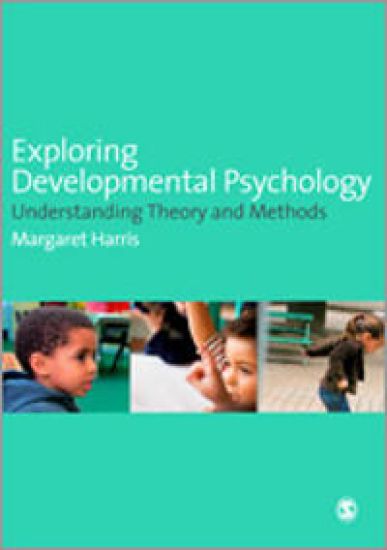
`This is a beautifully written account of the most important ways in which developmental psychologists go about their business, illustrated with carefully chosen articles which are carefully described in order to make the designs, methodologies, analysis and interpretation of the results readily accessible to a non-expert readership. This will become the preferred textbook for those who want an up-to-date, interesting and accessible introduction to developmental psychology research' - Alan Slater, University of Exeter A wide range of techniques is used to investigate children's development. This book, which is aimed at advanced undergraduates and postgraduate students in psychology and related areas, provides a guide to key theories and methods used by researchers. Carefully chosen articles are accompanied by a commentary from the author that, among other things, helps students to understand the rationale for a study, the choice of design and assessment measures, use of statistics and the interpretation of results. A wide range of recent research papers is included to cover observational and experimental methods from infancy to adolescence. The research papers are introduced by two chapters that consider the relationship between theory and methods, explaining how models of development differ from one another and how they can be tested through experimental studies.
Exploring Developmental Psychology

Exploring Developmental Psychology

Margaret Harris

SAGE Publications Inc
2008
nidottu
`This is a beautifully written account of the most important ways in which developmental psychologists go about their business, illustrated with carefully chosen articles which are carefully described in order to make the designs, methodologies, analysis and interpretation of the results readily accessible to a non-expert readership. This will become the preferred textbook for those who want an up-to-date, interesting and accessible introduction to developmental psychology research' - Alan Slater, University of Exeter A wide range of techniques is used to investigate children's development. This book, which is aimed at advanced undergraduates and postgraduate students in psychology and related areas, provides a guide to key theories and methods used by researchers. Carefully chosen articles are accompanied by a commentary from the author that, among other things, helps students to understand the rationale for a study, the choice of design and assessment measures, use of statistics and the interpretation of results. A wide range of recent research papers is included to cover observational and experimental methods from infancy to adolescence. The research papers are introduced by two chapters that consider the relationship between theory and methods, explaining how models of development differ from one another and how they can be tested through experimental studies.
Developmental Psychology

Developmental Psychology

Margaret Harris; George Butterworth

Psychology Press Ltd
2002
nidottu
Developmental Psychology: A Student's Handbook is a major textbook that provides an up-to-date account of theory and research in the rapidly-changing field of child development. Margaret Harris and George Butterworth have produced an outstanding volume that includes recent research from Britain, Europe, and the USA. The text is designed for undergraduate students who have little or no prior knowledge of developmental psychology. Key features include:Specially designed textbook features, such as key term definitions, chapter summaries, and annotated further reading sectionsOver 95 figures and tables, to illustrate principles described in the textAdditional boxed material, to add further insight and aid understandingClear, user-friendly layout, to make topics easy to locateThe book places developmental psychology in its historical context, tracing the emergence of the field as an independent discipline at the end of the 19th century, and following the radical changes that have occurred in our understanding of children's development since then. The development of the child is covered in sequence: through conception, pre-natal development, birth, infancy, and the pre-school years, to the achievements of the school years, and the changes that occur during adolescence. Each period is addressed in terms of cognitive, social, and linguistic development, including discussion of reading, spelling, and mathematical development. There is also consideration of comparative research concerning the development of cognitive abilities in other primates. Developmental Psychology: A Student's Handbook is essential reading for all undergraduate students of developmental psychology. It will also be of interest to those in education and healthcare studying child development.
Developmental Psychology

Developmental Psychology

Margaret Harris; George Butterworth

Psychology Press Ltd
2002
sidottu
Developmental Psychology: A Student's Handbook is a major textbook that provides an up-to-date account of theory and research in the rapidly-changing field of child development. Margaret Harris and George Butterworth have produced an outstanding volume that includes recent research from Britain, Europe, and the USA. The text is designed for undergraduate students who have little or no prior knowledge of developmental psychology. Key features include:Specially designed textbook features, such as key term definitions, chapter summaries, and annotated further reading sectionsOver 95 figures and tables, to illustrate principles described in the textAdditional boxed material, to add further insight and aid understandingClear, user-friendly layout, to make topics easy to locateThe book places developmental psychology in its historical context, tracing the emergence of the field as an independent discipline at the end of the 19th century, and following the radical changes that have occurred in our understanding of children's development since then. The development of the child is covered in sequence: through conception, pre-natal development, birth, infancy, and the pre-school years, to the achievements of the school years, and the changes that occur during adolescence. Each period is addressed in terms of cognitive, social, and linguistic development, including discussion of reading, spelling, and mathematical development. There is also consideration of comparative research concerning the development of cognitive abilities in other primates. Developmental Psychology: A Student's Handbook is essential reading for all undergraduate students of developmental psychology. It will also be of interest to those in education and healthcare studying child development.
Voluntary Organisations and Social Policy in Britain

Voluntary Organisations and Social Policy in Britain

Margaret Harris; Colin Rochester

Red Globe Press
2000
nidottu
The last two decades of the twentieth century saw the most fundamental changes in British social policy since the creation of the welfare state in the 1940s. From Margaret Thatcher's radical reassessment of the role of the state to Tony Blair's 'Third Way', the voluntary sector has been at the heart of these changes. At the beginning of the twenty-first century, voluntary organisations have been cast in leading roles on the social policy stage. They are expected to make key contributions to countering social exclusion; to regenerating communities; to providing social housing and welfare services; to promoting international aid and development; and to developing and sustaining democratic participation and the active community. But how are voluntary sector organisations grappling with the implications of their new, expanded role? How is their relationship with the state changing in practice? This book, which has its origins in an international conference of leading academics in the field, provides answers to these pressing questions. It analyses the numerous and complex ways in which the formulation and implementation of social policy is dependent on the contributions of the voluntary sector. It discusses the impact of the new policy environment on voluntary organisations. And it suggests that the successful implementation of social policy requires government to acknowledge and nurture the distinctive features and contributions of voluntary sector organisations. Voluntary Organisations and Social Policy in Britain is essential reading not only for the many people studying, working in or working with the voluntary sector in Britain but also for anyone who is interested in the formulation and implementation of social policy.
Fondamenti Di Psicologia Dello Sviluppo

Fondamenti Di Psicologia Dello Sviluppo

George Butterworth; Margaret Harris

Psychology Press Ltd
1998
nidottu
Lo scopo della psicologia dello sviluppo è descrivere e spiegare i cambiamenti nel comportamento e nelle attività psicologiche dal periodo prenatale fino alla vecchiaia. Il volume affronta in modo approfondito i principali temi della psicologia dello sviluppo dal periodo prenatale fino alla vecchiaia, esaminandone sia gli aspetti biologici che quelli culturali. Nel testo sono presentate le più importanti teorie dello sviluppo in una prospettiva storica e, in particolare, quelle di Piaget, Vygotskij e Bowlby, che permettono di comprendere gli orientamenti della ricerca contemporanea e forniscono una sintesi moderna rispetto alle radicali posizioni innatiste e ambientaliste. Il testo presenta inoltre recenti ipotesi, sostenute da evidenze sperimentali, che hanno portato a parziali revisioni di queste teorie. Il volume fornisce in tal modo una visione complessiva e aggiornata delle questioni teoriche e metodologiche più rilevanti della psicologia dello sviluppo ed è consigliato per studenti universitari, insegnanti, operatori del settore, genitori e per tutti coloro che sono interessati a questa disciplina. l curatore di questa edizione ha inoltre apportato integrazioni e adattamenti specifici per il pubblico italiano. A tal fine, sono state anche illustrate recenti ricerche italiane rilevanti per i temi trattati nel testo.
Voluntary Agencies

Voluntary Agencies

David Billis; Margaret Harris

Red Globe Press
1996
nidottu
This book brings together papers by voluntary sector scholars which were specially commissioned to celebrate the 15th Anniversary of the LSE's Centre for Voluntary Organisation. The papers address key issues currently facing UK voluntary sector managers including: What place do values have? How is accountability achieved? How can organisational change be handled? Are governing bodies needed? What kind of training is appropriate? Should volunteers be managed? And what does contracting do to voluntary agencies?