Kirjojen hintavertailu – 12 859 818 kirjaa ja 27 kauppaa

Kirjailija

Margaret Heritage

Kirjat ja teokset yhdessä paikassa: 12 kirjaa, julkaisuja vuosilta 2013–2025, suosituimpiin kuuluu Fair and Justice-Oriented Assessment. Vertaile teosten hintoja ja tarkista saatavuus suomalaisista kirjakaupoista.

12 kirjaa

Kirjojen julkaisuvuodet: 2013–2025.

Fair and Justice-Oriented Assessment

Fair and Justice-Oriented Assessment

Margaret Heritage; E. Caroline Wylie

Harvard Educational Publishing Group
2025
nidottu
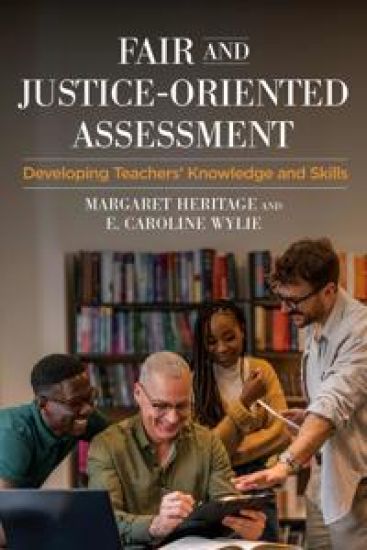
In Fair and Justice-Oriented Assessment, Margaret Heritage and Caroline Wylie propose that the key to improving learning opportunities for all students lies in increasing educators' assessment literacy. Only by examining various assessment practices through a lens of fairness and equity can practitioners best judge their use and value and then develop strategies for implementation that truly elevate student learning in alignment with school and district standards and in ways that are fair and just. To build better assessment literacy, Heritage and Wylie seek to strengthen professional knowledge of ambitious teaching and use of both formative and summative classroom assessment practices. They clearly describe the knowledge and skills teachers need to better orient classroom assessment practices toward more positive learning experiences for all students. Critically, they urge educators to establish substantive learning goals, attend to the ways of eliciting evidence of student learning towards those goals, and reflect on the evidence to take action that intends to advance learning. This book features real-world examples of assessment practices across a range of contexts and content areas, grade levels, and student populations, and shows how assessment literacy competencies can be achieved at scale with support from school and district leaders. Fair and Justice-Oriented Assessment provides a research-based and yet practical perspective on classroom assessment and advocates for the use of equity-oriented curricular and ambitious teaching.
Formative Assessment

Formative Assessment

Margaret Heritage

SAGE Publications Inc
2021
nidottu
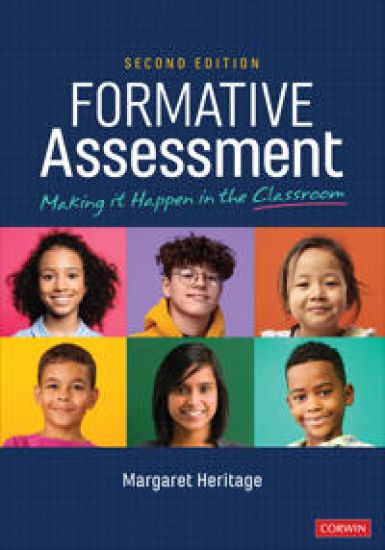
Develop the knowledge and skills needed for successful formative assessment Formative assessment is a process used by teachers and students to keep learning moving forward. In the 10 years since the first edition of Formative Assessment was published, the practice has become a mainstay in classrooms, but that does not mean that it is easy. Education expert Margaret Heritage walks readers through every step of implementation and offers numerous examples that illustrate formative assessment practices across a range of subjects and grade levels. She explains how to articulate learning progressions, goals, and success criteria; select assessment strategies and provide quality feedback; engage students in self-assessment and self-management; and create an environment that values feedback as part of the learning process. Based on the latest research, this second edition addresses: College and career readiness standards, Common Core State Standards, and Next Generation Science StandardsEquity and individual learning needsDiscipline-based and student-centered formative assessmentSocial and emotional learning Written for teachers and those who support them, this book will help all educators develop the skills necessary to get students on the path to success.
Formative Assessment in the Disciplines

Formative Assessment in the Disciplines

Margaret Heritage; E. Caroline Wylie

Harvard Educational Publishing Group
2020
nidottu
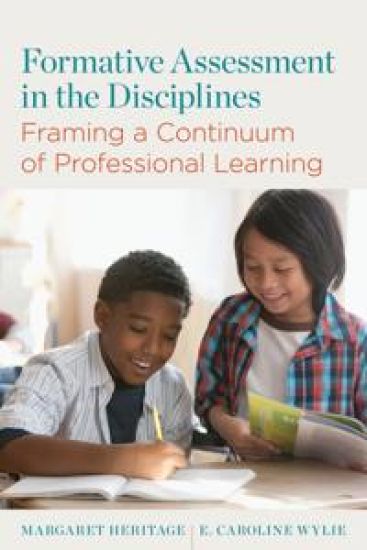
In Formative Assessment in the Disciplines, Margaret Heritage and E. Caroline Wylie explore the interconnection of ambitious teaching, formative assessment, and disciplinary knowledge. The authors outline a framework to help teachers develop and extend their proficiency in enacting discipline-based formative assessment practices across the continuum of preservice and professional learning. The book examines the interaction of formative assessment and disciplinary knowledge in mathematics, science, English language arts, and social studies. Through extended, real-life classroom vignettes, the authors argue that formative assessment is not a set of generic practices but rather is embedded in disciplinary learning. The authors illustrate how teachers' knowledge and skills in discipline-based formative assessment can be developed across each phase of professional expertise, from preservice programs through induction to in-service learning opportunities for teachers and teacher leadership. This approach supports the premise that teachers never stop learning and continue to hone their expertise over many years. Formative Assessment in the Disciplines is a valuable tool for those planning professional learning for teachers at any stage including teacher educators, professional learning providers, and teacher leaders.
The Power of Assessment for Learning

The Power of Assessment for Learning

Margaret Heritage; Christine Ann Harrison

SAGE Publications Inc
2020
nidottu
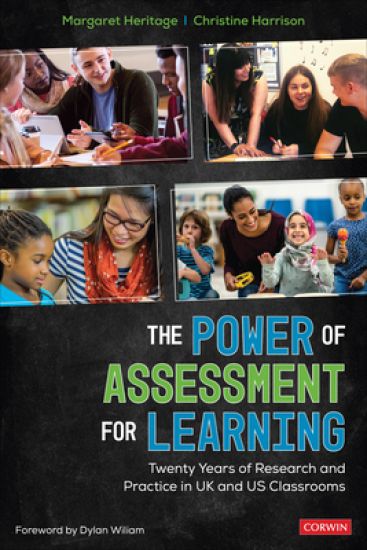
The future of Assessment for Learning 20 years after Inside the Black Box Twenty years after the publication of Inside the Black Box, the landmark review of formative classroom assessment, international education experts Christine Harrison and Margaret Heritage tackle assessment for learning (AfL) anew, with fresh insights gained from two decades of research, theory, and classroom practice. The Power of Assessment for Learning: Twenty Years of Research and Practice in UK & US Classrooms examines the practices and processes of formative assessment over time in both countries, evaluates the benefits accrued to teaching and learning, and considers future developments in growing and sustaining AfL practice. It features: Key AfL ideas, approaches, and supports Vignettes of classroom practice that illustrate AfL in action in the U. K. and U. S. Practice-based evidence to enrich understanding of AfL from both the teacher’s and the student’s perspective Focused on student-centeredness and rich with classroom examples, this book is a ‘sounding board’ for educators to explore and reflect on their own AfL practices and beliefs.
Self-Regulation in Learning

Self-Regulation in Learning

Alison L. Bailey; Margaret Heritage; Linda Allal

Harvard Educational Publishing Group
2018
nidottu
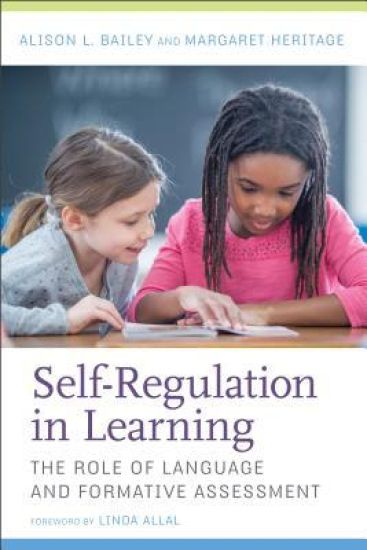
In their new book, Alison L. Bailey and Margaret Heritage illustrate how to help students become more self-regulated learners—that is, to be able to monitor and take charge of their own learning when working independently and in groups. Language provides the foundation for the development of self-regulatory skills, enabling students to express themselves and negotiate interactions with others; the demands of these self-regulatory processes in turn can support the development of rich vocabulary and social language skills. The authors also emphasize the role of formative assessment as a means of supporting students in engaging in language-rich, selfregulated learning. Self-Regulation in Learning shows how classrooms can be intentionally designed to support ambitious learning. Detailed vignettes from real-life classrooms illustrate the teacher’s role in helping students gradually master the processes of selfregulation, socially shared regulation, and coregulation. Each chapter also includes strategies for addressing the needs of English learners in the general education classroom. Students’ capacity for self-regulation is central to the set of outcomes that constitute college and career readiness: communicating and collaborating effectively, problem-solving, setting goals and following through on them, and applying knowledge in deep and rigorous ways. Self-Regulation in Learning represents an invaluable contribution to research-based classroom practice.
Self-Regulation in Learning

Self-Regulation in Learning

Alison L. Bailey; Margaret Heritage; Linda Allal

Harvard Educational Publishing Group
2018
sidottu
In their new book, Alison L. Bailey and Margaret Heritage illustrate how to help students become more self-regulated learners—that is, to be able to monitor and take charge of their own learning when working independently and in groups. Language provides the foundation for the development of self-regulatory skills, enabling students to express themselves and negotiate interactions with others; the demands of these self-regulatory processes in turn can support the development of rich vocabulary and social language skills. The authors also emphasize the role of formative assessment as a means of supporting students in engaging in language-rich, selfregulated learning. Self-Regulation in Learning shows how classrooms can be intentionally designed to support ambitious learning. Detailed vignettes from real-life classrooms illustrate the teacher’s role in helping students gradually master the processes of selfregulation, socially shared regulation, and coregulation. Each chapter also includes strategies for addressing the needs of English learners in the general education classroom. Students’ capacity for self-regulation is central to the set of outcomes that constitute college and career readiness: communicating and collaborating effectively, problem-solving, setting goals and following through on them, and applying knowledge in deep and rigorous ways. Self-Regulation in Learning represents an invaluable contribution to research-based classroom practice.
Using Formative Assessment to Enhance Learning, Achievement, and Academic Self-Regulation
There is convincing evidence that carefully applied classroom assessments can promote student learning and academic self-regulation. These assessments include, but are not limited to, conversations with students, diagnostic test items, and co-created rubrics used to guide feedback for students themselves and their peers. Writing with the practical constraints of teaching in mind, Andrade and Heritage present a concise resource to help pre- and in-service teachers maximize the positive impacts of classroom assessment on teaching. Using Formative Assessment to Enhance Learning, Achievement, and Academic Self-Regulation translates work from leading specialists and explains how to use assessment to improve learning by linking learning theory to formative assessment processes. Sections on goal setting, progress monitoring, interpreting feedback, and revision of goal setting make this a timely addition to assessment courses.
English Language Learners and the New Standards

English Language Learners and the New Standards

Margaret Heritage; Aida Walqui; Robert Linquanti; Kenji Hakuta

Harvard Educational Publishing Group
2015
nidottu
In English Language Learners and the New Standards, three leading scholars present a clear vision and practical suggestions for helping teachers engage ELL students in simultaneously learning subject-area content, analytical practices, and language. This process requires three important shifts in our perspective on language and language learning—from an individual activity to a socially engaged activity; from a linear process aimed at correctness and fluency, to a developmental process focused oncomprehension and communication; and from a separate area of instruction to an approach that embeds language development in subject-area activities. In English Language Learners and the New Standards, the authors:Clarify the skills and knowledge teachers need to integrate content knowledge and language developmentShow how teachers can integrate formative assessment in ongoing teaching and learningDiscuss key leverage points and stress points in using interim and summative assessments with ELLsProvide classroom vignettes that illustrate key practicesFinally, the authors explain the theories and research that underlie their vision and examine the role of policy in shaping pedagogy and assessment for ELL students.
English Language Learners and the New Standards

English Language Learners and the New Standards

Margaret Heritage; Aida Walqui; Robert Linquanti; Kenji Hakuta

Harvard Educational Publishing Group
2015
sidottu
In English Language Learners and the New Standards, three leading scholars present a clear vision and practical suggestions for helping teachers engage ELL students in simultaneously learning subject-area content, analytical practices, and language. This process requires three important shifts in our perspective on language and language learning—from an individual activity to a socially engaged activity; from a linear process aimed at correctness and fluency, to a developmental process focused oncomprehension and communication; and from a separate area of instruction to an approach that embeds language development in subject-area activities. In English Language Learners and the New Standards, the authors:Clarify the skills and knowledge teachers need to integrate content knowledge and language developmentShow how teachers can integrate formative assessment in ongoing teaching and learningDiscuss key leverage points and stress points in using interim and summative assessments with ELLsProvide classroom vignettes that illustrate key practicesFinally, the authors explain the theories and research that underlie their vision and examine the role of policy in shaping pedagogy and assessment for ELL students.
Formative Assessment in Practice

Formative Assessment in Practice

Margaret Heritage

Harvard Educational Publishing Group
2013
nidottu
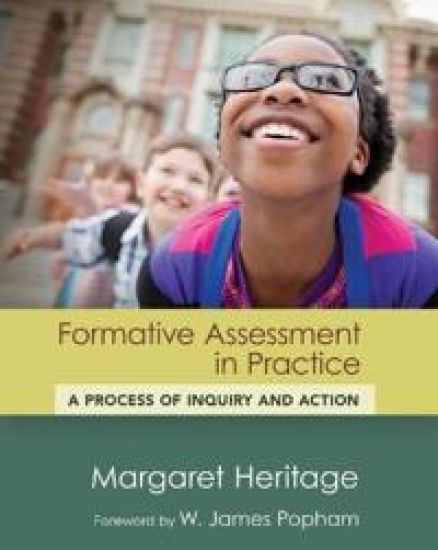
Margaret Heritage presents a practical guide to formative assessment as a process of ""inquiry and action"" essential to twenty-first century learning. In the wake of the development of the Common Core standards and the effort to develop the appropriate assessments to accompany them, formative assessment has attracted increasing attention from policy makers and practitioners alike. Yet this powerful and promising approach is often applied in ways that fail to capture its potential for improving student learning. In her book, Margaret Heritage presents a practical guide to formative assessment as a process of ""inquiry and action"" essential to twenty-first century learning. Heritage's approach is distinctive in that it is grounded in a ""children's rights"" framework--that is, the belief that assessment should be in the best interest of all students, that students should be involved in the decisions that ensue from assessment use, and that opportunities to learn, progress, and succeed will be available to all children equally. Accordingly, she addresses the students' own role in learning about themselves as learners and examines the classroom as a community of practice. The book also includes chapters on learning progressions and the policy contexts that support formative assessment. Skilfully interweaving theory and practice, this book promises to be an invaluable resource for teachers, teacher educators, and those interested in the academic and policy aspects of assessment.
Formative Assessment in Practice

Formative Assessment in Practice

Margaret Heritage

Harvard Educational Publishing Group
2013
sidottu
Margaret Heritage presents a practical guide to formative assessment as a process of ""inquiry and action"" essential to twenty-first century learning. In the wake of the development of the Common Core standards and the effort to develop the appropriate assessments to accompany them, formative assessment has attracted increasing attention from policy makers and practitioners alike. Yet this powerful and promising approach is often applied in ways that fail to capture its potential for improving student learning. In her book, Margaret Heritage presents a practical guide to formative assessment as a process of ""inquiry and action"" essential to twenty-first century learning. Heritage's approach is distinctive in that it is grounded in a ""children's rights"" framework--that is, the belief that assessment should be in the best interest of all students, that students should be involved in the decisions that ensue from assessment use, and that opportunities to learn, progress, and succeed will be available to all children equally. Accordingly, she addresses the students' own role in learning about themselves as learners and examines the classroom as a community of practice. The book also includes chapters on learning progressions and the policy contexts that support formative assessment. Skilfully interweaving theory and practice, this book promises to be an invaluable resource for teachers, teacher educators, and those interested in the academic and policy aspects of assessment.