Kirjojen hintavertailu – 12 903 725 kirjaa ja 27 kauppaa

Kirjailija

Margaret Iversen

Kirjat ja teokset yhdessä paikassa: 11 kirjaa, julkaisuja vuosilta 2002–2018, suosituimpiin kuuluu Alois Riegel. Vertaile teosten hintoja ja tarkista saatavuus suomalaisista kirjakaupoista.

11 kirjaa

Kirjojen julkaisuvuodet: 2002–2018.

Alois Riegel

Alois Riegel

Margaret Iversen

MIT Press
2003
pokkari
Alois Riegl (1858-1905) was one of the founders of art history as a discipline. This is the first general introduction to the work of the celebrated Austrian who brought complex philosophical considerations to bear on art and its history. Ranging easily over diverse fields and among a large group of thinkers, Margaret Iversen establishes Riegl's relevance to recent critical thinking while clearly delineating his extraordinary critical powers. Iversen contextualizes Riegl's thought among the wider cultural crosscurrents of his time, pointing for example to his denunciation of the sub-Semperians and his profound influence on Walter Benjamin. She is equally concerned to relate Riegl's work to contemporary theoretical interests, arguing that he pioneered an approach to art history that took into consideration the role of the spectator. She devotes a chapter to Riegl's theory of spectator/depiction relationships, comparing it with more recent writing on the subject by commentators like Fried, Foucault, and others. In a sympathetic reading of Riegl, Iversen interprets his theory of Kunstwollen or artistic volition, as a concept that ran counter to narrowly empiricist and determinist histories of art that were dominant in his time. She provides extended critical commentary on his most important works, Questions of Style, Late Roman Art Industry, and The Dutch Group Portrait, enriched by explorations of the theoretical background of his systematic art history, including the work of Kant, Hegel, Herbart, and Hildebrand. Iversen also details Erwin Panofsky's early response to Riegl, arguing that Panofsky's search for an authoritative viewpoint collapsed Riegl's multiple typology of style into an art history constructed around a single aesthetic norm.
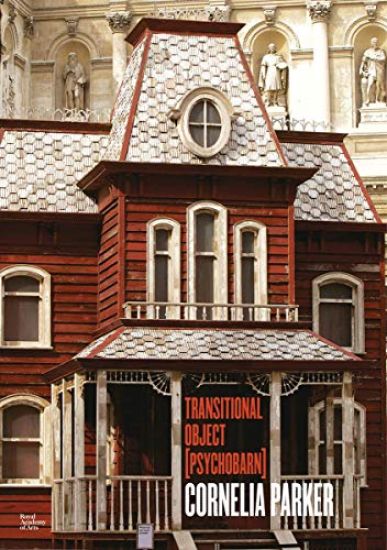
Cornelia Parker

Cornelia Parker

Margaret Iversen; Sheena Wagstaff

Royal Academy of Arts
2018
nidottu
In October 2018 Cornelia Parker's Transitional Object (PsychoBarn) lands in the courtyard of the Royal Academy of Arts, London. This meticulous and unsettling installation - first shown on the roof of The Metropolitan Museum of Art against the skyline of New York's Central Park - is half stage set, half sculpture. The work, which draws on archetypal images of American culture such as the red barn and the infamous Bates motel from Alfred Hitchcock's Psycho, will now be seen against a backdrop of Burlington House's neoclassical buildings. Cornelia Parker was elected a Royal Academician in 2009. She has since had solo shows at the Whitworth Gallery, Manchester, and the Frith Street Gallery, London. She is well known for her installations, including Cold Dark Matter: An Exploded View (1991), a reconstruction of an exploded shed, which now forms part of Tate's collection. Generously illustrated with supporting imagery and installation shots, this book comprises a conversation with the artist and a text on the work's installation in London. Transitional Object (PsychoBarn) will be on display in the courtyard of the Royal Academy of Arts, London, from October 2018 to March 2019.
Photography, Trace, and Trauma

Photography, Trace, and Trauma

Margaret Iversen

University of Chicago Press
2017
sidottu
Photography is often associated with the psychic effects of trauma: the automatic nature of the process, wide-open camera lens, and light-sensitive film record chance details unnoticed by the photographer similar to what happens when a traumatic event bypasses consciousness and lodges deeply in the unconscious mind. Photography, Trace, and Trauma takes a groundbreaking look at photographic art and works in other media that explore this important analogy. Examining photography and film, molds, rubbings, and more, Margaret Iversen considers how these artistic processes can be understood as presenting or simulating a residue, trace, or "index" of a traumatic event. These approaches, which involve close physical contact or the short-circuiting of artistic agency, are favored by artists who wish to convey the disorienting effect and elusive character of trauma. Informing the work of a number of contemporary artists including Tacita Dean, Jasper Johns, Mary Kelly, Gabriel Orozco, and Gerhard Richter the concept of the trace is shown to be vital for any account of the aesthetics of trauma; it has left an indelible mark on the history of photography and art as a whole.
Photography, Trace, and Trauma

Photography, Trace, and Trauma

Margaret Iversen

University of Chicago Press
2017
nidottu
Photography is often associated with the psychic effects of trauma: the automatic nature of the process, wide-open camera lens, and light-sensitive film record chance details unnoticed by the photographer similar to what happens when a traumatic event bypasses consciousness and lodges deeply in the unconscious mind. Photography, Trace, and Trauma takes a groundbreaking look at photographic art and works in other media that explore this important analogy. Examining photography and film, molds, rubbings, and more, Margaret Iversen considers how these artistic processes can be understood as presenting or simulating a residue, trace, or "index" of a traumatic event. These approaches, which involve close physical contact or the short-circuiting of artistic agency, are favored by artists who wish to convey the disorienting effect and elusive character of trauma. Informing the work of a number of contemporary artists including Tacita Dean, Jasper Johns, Mary Kelly, Gabriel Orozco, and Gerhard Richter the concept of the trace is shown to be vital for any account of the aesthetics of trauma; it has left an indelible mark on the history of photography and art as a whole.
Literature Politics & Theory

Literature Politics & Theory

Francis Barker; Peter Hulme; Margaret Iversen; Diana Loxley

Routledge
2013
nidottu
First Published in 2002. Modes and categories inherited from the past no longer seem to fit the reality experienced by a new generation. ‘New Accents’ is intended as a positive response to the initiative offered by such a situation. Each volume in the series will seek to encourage rather than resist the process of change, to stretch rather than reinforce the boundaries that currently define literature and its academic study. The present selection of papers, made from nearly two hundred published, represents in some measure the diversity of the work at the eight Essex Sociology of Literature Conferences.
Writing Art History

Writing Art History

Margaret Iversen; Stephen Melville

University of Chicago Press
2010
sidottu
Faced with an increasingly media-saturated, globalized culture, art historians have begun to ask themselves challenging and provocative questions about the nature of their discipline. Why did the history of art come into being? Is it now in danger of slipping into obsolescence? And, if so, should we care? In "Writing Art History", Margaret Iversen and Stephen Melville address these questions by exploring some assumptions at the discipline's foundation. Their project is to excavate the lost continuities between philosophical aesthetics, contemporary theory, and art history through close readings of figures as various as Michael Baxandall, Martin Heidegger, Jacques Lacan, and Alois Riegl. Ultimately, the authors propose that we might reframe the questions concerning art history by asking what kind of writing might help the discipline to better imagine its actual practices - and its potential futures.
Writing Art History

Writing Art History

Margaret Iversen; Stephen Melville

University of Chicago Press
2010
nidottu
Faced with an increasingly media-saturated, globalized culture, art historians have begun to ask themselves challenging and provocative questions about the nature of their discipline. Why did the history of art come into being? Is it now in danger of slipping into obsolescence? And, if so, should we care? In "Writing Art History", Margaret Iversen and Stephen Melville address these questions by exploring some assumptions at the discipline's foundation. Their project is to excavate the lost continuities between philosophical aesthetics, contemporary theory, and art history through close readings of figures as various as Michael Baxandall, Martin Heidegger, Jacques Lacan, and Alois Riegl. Ultimately, the authors propose that we might reframe the questions concerning art history by asking what kind of writing might help the discipline to better imagine its actual practices - and its potential futures.
Beyond Pleasure

Beyond Pleasure

Margaret Iversen

Pennsylvania State University Press
2007
pokkari
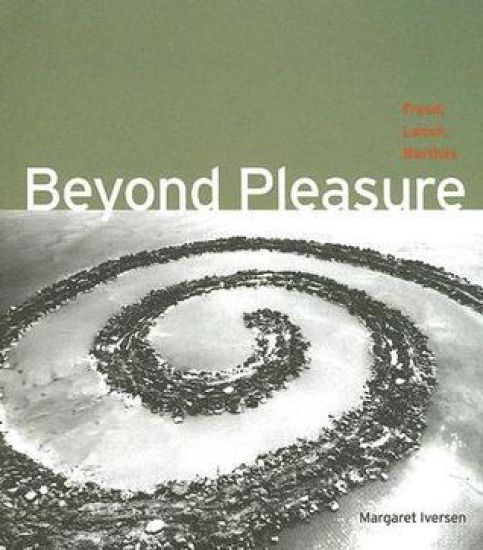
In Beyond the Pleasure Principle, Freud observed that the life-enhancing pleasure principle seems disrupted by something internal to the psyche. He took into account the possibility of a “death instinct” bent on returning the living organism to its origin of undifferentiated matter. In Beyond Pleasure: Freud, Lacan, Barthes, Margaret Iversen uses the writing of Freud, Lacan, the Surrealists, and Roland Barthes to elaborate a theory of art beyond the pleasure principle. Lacan was in close contact with the Surrealists and, early in his career, exchanged ideas with Dalí. This book offers a detailed reading of Dalí’s “paranoiac-critical” tour de force, The Tragic Myth of Millet’s Angelus, in which he demonstrates a method of interpretation that involves the projection and analysis of paranoid fantasies. The author later discusses the aesthetic dimension of the disintegrative death drive explored in Georges Bataille’s Eroticism and in Anton Ehrenzweig’s Hidden Order of Art, both of which inspired Robert Smithson. Iversen also takes up a postwar-era narrative that examines Maya Lin’s Vietnam Veterans Memorial and Robert Smithson’s Spiral Jetty. Beyond Pleasure shows that the aesthetics of Freud’s theory continue to resonate in the contemporary art world.
Literature Politics & Theory

Literature Politics & Theory

Francis Barker; Peter Hulme; Margaret Iversen; Diana Loxley

Routledge
2002
sidottu
First Published in 2002. Modes and categories inherited from the past no longer seem to fit the reality experienced by a new generation. ‘New Accents’ is intended as a positive response to the initiative offered by such a situation. Each volume in the series will seek to encourage rather than resist the process of change, to stretch rather than reinforce the boundaries that currently define literature and its academic study. The present selection of papers, made from nearly two hundred published, represents in some measure the diversity of the work at the eight Essex Sociology of Literature Conferences.