Kirjojen hintavertailu – 12 859 818 kirjaa ja 27 kauppaa
Kirjailija
Margaret MacMillan
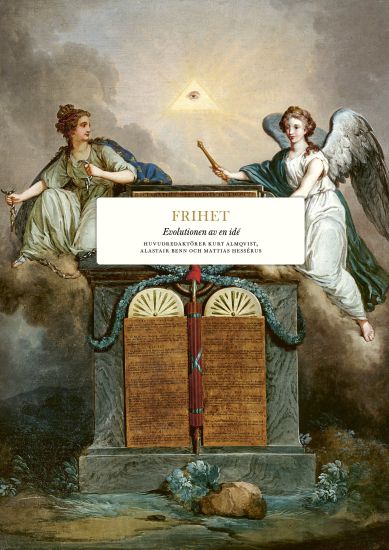
Kirjat ja teokset yhdessä paikassa: 18 kirjaa, julkaisuja vuosilta 2003–2026, suosituimpiin kuuluu Frihet : evolutionen av en idé. Vertaile teosten hintoja ja tarkista saatavuus suomalaisista kirjakaupoista.
Kemi Badenoch; John Bew; Adrian Bradshaw; Hal Brands; Richard Chartres; Christopher Coker; Marie Kawthar Daouda; Peter Frankopan; Jessica Frazier; Francis Gavin; Matthew Goodwin; Katja Hoyer; Jeremy Jennings; Robert Johnson; Alexander Lee; Margaret MacMillan; Janne Haaland Matláry; Richard Miles; Fraser Nelson; Jesse Norman; Iuliia Osmolovska; Charly Salonius-Pasternak; Agnès C. Poirier; Alina Polyakova; Sergey Radchenko; Juliet Samuel; Mary Sarotte; Kori Schake; Mark J. Schiefsky; Brendan Simms; Alexander McCall Smith
Hur har idén om frihet utvecklats och förändrats under århundradena? Vad betyder frihet idag och vad behöver vi göra för att behålla de friheter som generationer män och kvinnor har kämpat, och till och med dött, för? Frihet är en grundförutsättning för att ett samhälle ska frodas och utvecklas. Dess historia är brokig: mänsklighetens eviga kamp mot ödet, våra förfäder som outtröttligt stred för att upprätta tanke- och religionsfrihet, demokratiska friheter i samhället i stort och kampen mot auktoritära regimer och tyranner världen över. I denna essäsamling utforskar ledande akademiker, författare och historiker vad frihet har betytt genom tiderna. De reflekterar över detta ständigt pågående drama och varför vi så villigt offrar oss för friheten när den hotas.
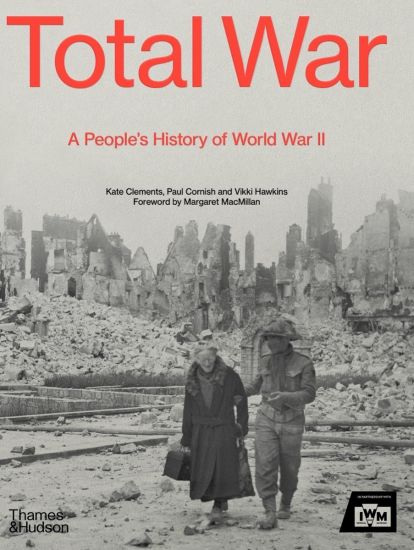
Total War is an illustrated account of the most pivotal historical episode of the 20th century: the Second World War. It was not one single event, but rather the confluence of many simultaneous conflicts across the globe – on land, in the air, across the sea and beneath it. The state of ‘total war’ revealed nations in turmoil, destroying the boundaries between civilians and combatants and unleashing violence, death and destruction on a scale never previously experienced. This authoritative, immersive account of a conflict that forever reshaped the geopolitical landscape is told not only through compelling photographs of wartime events and detailed maps, but also through a series of artefacts that convey the real-life stories of those involved, from Europe, Asia, the United States and beyond. Published to coincide with the much-anticipated opening of the new Second World War and Holocaust galleries at the Imperial War Museums, London, in 2021, Total War is an essential volume for anyone with an interest in the everyday realities of one of the most brutal and significant wars in modern history. Many unique images from the IWM’s Second World War and Holocaust collection are included, some being published for the first time. From German-Jewish passports and dolls made by Latvian war refugees, to Molotov cocktails and US bomber squadron flying gear, the book delves into the significance behind the deeply moving objects reproduced. With precision, sensitivity and a truly global approach, Total War offers a strikingly original visual perspective on an emotive and often controversial subject. With 390 illustrations
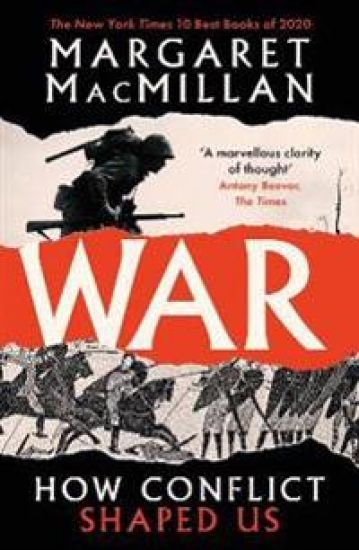
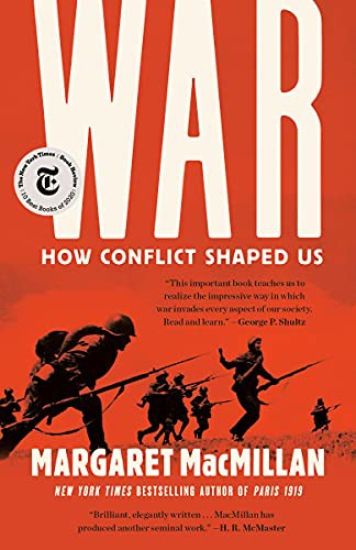
New York Times 10 Best Books of 2020 Sunday Times best books for Autumn 2020 Guardian critics' pick for Autumn 2020 Wall Street Journal notable book of 2020 The time since the Second World War has been seen by some as the longest uninterrupted period of harmony in human history: the 'long peace', as Stephen Pinker called it. But despite this, there has been a military conflict ongoing every year since 1945. The same can be said for every century of recorded history. Is war, therefore, an essential part of being human? In War, Professor Margaret MacMillan explores the deep links between society and war and the questions they raise. We learn when war began - whether among early homo sapiens or later, as we began to organise ourselves into tribes and settle in communities. We see the ways in which war reflects changing societies and how war has brought change - for better and worse. Economies, science, technology, medicine, culture: all are instrumental in war and have been shaped by it - without conflict it we might not have had penicillin, female emancipation, radar or rockets. Throughout history, writers, artists, film-makers, playwrights, and composers have been inspired by war - whether to condemn, exalt or simply puzzle about it. If we are never to be rid of war, how should we think about it and what does that mean for peace?
Is peace an aberration? The bestselling author of Paris 1919 offers a provocative view of war as an essential component of humanity. NAMED ONE OF THE TEN BEST BOOKS OF THE YEAR BY THE NEW YORK TIMES BOOK REVIEW AND THE EAST HAMPTON STAR "Margaret MacMillan has produced another seminal work. . . . She is right that we must, more than ever, think about war. And she has shown us how in this brilliant, elegantly written book."--H. R. McMaster, author of Dereliction of Duty and Battlegrounds: The Fight to Defend the Free World The instinct to fight may be innate in human nature, but war--organized violence--comes with organized society. War has shaped humanity's history, its social and political institutions, its values and ideas. Our very language, our public spaces, our private memories, and some of our greatest cultural treasures reflect the glory and the misery of war. War is an uncomfortable and challenging subject not least because it brings out both the vilest and the noblest aspects of humanity. Margaret MacMillan looks at the ways in which war has influenced human society and how, in turn, changes in political organization, technology, or ideologies have affected how and why we fight. War: How Conflict Shaped Us explores such much-debated and controversial questions as: When did war first start? Does human nature doom us to fight one another? Why has war been described as the most organized of all human activities? Why are warriors almost always men? Is war ever within our control? Drawing on lessons from wars throughout the past, from classical history to the present day, MacMillan reveals the many faces of war--the way it has determined our past, our future, our views of the world, and our very conception of ourselves.
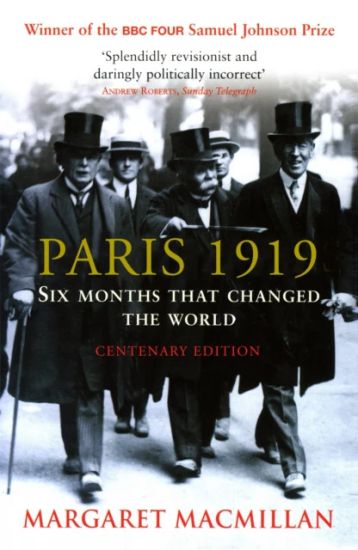
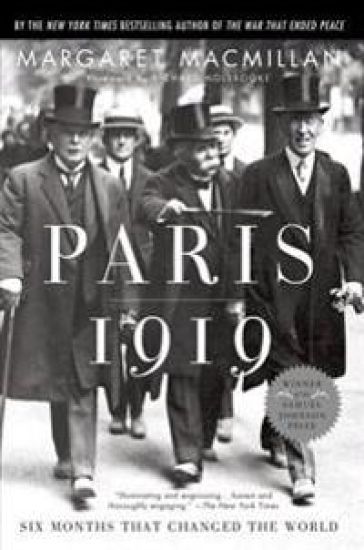
Previously published as PeacemakersBetween January and July 1919, after the war to end all wars, men and women from all over the world converged on Paris for the Peace Conference. At its heart were the leaders of the three great powers - Woodrow Wilson, Lloyd George and Clemenceau. Kings, prime ministers and foreign ministers with their crowds of advisers rubbed shoulders with journalists and lobbyists for a hundred causes - from Armenian independence to women's rights. Everyone had business in Paris that year - T. E. Lawrence, Queen Marie of Romania, Maynard Keynes, Ho Chi Minh. There had never been anything like it before, and there never has been since. For six extraordinary months the city was effectively the centre of world government as the peacemakers wound up bankrupt empires and created new countries. They pushed Russia to the sidelines, alienated China and dismissed the Arabs, struggled with the problems of Kosovo, of the Kurds, and of a homeland for the Jews. The peacemakers, so it has been said, failed dismally; failed above all to prevent another war. Margaret MacMillan argues that they have unfairly been made scapegoats for the mistakes of those who came later. They tried to be evenhanded, but their goals - to make defeated countries pay without destroying them, to satisfy impossible nationalist dreams, to prevent the spread of Bolshevism and to establish a world order based on democracy and reason - could not be achieved by diplomacy. Paris 1919 (originally published as Peacemakers) offers a prismatic view of the moment when much of the modern world was first sketched out.
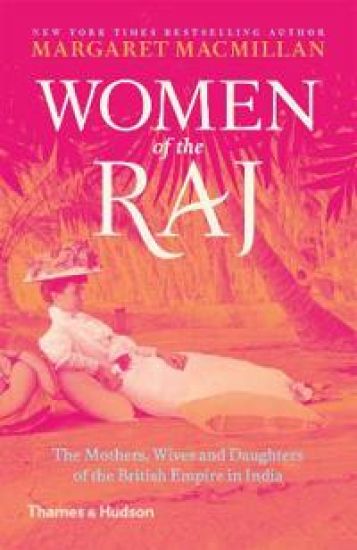
A new edition of this vivid cultural and social history of the daughters, sisters, mothers and wives of the men at the centre of a daring imperialist experiment, revealing India in all its richness and vitality.
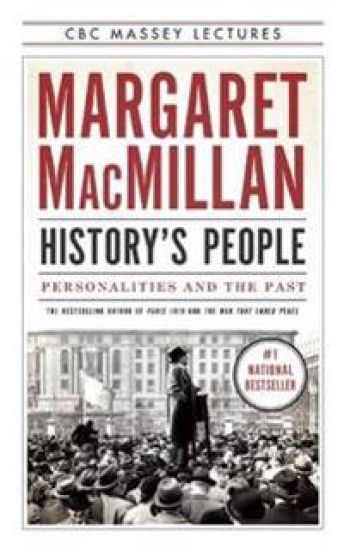
In History's People internationally acclaimed historian Margaret MacMillan gives her own personal selection of figures of the past, women and men, some famous and some little-known, who stand out for her. Some have changed the course of history and even directed the currents of their times. Others are memorable for being risk-takers, adventurers, or observers. She looks at the concept of leadership through Bismarck and the unification of Germany; William Lyon MacKenzie King and the preservation of the Canadian Federation; Franklin Delano Roosevelt and the bringing of a unified United States into the Second World War. She also notes how leaders can make huge and often destructive mistakes, as in the cases of Hitler, Stalin, and Thatcher. Richard Nixon and Samuel de Champlain are examples of daring risk-takers who stubbornly went their own ways, often in defiance of their own societies. Then there are the dreamers, explorers, and adventurers, individuals like Fanny Parkes and Elizabeth Simcoe who manage to defy or ignore the constraints of their own societies. Finally, there are the observers, such as Babur, the first Mughal emperor of India, and Victor Klemperer, a Holocaust survivor, who kept the notes and diaries that bring the past to life. History's People is about the important and complex relationship between biography and history, individuals and their times.
Although difficult to imagine, sixty years ago the Holocaust had practically no visibility in examinations of the Second World War. Yet today it is understood to be not only one of the defining moments of the twentieth century but also a touchstone in a quest for directions on how to avoid such catastrophes. In Lessons of the Holocaust, the distinguished historian Michael R. Marrus challenges the notion that there are definitive lessons to be deduced from the destruction of European Jewry. Instead, drawing on decades of studying, writing about, and teaching the Holocaust, he shows how its “lessons” are constantly challenged, debated, altered, and reinterpreted. A succinct, stimulating analysis by a world-renowned historian, Lessons of the Holocaust is the perfect guide for the general reader to the historical and moral controversies which infuse the interpretation of the Holocaust and its significance.
NAMED ONE OF THE BEST BOOKS OF THE YEAR BY The New York Times Book Review - The Economist - The Christian Science Monitor - Bloomberg Businessweek - The Globe and MailFrom the bestselling and award-winning author of Paris 1919 comes a masterpiece of narrative nonfiction, a fascinating portrait of Europe from 1900 up to the outbreak of World War I. The century since the end of the Napoleonic wars had been the most peaceful era Europe had known since the fall of the Roman Empire. In the first years of the twentieth century, Europe believed it was marching to a golden, happy, and prosperous future. But instead, complex personalities and rivalries, colonialism and ethnic nationalisms, and shifting alliances helped to bring about the failure of the long peace and the outbreak of a war that transformed Europe and the world. The War That Ended Peace brings vividly to life the military leaders, politicians, diplomats, bankers, and the extended, interrelated family of crowned heads across Europe who failed to stop the descent into war: in Germany, the mercurial Kaiser Wilhelm II and the chief of the German general staff, Von Moltke the Younger; in Austria-Hungary, Emperor Franz Joseph, a man who tried, through sheer hard work, to stave off the coming chaos in his empire; in Russia, Tsar Nicholas II and his wife; in Britain, King Edward VII, Prime Minister Herbert Asquith, and British admiral Jacky Fisher, the fierce advocate of naval reform who entered into the arms race with Germany that pushed the continent toward confrontation on land and sea. There are the would-be peacemakers as well, among them prophets of the horrors of future wars whose warnings went unheeded: Alfred Nobel, who donated his fortune to the cause of international understanding, and Bertha von Suttner, a writer and activist who was the first woman awarded Nobel's new Peace Prize. Here too we meet the urbane and cosmopolitan Count Harry Kessler, who noticed many of the early signs that something was stirring in Europe; the young Winston Churchill, then First Lord of the Admiralty and a rising figure in British politics; Madame Caillaux, who shot a man who might have been a force for peace; and more. With indelible portraits, MacMillan shows how the fateful decisions of a few powerful people changed the course of history. Taut, suspenseful, and impossible to put down, The War That Ended Peace is also a wise cautionary reminder of how wars happen in spite of the near-universal desire to keep the peace. Destined to become a classic in the tradition of Barbara Tuchman's The Guns of August, The War That Ended Peace enriches our understanding of one of the defining periods and events of the twentieth century. Praise for The War That Ended Peace "Magnificent . . . The War That Ended Peace will certainly rank among the best books of the centennial crop."--The Economist "Superb."--The New York Times Book Review "Masterly . . . marvelous . . . Those looking to understand why World War I happened will have a hard time finding a better place to start."--The Christian Science Monitor "The debate over the war's origins has raged for years. Ms. MacMillan's explanation goes straight to the heart of political fallibility. . . . Elegantly written, with wonderful character sketches of the key players, this is a book to be treasured."--The Wall Street Journal "A magisterial 600-page panorama."--Christopher Clark, London Review of Books
WINNER of the International Affairs Book of the Year at the Political Book Awards 2014Longlisted for the Samuel Johnson Prize 2013 The First World War followed a period of sustained peace in Europe during which people talked with confidence of prosperity, progress and hope. But in 1914, Europe walked into a catastrophic conflict which killed millions of its men, bled its economies dry, shook empires and societies to pieces, and fatally undermined Europe's dominance of the world. It was a war which could have been avoided up to the last moment-so why did it happen? Beginning in the early nineteenth century, and ending with the assassination of Arch Duke Franz Ferdinand, award-winning historian Margaret MacMillan uncovers the huge political and technological changes, national decisions and -- just as important-the small moments of human muddle and weakness that led Europe from peace to disaster. This masterful exploration of how Europe chose its path towards war will change and enrich how we see this defining moment in our history.
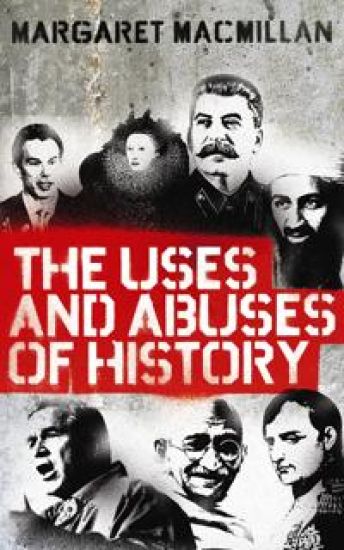
Acclaimed historian Margaret MacMillan explores here the many ways in which history affects us all. She shows how a deeper engagement with history, both as individuals and in the sphere of public debate, can help us understand ourselves and the world better. But she also warns that history can be misused and lead to misunderstanding. History is used to justify religious movements and political campaigns alike. Dictators may suppress history because it undermines their ideas, agendas, or claims to absolute authority. Nationalists may tell false, one-sided, or misleading stories about the past. Political leaders might mobilize their people by telling lies. It is imperative that we have an understanding of the past and avoid these and other common traps in thinking to which many fall prey. This brilliantly reasoned work, alive with incident and figures both great and infamous, will compel us to examine history anew--and skillfully illuminates why it is important to treat the past with care.
The past is capricious enough to support every stance - no matter how questionable. In 2002, the Bush administration decided that dealing with Saddam Hussein was like appeasing Hitler or Mussolini, and promptly invaded Iraq. Were they wrong to look to history for guidance? No; their mistake was to exaggerate one of its lessons while suppressing others of equal importance. History is often hijacked through suppression, manipulation, and, sometimes, even outright deception. MacMillan's book is packed full of examples of the abuses of history. In response, she urges us to treat the past with care and respect.
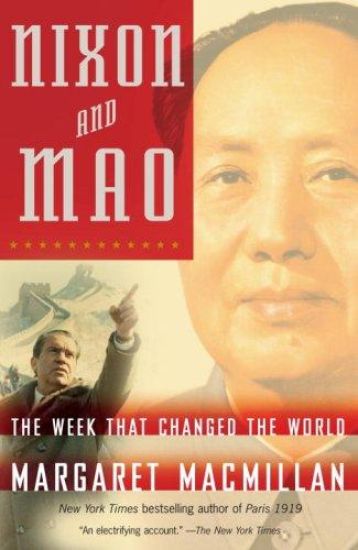
Margaret MacMillan, praised as "a superb writer who can bring history to life" (The Philadelphia Inquirer), brings her extraordinary gifts to one of the most important subjects today-the relationship between the United States and China-and one of the most significant moments in modern history. In February 1972, Richard Nixon, the first American president ever to visit China, and Mao Tse-tung, the enigmatic Communist dictator, met for an hour in Beijing. Their meeting changed the course of history and ultimately laid the groundwork for the complex relationship between China and the United States that we see today. That monumental meeting in 1972-during what Nixon called "the week that changed the world"-could have been brought about only by powerful leaders: Nixon himself, a great strategist and a flawed human being, and Mao, willful and ruthless. They were assisted by two brilliant and complex statesmen, Henry Kissinger and Chou En-lai. Surrounding them were fascinating people with unusual roles to play, including the enormously disciplined and unhappy Pat Nixon and a small-time Shanghai actress turned monstrous empress, Jiang Qing. And behind all of them lay the complex history of two countries, two great and equally confident civilizations: China, ancient and contemptuous yet fearful of barbarians beyond the Middle Kingdom, and the United States, forward-looking and confident, seeing itself as the beacon for the world. Nixon thought China could help him get out of Vietnam. Mao needed American technology and expertise to repair the damage of the Cultural Revolution. Both men wanted an ally against an aggressive Soviet Union. Did they get what they wanted? Did Mao betray his own revolutionary ideals? How did the people of China react to this apparent change in attitude toward the imperialist Americans? Did Nixon make a mistake in coming to China as a supplicant? And what has been the impact of the visit on the United States ever since? Weaving together fascinating anecdotes and insights, an understanding of Chinese and American history, and the momentous events of an extraordinary time, this brilliantly written book looks at one of the transformative moments of the twentieth century and casts new light on a key relationship for the world of the twenty-first century.
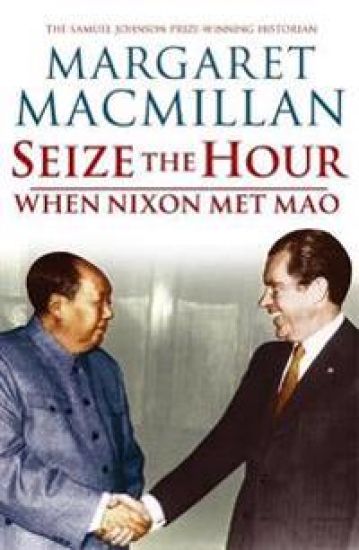
In 1972 Nixon amazed the world by going to China. The first trip ever by a US President was an immense gamble but a brilliant stroke of policy. It marked the end of deep freeze in Sino-American relations and changed the international balance of power for ever. This turning point in history was enacted by extraordinary players: Nixon himself, red-baiter, shrewd statesman and disgraced politician; Mao, frail, erratic, ruthless; the twin Machiavellis Kissinger and Chou En-lai; brittle, unhappy Pat Nixon; and Mao's wife Jiang Qing, the small-time Shanghai actress become scourge of Chinese civilization.
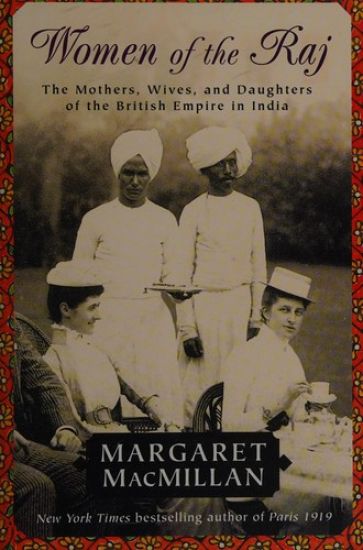
In the nineteenth century, at the height of colonialism, the British ruled India under a government known as the Raj. British men and women left their homes and traveled to this mysterious, beautiful country-where they attempted to replicate their own society. In this fascinating portrait, Margaret MacMillan examines the hidden lives of the women who supported their husbands' conquests-and in turn supported the Raj, often behind the scenes and out of the history books. Enduring heartbreaking separations from their families, these women had no choice but to adapt to their strange new home, where they were treated with incredible deference by the natives but found little that was familiar. The women of the Raj learned to cope with the harsh Indian climate and ward off endemic diseases; they were forced to make their own entertainment-through games, balls, and theatrics-and quickly learned to abide by the deeply ingrained Anglo-Indian love of hierarchy. Weaving interviews, letters, and memoirs with a stunning selection of illustrations, MacMillan presents a vivid cultural and social history of the daughters, sisters, mothers, and wives of the men at the center of a daring imperialist experiment-and reveals India in all its richness and vitality. "A marvellous book . . . Women of the Raj] successfully re-creates] a vanished world that continues to hold a fascination long after the sun has set on the British empire."-The Globe and Mail"MacMillan has that essential quality of the historian, a narrative gift."-The Daily Telegraph "MacMillan is a superb writer who can bring history to life."-The Philadelphia Inquirer "Well researched and thoroughly enjoyable."-Evening Standard
Describes the six months following the end of the First World War when leaders of the great powers, as well as men and women from all over the world, all with their own agendas, converged on Paris to shape the peace, including Woodrow Wilson, Lloyd George, Clemenceau, T. E. Lawrence, Churchill, W. E. B. Dubois, and others. Reprint. 75,000 first printing.