Kirjojen hintavertailu – 12 903 725 kirjaa ja 27 kauppaa

Kirjailija

Margaret Noodin

Kirjat ja teokset yhdessä paikassa: 5 kirjaa, julkaisuja vuosilta 2014–2022, suosituimpiin kuuluu Help Indians Help Themselves. Vertaile teosten hintoja ja tarkista saatavuus suomalaisista kirjakaupoista.

5 kirjaa

Kirjojen julkaisuvuodet: 2014–2022.

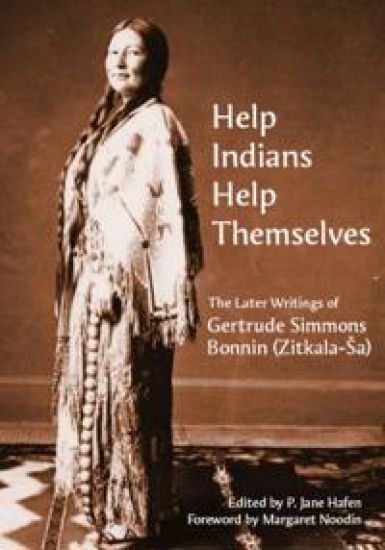
Help Indians Help Themselves

Help Indians Help Themselves

Margaret Noodin; Gertrude Simmons-Bonnin

Texas Tech Press,U.S.
2022
nidottu

Halvin toimitettuna 32,10 €

Zitkala-Ša, also known as Gertrude Simmons Bonnin, was born on the Yankton Sioux reservation in 1876 and went on to become one of the most influential American Indian writer/activists of the twentieth century. "Help Indians Help Themselves": The Later Writings of Gertrude Simmons Bonnin (Zitkala-Ša) is a critical collection of primary documents written by Bonnin who was principally known for the memoir of her boarding school experience, "Help Indians Help Themselves" expands the published work of Zitkala-Ša, adding insight to a life of writing and political activism on behalf of American Indians in the early twentieth century. Edited by P. Jane Hafen, "Help Indians Help Themselves" documents Bonnin's passion for justice in Indian America and outlines the broad scope of her life's work. In the American Indian Magazine, the publication of the Society of American Indians, and through her work for the National Council of American Indians, Bonnin developed her emphasis, as Hafen writes, on "resistance, tribal nationalism, land rights and call for civil rights." "Help Indians Help Themselves" also brings to light Bonnin's letters, speeches, and congressional testimony, which coincide with important developments of the relationship between American Indians and the U. S. federal government. Legislation such as the Citizenship Act of 1924, the Meriam Report of 1928, and the Indian Reorganization Act of 1934 is reflected through the work collected in "Help Indians Help Themselves". In these writings, in newsletters, and in voluminous correspondence—most of which have never before been published—Bonnin advocates tirelessly for "the Indian Cause.
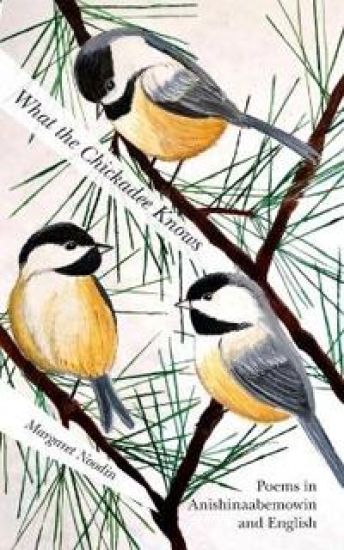
What the Chickadee Knows

What the Chickadee Knows

Margaret Noodin

Wayne State University Press
2020
nidottu

Halvin toimitettuna 22,00 €

Margaret Noodin explains in the preface of her new poetry collection, What the Chickadee Knows (Gijigijigaaneshiinh Gikendaan), "Whether we hear giji-giji-gaane-shii-shii or chick-a-dee-dee-dee depends on how we have been taught to listen. Our world is shaped by the sounds around us and the filter we use to turn thoughts into words. The lines and images here were conceived first in Anishinaabemowin and then in English. They are an attempt to hear and describe the world according to an Anishinaabe paradigm." The book is concerned with nature, history, tradition, and relationships, and these poems illuminate the vital place of the author's tribe both in the past and within the contemporary world. What the Chickadee Knows is a gesture toward a future that includes Anishinaabemowin and other indigenous languages seeing growth and revitalization. This bilingual collection includes Anishinaabemowin and English, with the poems mirroring one another on facing pages. In the first part, "What We Notice" (E-Maaminonendamang), Noodin introduces a series of seasonal poems that invoke Anishinaabe science and philosophy. The second part, "History" (Gaa Ezhiwebag), offers nuanced contemporary views of Anishinaabe history. The poems build in urgency, from observations of the natural world and human connection to poems centered in powerful grief and remembrance for events spanning from the Sandy Lake Tragedy of 1850, which resulted in the deaths of more than four hundred Ojibwe people, to the Standing Rock water crisis of 2016, which resulted in the prosecution of Native protesters and, ultimately, the completion of the Dakota Access Pipeline on sacred land. The intent of What the Chickadee Knows is to create a record of the contemporary Anishinaabe worldview as it is situated between the traditions of the past and as it contributes to the innovation needed for survival into the future. Readers of poetry with an interest in world languages and indigenous voices will need this book.
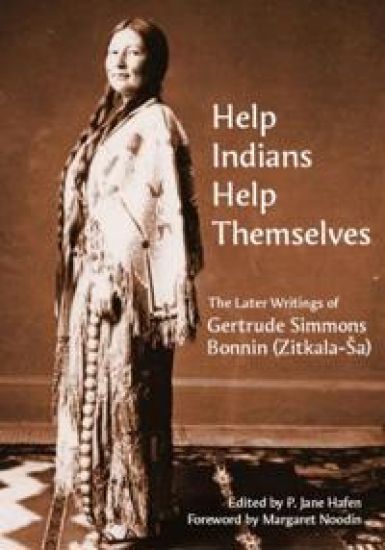
Help Indians Help Themselves

Help Indians Help Themselves

P. Jane Hafen; Margaret Noodin

Texas Tech Press,U.S.
2020
sidottu
Zitkala-Ša, also known as Gertrude Simmons Bonnin, was born on the Yankton Sioux reservation in 1876 and went on to become one of the most influential American Indian writer/activists of the twentieth century. "Help Indians Help Themselves": The Later Writings of Gertrude Simmons Bonnin (Zitkala-Ša) is a critical collection of primary documents written by Bonnin who was principally known for the memoir of her boarding school experience, "Help Indians Help Themselves" expands the published work of Zitkala-Ša, adding insight to a life of writing and political activism on behalf of American Indians in the early twentieth century. Edited by P. Jane Hafen, "Help Indians Help Themselves" documents Bonnin's passion for justice in Indian America and outlines the broad scope of her life's work. In the American Indian Magazine, the publication of the Society of American Indians, and through her work for the National Council of American Indians, Bonnin developed her emphasis, as Hafen writes, on "resistance, tribal nationalism, land rights and call for civil rights." "Help Indians Help Themselves" also brings to light Bonnin's letters, speeches, and congressional testimony, which coincide with important developments of the relationship between American Indians and the U. S. federal government. Legislation such as the Citizenship Act of 1924, the Meriam Report of 1928, and the Indian Reorganization Act of 1934 is reflected through the work collected in "Help Indians Help Themselves". In these writings, in newsletters, and in voluminous correspondence—most of which have never before been published—Bonnin advocates tirelessly for "the Indian Cause.
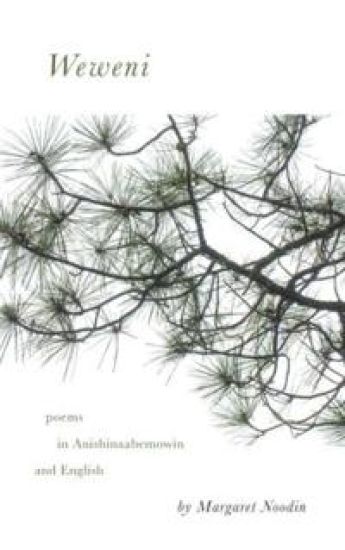
Weweni

Weweni

Margaret Noodin

Wayne State University Press
2015
nidottu
Depending on dialect, the Anishinaabemowin word ""weweni"" expresses thanks, exactitude, ease, and sincerity. In addition, the word for ""relatives"" is ""nindenwemaaganag"": those whose ""enewewe,"" or voices, sound familiar. In Weweni, poet Margaret Noodin brings all of these meanings to bear in a unique bilingual collection. Noodin's warm and perceptive poems were written first in the Modern Anishinaabemowin double-vowel orthography and appear translated on facing pages in English. From planetary tracking to political contrasts, stories of ghosts, and messages of trees, the poems in Weweni use many images to speak to the interconnectedness of relationships, moments of difficulty and joy, and dreams and cautions for the future. As poems move from Anishinaabemowin to English, the challenge of translation offers multiple levels of meaning-English meanings found in Anishinaabe words long as rivers and knotted like nets, English approximations that bend the dominant language in new directions, and sets of signs and ideas unable to move from one language to another. In addition to the individual dialogues played out beween Noodin's poems, the collection as a whole demonstrates a fruitful and respectful dialogue between languages and cultures. Noodin's poems will be proof to students and speakers of Anishinaabemowin that the language can be a vital space for modern expression and, for those new to the language, a lyric invitation to further exploration. Anyone interested in poetry or linguistics will enjoy this one-of-a-kind volume.
Bawaajimo

Bawaajimo

Margaret Noodin

Michigan State University Press
2014
pokkari
Bawaajimo: A Dialect of Dreams in Anishinaabe Language and Literature combines literary criticism, sociolinguistics, native studies, and poetics to introduce an Anishinaabe way of reading. Although nationally specific, the book speaks to a broad audience by demonstrating an indigenous literary methodology. Investigating the language itself, its place of origin, its sound and structure, and its current usage provides new critical connections between North American fiction, Native American literatures, and Anishinaabe narrative. The four Anishinaabe authors discussed in the book, Louise Erdrich, Jim Northrup, Basil Johnston, and Gerald Vizenor, share an ethnic heritage but are connected more clearly by a culture of tales, songs, and beliefs. Each of them has heard, studied, and written in Anishinaabemowin, making their heritage language a part of the backdrop and sometimes the medium, of their work. All of them reference the power and influence of the Great Lakes region and the Anishinaabeakiing, and they connect the landscape to the original language. As they reconstruct and deconstruct the aadizookaan, the traditional tales of Nanabozho and other mythic figures, they grapple with the legacy of cultural genocide and write toward a future that places ancient beliefs in the centre of the cultural horizon.