Kirjojen hintavertailu – 12 859 827 kirjaa ja 27 kauppaa

Kirjailija

Margaret Randall

Kirjat ja teokset yhdessä paikassa: 51 kirjaa, julkaisuja vuosilta 1987–2026, suosituimpiin kuuluu Lupe's Dream. Vertaile teosten hintoja ja tarkista saatavuus suomalaisista kirjakaupoista.

51 kirjaa

Kirjojen julkaisuvuodet: 1987–2026.

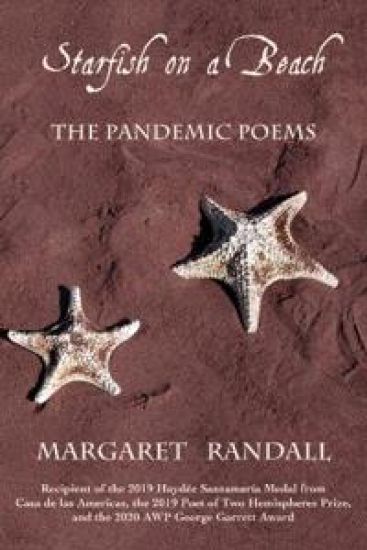
Starfish on a Beach

Starfish on a Beach

Margaret Randall

Wings Press
2020
nidottu
Starfish on a Beach: The Pandemic Poems grew out of the first months of the 2020 COVID-19 pandemic. When some of them were posted on Facebook, readers responded immediately to identify with her take on what we were all experiencing. These poems reflect the fear, isolation, and horror we felt as society - as we watched public life close down, people were urged to stay distant from one another, wear face masks, and wash our hands frequently. Many of us lost jobs; some of us lost businesses. We saw beloved family members and friends sicken and some of them die. We watched helplessly as sources of income disappeared and the future seemed uncertain. But I also began thinking about other aspects of life through the lens of this situation: Have we brought this plague upon ourselves by our carelessness and lack of accountability to global warming? Does our social organization really meet our needs? Why are some communities suffering so much more than others? These poems reflect all this and more. They are offered in concern, anger, and also hope for a different future. These poems predate the killing of George Floyd, so the focus remains on health and isolation.
My Life in 100 Objects

My Life in 100 Objects

Margaret Randall

New Village Press
2020
sidottu
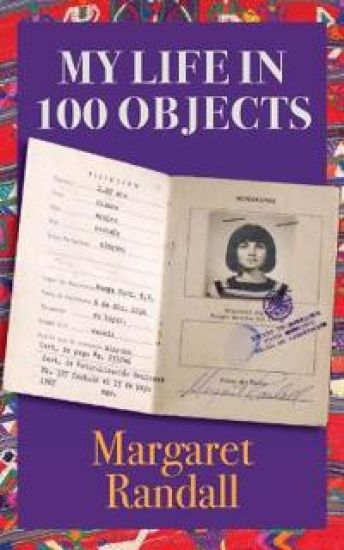
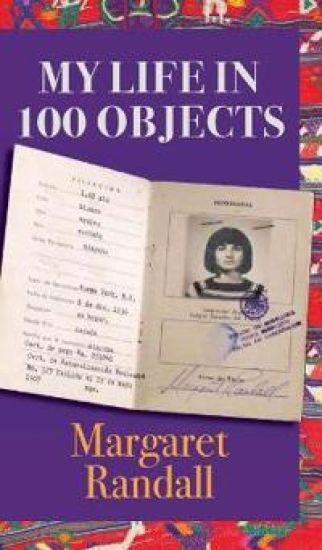
Traces the remarkable life of a feminist poet through the items and images that have have defined her experiences My Life in 100 Objects is a personal reflection on the events and moments that shaped the life and work of one extraordinary woman. With a masterful, poetic voice, Margaret Randall uses talismanic objects and photographs as launching points for her nonlinear narrative. Through each "object," Randall uncovers another part of herself, starting in a museum in Amman, Jordan, and ending in the Latin American Studies Association in Boston. Interwoven throughout are her most precious relationships, her growth as an artist, and her brave, revolutionary spirit. As Randall's adventures often coincide with important moments in history, many of her objects provide a transcontinental glimpse into social upheavals and transitions. She shares memories from her years in Cuba (1969 to 1980) and Nicaragua (1980 to 1984), as well as briefer periods in North Vietnam (immediately preceding the end of the war in 1975), and Peru (during the government of Velasco Alvarado). In her introduction, Randall states, "objects and places have always been alive to me." Her history too is alive, as much of a means to consider our own present as it is to glimpse her vibrant past.
My Life in 100 Objects

My Life in 100 Objects

Margaret Randall

New Village Press
2020
nidottu
Traces the remarkable life of a feminist poet through the items and images that have have defined her experiences My Life in 100 Objects is a personal reflection on the events and moments that shaped the life and work of one extraordinary woman. With a masterful, poetic voice, Margaret Randall uses talismanic objects and photographs as launching points for her nonlinear narrative. Through each "object," Randall uncovers another part of herself, starting in a museum in Amman, Jordan, and ending in the Latin American Studies Association in Boston. Interwoven throughout are her most precious relationships, her growth as an artist, and her brave, revolutionary spirit. As Randall's adventures often coincide with important moments in history, many of her objects provide a transcontinental glimpse into social upheavals and transitions. She shares memories from her years in Cuba (1969 to 1980) and Nicaragua (1980 to 1984), as well as briefer periods in North Vietnam (immediately preceding the end of the war in 1975), and Peru (during the government of Velasco Alvarado). In her introduction, Randall states, "objects and places have always been alive to me." Her history too is alive, as much of a means to consider our own present as it is to glimpse her vibrant past.
I Never Left Home

I Never Left Home

Margaret Randall

Duke University Press
2020
sidottu
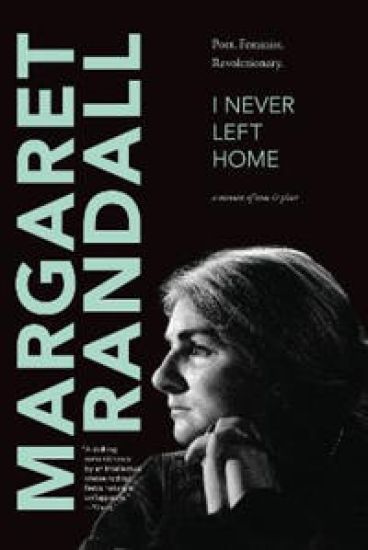
In 1969, poet and revolutionary Margaret Randall was forced underground when the Mexican government cracked down on all those who took part in the 1968 student movement. Needing to leave the country, she sent her four young children alone to Cuba while she scrambled to find safe passage out of Mexico. In I Never Left Home, Randall recounts her harrowing escape and the other extraordinary stories from her life and career. From living among New York's abstract expressionists in the mid-1950s as a young woman to working in the Nicaraguan Ministry of Culture to instill revolutionary values in the media during the Sandinista movement, the story of Randall's life reads like a Hollywood production. Along the way, she edited a bilingual literary journal in Mexico City, befriended Cuban revolutionaries, raised a family, came out as a lesbian, taught college, and wrote over 150 books. Throughout it all, Randall never wavered from her devotion to social justice. When she returned to the United States in 1984 after living in Latin America for twenty-three years, the U. S. Immigration and Naturalization Service ordered her to be deported for her “subversive writing.” Over the next five years, and with the support of writers, entertainers, and ordinary people across the country, Randall fought to regain her citizenship, which she won in court in 1989. As much as I Never Left Home is Randall's story, it is also the story of the communities of artists, writers, and radicals she belonged to. Randall brings to life scores of creative and courageous people on the front lines of creating a more just world. She also weaves political and social analyses and poetry into the narrative of her life. Moving, captivating, and astonishing, I Never Left Home is a remarkable story of a remarkable woman.
Against Atrocity

Against Atrocity

Margaret Randall

Wings Press
2019
nidottu
Against Atrocity is Margaret Randall's first large book of poems since Time's Language: Selected Poems 1959-2018, a major collection covering work from 30 of her books over a period of 60 years. This new book shows that this poet continues to be a relevant and inspiring voice in American letters. It is also a stellar example of contemporary, intelligent protest poetry by a significant writer. Long known and honored for her work throughout the Americas, she is also long admired in the LGBTQ community. Among numerous awards, Randall was awarded the Lillian Hellman and Dashiell Hammett grant for writers victimized by political repression. In 2004 she was the first recipient of PEN New Mexico’s Dorothy Doyle Lifetime Achievement Award for Writing and Human Rights Activism. In 2017, she was only the second American to be awarded the prestigious Medal of Literary Merit by Literatura en el Bravo, Chihuahua, Mexico. Nicaraguan poet Daisy Zamora writes: "These poems restore language to its authentic meaning, remind us of the power of words when expressing the truth, and the redeeming potential of poetry in these terrible times." These are indeed terrible times, ones in which we increasingly find ourselves looking to art and creativity to lift us from the unchecked violence, everyday frustration of deaf governance, and an out-of-control profit motive that too often seems to bury us in a dangerous sense of futility. Randall writes as insightfully about the plight of a single woman or child as she does about global warming or the mysteries of aging. In these poems we find more questions than answers, but they are the questions we must continue to ask ourselves in order for our humanity to survive. Against Atrocity will also see publication this year, in completely bilingual format, by Aguacero in Buenos Aires, Argentina. And some of the poems are included in El lenguaje del tiempo, a book-length sampling of the poet's work coming out from El Angel Editor in Quito, Ecuador to coincide with that country's Poesía en paralelo cero (Poetry on the Equator), an important Latin American poetry festival. Randall's work is being published in Cuba, throughout South America, in Europe and Asia. She is someone who combines the intimate with the international, our small stories with the larger one that shapes us all. Here are poems that pierce complacency's thick skin and provide a road map to agency and hope.
Exporting Revolution

Exporting Revolution

Margaret Randall

Duke University Press
2017
pokkari
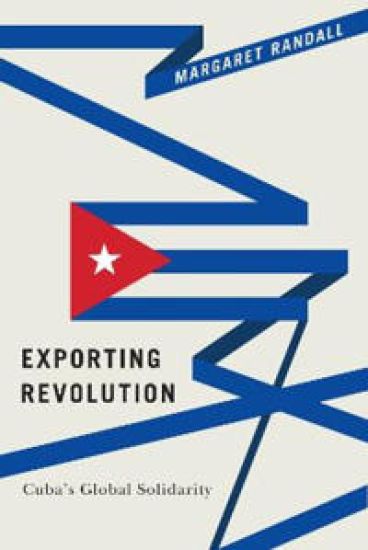
In her new book, Exporting Revolution, Margaret Randall explores the Cuban Revolution's impact on the outside world, tracing Cuba's international outreach in health care, disaster relief, education, literature, art, liberation struggles, and sports. Randall combines personal observations and interviews with literary analysis and examinations of political trends in order to understand what compels a small, poor, and underdeveloped country to offer its resources and expertise. Why has the Cuban health care system trained thousands of foreign doctors, offered free services, and responded to health crises around the globe? What drives Cuba's international adult literacy programs? Why has Cuban poetry had an outsized influence in the Spanish-speaking world? This multifaceted internationalism, Randall finds, is not only one of the Revolution's most central features; it helped define Cuban society long before the Revolution.
Exporting Revolution

Exporting Revolution

Margaret Randall

Duke University Press
2017
sidottu
In her new book, Exporting Revolution, Margaret Randall explores the Cuban Revolution's impact on the outside world, tracing Cuba's international outreach in health care, disaster relief, education, literature, art, liberation struggles, and sports. Randall combines personal observations and interviews with literary analysis and examinations of political trends in order to understand what compels a small, poor, and underdeveloped country to offer its resources and expertise. Why has the Cuban health care system trained thousands of foreign doctors, offered free services, and responded to health crises around the globe? What drives Cuba's international adult literacy programs? Why has Cuban poetry had an outsized influence in the Spanish-speaking world? This multifaceted internationalism, Randall finds, is not only one of the Revolution's most central features; it helped define Cuban society long before the Revolution.
Openings

Openings

Sabra Moore; Lucy R. Lippard; Margaret Randall

New Village Press
2016
sidottu
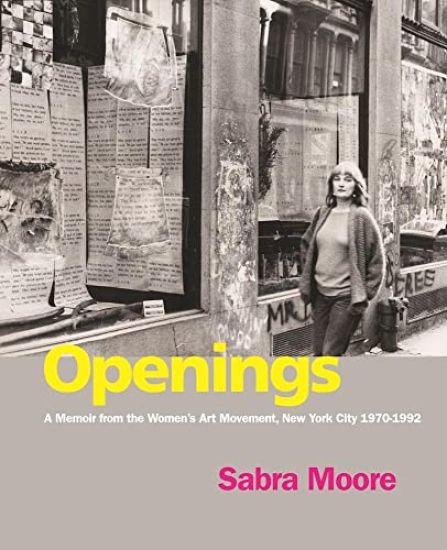
A candid and generous color-illustrated account of women artists creating politically and personally effective art works, exhibitions, and actions over two tumultuous decades This abundantly illustrated personal narrative takes readers through twenty-two years of activism in the women's art movements in New York City during a period of great cultural change. Author Sabra Moore vividly recounts life in this era of social upheaval in which women artists responded to war, racial tension and reconciliation, cultural and aesthetic inequality, and struggles for reproductive freedom. We learn intimately how she and fellow women artists found ways to create politically and personally effective art works, exhibitions, actions, and institutions. The book features Moore's involvement in pivotal art organizations of this time and her own development as an artist, counterbalanced with her connections to family in rural East Texas and friends in New Mexico. Moore was a member of the Heresies Collective, an influential feminist activist group, became editor of their art and politics journal Heresies, and was president of the NYC/Women's Caucus for Art. She helped coordinate and curate many of the earliest large-scale exhibitions of women artists in NYC, including Views by Women Artists (1982), and the collaborative shows Reconstruction Project and Connections Project/Conexus. Moore was a principle organizer of the 1984 demonstration against MoMA over their lack of inclusion of women artists and was a member of various groundbreaking collaborative arts groups in the 1970s, including Atlantic Gallery and WAR (Women Artists in Revolution). While Openings is an historical narrative of women artists' actions, organizations, and ideas, it also candidly describes their periods of challenge, including the death of sculptor Ana Mendieta and the indictment of her husband and the author's own attempted murder by her former art teacher. The book is illustrated throughout by a treasure of 950 color and black & white images of the art from this momentous period: a valuable collection that is concurrently being archived by Barnard College along with papers, letters, show cards, posters, original artworks, and other documents. This eye-opening book includes forewords by renowned art critic Lucy Lippard and poet/activist Margaret Randall.
Openings

Openings

Sabra Moore; Lucy R. Lippard; Margaret Randall

New Village Press
2016
pokkari
A candid and generous color-illustrated account of women artists creating politically and personally effective art works, exhibitions, and actions over two tumultuous decades This abundantly illustrated personal narrative takes readers through twenty-two years of activism in the women's art movements in New York City during a period of great cultural change. Author Sabra Moore vividly recounts life in this era of social upheaval in which women artists responded to war, racial tension and reconciliation, cultural and aesthetic inequality, and struggles for reproductive freedom. We learn intimately how she and fellow women artists found ways to create politically and personally effective art works, exhibitions, actions, and institutions. The book features Moore's involvement in pivotal art organizations of this time and her own development as an artist, counterbalanced with her connections to family in rural East Texas and friends in New Mexico. Moore was a member of the Heresies Collective, an influential feminist activist group, became editor of their art and politics journal Heresies, and was president of the NYC/Women's Caucus for Art. She helped coordinate and curate many of the earliest large-scale exhibitions of women artists in NYC, including Views by Women Artists (1982), and the collaborative shows Reconstruction Project and Connections Project/Conexus. Moore was a principle organizer of the 1984 demonstration against MoMA over their lack of inclusion of women artists and was a member of various groundbreaking collaborative arts groups in the 1970s, including Atlantic Gallery and WAR (Women Artists in Revolution). While Openings is an historical narrative of women artists' actions, organizations, and ideas, it also candidly describes their periods of challenge, including the death of sculptor Ana Mendieta and the indictment of her husband and the author's own attempted murder by her former art teacher. The book is illustrated throughout by a treasure of 950 color and black & white images of the art from this momentous period: a valuable collection that is concurrently being archived by Barnard College along with papers, letters, show cards, posters, original artworks, and other documents. This eye-opening book includes forewords by renowned art critic Lucy Lippard and poet/activist Margaret Randall.
Blood on the Border

Blood on the Border

Roxanne Dunbar-Ortiz; Margaret Randall

University of Oklahoma Press
2016
nidottu
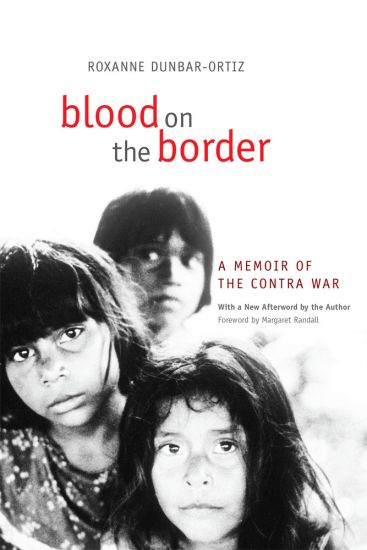
Human rights activist and historian Roxanne Dunbar-Ortiz has been described as ""a force of nature on the page and off."" That force is fully present in Blood on the Border, the third in her acclaimed series of memoirs. Seamlessly blending the personal and the political, Blood on the Border is Dunbar-Ortiz's firsthand account of the decade-long dirty war pursued by the Contras and the United States against the people of Nicaragua. With the 1981 bombing of a Nicaraguan plane in Mexico City - a plane Dunbar-Ortiz herself would have been on if not for a delay - the US-backed Contras (short for los contrarrevolucionarios) launched a major offensive against Nicaragua's Sandinista regime, which the Reagan administration labeled as communist. While her rich political analysis of the US-Nicaraguan relationship bears the mark of a trained historian, Dunbar-Ortiz also writes from her perspective as an intrepid activist who spent months at a time throughout the 1980s in the war-torn country, especially in the remote northeastern region, where the Indigenous Miskitu people were relentlessly assailed and nearly wiped out by CIA-trained Contra mercenaries. She makes painfully clear the connections between what many US Americans today remember only vaguely as the Iran-Contra ""affair"" and ongoing US aggression in the Americas, the Middle East, and around the world - connections made even more explicit in a new afterword written for this edition. A compelling, important, and sobering story on its own, Blood on the Border offers a deeply informed, closely observed, and heartfelt view of history in the making.
She Becomes Time

She Becomes Time

Margaret Randall

Wings Press
2016
nidottu
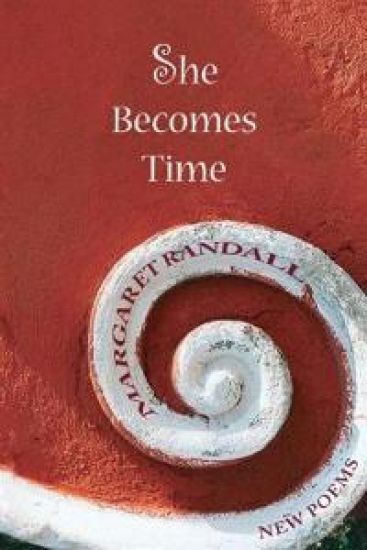
Margaret Randall's new collection, She Becomes Time, continues her legacy of poetry that combines the intimate with the global, history with feeling, memory with the world we touch and see, showing--always in surprising ways--how these impact and intersect each other. The book begins with a group of poems about her childhood, in which the poet reveals secrets and asks unexpected questions. It ends with breathtaking series about Mexico and Cuba, countries the poet knows well and which she takes on without any idealization.
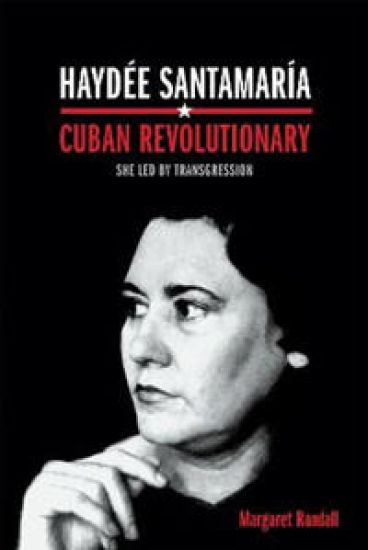
Haydée Santamaría, Cuban Revolutionary

Haydée Santamaría, Cuban Revolutionary

Margaret Randall

Duke University Press
2015
pokkari
Taking part in the Cuban Revolution's first armed action in 1953, enduring the torture and killings of her brother and fiancé, assuming a leadership role in the underground movement, and smuggling weapons into Cuba, Haydée Santamaría was the only woman to participate in every phase of the Revolution. Virtually unknown outside of Cuba, Santamaría was a trusted member of Fidel Castro's inner circle and friend of Che Guevara. Following the Revolution's victory Santamaría founded and ran the cultural and arts institution Casa de las Americas, which attracted cutting-edge artists, exposed Cubans to some of the world's greatest creative minds, and protected queer, black, and feminist artists from state repression. Santamaría's suicide in 1980 caused confusion and discomfort throughout Cuba; despite her commitment to the Revolution, communist orthodoxy's disapproval of suicide prevented the Cuban leadership from mourning and celebrating her in the Plaza of the Revolution. In this impressionistic portrait of her friend Haydée Santamaría, Margaret Randall shows how one woman can help change the course of history.
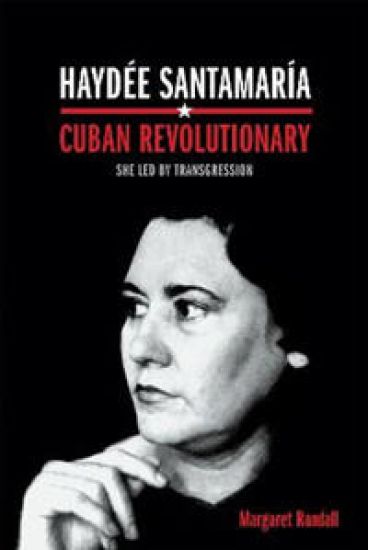
Haydée Santamaría, Cuban Revolutionary

Haydée Santamaría, Cuban Revolutionary

Margaret Randall

Duke University Press
2015
sidottu
Taking part in the Cuban Revolution's first armed action in 1953, enduring the torture and killings of her brother and fiancé, assuming a leadership role in the underground movement, and smuggling weapons into Cuba, Haydée Santamaría was the only woman to participate in every phase of the Revolution. Virtually unknown outside of Cuba, Santamaría was a trusted member of Fidel Castro's inner circle and friend of Che Guevara. Following the Revolution's victory Santamaría founded and ran the cultural and arts institution Casa de las Americas, which attracted cutting-edge artists, exposed Cubans to some of the world's greatest creative minds, and protected queer, black, and feminist artists from state repression. Santamaría's suicide in 1980 caused confusion and discomfort throughout Cuba; despite her commitment to the Revolution, communist orthodoxy's disapproval of suicide prevented the Cuban leadership from mourning and celebrating her in the Plaza of the Revolution. In this impressionistic portrait of her friend Haydée Santamaría, Margaret Randall shows how one woman can help change the course of history.
More Than Things

More Than Things

Margaret Randall

University of Nebraska Press
2013
pokkari
More Than Things is a collection of essays on a variety of political, cultural, and literary issues, all linked by Margaret Randall's attention to power: its use, misuse, and impact on how we live our lives. There are texts on sex, fashion, food, LGBT rights, automobiles, forgiving, women's self-image, writing, books, and more. Two of the essays provide glimpses into present-day Cuba and Tunisia. She reflects on her family; her romantic partners; and the revolutionaries, writers, artists, and activists she has known personally and admired: Roque Dalton, Meridel LeSueur, and Haydée Santamaría. Randall's writings move in unexpected directions, evoked by the "things" and ideas in her life: objects picked up around the world, her children's names, family heirlooms, artistic practices, dreams, poems, and memories. Elegantly weaving together the personal and the political, More Than Things is a tour de force by one of America's most formidable and elegiac writers and political activists.
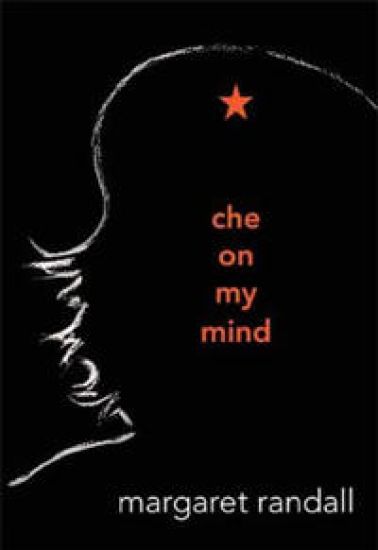
Che on My Mind

Che on My Mind

Margaret Randall

Duke University Press
2013
sidottu
Che on My Mind is an impressionistic look at the life, death, and legacy of Che Guevara by the renowned feminist poet and activist Margaret Randall. Recalling an era and this figure, she writes, "I am old enough to remember the world in which [Che] lived. I was part of that world, and it remains a part of me." Randall participated in the Mexican student movement of 1968 and eventually was forced to leave the country. She arrived in Cuba in 1969, less than two years after Che's death, and lived there until 1980. She became friends with several of Che's family members, friends, and compatriots. In Che on My Mind she reflects on his relationships with his family and fellow insurgents, including Fidel Castro. She is deeply admiring of Che's integrity and charisma and frank about what she sees as his strategic errors. Randall concludes by reflecting on the inspiration and lessons that Che's struggles might offer early twenty-first-century social justice activists and freedom fighters.
Che on My Mind

Che on My Mind

Margaret Randall

Duke University Press
2013
pokkari
Che on My Mind is an impressionistic look at the life, death, and legacy of Che Guevara by the renowned feminist poet and activist Margaret Randall. Recalling an era and this figure, she writes, "I am old enough to remember the world in which [Che] lived. I was part of that world, and it remains a part of me." Randall participated in the Mexican student movement of 1968 and eventually was forced to leave the country. She arrived in Cuba in 1969, less than two years after Che's death, and lived there until 1980. She became friends with several of Che's family members, friends, and compatriots. In Che on My Mind she reflects on his relationships with his family and fellow insurgents, including Fidel Castro. She is deeply admiring of Che's integrity and charisma and frank about what she sees as his strategic errors. Randall concludes by reflecting on the inspiration and lessons that Che's struggles might offer early twenty-first-century social justice activists and freedom fighters.
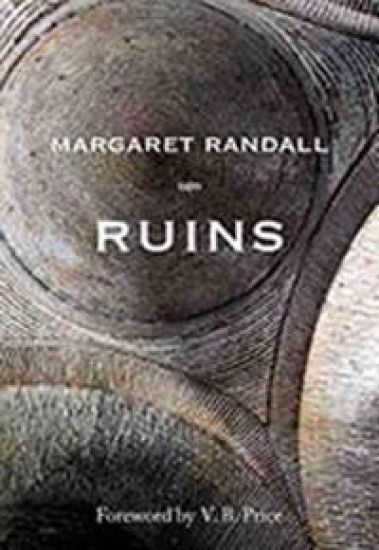
Ruins

Ruins

Margaret Randall

University of New Mexico Press
2011
nidottu
In this poetry collection, Margaret Randall uses the metaphor of ruins to meditate on time's movement--through memory, through cities, through the leavings of history, and through the bodies of people who have experienced time's transformations and traumas. Randall's ruins include not only Chaco Canyon, Hovenweep, Teotihuacan, Machu Picchu, Kiet Siel, Petra, and sites in ancient Greece and Egypt, but also Auschwitz-Birkenau and lives shattered by torture and oppression.""Always there is that moment of arrival, as another reality rises before me, superimposed upon the one I live today. Sometimes the membrane is torn, and I find myself moving in and out. Boundaries dissolve. A mysterious space, between then and now, warns as it invites: promising revelation and maybe also fresh trauma if I am willing to risk its secrets.""--Margaret Randall, in the Introduction
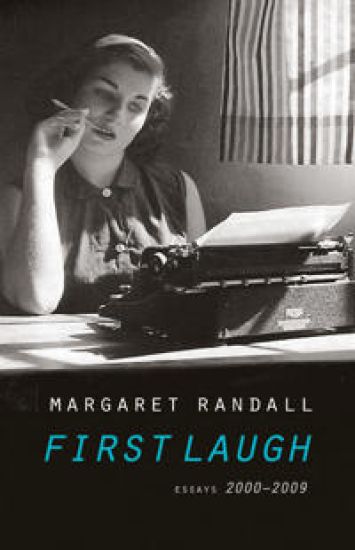
First Laugh

First Laugh

Margaret Randall

Bison Books
2011
pokkari
Concerns about power, its use and abuse, have been at the center of Margaret Randall's work for more than fifty years. And over time Randall has acquired a power all her own, as her unique ability to observe, consider, and distill experience has drawn readers into new experiences and insights. Tempered by time and reflecting a life fully lived and richly examined, her thoughts on race, gender, poetry, landscape, cellular memory, and personal loss speak with eloquence and urgency. First Laugh invites readers to ponder the role of race and racism in the 2008 presidential election; the nature of repressed memory in understanding oneself; the place of poetry in social change; the efforts of Pueblo Indians to earn historical recompense for Spanish colonialist atrocity and subsequent abuse; and the bonds of intimacy and shared political conviction that sustain family and friendship. Over the course of her life, Margaret Randall has found herself with the abstract expressionists of the 1950s, the activists of the 1968 Mexican student movement, the Cuban revolutionaries of the 1970s, the North Vietnamese during the last years of the U. S. war, and the Sandinistas. It is our privilege to have her among us now, documenting moments at once personal and universal and showing us new ways to see.
Something's Wrong with the Cornfields

Something's Wrong with the Cornfields

Margaret Randall

Skylight Press
2011
pokkari
"I think of these as my 'impossible poems,' poems made from the battered language they are leaving us with, the torn and devastated language, the words twisted to mean the opposite of what they have always meant...turning language back on itself, as if going home..." Margaret Randall's Something's Wrong with the Cornfields offers an array of sacred spaces, evocative landscapes, historical acts, and personal infusions. The poems augur around the ability to alternate between the universal and the obscure, between personal orbit and cultural aura. Some poems constrict like bloodward spirals, and others unravel from their topical moorings. As with earlier volumes like Stones Witness, hers is a language in flux, where the willingness to yield alephs and symbols over time gives the poet a new scope to write beyond fixity.
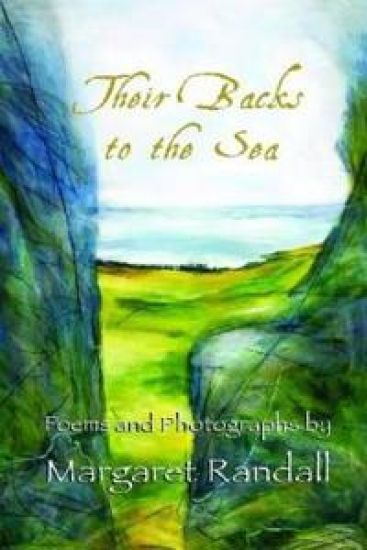
Their Backs to the Sea

Their Backs to the Sea

Margaret Randall

Wings Press
2009
nidottu
Detailing the natural and human history of Rapa Nui - more commonly known as Easter Island - this extraordinary collection of poems and photographs links together the ancient inhabitants of the most isolated, inhabited spot on earth with common concerns and hopes of the present. Illustrating the unique culture and ongoing struggle to survive against dramatic odds, this volume dramatically depicts the basic desires, misgivings, and challenges that human beings have long faced, regardless of time and place.