Kirjojen hintavertailu – 12 903 724 kirjaa ja 27 kauppaa

Kirjailija

Margaret Somerville

Kirjat ja teokset yhdessä paikassa: 14 kirjaa, julkaisuja vuosilta 1999–2025, suosituimpiin kuuluu Singing the Coast. Vertaile teosten hintoja ja tarkista saatavuus suomalaisista kirjakaupoista.

14 kirjaa

Kirjojen julkaisuvuodet: 1999–2025.

When Prayer Doesn't Work

When Prayer Doesn't Work

Margaret Somerville

WILD GOOSE PUBLICATIONS
2025
nidottu
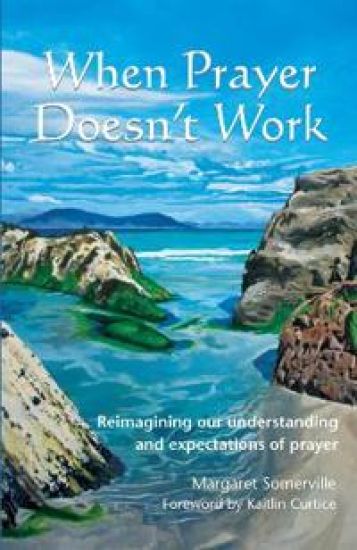
What if prayer is not about having the right words, but about noticing the sacred in washing dishes, the rhythm of breath, or the quiet sharing of tea with a friend? Margaret Somerville invites us to rediscover prayer as a way of living, not a formula to get right. With wisdom drawn from her Celtic roots, lifelong pilgrimage to the Isle of Iona, and deep engagement with Buddhist, Hindu, Muslim and Jewish traditions, she reimagines prayer as presence in the ordinary. From her granny's morning ritual of lighting the coal fire to the contemplative kneading of bread, she shows how holiness shimmers in the small gestures of daily life. Through six pathways - Sacred Space, Release, Naming, Wilderness, Nourishment and Peace - the author offers gentle practices and stories that carry us beyond unanswered petitions into a deeper communion with self, others and the divine mystery. Both memoir and spiritual guide, this book speaks to seekers who are weary of rigid traditions or silence from heaven, and to all who long for prayer that nourishes rather than disappoints. With a foreword by Kaitlin Curtice.
Walking to Connect with Nature and Respond to Anthropogenic Climate Change
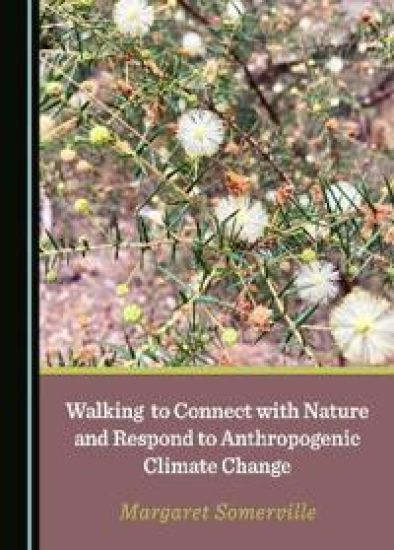
The author, Margaret Somerville, collected the insights contained within the present volume over a year of walking the ridge daily, linking globally significant scientific findings on the origins and deep time evolution of landscapes and living things to her own intensely observed, embodied interactions with rocks, trees, plants, birds, weather and the seasons, informed by decades of work with Indigenous researchers. It draws on the formation of Gondwana Land and how the planet came to be when life emerged from the sea and trees in symbiosis with fungi. The Gondwana forests contained the oldest trees and plants on the planet and the first song birds in the world that are said to be the beginning of music and song. It also addresses seasonal change. This book is a valuable resource for any course that aims to address global issues and bring hope to the global movement of young people facing climate change in their local places.
Riverlands of the Anthropocene

Riverlands of the Anthropocene

Margaret Somerville

Routledge
2021
nidottu
This is an invitation to readers to ponder universal questions about human relations with rivers and water for the precarious times of the Anthropocene. The book asks how humans can learn through sensory embodied encounters with local waterways that shape the architecture of cities and make global connections with environments everywhere. The book considers human becomings with urban waterways to address some of the major conceptual challenges of the Anthropocene, through stories of trauma and healing, environmental activism, and encounters with the living beings that inhabit waterways. Its unique contribution is to bring together Australian Aboriginal knowledges with contemporary western, new materialist, posthuman and Deleuzean philosophies, foregrounding how visual, creative and artistic forms can assist us in thinking beyond the constraints of western thought to enable other modes of being and knowing the world for an unpredictable future. Riverlands of the Anthropocene will be of particular interest to those studying the Anthropocene through the lenses of environmental humanities, environmental education, philosophy, ecofeminism and cultural studies.
Riverlands of the Anthropocene

Riverlands of the Anthropocene

Margaret Somerville

CRC Press Inc
2020
sidottu
This is an invitation to readers to ponder universal questions about human relations with rivers and water for the precarious times of the Anthropocene. The book asks how humans can learn through sensory embodied encounters with local waterways that shape the architecture of cities and make global connections with environments everywhere. The book considers human becomings with urban waterways to address some of the major conceptual challenges of the Anthropocene, through stories of trauma and healing, environmental activism, and encounters with the living beings that inhabit waterways. Its unique contribution is to bring together Australian Aboriginal knowledges with contemporary western, new materialist, posthuman and Deleuzean philosophies, foregrounding how visual, creative and artistic forms can assist us in thinking beyond the constraints of western thought to enable other modes of being and knowing the world for an unpredictable future. Riverlands of the Anthropocene will be of particular interest to those studying the Anthropocene through the lenses of environmental humanities, environmental education, philosophy, ecofeminism and cultural studies.
Public Health and Epidemiology at a Glance

Public Health and Epidemiology at a Glance

Margaret Somerville; K. Kumaran; Rob Anderson

John Wiley Sons Inc
2016
nidottu
First Prize in Public health in the 2017 BMA Medical Book Awards Public Health and Epidemiology at a Glance is a highly visual introduction to the key concepts and major themes of population health. With comprehensive coverage of all the core topics covered at medical school, it helps students understand the determinants of health and their study, from personal lifestyle choices and behaviour, to environmental, social and economic factors. This fully updated new edition features:• More coverage of audit and quality improvement techniques• Brand new sections on maternal and child health, and health of older people• New chapters on social determinants of health and guideline development• Expanded self-assessment materialThis accessible guide is an invaluable resource for medical and healthcare students, junior doctors, and those preparing for a career in epidemiology and public health
Bird on an Ethics Wire

Bird on an Ethics Wire

Margaret Somerville

McGill-Queen's University Press
2015
sidottu
Our physical ecosystem is not indestructible and we have obligations to hold it in trust for future generations. The same is true of our metaphysical ecosystem - the values, principles, attitudes, beliefs, and shared stories on which we have founded our society. In Bird on an Ethics Wire, Margaret Somerville explores the values needed to maintain a world that reasonable people would want to live in and pass on to their descendants. Somerville addresses the conflicts between people who espouse "progressive" values and those who uphold "traditional" ones by casting her attention on the debates surrounding "birth" (abortion and reproductive technologies) and "death" (euthanasia) and shows how words are often used as weapons. She proposes that we should seek to experience amazement, wonder, and awe to enrich our lives and help us to find meaning. Such experiences, Somerville believes, can change how we see the world and live our lives, and affect the decisions we make, especially regarding values and ethics. They can help us to cope with physical or existential suffering, and ultimately put us in touch with the sacred - in either its secular or religious form - which protects what we must not destroy. Experiencing amazement, wonder, and awe, Somerville concludes, can also generate hope, without which our spirit dies. Both individuals and societies need hope, a sense of connection to the future, if the world is to make the best decisions about values in the battles that constitute the current culture wars.
Children, Place and Sustainability

Children, Place and Sustainability

Margaret Somerville; Monica Green

Palgrave Macmillan
2015
sidottu
Through focusing on children's sustainability learning this book examines how school education can address the current environmental problems. It explores children's responses in literacy and language, arts-based approaches, and indigenous studies as well as scientific pedagogies to provide a unique insight into how children learn.
Death Talk

Death Talk

Margaret Somerville

McGill-Queen's University Press
2014
nidottu
There are vast ethical, legal, and social differences between natural death and euthanasia. In Death Talk Margaret Somerville argues that legalizing euthanasia would cause irreparable harm to society's value of respect for human life, which in secular societies is carried primarily by the institutions of law and medicine. Death has always been a central focus of the discussion that we engage in as individuals and as a society in searching for meaning in life. Moreover, we accommodate the inevitable reality of death into the living of our lives by discussing it, that is, through "death talk." Until the last twenty years this discussion occurred largely as part of the practice of organized religion. Today, in industrialized western societies, the euthanasia debate provides a context for such discussion and is part of the search for a new societal-cultural paradigm. Seeking to balance the "death talk" articulated in the euthanasia debate with "life talk," Somerville identifies the very serious harms for individuals and society that would result from accepting euthanasia. A sense of the unfolding euthanasia debate is captured through the inclusion of Somerville's responses to or commentaries on several other authors' contributions.
Water in a Dry Land

Water in a Dry Land

Margaret Somerville

Routledge
2013
nidottu
Water in a Dry Land is a story of research about water as a source of personal and cultural meaning. The site of this exploration is the iconic river system which forms the networks of natural and human landscapes of the Murray-Darling Basin, Australia. In the current geological era of human induced climate change, the desperate plight of the system of waterways has become an international phenomenon, a symbol of the unsustainable ways we relate to water globally. The Murray-Darling Basin extends west of the Great Dividing Range that separates the densely populated east coast of Australia from the sparsely populated inland. Aboriginal peoples continue to inhabit the waterways of the great artesian basin and pass on their cultural stories and practices of water, albeit in changing forms. A key question informing the book is: What can we learn about water from the oldest continuing culture inhabiting the world’s driest continent? In the process of responding to this question a team of Indigenous and non-Indigenous researchers formed to work together in a contact zone of cultural difference within an emergent arts-based ethnography. Photo essays of the artworks and their landscapes offer a visual accompaniment to the text on the Routledge Innovative Ethnography Series website, http://www.innovativeethnographies.net/. This book is perfect for courses in environmental sociology, environmental anthropology, and qualitative methods.
Water in a Dry Land

Water in a Dry Land

Margaret Somerville

Routledge
2013
sidottu
Water in a Dry Land is a story of research about water as a source of personal and cultural meaning. The site of this exploration is the iconic river system which forms the networks of natural and human landscapes of the Murray-Darling Basin, Australia. In the current geological era of human induced climate change, the desperate plight of the system of waterways has become an international phenomenon, a symbol of the unsustainable ways we relate to water globally. The Murray-Darling Basin extends west of the Great Dividing Range that separates the densely populated east coast of Australia from the sparsely populated inland. Aboriginal peoples continue to inhabit the waterways of the great artesian basin and pass on their cultural stories and practices of water, albeit in changing forms. A key question informing the book is: What can we learn about water from the oldest continuing culture inhabiting the world’s driest continent? In the process of responding to this question a team of Indigenous and non-Indigenous researchers formed to work together in a contact zone of cultural difference within an emergent arts-based ethnography. Photo essays of the artworks and their landscapes offer a visual accompaniment to the text on the Routledge Innovative Ethnography Series website, http://www.innovativeethnographies.net/. This book is perfect for courses in environmental sociology, environmental anthropology, and qualitative methods.
Singing the Coast

Singing the Coast

Tony Perkins; Margaret Somerville

Aboriginal Studies Press
2010
nidottu
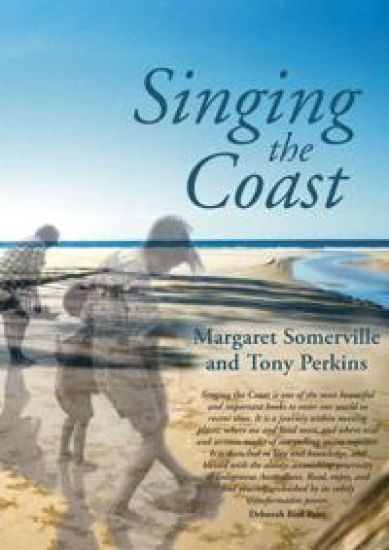
Most Australians live on the narrow coastal strip that fringes our island continent. For Aboriginal people a place comes into being each time it is sung, and it is through this process that places are learned about and cared for. These songs can be for all of us, in the places where Aboriginal stories are rapidly overwritten with the grids of roads and towns. Together Tony Perkins and Margaret Somerville explore one coastal group's experience in maintaining the stories and songs of their country: Perkins' Gumbaynggirr homeland in mid-north coast New South Wales. These stories and songs are unique in their particularities, yet universal in their sense of knowledge, understanding and openness to sharing.
The Ethical Imagination

The Ethical Imagination

Margaret Somerville

McGill-Queen's University Press
2008
nidottu
Renowned ethicist Margaret Somerville tackles some of the most contentious issues of our time and proposes a brilliant new kind of ethical language and thought to help us deal with them. Somerville asks: What does it mean to be human today, when mind-altering scientific breakthroughs are challenging our fundamental ideas of ourselves, how we relate to others and the world around us, and how we find meaning in life? Touching on such controversial subjects as our growing acceptance of new reproductive technologies and the genetic modification of plants and animals, she argues that only if we are willing to undertake a journey of the human imagination will we be able to see, understand, and relate morally to the world around us, allowing us to develop an ethics to guide us.
Body/Landscape Journals

Body/Landscape Journals

Margaret Somerville

Spinifex Press
1999
nidottu
Reading 'Body/Landscape Journals' is like falling through a fault-line, as we respond to poesis, both as poetry and as thought creation. From Pine Gap Women's Peace Camp and interactions with women across Australia, Margaret Somerville conjures up the landscape inhabited by both Indigenous and white women in the places they call home: the mountains, the desert, the tropics. A thoughtful challenge of all that we think, concluding with reflections on the architecture of love.