Kirjojen hintavertailu – 12 859 818 kirjaa ja 27 kauppaa

Kirjailija

Margaretha Rossholm Lagerlöf

Kirjat ja teokset yhdessä paikassa: 6 kirjaa, julkaisuja vuosilta 2000–2020, suosituimpiin kuuluu A Place to Know. Vertaile teosten hintoja ja tarkista saatavuus suomalaisista kirjakaupoista.

Nimi esiintyy myös muodoissa: Margaretha Rossholm Lagerlof

6 kirjaa

Kirjojen julkaisuvuodet: 2000–2020.

Trollbunden

Trollbunden

Margaretha Rossholm Lagerlöf; Elina Druker; Tomas Björk; Tora Wall; Vibeke Röstorp; Vibeke Waallann Hansen; Jeff Werner

Prins Eugens Waldemarsudde
2020
sidottu
I den nordiska konsten kring sekelskiftet 1900 utgör magisk besjälad natur en fascinerande och återkommande tematik. Djupa skogar, dimhöljda ängar och brusande forsar, kom i flera verk från denna tid att befolkas av olika naturväsen såsom troll, älvor och Näcken. Intresset för nordisk folktro och mytologi bland bildkonstnärer, sammanföll i tid med nationella strömningar, inflytanden från symbolismens tankevärld och ett uppsving för nedtecknade sägner och illustrerad sagolitteratur. John Bauers fängslande sagoillustrationer presenteras i denna bok i dialog med verk av hans samtida nordiska konstnärskollegor, däribland J. A. G. Acke, Agnes de Frumerie, Akseli Gallen-Kallela, Ernst Josephson, Theodor Kittelsen, Louis Moe och Hugo Simberg. Angelägna frågeställningar, kopplade till natur, magi och identitet, tematiseras inom den nordiska samtidskonsten hos konstnärer såsom Maria Friberg, Elisabeth Henriksson och Tori Wrånes. Denna rikt illustrerade publikation har tillkommit i samband med den omfattande utställningen Trollbunden – John Bauer och den magiska naturen, som visas på Prins Eugens Waldemarsudde hösten 2020 och vintern 2021. Ett antal framstående experter inom konst, litteratur och etnologi ger intressanta perspektiv på folktro och väsen i nordisk konst, sägner och sagor och på visualiseringen av en besjälad natur då och nu.
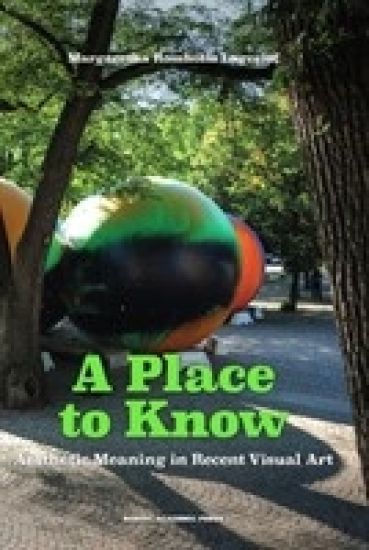
A Place to Know

A Place to Know

Margaretha Rossholm Lagerlof

Nordic Academic Press
2018
sidottu
To engage with the aesthetic is to watch yourself watching  and what you see cannot be reached, for all that exists is the reflection of the vision performed by you. The aesthetic experience offers insights into the consciousness that are both ancient and linked to creative inventions in present-day art culture. In "A Place to Know", Margaretha Rossholm Lagerlöf interprets twelve recent artworks, from Sol LeWitt to Katharina Grosse. She sets out the unique claims and qualities which are inherent in seeing and understanding contemporary art. The book presents four analytical categories of artwork, charting the character of the aesthetic experience and the traditions that determine how we think about visual art. She peels back the layers of consciousness to lay bare the forgotten seams of experience, interwoven with artistic expression. The ancient thus arcs into a deepened awareness of avant-garde art.
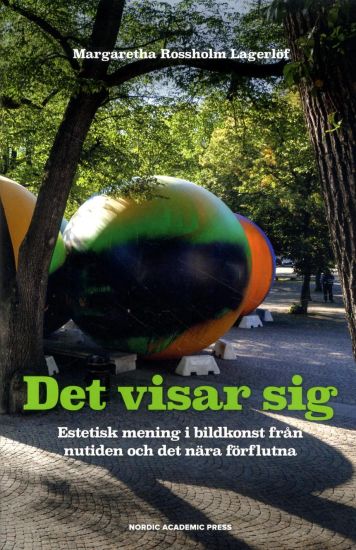
Det visar sig : estetisk mening i bildkonst från nutiden och det nära förflutna
Vad är det som sker när vi tolkar konstverk? Betraktare kan man vara utan att behöva förklara sin känsla. Först när man inser att verken skiljer sig från annan verklighet får man tillgång till dem menar konstvetaren Margaretha Rossholm Lagerlöf. Hon guidar och inspirerar till tankar kring och tolkningar av samtida konst; lika berikande för amatörer som lärda och studenter. Rossholm Lagerlöf studerar här tolv bildkonstverk från de senaste femtio åren av Sol LeWitt, Agnes Martin, Rémy Zaugg, John Chamberlain, Sofia Hultén, Louise Bourgeois, Julie Roberts, Marcel van Eeden, Amy Simon, Katharina Grosse, Ai Weiwei och Danh Vo och de öppnar sig för henne som världar att uppleva i sig själv. Boken är en frukt av ett fördjupat och oberoende samarbete med Magasin III Museum & Foundation for Contemporary Art och är författarens gensvar till en plats där hon upplevt och förstått samtida konst, på genomgripande sätt. Boken ges ut samtidigt på svenska och engelska. Den engelska versionen heter A place to know. ISBN 978-91-88661-39-5.
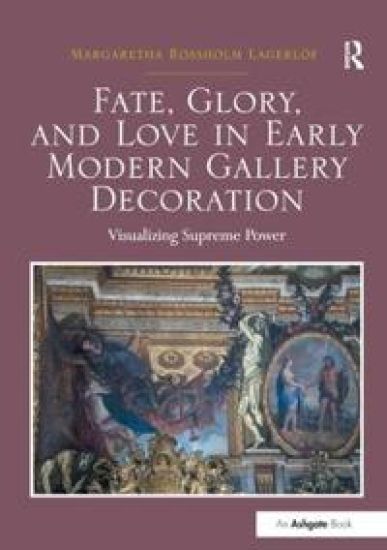
Fate, Glory, and Love in Early Modern Gallery Decoration

Fate, Glory, and Love in Early Modern Gallery Decoration

Margaretha Rossholm Lagerlöf

Routledge
2016
nidottu
Analysing the decorative programmes of the most opulent European palaces of the time, Margaretha Rossholm Lagerlöf investigates how meaning was conveyed through display and visual effects. She explores the visual meaning inherent in the scheme of spatial relations; in effects of scale, perspective, lighting, figures' positions and postures; and in relations among image types. The analysis concerns the interrelations of various kinds of images in the ensembles; the relations between images and physical site; and the address to the beholder. Lagerlöf considers the visual impact of the imagery in conjunction with 'readable' or symbolically 'coded' meanings; thus, the study does not merely subject these decorations to formalist aesthetic principles. She shows the visual meaning generally to sustain the verbal or readable messages, but often in subtle ways, extending or elaborating the meaning. Occasionally, the visual meaning comes forth as an undercurrent or complication, deviating from the proclaimed and symbolic meaning. Fate, Glory, and Love in Early Modern Gallery Decoration contributes to the body of scholarship on visual rhetoric and on how images 'act' out their messages.
Fate, Glory, and Love in Early Modern Gallery Decoration

Fate, Glory, and Love in Early Modern Gallery Decoration

Margaretha Rossholm Lagerlöf

Ashgate Publishing Limited
2013
sidottu
Analysing the decorative programmes of the most opulent European palaces of the time, Margaretha Rossholm Lagerlöf investigates how meaning was conveyed through display and visual effects. She explores the visual meaning inherent in the scheme of spatial relations; in effects of scale, perspective, lighting, figures' positions and postures; and in relations among image types. The analysis concerns the interrelations of various kinds of images in the ensembles; the relations between images and physical site; and the address to the beholder. Lagerlöf considers the visual impact of the imagery in conjunction with 'readable' or symbolically 'coded' meanings; thus, the study does not merely subject these decorations to formalist aesthetic principles. She shows the visual meaning generally to sustain the verbal or readable messages, but often in subtle ways, extending or elaborating the meaning. Occasionally, the visual meaning comes forth as an undercurrent or complication, deviating from the proclaimed and symbolic meaning. Fate, Glory, and Love in Early Modern Gallery Decoration contributes to the body of scholarship on visual rhetoric and on how images 'act' out their messages.
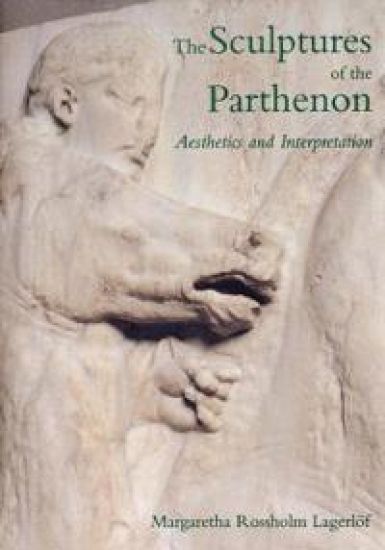
The Sculptures of the Parthenon

The Sculptures of the Parthenon

Margaretha Rossholm Lagerlöf

Yale University Press
2000
sidottu
This generously illustrated book provides a complete overview of current knowledge about the sculptures of the Parthenon and suggests new interpretations of the ancient temple's sculptural creations. Margaretha Lagerlöf steps back from viewing the fragments of the sculptures that remain today to focus more clearly on their meanings in the light of classical Athenian knowledge and society. She considers what the sculptures reveal about the Greek sense of democracy and how they characterize women's lives in a warrior culture. Using Plato's philosophy and the visually oriented similes of his myths, Lagerlöf offers a new decoding of the aesthetic structure of the Parthenon's entire sculptural ensemble. The book compares the sculptures of the pediments to those of the metopes and the frieze, uncovering subtle differences in both the nature and the content of their images. Whereas the pediments represent divine elements, for example, the frieze is seen as the domain of human beings, representing events and also the stage of history when humans no longer have direct access to the presence of the gods. The frieze can be interpreted as an invocation of this presence, a means of regaining closeness with the gods. Using a multifaceted and imaginative approach to the sculptures of the Parthenon, Lagerlöf finds powerful new meaning in them as well as an enhanced appreciation of their Athenian creators.