Kirjojen hintavertailu – 12 903 725 kirjaa ja 27 kauppaa

Kirjailija

Margarita Diaz-Andreu

Kirjat ja teokset yhdessä paikassa: 4 kirjaa, julkaisuja vuosilta 2005–2020, suosituimpiin kuuluu A History of Archaeological Tourism. Vertaile teosten hintoja ja tarkista saatavuus suomalaisista kirjakaupoista.

Nimi esiintyy myös muodoissa: Margarita Díaz-Andreu

4 kirjaa

Kirjojen julkaisuvuodet: 2005–2020.

A History of Archaeological Tourism

A History of Archaeological Tourism

Margarita Díaz-Andreu

Springer Nature Switzerland AG
2020
nidottu
This book examines the relationship between archaeological tourism and professional archaeology. To do so, it explores the connection – most visibly through nationalism and global capitalism - from its origins in the early modern period to World War II. How separate is the development of archaeological tourism from that of the formation of archaeology as a discipline? And do the fields operate in two different worlds? Scholarly discussions have largely treated them as distinct fields with no connection, while histories of archaeology, in particular, have focused on aspects such as the history of archaeological discoveries, archaeological thought and, more recently, the political relationship between archaeology and nationalism and other ideologies. Largely missing from all these accounts has been an examination of how archaeology has been incorporated into society, for example through something that all humans enjoy – leisure – in the form of archaeological tourism. Moreover, just as histories of archaeology have largely ignored the connection between archaeology and tourism, so too has tourism in the reverse direction. Recent studies on tourism have centered on topics such as economy (sustainable and recession tourism) and new types of tourism (including ecotourism and medical tourism).
A World History of Nineteenth-Century Archaeology

A World History of Nineteenth-Century Archaeology

Margarita Diaz-Andreu

Oxford University Press
2007
sidottu
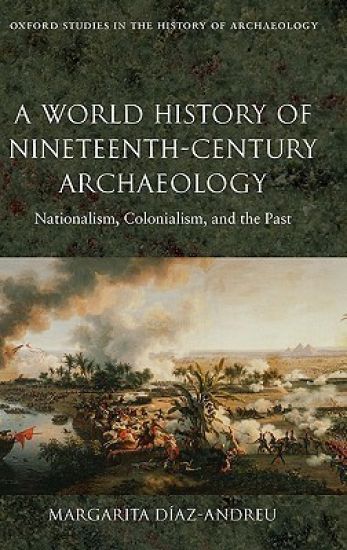
Margarita Diaz-Andreu offers an innovative history of archaeology during the nineteenth century, encompassing all its fields from the origins of humanity to the medieval period, and all areas of the world. The development of archaeology is placed within the framework of contemporary political events, with a particular focus upon the ideologies of nationalism and imperialism. Diaz-Andreu examines a wide range of issues, including the creation of institutions, the conversion of the study of antiquities into a profession, public memory, changes in archaeological thought and practice, and the effect on archaeology of racism, religion, the belief in progress, hegemony, and resistance.
Archaeology of Identity

Archaeology of Identity

Margarita Diaz-Andreu; Sam Lucy

Routledge
2005
sidottu
Bringing together a wealth of scholarship which provides a unique integrated approach to identity, The Archaeology of Identity presents an overview of the five key areas which have recently emerged in archaeological social theory: * gender* age* ethnicity* religion * status. This excellent book reviews the research history of each areas, the different ways in which each has been investigated, and offers new avenues for research and exploring the connections between them. Emphasis is placed on exploring the ways in which material culture structures, and is structured by, these aspects of individual and communal identity, with a particular examination of social practice. Useful for social scientists in sociology, anthropology and history, under- and postgraduates will find this an excellent addition to their course studies.
Archaeology of Identity

Archaeology of Identity

Margarita Diaz-Andreu; Sam Lucy

Routledge
2005
nidottu
Bringing together a wealth of scholarship which provides a unique integrated approach to identity, The Archaeology of Identity presents an overview of the five key areas which have recently emerged in archaeological social theory: * gender* age* ethnicity* religion * status. This excellent book reviews the research history of each areas, the different ways in which each has been investigated, and offers new avenues for research and exploring the connections between them. Emphasis is placed on exploring the ways in which material culture structures, and is structured by, these aspects of individual and communal identity, with a particular examination of social practice. Useful for social scientists in sociology, anthropology and history, under- and postgraduates will find this an excellent addition to their course studies.