Kirjojen hintavertailu – 12 903 725 kirjaa ja 27 kauppaa

Kirjailija

Margo Natalie Crawford

Kirjat ja teokset yhdessä paikassa: 3 kirjaa, julkaisuja vuosilta 2017–2024, suosituimpiin kuuluu Black Post-Blackness. Vertaile teosten hintoja ja tarkista saatavuus suomalaisista kirjakaupoista.

3 kirjaa

Kirjojen julkaisuvuodet: 2017–2024.

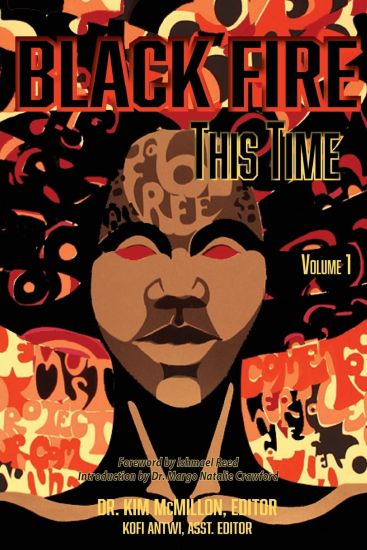
Black Fire-This Time, Volume 1

Black Fire-This Time, Volume 1

Ishmael Reed; Margo Natalie Crawford

Aquarius Press
2024
nidottu
An anthology that explores all facets of the Black Arts Movement. Edited by Dr. Kim McMillon and Kofi Antwi. Foreword by Ishmael Reed. Introduction by Dr. Margo Natalie Crawford. This anthology, nearly 60 years in the making, features over 100 poets and writers on the theme of "Black is Beautiful, Black is Powerful, Black is Home." Exploring the past, present and future of Black writing, this collection bridges many of the founders of the Black Arts Movement-including Nikki Giovanni, Sonia Sanchez, Haki Madhubuti, Amiri Baraka, Wanda Coleman, Dudley Randall, Eugene B. Redmond and Askia Tour -with contemporary established writers in the tradition such as brian g. gilmore-to Ishmael Reed's "younger generation"-Karla Brundage, Allison E. Francis, Tongo Eisen-Martin and C. Liegh McInnis. Designed as an open conversation between generations bridging hearts and minds across decades, Black Fire-This Time's works are rooted in preservation, reverence and discovery. Several little-known works are included for the first time. New works-from established writers as well as emerging talent-share this historic debut. Black Fire-This Time also stands out for its inclusion of many voices that were underrepresented in previous anthologies, most notably Black Fire: an anthology of Afro-American Writing (1968) and its ancestor, The New Negro (1920). The works of writers such as Nikki Giovanni and James Baldwin provide a more complete view of the myriad perspectives on Black identity and writing.

Black Post-Blackness

Black Post-Blackness

Margo Natalie Crawford

University of Illinois Press
2017
nidottu

Halvin toimitettuna 31,00 €

A 2008 cover of The New Yorker featured a much-discussed Black Power parody of Michelle and Barack Obama. The image put a spotlight on how easy it is to flatten the Black Power movement as we imagine new types of blackness. Margo Natalie Crawford argues that we have misread the Black Arts Movement's call for blackness. We have failed to see the movement's anticipation of the "new black" and "post-black." Black Post-Blackness compares the black avant-garde of the 1960s and 1970s Black Arts Movement with the most innovative spins of twenty-first century black aesthetics. Crawford zooms in on the 1970s second wave of the Black Arts Movement and shows the connections between this final wave of the Black Arts movement and the early years of twenty-first century black aesthetics. She uncovers the circle of black post-blackness that pivots on the power of anticipation, abstraction, mixed media, the global South, satire, public interiority, and the fantastic.
Black Post-Blackness

Black Post-Blackness

Margo Natalie Crawford

University of Illinois Press
2017
sidottu
A 2008 cover of The New Yorker featured a much-discussed Black Power parody of Michelle and Barack Obama. The image put a spotlight on how easy it is to flatten the Black Power movement as we imagine new types of blackness. Margo Natalie Crawford argues that we have misread the Black Arts Movement's call for blackness. We have failed to see the movement's anticipation of the "new black" and "post-black." Black Post-Blackness compares the black avant-garde of the 1960s and 1970s Black Arts Movement with the most innovative spins of twenty-first century black aesthetics. Crawford zooms in on the 1970s second wave of the Black Arts Movement and shows the connections between this final wave of the Black Arts movement and the early years of twenty-first century black aesthetics. She uncovers the circle of black post-blackness that pivots on the power of anticipation, abstraction, mixed media, the global South, satire, public interiority, and the fantastic.