Kirjailija
Marguerite Yourcenar
Kirjat ja teokset yhdessä paikassa: 40 kirjaa, julkaisuja vuosilta 1976–2026, suosituimpiin kuuluu Alexis. Vertaile teosten hintoja ja tarkista saatavuus suomalaisista kirjakaupoista.
40 kirjaa
Kirjojen julkaisuvuodet: 1976–2026.
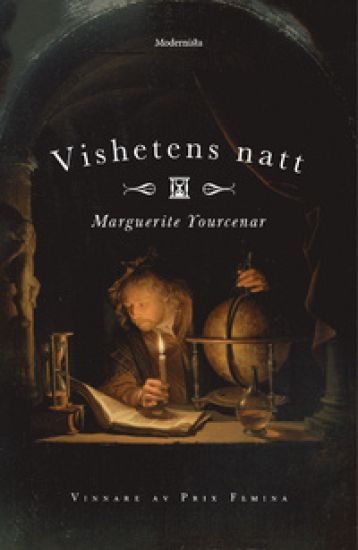
#Prix Femina 1968#På plats 26 i Le Mondes Topp 100-lista över 1900-talets bästa romaner.» Utsökt välkomponerad.« | David Zimmerman, Ny tidZenon Ligre är alkemist, fysiker, filosof, präst och läkare. I sina skrifter reflekterar han över ett intolerant samhälle, sönderslitet av inbördes- och religionskrig, där den som förespråkar tankens och yttrandets frihet utsätter sig för livsfara. Inte undra på att inkvisitionen är efter honom. Zenon tvingas uppträda under falskt namn och ständigt uppsöka nya orter för att undkomma sina förföljare. Med inspiration från Leonardo da Vinci, Giordano Bruno och Nicolaus Copernicus, skrev Marguerite Yourcenar en revolutionär roman förlagd till renässansens Europa. Vishetens natt [L 'Oe uvre au noir, 1968] lanserades mitt under studentupproren i Frankrike och fick närmast profetisk status. I dag räknas den till 1900-talets stora franska klassiker. I översättning av Karin Landgren och med ett nyskrivet förord av litteraturvetaren Lena Kåreland, litteraturforskare och professor emerita vid Uppsala universitet. MARGUERITE YOURCENAR [1903 -1987] skrev romaner, noveller, lyrik, dramatik och självbiografier. Hon var den första kvinnliga författaren i Franska akademien. Ofta skrev hon med historiskt underlag; förutom i Vishetens natt även i genombrottsromanen Hadrianus minnen [Mémoires d 'Hadrien, 1951], som utspelar sig under antiken.» Vishetens natt är en stor roman: rik, mångfacetterad, subtil.« | The Paris Review»Det är en tät, suggestiv, i sin rörelse intensiv berättelse.« | Benny Holmberg, Tidningen Kulturen»Alla epoker kan hämta något igenkännande i denna täta berättelse.« | Ylva Lindberg, Jönköpings-Posten»En lysande bild av Västeuropa under medeltiden, skarpt detaljerad som en Brueghel-målning.« | The Wahington Post»Ett mästerverk.« | L 'Aurore

Mishima eller Tomhetens vision
Marguerite Yourcenar; Kristoffer Leandoer
Ellerströms Förlag
2016
nidottu
när yukio mishima den 24 november 1970 med stor omsorg förberedde sin död var han 45 år gammal och världsberömd författare. Det var ett självmord som skulle följa ritens stränga regler – och genom vilket Mishima skulle nå den metafysiska tomhet som han fascinerats av sedan ungdomen. I denna långa essä, skriven tio år efter hans död, närmar sig Marguerite Yourcenar Mishimas liv och verk med en känsla av både samhörighet och främlingskap. Essän framstår som något av det mest klarsynta som sagts om författaren och personen Mishima – om hans framgångar och nederlag, om besattheten av handlingen och döden, om hans ärelystnad och mod. För översättning, efterord och kommentarer står Kristoffer Leandoer.
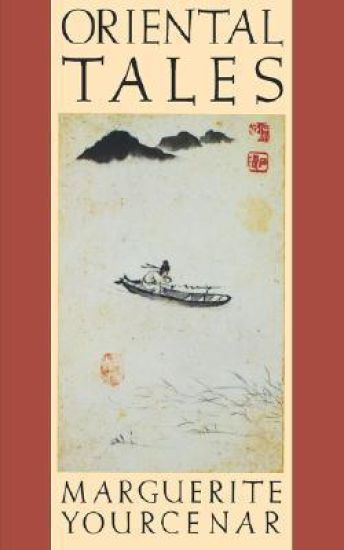
Marguerite Yourcenar har en usædvanlig evne til at udtrykke meget med et minimum af ord. Hendes Orientalske noveller er korte, men dybsindige. Man føler mere end nogensinde ordenes magt - og kærlighedens eller kunstens magt, skønhedens og venskabets. En refleksion over livets muligheder og mål, fastholdt i en rig kunstnerisk form.
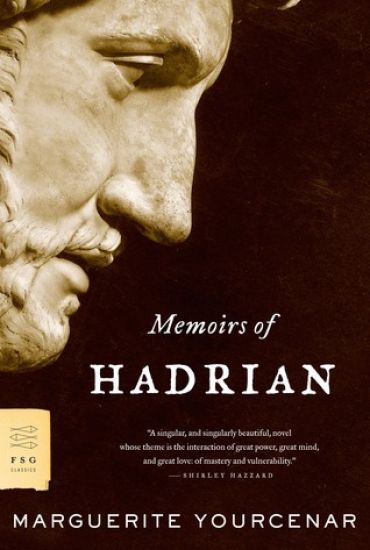
Memoirs of Hadrian
Marguerite Yourcenar
Farrar, Straus and Giroux
2005
nidottu
Halvin toimitettuna 20,90 €
Both an exploration of character and a reflection on the meaning of history, "Memoirs of Hadrian" has received international acclaim since its first publication in France in 1951. In it, Marguerite Yourcenar reimagines the Emperor Hadrian's arduous boyhood, his triumphs and reversals, and finally, as emperor, his gradual reordering of a war-torn world, writing with the imaginative insight of a great writer of the twentieth century while crafting a prose style as elegant and precise as those of the Latin stylists of Hadrian's own era.
Ranskalaisen kirjallisuuden suuren taiturin teos vuodelta 1925. Kirja kertoo sisarusparista, Annasta ja Miguelista, ja heidän kiihkeästä elämästään. Avun suuriin ongelmiin voi antaa vain Jumala... tai kuolema. Vangitsevan intensiivinen kertomus sijoittuu vuoden 1500-luvun Napoliin. Yourcenar halusi luoda nuoren naisen ja miehen, Annan ja Miguelin moniulotteiset henkilöhahmot täydellisiksi väittäen, että ”koko luomakunta sisältyy heidän hahmoihinsa”. Marguerite Yourcenar (1903–1987) syntyi Brysselissä ja kuoli Yhdysvalloissa. Hänen kirjansa ovat edelleen rakastettuja ja siteerattuja, huolimatta useista skandaaleista, joita tuo teräväkielinen ja vapaamielinen kirjailija aiheutti. Yourcenarin valinta Ranskan akatemiaan ensimmäisenä naisena herätti aikoinaan suurta kohua, mutta nykyään häntä pidetään lähes kirjallisen modernismin pyhimyksenä. "Pieni kirjallinen jalokivi, jota kaunistavat Napolin paikallisväri, renesanssiajan historia, kuvataiteet ja katolinen perinne." – Tarmo Kunnas, Helsingin Sanomat "Tarina etenee henkeäsalpaavalla kiihkolla ja nopeudella, siinä ei kerrota mitään ylimääräistä. Eikä ole syytäkään, sillä lukija palaa halusta saada tietää, kuinka tarinassa käy." - Merja Kaipiainen, Hämeen Sanomat
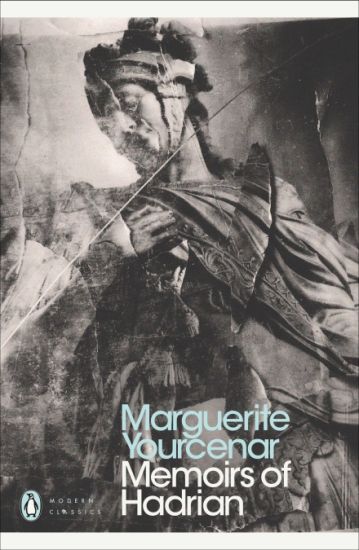
Framed as a letter from the Roman Emperor Hadrian to his successor, Marcus Aurelius, Marguerite Yourcenar's Memoirs of Hadrian is translated from the French by Grace Frick with an introduction by Paul Bailey in Penguin Modern Classics. In her magnificent novel, Marguerite Yourcenor recreates the life and death of one of the great rulers of the ancient world. The Emperor Hadrian, aware his demise is imminent, writes a long valedictory letter to Marcus Aurelius, his future successor. The Emperor meditates on his past, describing his accession, military triumphs, love of poetry and music, and the philosophy that informed his powerful and far-flung rule. A work of superbly detailed research and sustained empathy, Memoirs of Hadrian captures the living spirit of the Emperor and of Ancient Rome. Marguerite de Crayencour (1903-88), who went by the inexact anagrammatic pen name 'Marguarite Yourcenar', was a Belgian-born French novelist and essayist, the first woman to be elected to the Académie française. Her first novel Alexis was published in 1929; in 1939 she was invited to America by her lover Grace Frick, where she lectured in comparative literature at Sarah Lawrence College in New York. When Mémoires d'Hadrien was first published in 1951, it was an immediate success and met with great critical acclaim. If you enjoyed Memoirs of Hadrian, you might like Robert Graves's I, Claudius, also available in Penguin Modern Classics.'A timeless masterpiece ... every page is informed by her profound scholarship'Paul Bailey, author of Gabriel's Lament'Yourcenar conjures worlds. She can make us share passion - for beauty, bodies, ideas, even power - and consider it closely at the same time. She is that most extraordinary thing: a sensual thinker'Independent on Sunday
Die Lebensgeschichte des römischen Kaisers Hadrian. In seiner Villa in Tibur schreibt der sechzigjährige Kaiser Hadrian an seinen Adoptivenkel, den späteren Herrscher Marc Aurel. Was er dem siebzehnjährigen Jüngling mitteilt, gleicht einem reflexiven Selbstgespräch, ist ein Versuch des alternden Mannes, die wechselnden Masken und Gesichter des eigenen Ich zu erkunden: Hadrian wurde als Provinzler im westlichsten Teil des Reichs, in Spanien geboren. Der Eroberungswut seines Vorgängers Trajan setzt der musische und sensible Hadrian seine Friedenspolitik entgegen, die die segensreichsten Auswirkungen auf das Reich haben sollte. Zwei große Leidenschaften prägten diesen ungewöhnlichen Herrscher: die einfühlende Bewunderung griechischer Kunst und die Liebe zu dem bithynischen Knaben Antonius. Ein Besuch der Villa Adriana bei Rom weckte in der zwanzigjährigen Marguerite Yourcenar den Plan, eine Biographie dieses Mannes zu verfassen. Als die fiktiven Erinnerungen in deutscher Sprache erschienen, schrieb Ludwig Curtis: ? Man hat nur wenige Seiten ... zu lesen, um von einem doppelten Zauber umfagen zu werden: von dem Zauber der großen Persönlichkeit des Kaisers und von dem Zauber der dichterischen Einfühlung der Verfasserin nicht nur in dessen persönliche, sondern in seine ganze weite antike Welt.?
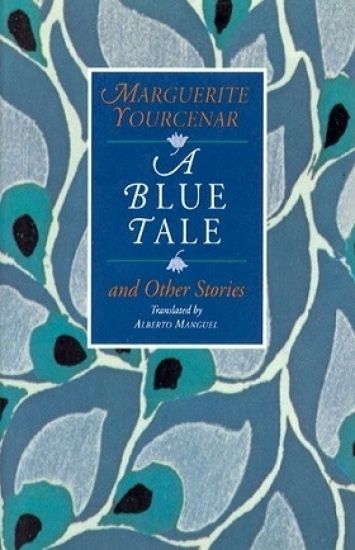
Published to great acclaim in France in 1993, this collection is not only a delight for Marguerite Yourcenar fans but a welcome port of entry for any reader not yet familiar with the author's lengthier, more demanding works. The sole published work of fiction by Yourcenar yet to be translated into English, this collection includes three stories written between 1927 and 1930 when the author was in her mid-twenties. These stories cover a range of themes, from an allegory on greed and a scene from the war of the sexes, to a witchhunt that obsessively creates its own quarry. For the devoted readers of Yourcenar, this collection allows a rare glimpse at the beginnings of a writer's craft. In these accomplished but forgotten pieces, edited and introduced by her biographer, Josyane Savigneau, the reader will find the blend of fable and fairy tale of Oriental Tales, the psychological chronicle of Dear Departed, the ironic realism of A Coin in Nine Hands. Read as an introduction to Yourcenar's work, the stories take us into the writer's workshop, as it were, to the early days of creation. In either case, A Blue Tale and Other Stories carries the unmistakable voice of a formidable and vastly talented writer. Marguerite Yourcenar (her pseudonym was an anagram of her family name, Crayencour) was born in Brussels in 1903 and died in Maine in 1987. One of the most respected writers in the French language, she is best known as the author of the best-selling Memoirs of Hadrian and The Abyss. She was awarded many literary honors, most notably election to the Académie Francaise in 1980, the first woman to be so honored.
Set in Rembrandt's Amsterdam, An Obscure Man is the story of Nathanael--innocent, open to experience--born like Everyman upon the stream of life. In A Lovely Morning, Nathanael's young son joins a touring company of Jacobean actors. Anna, soror . . ., the final tale, is an account of illicit passion in the baroque world of Naples. An Obscure Man swarms with life. This intricately researched, imaginative, beautifully written tale of a young man's brief life in the mid-17th century is entirely engrossing.--Leona Weiss, San Francisco ChronicleIn these three stories, [Yourcenar] succeeds in making the essences of these past lives a part of the reader's future through the sheer intensity of their portrayal.--Margaret Ezell, Houston Chronicle
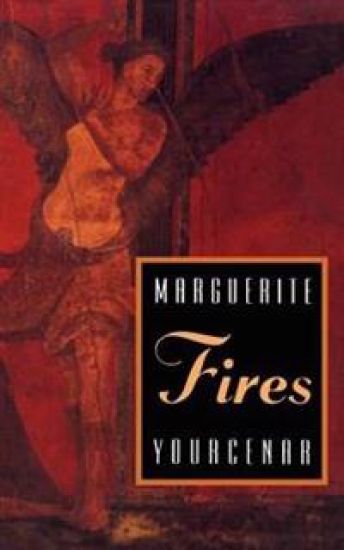
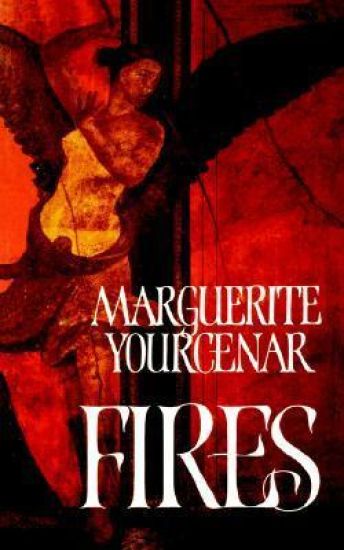
Fires consists of nine monologues and narratives based on classical Greek stories. Antigone, Clytemnestra, Phaedo, Sappho are all mythical figures whose stories are mingled with contemporary themes. Interspersed are highly personal narratives, reflecting on a time of profound inner crisis in the author's life. "The unwritten novel among the fantasies and aphorisms of Fires is a classic tale."-Stephen Koch, New York Times Book Review
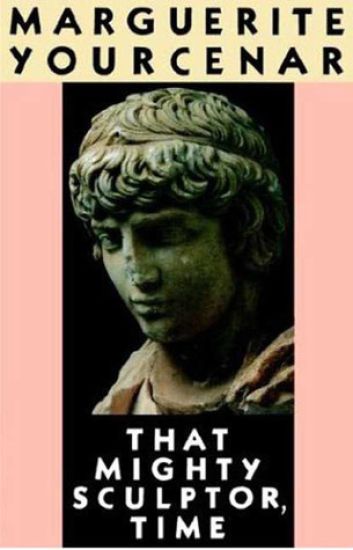
That Mighty Sculptor, Time
Marguerite Yourcenar
Farrar, Straus Giroux Inc
1993
nidottu
Halvin toimitettuna 23,60 €
This posthumously published collection of essays takes up such diverse subjects as the poet Oppian, Tantrism, the feasts of the Christian year, Durer, the Japanese studies of Ivan Morris, the erotic mysticism of the Gita-Govinda, the eternal spirit of Andalusia, and Bede's Ecclesiastical History. The title esay consider's time's transforming effect on arrt, meditating on the erosion of a statue and the resulting production of a new, sublime work of art.
This book of three novellas was first published in Paris in 1982, where it was hailed as the finest book of novellas since Flaubert's Trois Contes.
This collection includes: How Wand-fo was Saved, Marko's Smile, The Milk of Death, The Last Love of Princess Genji, The Man Who Loved the Nereids, Our Lady of the Swallows, Aphrodissia; the Widow, Kali Beheaded, The End of Marko Kraljevic, The Sadness of Cornelius Berg, and a Postscript by the Author." From China to Japan, the Balkans to India, Oriental Tales addresses love, conquest, betrayal, murder, religion, and passion in an eloquent and exquisite telling."--"Kirkus Reviews."
Fires consists of nine monologues and narratives based on classical Greek stories. Antigone, Clytemnestra, Phaedo, Sappho are all mythical figures whose stories are mingled with contemporary themes. Interspersed are highly personal narratives, reflecting on a time of profound inner crisis in the author's life. "The unwritten novel among the fantasies and aphorisms of Fires is a classic tale."-Stephen Koch, New York Times Book Review Consists of 9 monologues and narratives based on classical Greek stories. Interspersed are highly personal notations, reflecting a time of profound innner crisis in the author's life.
Marguerite Yourcenar instantly assumes command of our imagination in her novel "The Abyss." Almost before we know it the author establishes a scene and time, and engages us in the fate of two cousins.
Set in the Baltic provinces in the aftermath of World War I, "Coup de Grace" tells the story of an intimacy that grows between three young people hemmed in by civil war: Erick, a Prussian fighting with the White Russians against the Bolsheviks; Conrad, his best friend from childhood; and Sophie, whose unrequited love for Conrad becomes an unbearable burden.
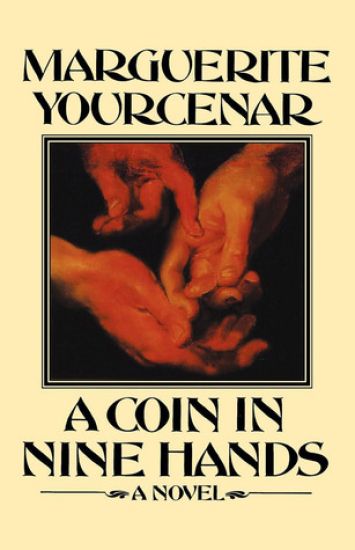
During the space of a day in Rome in 1933, a ten-lira coin passes through the hands of nine people-including an aging artist, a prostitute, and a would-be assassin of Mussolini. The coin becomes the symbol of contact between human beings, each lost in private passions and nearly impenetrable solitude. "A Coin in Nine Hands has . . . passages that move close to poetry and a story that belongs in both literature and history."-Doris Grumbach, Los Angeles Times Book Review "What lingers at the end of A Coin in Nine Hands is the shadowiness and puppetlike vagueness of the Dictator, and the compelling specificity of the so-called 'common people' revolving all around him."-Anne Tyler, The New Republic "Within a few pages we have met half the major characters in this haunting, brilliantly constructed novel. . . . The studied perfection, the structural intricacy and brevity remind one of Camus. Yet by comparison, Yourcenar's prose is lavish, emotional and imagistic."-Cynthia King, Houston Post "Transcends its specific time and place to become a portrait of vividly delineated characters caught in the vise of a tragically familiar political situation."-Publisher's Weekly Best known as the author of Memoirs of Hadrian and The Abyss, Marguerite Yourcenar (1903-87) achieved countless literary honors and was the first woman ever elected to the Acad mie Fran aise.