Kirjojen hintavertailu – 12 859 819 kirjaa ja 27 kauppaa

Kirjailija

Mari Lending

Kirjat ja teokset yhdessä paikassa: 4 kirjaa, julkaisuja vuosilta 2017–2021, suosituimpiin kuuluu A Feeling of History. Vertaile teosten hintoja ja tarkista saatavuus suomalaisista kirjakaupoista.

4 kirjaa

Kirjojen julkaisuvuodet: 2017–2021.

A Feeling of History

A Feeling of History

Peter Zumthor; Mari Lending

Scheidegger und Spiess AG, Verlag
2021
pokkari

Halvin toimitettuna 35,80 €

While completing the Almannajuvet Zinc Mine Museum in southern Norway in 2016, celebrated Swiss architect Peter Zumthor asked Norwegian scholar Mari Lending to engage in a dialogue about the project. Departing from the ways in which Zumthor's pavilions frame the barely visible traces of the industrial exploitation of zinc in the 1890s, the conversation took unexpected turns. In meandering, impressionistic style and drawing on Zumthor's favourite writers, such as Johann Peter Hebel, Stendhal, Vladimir Nabokov, and T. S. Eliot, their exchanges explore how history, time and temporalities reverberate across the famous architect's oeuvre. Looking back, Zumthor ponders on how a feeling of history has informed his continuous attempts of emotional reconstruction by means of building, from architectural interventions in dramatic landscapes to his design for the redevelopment of Los Angeles' LACMA on a grand urban scale. This small, beautifully designed new book records the conversation between Zumthor and Lending, illustrated with photographs by the renowned Swiss architectural photographer Helene Binet.
Présences de l'histoire

Présences de l'histoire

Peter Zumthor; Mari Lending

Scheidegger und Spiess AG, Verlag
2018
nidottu
While completing the Almannajuvet Zinc Mine Museum in southern Norway in 2016, celebrated Swiss architect Peter Zumthor asked Norwegian scholar Mari Lending to engage in a dialogue about the project. Departing from the ways in which Zumthor's pavilions frame the barely visible traces of the industrial exploitation of zinc in the 1890s, the conversation took unexpected turns. In meandering, impressionistic style and drawing on Zumthor's favourite writers, such as Johann Peter Hebel, Stendhal, Vladimir Nabokov, or T. S. Eliot, their exchanges explore how history, time and temporalities reverberate across the famous architect's oeuvre. Looking back, Zumthor ponders on how a feeling of history has informed his continuous attempts of emotional reconstruction by means of building, from architectural interventions in dramatic landscapes to his design for the redevelopment of Los Angeles' LACMA on a grand urban scale. This small, beautifully designed new book records the conversation between Zumthor and Lending, illustrated with photographs by the renowned Swiss architectural photographer Hélène Binet. Text in French.
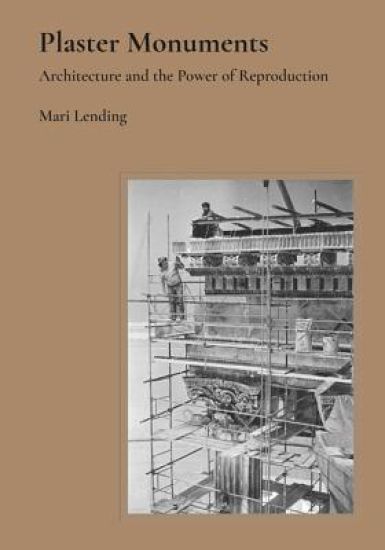
Plaster Monuments

Plaster Monuments

Mari Lending

PRINCETON UNIVERSITY PRESS
2017
sidottu
We are taught to believe in originals. In art and architecture in particular, original objects vouch for authenticity, value, and truth, and require our protection and preservation. The nineteenth century, however, saw this issue differently. In a culture of reproduction, plaster casts of building fragments and architectural features were sold throughout Europe and America and proudly displayed in leading museums. The first comprehensive history of these full-scale replicas, Plaster Monuments examines how they were produced, marketed, sold, and displayed, and how their significance can be understood today. Plaster Monuments unsettles conventional thinking about copies and originals. As Mari Lending shows, the casts were used to restore wholeness to buildings that in reality lay in ruin, or to isolate specific features of monuments to illustrate what was typical of a particular building, style, or era. Arranged in galleries and published in exhibition catalogues, these often enormous objects were staged to suggest the sweep of history, synthesizing structures from vastly different regions and time periods into coherent narratives. While architectural plaster casts fell out of fashion after World War I, Lending brings the story into the twentieth century, showing how Paul Rudolph incorporated historical casts into the design for the Yale Art and Architecture building, completed in 1963. Drawing from a broad archive of models, exhibitions, catalogues, and writings from architects, explorers, archaeologists, curators, novelists, and artists, Plaster Monuments tells the fascinating story of a premodernist aesthetic and presents a new way of thinking about history's artifacts.