
Kirjojen hintavertailu – 12 903 725 kirjaa ja 27 kauppaa

Kirjailija

Maria Csanádi

Kirjat ja teokset yhdessä paikassa: 2 kirjaa, julkaisuja vuosilta 1997–2022, suosituimpiin kuuluu Dynamics of an Authoritarian System. Vertaile teosten hintoja ja tarkista saatavuus suomalaisista kirjakaupoista.

Nimi esiintyy myös muodoissa: Mária Csanádi

2 kirjaa

Kirjojen julkaisuvuodet: 1997–2022.

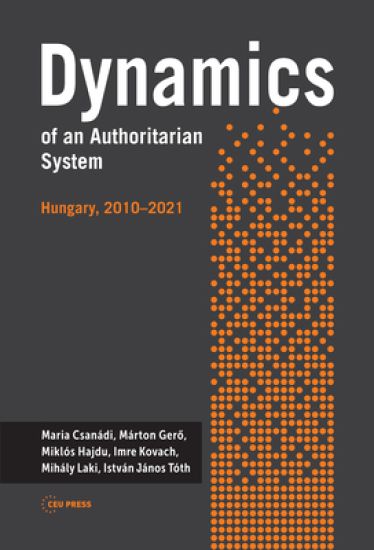
Dynamics of an Authoritarian System

Dynamics of an Authoritarian System

Mária Csanádi; Imre Kovách; Márton Gero; Miklós Hajdu

CENTRAL EUROPEAN UNIVERSITY PRESS
2022
sidottu
This conceptually synthetic and empirically rich book demonstrates the vulnerability of democratic settings to authoritarianism and populism. Six scholars from various professional fields explore here the metamorphosis of a political party into a centralized authoritarian system. Viktor Orbán and his Fidesz party needed less than ten years to accomplish this transformation in Hungary. In 2010, after winning a majority that could make changes in the constitution – two-thirds of the parliamentary seats, they evolved and stabilized the system, which produced again the two-thirds majority in 2014 and 2018. The authors reveal how a democratic setting can be used as a device for political capture. They show how a political entity managed to penetrate almost all sub-fields of the economy to arrive at institutionalized corruption, and how the centralized power structure reproduces itself. With the help of a powerful empirical apparatus—among others analyses of more than 220,000 public tenders, redistributions of state subsidies, and the interconnectedness of those privileged with the political elite — the authors detail the functioning of a crony system and the network aspects of political connections in the rapid enrichment of politically-linked businesses. Their studies demonstrate the role of political capture in this redistribution and how this capture leads to a new social stratification.
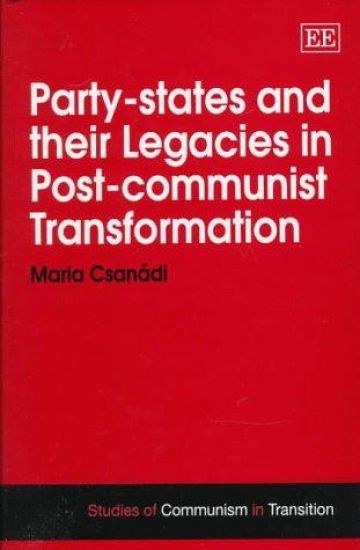
Party-states and their Legacies in Post-communist Transformation
Party-States and their Legacies in Post-Communist Transformation is a unique investigation into the construction, operation, self-destruction and transition of Hungarian politics from the 1960s to the mid- 1990s. It presents a rich picture which draws upon an extraordinary body of data and provides not just simply a retrospective theoretical analysis of the system, but details of everyday life within the state apparatus. This remarkable book includes extensive interviews with over four hundred key individuals in the party, state and the economy from 1975 onwards. In addition, Dr Csanadi draws upon other unique empirical research including internal memos and secret state documents as well as a full range of studies by East and West European scholars to reveal the realities of the system as observed by those closest to it. She not only considers the workings of the system during the communist era, but also analyses the legacy it continues to exert on the period of the transformation. As such the book contributes to our understanding of the Hungarian transformation and sheds new light on how party states worked throughout Eastern and Central Europe during the communist era and what the consequences of their self-similar features on the transformation are. In addition the book offers comparisons with other formerly centrally planned systems to reveal the structural differences in the distribution of power in party states and the very different legacies they leave for post-communist transformation. This comprehensive book will be welcomed by researchers, academics and postgraduates interested in the politics, economics, history and political science of Hungary and other East and Central European countries in transition.