
Kirjailija
Maria Edgeworth
Kirjat ja teokset yhdessä paikassa: 592 kirjaa, julkaisuja vuosilta 1971–2026, suosituimpiin kuuluu Frank. Vertaile teosten hintoja ja tarkista saatavuus suomalaisista kirjakaupoista.
592 kirjaa
Kirjojen julkaisuvuodet: 1971–2026.

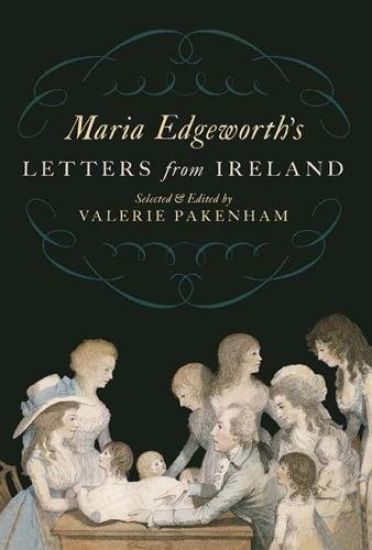
1 January 2018 will be the 250th anniversary of Maria Edgeworth's birth. Valerie Pakenham's sparkling new selection of over four hundred letters, many hitherto unpublished, will help to celebrate her memory. Born in England, she was brought to live in Ireland at the age of fourteen and spent most of the rest of her life at the family home at Edgeworthstown, Co. Longford. Encouraged by her remarkable father, Richard Lovell Edgeworth, whose memoirs she edited, she became, in turn, famous for her children's stories, her practical guides to education and her novels - or, as she preferred to call them, `Moral Tales'. By 1813, when visiting London, she was, as Byron testified, as great a literary lion as he had been the season before, and she was hugely admired by fellow novelists Sir Walter Scott and Jane Austen. Maria Edgeworth's posthumous fame has dwindled and only her first novel, Castle Rackrent (1800), a brilliant burlesque account of the Irish squirearchy, is still widely read. She was, however, a prolific and fascinating letter writer. She insisted that her letters were for private consumption only, but after her death, her stepmother and half-sisters produced a private memoir for friends using carefully selected extracts. Their literary quality was spotted by Augustus Hare, whose shortened version, The Life and Letters of Maria Edgeworth, appeared in 1894. In the 1970s Maria's great great niece, Christina Colvin edited Maria Edgeworth's Letters from England and Maria Edgeworth in France & Switzerland. No one, however, has revisited fully Maria's original letters from the place she loved and knew best: Ireland. From 1825, Maria's letters reflect sixty years of Irish history, from the heady days of Grattan's Parliament, through the perils of the 1798 Rebellion to the rise of O'Connell and the struggle for Catholic Emancipation. In old age, she worked actively to alleviate the Great Famine and wrote her last story to raise money aged 82. A treasure trove of stories, humour, local and high-level gossip, her letters show the extraordinary range of her interests: history, politics, literature and science. Maria almost single-handedly took over the management of her family estate and restored it to solvency. Her later letters brim with delight at these practical undertakings and her affection for the local people she worked with. Two of her half-sisters and her stepmother were gifted artists, and Valerie Pakenham has been able to use many of their unpublished drawings and sketches to illustrate this book.
Rosamond - a series of tales is an unchanged, high-quality reprint of the original edition of 1864. Hansebooks is editor of the literature on different topic areas such as research and science, travel and expeditions, cooking and nutrition, medicine, and other genres. As a publisher we focus on the preservation of historical literature. Many works of historical writers and scientists are available today as antiques only. Hansebooks newly publishes these books and contributes to the preservation of literature which has become rare and historical knowledge for the future.
Popular Tales is an unchanged, high-quality reprint of the original edition of 1867. Hansebooks is editor of the literature on different topic areas such as research and science, travel and expeditions, cooking and nutrition, medicine, and other genres. As a publisher we focus on the preservation of historical literature. Many works of historical writers and scientists are available today as antiques only. Hansebooks newly publishes these books and contributes to the preservation of literature which has become rare and historical knowledge for the future.

The Parent's Assistant By Maria Edgeworth

Popular tales. By: Maria Edgeworth, and By: Richard Lovell Edgeworth: (Story collections), Volume I.
Richard Lovell Edgeworth; Maria Edgeworth
Createspace Independent Publishing Platform
2017
nidottu
Maria Edgeworth (1 January 1768 - 22 May 1849) was a prolific Anglo-Irish writer of adults' and children's literature. She was one of the first realist writers in children's literature and was a significant figure in the evolution of the novel in Europe. She held advanced views, for a woman of her time, on estate management, politics and education, and corresponded with some of the leading literary and economic writers, including Sir Walter Scott and David Ricardo. Early life: Maria Edgeworth was born at Black Bourton, Oxfordshire. She was the second child of Richard Lovell Edgeworth (who eventually fathered 22 children by four wives) and Anna Maria Edgeworth; Maria was thus an aunt of Francis Ysidro Edgeworth. She spent her early years with her mother's family in England, until her mother's death when Maria was five. When her father married his second wife Honora Sneyd in 1773, she went with him to his estate, Edgeworthstown, in County Longford, Ireland. Maria was sent to Mrs. Lattafi re's school in Derby after Honora fell ill in 1775. After Honora died in 1780 Maria's father married Honora's sister Elizabeth (then socially disapproved and legally forbidden from 1833 until the Deceased Wife's Sister's Marriage Act 1907). Maria transferred to Mrs. Devis's school in London. Her father's attention became fully focused on her in 1781 when she nearly lost her sight to an eye infection. Returning home at the age of 14, she took charge of her many younger siblings and was home-tutored in law, Irish economics and politics, science, and literature by her father. She also started her lifelong correspondences with learned men, mainly members of the Lunar Society. She became her father's assistant in managing the Edgeworthstown estate, which had become run-down during the family's 1777-1782 absence; she would live and write there for the rest of her life. With their bond strengthened, Maria and her father began a lifelong academic collaboration "of which she was the more able and nimble mind." Present at Edgeworthstown was an extended family, servants and tenants. She observed and recorded the details of daily Irish life, later drawing on this experience for her novels about the Irish. She also mixed with the Anglo-Irish gentry, particularly Kitty Pakenham (later the wife of Arthur Wellesley, 1st Duke of Wellington), Lady Moira, and her aunt Margaret Ruxton of Black Castle. Margaret supplied her with the novels of Anne Radcliffe and William Godwin and encouraged her in her writing. Though Maria Edgeworth spent most of her childhood in England, her life in Ireland had a profound impact on both her thinking and views surrounding her Irish culture. Fauske and Kaufman conclude, " used her fiction to address the inherent problems of acts delineated by religious, national, racial, class based, sexual, and gendered identities." Edgeworth used works such Castle Rackrent and Harrington to express her feelings on controversial issues............... Richard Lovell Edgeworth (31 May 1744 - 13 June 1817) was an Anglo-Irish politician, writer and inventor. Biography Edgeworth was born in Pierrepont Street, Bath, England, great-grandson of Sir Salathiel Lovell through his granddaughter, Jane Lovell. A Trinity College, Dublin and Oxford alumnus, he is credited for creating, among other inventions, a machine to measure the size of a plot of land. He also made strides in the developing educational methods. He anticipated the caterpillar track with an invention that he played around with for forty years but that he never successfully developed. 3] He described it as a "cart that carries its own road". He was married four times, including both Honora Sneyd and Frances Beaufort, older sister of Francis Beaufort of the Royal Navy. The two men installed a telegraph line for Ireland. Richard Lovell Edgeworth was a member of the Lunar Society.....
Harrington, and Ormond; tales - 1817 (novel). By: Maria Edgeworth (Original Classics) COMPLETE SET VOLUME 1,2 AND 3.: The novel is an autobiography of
Maria Edgeworth
Createspace Independent Publishing Platform
2017
nidottu
Harrington is an 1817 novel by British novelist Maria Edgeworth. The novel was written in response to a letter from a Jewish-American reader who complained about Edgeworth's stereotypically anti-semitic portrayals of Jews in Castle Rackrent (1800), Belinda (1801), The Absentee (1812), and her Moral Tales (1801) for children. The novel is an autobiography of a "recovering anti-Semite", whose youthful prejudices are undone by contact with various Jewish characters, particularly a young woman. It also makes parallels between the religious discrimination of the Jews and the Catholics in Ireland. Set between the Jewish Naturalization Act of 1753 and the Gordon Riots of 1780, the timeframe highlights these connections. Synopsis Harrington follows the protagonist of the same name who explores his memories to better understand his views on Jews. The novel begins with Harrington's early image of Jews, formed by stories told by his maid of Simon the Jew. Harrington says that the stories of Simon the Jew were " used upon every occasion to reduce me to passive obedience." His parents further strengthen this image by rewarding Harrington's antisemitism. Only after attending public school and meeting the bully Mowbray are Harrington's views on Jews changed. Mowbray's tormenting of the Jewish peddler Jacob causes this sudden shift in thinking. The story shifts to a romance novel with the introduction of Berenice Montenero, an American Jew who moved to England with her wealthy father. Harrington's family and friends are alarmed at his choice of a Jewish woman, a relationship further impeded by the advances of Harrington's old rival Mowbray. Seeking marriage into a wealthy family, Mowbray's attempts to court Berenice are denied. As revenge, Mowbray brings charges of insanity against Harrington, a situation further compounded by his family threatening to disown him. To marry Berenice, Harrington must overcome these obstacles and prove himself to Mr. Montenero. He is thus tested "by experiences designed to arouse his enthusiasm and fear." Mowbray is exposed as the culprit behind Harrington's supposed insanity and Harrington is deemed worthy of marriage to Berenice. This strange courtship is concluded with the revelation by Mr. Montenero, "I have tried you to the utmost, and am satisfied both of the steadiness of your principles and of the strength of your attachment to my daughter-Berenice is not a Jewess."... Maria Edgeworth (1 January 1768 - 22 May 1849) was a prolific Anglo-Irish writer of adults' and children's literature. She was one of the first realist writers in children's literature and was a significant figure in the evolution of the novel in Europe. She held advanced views, for a woman of her time, on estate management, politics and education, and corresponded with some of the leading literary and economic writers, including Sir Walter Scott and David Ricardo. Early life: Maria Edgeworth was born at Black Bourton, Oxfordshire. She was the second child of Richard Lovell Edgeworth (who eventually fathered 22 children by four wives) and Anna Maria Edgeworth; Maria was thus an aunt of Francis Ysidro Edgeworth. She spent her early years with her mother's family in England, until her mother's death when Maria was five. When her father married his second wife Honora Sneyd in 1773, she went with him to his estate, Edgeworthstown, in County Longford, Ireland. Maria was sent to Mrs. Lattafi re's school in Derby after Honora fell ill in 1775. After Honora died in 1780 Maria's father married Honora's sister Elizabeth (then socially disapproved and legally forbidden from 1833 until the Deceased Wife's Sister's Marriage Act 1907)......

Castle Rackrent and The absentee. By: Maria Edgeworth, illustrated By: Chris Hammond (1860-1900). Introduction By: Anne Thackeray Ritchie: Castle Rack
Chris Hammond; Anne Thackeray Ritchie; Maria Edgeworth
Createspace Independent Publishing Platform
2017
nidottu
Castle Rackrent, a short novel by Maria Edgeworth published in 1800, is often regarded as the first historical novel, the first regional novel in English, the first Anglo-Irish novel, the first Big House novel and the first saga novel. It is also widely regarded as the first novel to use the device of a narrator who is both unreliable and an observer of, rather than a player in, the actions he chronicles. Kirkpatrick suggests that it "both borrows from and originates a variety of literary genres and subgenres without neatly fitting into any one of them". William Butler Yeats pronounced Castle Rackrent "one of the most inspired chronicles written in English"............... The Absentee is a novel by Maria Edgeworth, published in 1812 in Tales of Fashionable Life, that expresses the systemic evils of the absentee landlord class of Anglo-Irish and the desperate condition of the Irish peasantry. Just before coming of age, Lord Colambre, the sensitive hero of the novel, finds that his mother Lady Clonbrony's attempts to buy her way into the high society of London are only ridiculed, while his father, Lord Clonbrony, is in serious debt as a result of his wife's lifestyle. His mother wishes him to marry an heiress, Miss Broadhurst, who is a friend of Grace Nugent. However, Colambre has already fallen in love with his cousin, Grace Nugent, who lives with the family as a companion to Lady Clonbrony. Worried that his mother will pressure him into a marriage with someone he does not love, Colambre decides to leave the London social scene and visit his ancestral home in County Wicklow in Ireland.................... Maria Edgeworth (1 January 1768 - 22 May 1849) was a prolific Anglo-Irish writer of adults' and children's literature. She was one of the first realist writers in children's literature and was a significant figure in the evolution of the novel in Europe. She held advanced views, for a woman of her time, on estate management, politics and education, and corresponded with some of the leading literary and economic writers, including Sir Walter Scott and David Ricardo. Early life: Maria Edgeworth was born at Black Bourton, Oxfordshire. She was the second child of Richard Lovell Edgeworth (who eventually fathered 22 children by four wives) and Anna Maria Edgeworth; Maria was thus an aunt of Francis Ysidro Edgeworth. She spent her early years with her mother's family in England, until her mother's death when Maria was five. When her father married his second wife Honora Sneyd in 1773, she went with him to his estate, Edgeworthstown, in County Longford, Ireland........... 'Chris' Hammond (1860-1900) was one of the most productive illustrators of the 1890s. Best known as an interpreter of classic fiction, she embellished texts by Jane Austen, Maria Edgeworth, W. M. Thackeray, George Eliot and a number of others, as well as contributing to Cassell's Magazine, The Quiver, and St Pauls..... Anne Isabella, Lady Ritchie, n e Thackeray (9 June 1837 - 26 February 1919), was an English writer. She was the eldest daughter of William Makepeace Thackeray. She was the author of several novels which were highly regarded in their time, and a central figure in the late Victorian literary scene. She is perhaps best remembered today as the custodian of her father's literary legacy, and for her short fiction placing traditional fairy tale narratives in a Victorian milieu. Her 1885 novel Mrs. Dymond contains the earliest English-language use of the well-known proverb "give a man a fish and you feed him for a day; teach a man to fish and you feed him for life".............

Castle Rackrent By: Maria Edgeworth, and The Absentee (novel- Illustrated): Maria Edgeworth (1 January 1768 - 22 May 1849) was a prolific
Maria Edgeworth
Createspace Independent Publishing Platform
2017
nidottu

Patronage (1814). NOVEL By: Maria Edgeworth (Volume III). Original Version: Patronage is a four volume fictional work by Anglo-Irish writer Maria
Maria Edgeworth
Createspace Independent Publishing Platform
2017
nidottu
Patronage is a four volume fictional work by Anglo-Irish writer Maria Edgeworth and published in 1814. It is one of her later books, after such successes as Castle Rackrent (1800), Belinda (1801), Leonora (1806) and The Absentee in 1812, to name a few. The novel is a long and ambitious one which she began writing in 1809. It is the longest of her novels. Patronage as a book is path-making; it was among the first novels with a thesis and as such, it opened the way for Sir Walter Scott's historical novels. In the novel, Edgeworth focuses on and scrupulously explores the various types of patronage and the many forms it takes in all strata of English society. Despite the rigor of her analysis, Edgeworth obtains a sense of subtlety through her ingenious use of variations in characterizatons and a well diversified plot. The plot is made up of many incidents, great and small, that take the reader through a wide range of situations. Much like her contemporary, Jane Austen, Edgeworth had a gift for conveying social conventions through brilliant dialogue and acute moral observations. However, unlike Austen, Edgeworth's writing diverges into essay and an overemphasis on ideas (of which she has a large number) and veers once or twice into the didactic. The literary scholar Alastair Fowler notes her "flawless ear for speech" and ability to produce "brilliant dialogue", as well as the way her various subplots are linked by chains of causation that rest ultimately on a trivial plot element, much as Austen later was able to do so superbly. Edgeworth was eldest daughter of Richard Lovell Edgeworth, the Anglo-Irish politician, writer and inventor who had 21 other children with four wives. This book received the imprimatur of her famous father when published. .................. Maria Edgeworth (1 January 1768 - 22 May 1849) was a prolific Anglo-Irish writer of adults' and children's literature. She was one of the first realist writers in children's literature and was a significant figure in the evolution of the novel in Europe. She held advanced views, for a woman of her time, on estate management, politics and education, and corresponded with some of the leading literary and economic writers, including Sir Walter Scott and David Ricardo. Early life: Maria Edgeworth was born at Black Bourton, Oxfordshire. She was the second child of Richard Lovell Edgeworth (who eventually fathered 22 children by four wives) and Anna Maria Edgeworth; Maria was thus an aunt of Francis Ysidro Edgeworth. She spent her early years with her mother's family in England, until her mother's death when Maria was five. When her father married his second wife Honora Sneyd in 1773, she went with him to his estate, Edgeworthstown, in County Longford, Ireland.............

Popular tales. By: Maria Edgeworth, and By: Richard Lovell Edgeworth: (Story collections), Volume II.
Richard Lovell Edgeworth; Maria Edgeworth
Createspace Independent Publishing Platform
2017
nidottu
Maria Edgeworth (1 January 1768 - 22 May 1849) was a prolific Anglo-Irish writer of adults' and children's literature. She was one of the first realist writers in children's literature and was a significant figure in the evolution of the novel in Europe. She held advanced views, for a woman of her time, on estate management, politics and education, and corresponded with some of the leading literary and economic writers, including Sir Walter Scott and David Ricardo. Early life: Maria Edgeworth was born at Black Bourton, Oxfordshire. She was the second child of Richard Lovell Edgeworth (who eventually fathered 22 children by four wives) and Anna Maria Edgeworth; Maria was thus an aunt of Francis Ysidro Edgeworth. She spent her early years with her mother's family in England, until her mother's death when Maria was five. When her father married his second wife Honora Sneyd in 1773, she went with him to his estate, Edgeworthstown, in County Longford, Ireland. Maria was sent to Mrs. Lattafi re's school in Derby after Honora fell ill in 1775. After Honora died in 1780 Maria's father married Honora's sister Elizabeth (then socially disapproved and legally forbidden from 1833 until the Deceased Wife's Sister's Marriage Act 1907). Maria transferred to Mrs. Devis's school in London. Her father's attention became fully focused on her in 1781 when she nearly lost her sight to an eye infection. Returning home at the age of 14, she took charge of her many younger siblings and was home-tutored in law, Irish economics and politics, science, and literature by her father. She also started her lifelong correspondences with learned men, mainly members of the Lunar Society. She became her father's assistant in managing the Edgeworthstown estate, which had become run-down during the family's 1777-1782 absence; she would live and write there for the rest of her life. With their bond strengthened, Maria and her father began a lifelong academic collaboration "of which she was the more able and nimble mind." Present at Edgeworthstown was an extended family, servants and tenants. She observed and recorded the details of daily Irish life, later drawing on this experience for her novels about the Irish. She also mixed with the Anglo-Irish gentry, particularly Kitty Pakenham (later the wife of Arthur Wellesley, 1st Duke of Wellington), Lady Moira, and her aunt Margaret Ruxton of Black Castle. Margaret supplied her with the novels of Anne Radcliffe and William Godwin and encouraged her in her writing. Though Maria Edgeworth spent most of her childhood in England, her life in Ireland had a profound impact on both her thinking and views surrounding her Irish culture. Fauske and Kaufman conclude, " She] used her fiction to address the inherent problems of acts delineated by religious, national, racial, class based, sexual, and gendered identities." Edgeworth used works such Castle Rackrent and Harrington to express her feelings on controversial issues............... Richard Lovell Edgeworth (31 May 1744 - 13 June 1817) was an Anglo-Irish politician, writer and inventor. Biography Edgeworth was born in Pierrepont Street, Bath, England, great-grandson of Sir Salathiel Lovell through his granddaughter, Jane Lovell. A Trinity College, Dublin and Oxford alumnus, he is credited for creating, among other inventions, a machine to measure the size of a plot of land. He also made strides in the developing educational methods. He anticipated the caterpillar track with an invention that he played around with for forty years but that he never successfully developed. 3] He described it as a "cart that carries its own road". He was married four times, including both Honora Sneyd and Frances Beaufort, older sister of Francis Beaufort of the Royal Navy. The two men installed a telegraph line for Ireland. Richard Lovell Edgeworth was a member of the Lunar Society.....

Lettres Intimes En Voyage En 1802, 1820 Et 1821. Belgique, France, Suisse
Maria Edgeworth
Hachette Livre - BNF
2017
pokkari
Leonora By: Maria Edgeworth, NOVEL (World's classic's): The novel is written in an epistolary style, which means all of the action
Maria Edgeworth
Createspace Independent Publishing Platform
2017
nidottu
Leonora is a novel written by Maria Edgeworth and published in 1806. Although Edgeworth is known for having her novels (Castle Rackrent, The Absentee) address issues of nationalism in an Anglo-Irish context, Leonora instead privileges English manners over French ones. The plot of the novel centers on the newly married Leonora and her decision to bring back to England a woman who had been exiled to France. The woman, Olivia, is known as a "coquette," and her controversial behavior with regard to her marriage had driven her to France, where she cultivated an aristocratic, "French" sensibility that exists apart from conventional morality. The novel is written in an epistolary style, which means all of the action is mediated through personal letters and the letter-writers' points-of-view. By having the main characters tell the story through their own perspectives, the reader gets to read full articulations of competing sensibilities and philosophies, although the narrative clearly prefers Leonora's prudent reserve over Olivia's extravagant emotional displays. Indeed, this novel can be read as a critique of Sensibility, a behavioral phenomenon that tries to correlate a person's emotional sensitivity with her elevated moral sentiments. Olivia, a self-professed woman of Sensibility, often makes dramatic displays of feeling that are described by others as "theatrical," or contrived, and in her personal correspondence with her French friend, Gabrielle, Olivia makes grand claims about sentiment and love that, conveniently, justify her insatiable need for attention, particularly male attention. While a conventional reading of Jane Austen's Sense and Sensibility dismisses the heroine Marianne's Sensibility as romantic teenage folly, Edgeworth's novel Leonora emphasizes Olivia's behavior as hypocritical narcissism. Maria Edgeworth's letter to Mrs. Pruxton at Black Castle, Navan, dated 8 June 1806, reads: "------ Lady Olivia in ' Leonora ' is now supposed by all Dublin to be a portrait of Lady Asgill wife of Sir Charles Asgill, 2nd Baronet] and that wherever they go they have to defend me by asserting that I'm not acquainted with the said Lady Asgill. Very luckily I never did meet her at Lady Holt's where she was intimate. She was educated by Mademoiselle Le Noir who was Miss Bracebridge's governess and who was more like Mademoiselle Panache than Lady Asgill is - to Olivia - at all events this fancy of the Dublin fine world promotes the sale of the book and I am content. -------." Lady Bessborough, writing to Granville Leveson Gower from Paris on Thursday, 23 December 1802, had this to say about Maria Edgeworth: "..... I was introduc'd by him Fran ois de la Harpe] to the famous Miss Edgeworth and her Brother (Castle Rackrent &c. By the by, I am sure she wrote it all herself, for the brother seems a fool and a coxcomb; she very ugly, but delightful.)"... Maria Edgeworth (1 January 1768 - 22 May 1849) was a prolific Anglo-Irish writer of adults' and children's literature. She was one of the first realist writers in children's literature and was a significant figure in the evolution of the novel in Europe. She held advanced views, for a woman of her time, on estate management, politics and education, and corresponded with some of the leading literary and economic writers, including Sir Walter Scott and David Ricardo......

Patronage (1814). NOVEL By: Maria Edgeworth (Volume I). Original Version: Patronage is a four volume fictional work by Anglo-Irish writer Maria Ed
Maria Edgeworth
Createspace Independent Publishing Platform
2017
nidottu
Patronage is a four volume fictional work by Anglo-Irish writer Maria Edgeworth and published in 1814. It is one of her later books, after such successes as Castle Rackrent (1800), Belinda (1801), Leonora (1806) and The Absentee in 1812, to name a few. The novel is a long and ambitious one which she began writing in 1809. It is the longest of her novels. Patronage as a book is path-making; it was among the first novels with a thesis and as such, it opened the way for Sir Walter Scott's historical novels. In the novel, Edgeworth focuses on and scrupulously explores the various types of patronage and the many forms it takes in all strata of English society. Despite the rigor of her analysis, Edgeworth obtains a sense of subtlety through her ingenious use of variations in characterizatons and a well diversified plot. The plot is made up of many incidents, great and small, that take the reader through a wide range of situations. Much like her contemporary, Jane Austen, Edgeworth had a gift for conveying social conventions through brilliant dialogue and acute moral observations. However, unlike Austen, Edgeworth's writing diverges into essay and an overemphasis on ideas (of which she has a large number) and veers once or twice into the didactic. The literary scholar Alastair Fowler notes her "flawless ear for speech" and ability to produce "brilliant dialogue", as well as the way her various subplots are linked by chains of causation that rest ultimately on a trivial plot element, much as Austen later was able to do so superbly. Edgeworth was eldest daughter of Richard Lovell Edgeworth, the Anglo-Irish politician, writer and inventor who had 21 other children with four wives. This book received the imprimatur of her famous father when published........ Maria Edgeworth (1 January 1768 - 22 May 1849) was a prolific Anglo-Irish writer of adults' and children's literature. She was one of the first realist writers in children's literature and was a significant figure in the evolution of the novel in Europe. She held advanced views, for a woman of her time, on estate management, politics and education, and corresponded with some of the leading literary and economic writers, including Sir Walter Scott and David Ricardo. Early life: Maria Edgeworth was born at Black Bourton, Oxfordshire. She was the second child of Richard Lovell Edgeworth (who eventually fathered 22 children by four wives) and Anna Maria Edgeworth; Maria was thus an aunt of Francis Ysidro Edgeworth. She spent her early years with her mother's family in England, until her mother's death when Maria was five. When her father married his second wife Honora Sneyd in 1773, she went with him to his estate, Edgeworthstown, in County Longford, Ireland. Maria was sent to Mrs. Lattafi re's school in Derby after Honora fell ill in 1775. After Honora died in 1780 Maria's father married Honora's sister Elizabeth (then socially disapproved and legally forbidden from 1833 until the Deceased Wife's Sister's Marriage Act 1907). Maria transferred to Mrs. Devis's school in London. Her father's attention became fully focused on her in 1781 when she nearly lost her sight to an eye infection. Returning home at the age of 14, she took charge of her many younger siblings and was home-tutored in law, Irish economics and politics, science, and literature by her father. She also started her lifelong correspondences with learned men, mainly members of the Lunar Society. She became her father's assistant in managing the Edgeworthstown estate, which had become run-down during the family's 1777-1782 absence; she would live and write there for the rest of her life. With their bond strengthened, Maria and her father began a lifelong academic collaboration "of which she was the more able and nimble mind." Present at Edgeworthstown was an extended family, servants and tenants. She observed and recorded the details of daily Irish life, later drawing on this experience for her novels about t

The Absentee (1812). By: Maria Edgeworth, NOVEL: Maria Edgeworth (1 January 1768 - 22 May 1849) was a prolific Anglo-Irish writer of adults' an
Maria Edgeworth
Createspace Independent Publishing Platform
2017
nidottu
Lord Colambre, the sensitive hero of the novel, finds that his mother Lady Clonbrony's attempts to buy her way into the high society of London are only ridiculed, while his father, Lord Clonbrony, is in serious debt as a result of his wife's lifestyle. Colambre travels incognito to Ireland to see the country that he still considers his home. When he returns to London he assists his father to pay off the debts, on condition that the Clonbrony family return to live in Ireland.,,, Maria Edgeworth (1 January 1768 - 22 May 1849) was a prolific Anglo-Irish writer of adults' and children's literature. She was one of the first realist writers in children's literature and was a significant figure in the evolution of the novel in Europe. She held advanced views, for a woman of her time, on estate management, politics and education, and corresponded with some of the leading literary and economic writers, including Sir Walter Scott and David Ricardo. Early life: Maria Edgeworth was born at Black Bourton, Oxfordshire. She was the second child of Richard Lovell Edgeworth (who eventually fathered 22 children by four wives) and Anna Maria Edgeworth; Maria was thus an aunt of Francis Ysidro Edgeworth. She spent her early years with her mother's family in England, until her mother's death when Maria was five. When her father married his second wife Honora Sneyd in 1773, she went with him to his estate, Edgeworthstown, in County Longford, Ireland. Maria was sent to Mrs. Lattafi re's school in Derby after Honora fell ill in 1775. After Honora died in 1780 Maria's father married Honora's sister Elizabeth (then socially disapproved and legally forbidden from 1833 until the Deceased Wife's Sister's Marriage Act 1907). Maria transferred to Mrs. Devis's school in London. Her father's attention became fully focused on her in 1781 when she nearly lost her sight to an eye infection. Returning home at the age of 14, she took charge of her many younger siblings and was home-tutored in law, Irish economics and politics, science, and literature by her father. She also started her lifelong correspondences with learned men, mainly members of the Lunar Society. She became her father's assistant in managing the Edgeworthstown estate, which had become run-down during the family's 1777-1782 absence; she would live and write there for the rest of her life. With their bond strengthened, Maria and her father began a lifelong academic collaboration "of which she was the more able and nimble mind." Present at Edgeworthstown was an extended family, servants and tenants. She observed and recorded the details of daily Irish life, later drawing on this experience for her novels about the Irish. She also mixed with the Anglo-Irish gentry, particularly Kitty Pakenham (later the wife of Arthur Wellesley, 1st Duke of Wellington), Lady Moira, and her aunt Margaret Ruxton of Black Castle. Margaret supplied her with the novels of Anne Radcliffe and William Godwin and encouraged her in her writing. Though Maria Edgeworth spent most of her childhood in England, her life in Ireland had a profound impact on both her thinking and views surrounding her Irish culture. Fauske and Kaufman conclude, " She] used her fiction to address the inherent problems of acts delineated by religious, national, racial, class based, sexual, and gendered identities." Edgeworth used works such Castle Rackrent and Harrington to express her feelings on controversial issues............
Practical education. By: Maria Edgeworth and By: Richard Lovell Edgeworth: Practical Education is an educational treatise written by Maria Edge
Richard Lovell Edgeworth; Maria Edgeworth
Createspace Independent Publishing Platform
2017
nidottu
Practical Education is an educational treatise written by Maria Edgeworth and her father Richard Lovell Edgeworth. Published in 1798, it is a comprehensive theory of education that combines the ideas of philosophers John Locke and Jean-Jacques Rousseau as well as of educational writers such as Thomas Day, William Godwin, Joseph Priestley, and Catharine Macaulay. The Edgeworths' theory of education was based on the premise that a child's early experiences are formative and that the associations they form early in life are long-lasting. They also encourage hands-on learning and include suggestions of "experiments" that children can perform and learn fun. 2] Following Locke's emphasis on the importance of concrete language over abstract, the Edgeworth's argued that words should clearly indicate "distinct ideas". This contributed to what Romanticist Alan Richardson calls "their controversial positions", including their resistance to reading fairy tales to children or discussing religion with them......... Maria Edgeworth (1 January 1768 - 22 May 1849) was a prolific Anglo-Irish writer of adults' and children's literature. She was one of the first realist writers in children's literature and was a significant figure in the evolution of the novel in Europe. She held advanced views, for a woman of her time, on estate management, politics and education, and corresponded with some of the leading literary and economic writers, including Sir Walter Scott and David Ricardo. Early life: Maria Edgeworth was born at Black Bourton, Oxfordshire. She was the second child of Richard Lovell Edgeworth (who eventually fathered 22 children by four wives) and Anna Maria Edgeworth; Maria was thus an aunt of Francis Ysidro Edgeworth. She spent her early years with her mother's family in England, until her mother's death when Maria was five. When her father married his second wife Honora Sneyd in 1773, she went with him to his estate, Edgeworthstown, in County Longford, Ireland. Maria was sent to Mrs. Lattafi re's school in Derby after Honora fell ill in 1775. After Honora died in 1780 Maria's father married Honora's sister Elizabeth (then socially disapproved and legally forbidden from 1833 until the Deceased Wife's Sister's Marriage Act 1907). Maria transferred to Mrs. Devis's school in London. Her father's attention became fully focused on her in 1781 when she nearly lost her sight to an eye infection. Returning home at the age of 14, she took charge of her many younger siblings and was home-tutored in law, Irish economics and politics, science, and literature by her father. She also started her lifelong correspondences with learned men, mainly members of the Lunar Society. She became her father's assistant in managing the Edgeworthstown estate, which had become run-down during the family's 1777-1782 absence; she would live and write there for the rest of her life. With their bond strengthened, Maria and her father began a lifelong academic collaboration "of which she was the more able and nimble mind." Present at Edgeworthstown was an extended family, servants and tenants. She observed and recorded the details of daily Irish life, later drawing on this experience for her novels about the Irish. She also mixed with the Anglo-Irish gentry, particularly Kitty Pakenham (later the wife of Arthur Wellesley, 1st Duke of Wellington), Lady Moira, and her aunt Margaret Ruxton of Black Castle. Margaret supplied her with the novels of Anne Radcliffe and William Godwin and encouraged her in her writing. Though Maria Edgeworth spent most of her childhood in England, her life in Ireland had a profound impact on both her thinking and views surrounding her Irish culture. Fauske and Kaufman conclude, "........ Richard Lovell Edgeworth (31 May 1744 - 13 June 1817) was an Anglo-Irish politician, writer and inventor...........
Frank: A Sequel to Frank in Early Lessons- (1822). By: Maria Edgeworth (Volume 1). In two volume: Maria Edgeworth (1 January
Maria Edgeworth
Createspace Independent Publishing Platform
2017
nidottu
Maria Edgeworth (1 January 1768 - 22 May 1849) was a prolific Anglo-Irish writer of adults' and children's literature. She was one of the first realist writers in children's literature and was a significant figure in the evolution of the novel in Europe. She held advanced views, for a woman of her time, on estate management, politics and education, and corresponded with some of the leading literary and economic writers, including Sir Walter Scott and David Ricardo. Early life: Maria Edgeworth was born at Black Bourton, Oxfordshire. She was the second child of Richard Lovell Edgeworth (who eventually fathered 22 children by four wives) and Anna Maria Edgeworth; Maria was thus an aunt of Francis Ysidro Edgeworth. She spent her early years with her mother's family in England, until her mother's death when Maria was five. When her father married his second wife Honora Sneyd in 1773, she went with him to his estate, Edgeworthstown, in County Longford, Ireland. Maria was sent to Mrs. Lattafi re's school in Derby after Honora fell ill in 1775. After Honora died in 1780 Maria's father married Honora's sister Elizabeth (then socially disapproved and legally forbidden from 1833 until the Deceased Wife's Sister's Marriage Act 1907). Maria transferred to Mrs. Devis's school in London. Her father's attention became fully focused on her in 1781 when she nearly lost her sight to an eye infection. Returning home at the age of 14, she took charge of her many younger siblings and was home-tutored in law, Irish economics and politics, science, and literature by her father. She also started her lifelong correspondences with learned men, mainly members of the Lunar Society. She became her father's assistant in managing the Edgeworthstown estate, which had become run-down during the family's 1777-1782 absence; she would live and write there for the rest of her life. With their bond strengthened, Maria and her father began a lifelong academic collaboration "of which she was the more able and nimble mind." Present at Edgeworthstown was an extended family, servants and tenants. She observed and recorded the details of daily Irish life, later drawing on this experience for her novels about the Irish. She also mixed with the Anglo-Irish gentry, particularly Kitty Pakenham (later the wife of Arthur Wellesley, 1st Duke of Wellington), Lady Moira, and her aunt Margaret Ruxton of Black Castle. Margaret supplied her with the novels of Anne Radcliffe and William Godwin and encouraged her in her writing. Though Maria Edgeworth spent most of her childhood in England, her life in Ireland had a profound impact on both her thinking and views surrounding her Irish culture. Fauske and Kaufman conclude, " She] used her fiction to address the inherent problems of acts delineated by religious, national, racial, class based, sexual, and gendered identities." Edgeworth used works such Castle Rackrent and Harrington to express her feelings on controversial issues.
Harrington, and Ormond; tales - 1817 (novel). By: Maria Edgeworth (Original Classics) VOLUME 3.: The novel is an autobiography of a "recovering anti-S
Maria Edgeworth
Createspace Independent Publishing Platform
2017
nidottu
Harrington is an 1817 novel by British novelist Maria Edgeworth. The novel was written in response to a letter from a Jewish-American reader who complained about Edgeworth's stereotypically anti-semitic portrayals of Jews in Castle Rackrent (1800), Belinda (1801), The Absentee (1812), and her Moral Tales (1801) for children. The novel is an autobiography of a "recovering anti-Semite", whose youthful prejudices are undone by contact with various Jewish characters, particularly a young woman. It also makes parallels between the religious discrimination of the Jews and the Catholics in Ireland. Set between the Jewish Naturalization Act of 1753 and the Gordon Riots of 1780, the timeframe highlights these connections. Synopsis Harrington follows the protagonist of the same name who explores his memories to better understand his views on Jews. The novel begins with Harrington's early image of Jews, formed by stories told by his maid of Simon the Jew. Harrington says that the stories of Simon the Jew were " used upon every occasion to reduce me to passive obedience." His parents further strengthen this image by rewarding Harrington's antisemitism. Only after attending public school and meeting the bully Mowbray are Harrington's views on Jews changed. Mowbray's tormenting of the Jewish peddler Jacob causes this sudden shift in thinking. The story shifts to a romance novel with the introduction of Berenice Montenero, an American Jew who moved to England with her wealthy father. Harrington's family and friends are alarmed at his choice of a Jewish woman, a relationship further impeded by the advances of Harrington's old rival Mowbray. Seeking marriage into a wealthy family, Mowbray's attempts to court Berenice are denied. As revenge, Mowbray brings charges of insanity against Harrington, a situation further compounded by his family threatening to disown him. To marry Berenice, Harrington must overcome these obstacles and prove himself to Mr. Montenero. He is thus tested "by experiences designed to arouse his enthusiasm and fear." Mowbray is exposed as the culprit behind Harrington's supposed insanity and Harrington is deemed worthy of marriage to Berenice. This strange courtship is concluded with the revelation by Mr. Montenero, "I have tried you to the utmost, and am satisfied both of the steadiness of your principles and of the strength of your attachment to my daughter-Berenice is not a Jewess."... Maria Edgeworth (1 January 1768 - 22 May 1849) was a prolific Anglo-Irish writer of adults' and children's literature. She was one of the first realist writers in children's literature and was a significant figure in the evolution of the novel in Europe. She held advanced views, for a woman of her time, on estate management, politics and education, and corresponded with some of the leading literary and economic writers, including Sir Walter Scott and David Ricardo. Early life: Maria Edgeworth was born at Black Bourton, Oxfordshire. She was the second child of Richard Lovell Edgeworth (who eventually fathered 22 children by four wives) and Anna Maria Edgeworth; Maria was thus an aunt of Francis Ysidro Edgeworth. She spent her early years with her mother's family in England, until her mother's death when Maria was five. When her father married his second wife Honora Sneyd in 1773, she went with him to his estate, Edgeworthstown, in County Longford, Ireland. Maria was sent to Mrs. Lattafi re's school in Derby after Honora fell ill in 1775. After Honora died in 1780 Maria's father married Honora's sister Elizabeth (then socially disapproved and legally forbidden from 1833 until the Deceased Wife's Sister's Marriage Act 1907)......