Kirjojen hintavertailu – 12 859 818 kirjaa ja 27 kauppaa

Kirjailija

Marian Macken

Kirjat ja teokset yhdessä paikassa: 3 kirjaa, julkaisuja vuosilta 2018–2026, suosituimpiin kuuluu Bodies and Space in Architectural Drawing. Vertaile teosten hintoja ja tarkista saatavuus suomalaisista kirjakaupoista.

3 kirjaa

Kirjojen julkaisuvuodet: 2018–2026.

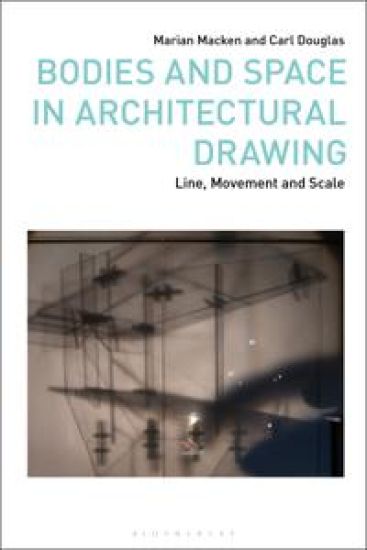
Bodies and Space in Architectural Drawing

Bodies and Space in Architectural Drawing

Marian Macken; Carl Douglas

BLOOMSBURY PUBLISHING PLC
2026
sidottu
Reimagining architectural drawing as a full-scale, bodily, and spatial practice, Marian Macken and Carl Douglas explore how architects perceive and shape space through drawing, positioning the body not just as a subject but as an active tool for design. Bodies and Space in Architectural Drawing challenges conventional scale relationships and advocates for full-scale, performative drawing methods that expand the boundaries of architectural practice. Drawing becomes a verb—inhabited, present, and embodied—redefining how space is measured, represented, and understood. The authors examine diverse approaches to architectural drawing, including motion-capture and wearable technologies, movement-based drawing, and the role of time and duration. They highlight how drawing can be inhabited by both the drawer and the viewer, offering a dynamic, immersive experience. Through case studies and examples, the book reinstates drawing as a spatial, temporal, and bodily act. Crucially, this book reframes the role of scaled artefacts—models, maps, and drawings—as intermediaries that mobilise architectural thinking. Rather than treating the body as a static reference point, it explores how moving, thinking bodies generate and reside within drawings. This is essential reading for students, practitioners, and researchers in architecture and spatial design seeking to rethink drawing as a performative and conceptual tool
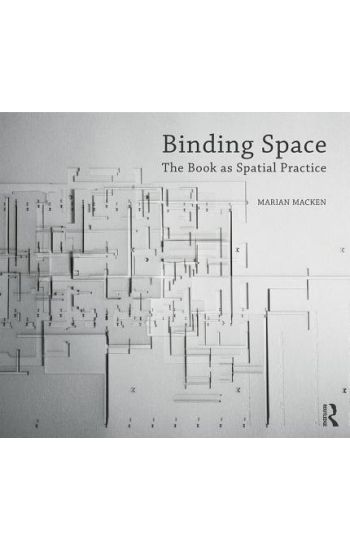
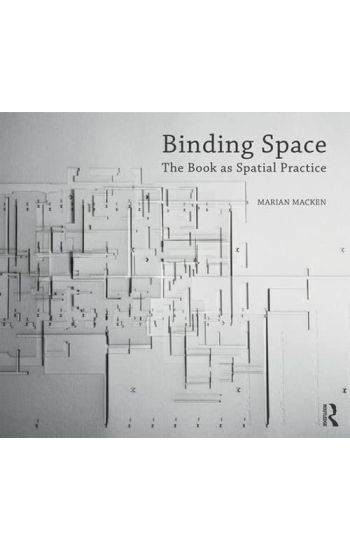
Binding Space: The Book as Spatial Practice
Books orient, intrigue, provoke and direct the reader while editing, interpreting, encapsulating, constructing and revealing architectural representation. Binding Space: The Book as Spatial Practice explores the role of the book form within the realm of architectural representation. It proposes the book itself as another three-dimensional, complementary architectural representation with a generational and propositional role within the design process. Artists’ books in particular – that is, a book made as an original work of art, with an artist, designer or architect as author – have certain qualities and characteristics, quite different from the conventional presentation and documentation of architecture. Paginal sequentiality, the structure and objecthood of the book, and the act of reading create possibilities for the book as a site for architectural imagining and discourse. In this way, the form of the book affects how the architectural work is conceived, constructed and read. In five main sections, Binding Space examines the relationships between the drawing, the building and the book. It proposes thinking through the book as a form of spatial practice, one in which the book is cast as object, outcome, process and tool. Through the book, we read spatial practice anew.