

Kirjailija
Marian Ronan
Kirjat ja teokset yhdessä paikassa: 5 kirjaa, julkaisuja vuosilta 2009–2017, suosituimpiin kuuluu Wisdom's Feast. Vertaile teosten hintoja ja tarkista saatavuus suomalaisista kirjakaupoista.
5 kirjaa
Kirjojen julkaisuvuodet: 2009–2017.
This unique handbook combines the theory and practice of the celebration of Sophia-whose name literally means "wisdom"-in one indispensable volume. In this new edition of Wisdom's Feast, the authors combine exercises, liturgies, sermons, study guides, prayers and meditations to create the first book of its kind-one that provides for experiencing Sophia in a ritual setting. Wisdom's Feast includes: - An introduction to Sophia - Activities for women's groups, churches and academic settings - Exercises on the most prominent Sophia themes in the Bible - Meditations and sermons - A comparative study of the biblical Sophia and other goddess figures - Studies of Sophia as mother, creator, wisdom and teacher
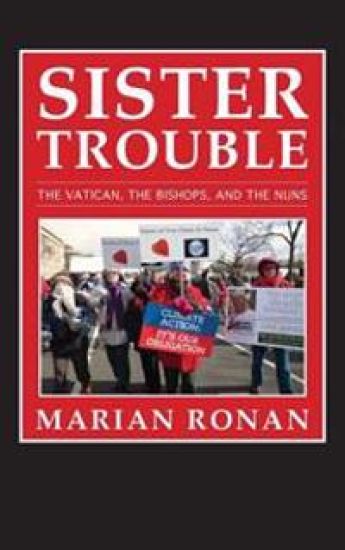
Sister Trouble: The Vatican, the Bishops, and the Nuns
Marian Ronan
Createspace Independent Publishing Platform
2013
nidottu
In April of 2012 the Vatican issued a harsh "doctrinal assessment" of the largest organization of Catholic sisters in the U. S., the Leadership Conference of Women Religious. The "assessment" was the culmination of a three-year investigation. Simultaneously, the Vatican had been conducting a visitation of 340 active (non-cloistered) congregations of U. S sisters. What do these developments mean? This is the question Catholic scholar and activist Marian Ronan sets out to answer in Sister Trouble: The Vatican, the Bishops, and the Nuns, her galvanizing collection of articles about the investigations, the doctrinal assessment, and the issues that connect them. In the first section of Sister Trouble, Ronan chronicles the conflict from the 2009 launch of the investigations to the 2012 actions of bishops appointed to oversee the Leadership Conference. She also examines the condemnation of Sister Elizabeth Johnson's book, the link between the sisters' support for the Affordable Care Act and the Vatican crackdown, and the dispute over the ultimate meaning of the Second Vatican Council that underlies the conflict. The articles sizzle with Ronan's distinctive and sometimes acerbic humor. Readers curious about the Vatican crackdown will learn a good deal from this first section of Sister Trouble. But the talk that comprises the second section provides much-needed context for understanding the conflict. Here the author examines in particular the treatment of dedicated celibate women throughout church history and the threat they have always posed to the supposedly absolute gender boundaries with which male leaders justify their domination of the church. Finally, in the concluding section, Ronan makes clear her reasons for undertaking Sister Trouble-because she cares so deeply about Catholic sisters. In the first article, she uses a statue of Joan of Arc to trace a genealogy from one U. S. Catholic sister to another and finally to herself. Then she draws on Irish writer Nuala O'Faolain to explore how the sisters shaped the lives and characters of generations of Catholic women. And in the final essay, Ronan steps beyond the current conflict to bid farewell to three recently deceased sisters whose lives of commitment profoundly influenced her own. As theologian Tania Oldenhage has written, Sister Trouble is an "urgent, clear-sighted and deeply-moving account" of the conflict between the Vatican and the nuns. It's also a testimony to the legacy of Catholic sisters throughout the ages.
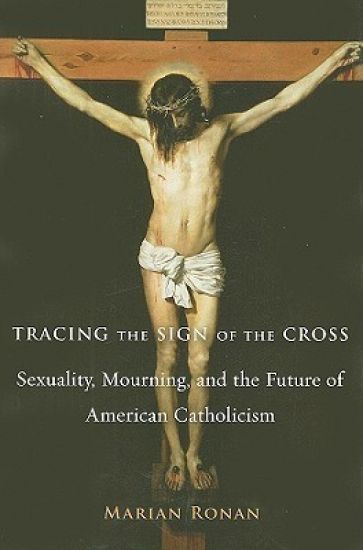
Following World War II, millions of U. S. Catholics were poised to attain the American dream, while at Vatican Council II, the liberal vision of the church seemed finally to triumph. Yet by the end of the twentieth century, American Catholicism was in crisis, plagued by grave ideological divisions; a dwindling pool of priests, nuns, and monks; and declining financial resources. What went wrong? In Tracing the Sign of the Cross, Marian Ronan identifies the roots of this crisis in an inability on the part of American Catholics to mourn a variety of losses suffered in the last third of the twentieth century. Drawing on the work of four writers with distinctively Catholic imaginations, Ronan argues that endless battles over sexuality and gender in particular have kept American Catholics from confronting these losses, thus jeopardizing the future of Catholicism. The writings of James Carroll, the archetypal liberal American Catholic, form the basis of Ronan's exploration of the church in the decades following Vatican II. Carroll's writings, especially his memoir, An American Requiem, seem to embody the very engagement with loss Ronan calls for-yet a highly gendered pattern of resistance to mourning emerges throughout Carroll's writing. Ronan discerns a similar Catholic "inability to mourn" in the early works of the novelist Mary Gordon, the feminist philosopher of science Donna Haraway, and the essayist Richard Rodriguez. While Gordon's characters gradually engage their profound losses, Haraway's female cyborg dons a crown of thorns, and Rodriguez confronts his own gay/brown identity-contributing in all cases to a new and chastened vision of the church. Framed by the author's own personal experience, Tracing the Sign of the Cross is an intimate and persuasive account of Catholic possibility in a postmodern world.