Kirjojen hintavertailu – 12 859 824 kirjaa ja 27 kauppaa

Kirjailija

Marianne C. Stewart

Kirjat ja teokset yhdessä paikassa: 8 kirjaa, julkaisuja vuosilta 2004–2023, suosituimpiin kuuluu Political Choice in Britain. Vertaile teosten hintoja ja tarkista saatavuus suomalaisista kirjakaupoista.

8 kirjaa

Kirjojen julkaisuvuodet: 2004–2023.

Political Choice in Britain

Political Choice in Britain

Harold D. Clarke; David Sanders; Marianne C. Stewart; Paul Whiteley

Oxford University Press
2004
sidottu
Why do people vote as they do? Indeed, why do they vote at all? What do they think about elections, political parties, and democracy? This important book by four leading scholars addresses these questions. Using a wealth of data from the 1964-2001 British election studies, monthly Gallup polls, and numerous other national surveys conducted over the past four decades, the authors test the explanatory power of rival sociological and individual rationality models of turnout and party choice. Analyses of party choice endorse a valence politics model that challenges the long-dominant social class model. British voters make their political choices by evaluating the performance of parties and party leaders in economic and other important policy areas. Although these evaluations may be products of events and conditions that occur long before an election campaign officially begins, parties' national and local campaign activities are also influential. Consistent with the valence politics model, partisan attachments display individual- and aggregate-level dynamics that reflect ongoing judgements about the managerial abilities of parties and their leaders. A general incentives model provides the best explanation of turnout. Calculations of the costs and influence-discounted benefits of voting and sense of civic duty are key variables in this model. Significantly, the decline in turnout in recent elections does not reflect more general negative trends in public attitudes about the political system. Voters judge the performance of British democracy in much the same way as they evaluate its parties and politicians. Support at all levels of the system is a renewable resource, but one that must be renewed. A command of theory, data, models, and method ensure that Political Choice in Britain will be a major resource for all those interested in elections, voting, and democracy.

Political Choice in Britain

Political Choice in Britain

Harold D. Clarke; David Sanders; Marianne C. Stewart; Paul Whiteley

Oxford University Press
2004
nidottu
Why do people vote as they do? Indeed, why do they vote at all? What do they think about elections and democracy? This book addresses these questions by focusing on the explanatory power of rival sociological and "individual rationality" models. Data from the latest British Election Study, earlier election studies and monthly opinion polls reveal that government and party performance, rather than social class, provides the superior explanation of vote choice.
Brexit Britain

Brexit Britain

Paul Whiteley; Harold D. Clarke; Matthew Goodwin; Marianne C. Stewart

Cambridge University Press
2023
pokkari

Halvin toimitettuna 26,90 €

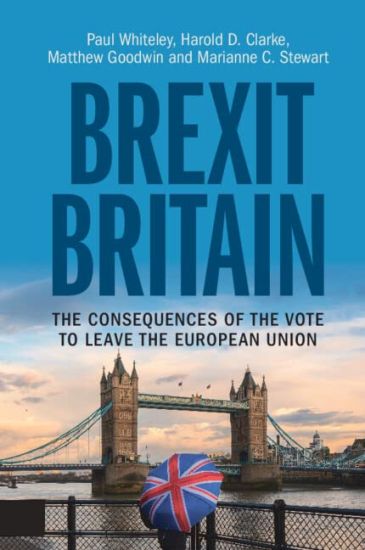
In June 2016, more than 17 million people voted for Britain to leave the European Union. The fallout of this momentous referendum has been tumultuous and unpredictable. Now, from the authors of the highly-acclaimed Brexit: Why Britain Voted to Leave the European Union (Cambridge University Press, 2017), comes the definitive guide to the transformation of British politics in the years following the Brexit vote. By charting the impact of Brexit on three major elections – the 2017 and 2019 general elections as well as the 2019 European Parliament elections – this book reveals the deeper currents reshaping modern Britain. The authors draw upon many years of unique and unprecedented data from their own surveys, giving key insights into how and why Brexit has changed British electoral politics. The book is written in a clear and accessible style, appealing to students, scholars and anyone interested in the impact of Brexit on Britain today.
Brexit Britain

Brexit Britain

Paul Whiteley; Harold D. Clarke; Matthew Goodwin; Marianne C. Stewart

Cambridge University Press
2023
sidottu
In June 2016, more than 17 million people voted for Britain to leave the European Union. The fallout of this momentous referendum has been tumultuous and unpredictable. Now, from the authors of the highly-acclaimed Brexit: Why Britain Voted to Leave the European Union (Cambridge University Press, 2017), comes the definitive guide to the transformation of British politics in the years following the Brexit vote. By charting the impact of Brexit on three major elections – the 2017 and 2019 general elections as well as the 2019 European Parliament elections – this book reveals the deeper currents reshaping modern Britain. The authors draw upon many years of unique and unprecedented data from their own surveys, giving key insights into how and why Brexit has changed British electoral politics. The book is written in a clear and accessible style, appealing to students, scholars and anyone interested in the impact of Brexit on Britain today.
Affluence, Austerity and Electoral Change in Britain

Affluence, Austerity and Electoral Change in Britain

Paul Whiteley; Harold D. Clarke; David Sanders; Marianne C. Stewart

Cambridge University Press
2013
sidottu
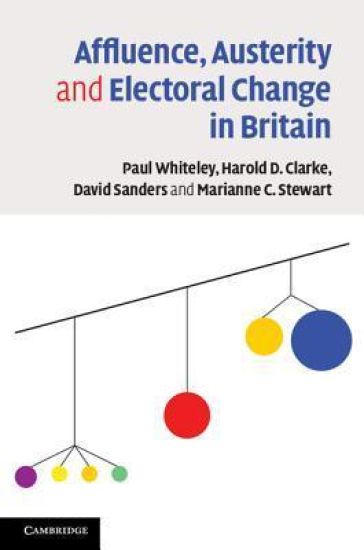
Affluence, Austerity and Electoral Change in Britain investigates the political economy of party support for British political parties since Tony Blair led New Labour to power in 1997. Using valence politics models of electoral choice and marshalling an unprecedented wealth of survey data collected in the British Election Study's monthly Continuous Monitoring Surveys, the authors trace forces affecting support for New Labour during its thirteen years in office. They then study how the recessionary economy has influenced the dynamics of party support since the Conservative–Liberal Democrat Coalition came to power in May 2010 and factors that shaped voting in Britain's May 2011 national referendum on changing the electoral system. Placing Britain in comparative perspective with cross-national survey data gathered in the midst of the worst recession since the 1930s, the authors investigate how the economic crisis has affected support for incumbent governments and democratic politics in over twenty European countries.
Affluence, Austerity and Electoral Change in Britain

Affluence, Austerity and Electoral Change in Britain

Paul Whiteley; Harold D. Clarke; David Sanders; Marianne C. Stewart

Cambridge University Press
2013
pokkari
Affluence, Austerity and Electoral Change in Britain investigates the political economy of party support for British political parties since Tony Blair led New Labour to power in 1997. Using valence politics models of electoral choice and marshalling an unprecedented wealth of survey data collected in the British Election Study's monthly Continuous Monitoring Surveys, the authors trace forces affecting support for New Labour during its thirteen years in office. They then study how the recessionary economy has influenced the dynamics of party support since the Conservative–Liberal Democrat Coalition came to power in May 2010 and factors that shaped voting in Britain's May 2011 national referendum on changing the electoral system. Placing Britain in comparative perspective with cross-national survey data gathered in the midst of the worst recession since the 1930s, the authors investigate how the economic crisis has affected support for incumbent governments and democratic politics in over twenty European countries.
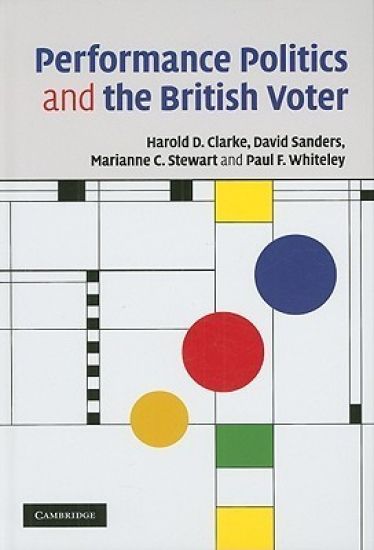
Performance Politics and the British Voter

Performance Politics and the British Voter

Harold D. Clarke; David Sanders; Marianne C. Stewart; Paul F. Whiteley

Cambridge University Press
2009
sidottu
What matters most to voters when they choose their leaders? This book suggests that performance politics is at the heart of contemporary democracy, with voters forming judgments about how well competing parties and leaders perform on important issues. Given the high stakes and uncertainty involved, voters rely heavily on partisan cues and party leader images as guides to electoral choice. However, the authors argue that the issue agenda of British politics has changed markedly in recent years. A cluster of concerns about crime, immigration and terrorism now mix with perennial economic and public service issues. Since voters and parties often share the same positions on these issues, political competition focuses on who can do the best job. This book shows that a model emphasizing flexible partisan attachments, party leader images and judgments of party competence on key issues can explain electoral choice in contemporary Britain.
Performance Politics and the British Voter

Performance Politics and the British Voter

Harold D. Clarke; David Sanders; Marianne C. Stewart; Paul F. Whiteley

Cambridge University Press
2009
pokkari
What matters most to voters when they choose their leaders? This book suggests that performance politics is at the heart of contemporary democracy, with voters forming judgments about how well competing parties and leaders perform on important issues. Given the high stakes and uncertainty involved, voters rely heavily on partisan cues and party leader images as guides to electoral choice. However, the authors argue that the issue agenda of British politics has changed markedly in recent years. A cluster of concerns about crime, immigration and terrorism now mix with perennial economic and public service issues. Since voters and parties often share the same positions on these issues, political competition focuses on who can do the best job. This book shows that a model emphasizing flexible partisan attachments, party leader images and judgments of party competence on key issues can explain electoral choice in contemporary Britain.