
Kirjojen hintavertailu – 12 876 696 kirjaa ja 26 kauppaa

Kirjailija

Marianne Stenbaek

Kirjat ja teokset yhdessä paikassa: 3 kirjaa, julkaisuja vuosilta 2011–2021, suosituimpiin kuuluu Language, Citizenship, and Sámi Education in the Nordic North, 1900-1940. Vertaile teosten hintoja ja tarkista saatavuus suomalaisista kirjakaupoista.

3 kirjaa

Kirjojen julkaisuvuodet: 2011–2021.

Language, Citizenship, and Sámi Education in the Nordic North, 1900-1940

Language, Citizenship, and Sámi Education in the Nordic North, 1900-1940

Otso Kortekangas; Marianne Stenbaek

McGill-Queen's University Press
2021
nidottu

Halvin toimitettuna 38,20 €

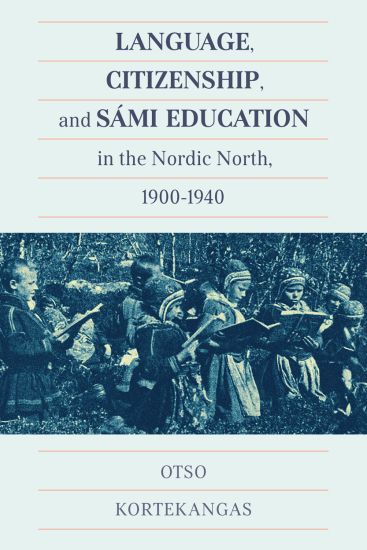
In the making of the modern Nordic states in the first half of the twentieth century, elementary education was paramount in creating a notion of citizenship that was universal and equal for all citizens. Yet these elementary education policies ignored, in most cases, the language, culture, wishes, and needs of minorities such as the indigenous Sámi. Presenting the Sámi as an active, transnational population in early twentieth-century northern Europe, Otso Kortekangas examines how educational policies affected the Sámi people residing in the northern parts of Norway, Sweden, and Finland. In this detailed study, Kortekangas explores what the arguments were for the lack of Sámi language in schools, how Sámi teachers have promoted the use of their mother tongue within the school systems, and how the history of the Sámi compares to other indigenous and minority populations globally. Timely in its focus on educational policies in multiethnic societies, and ambitious in its scope, the book provides essential information for educators, policy-makers, and academics, as well as anyone interested in the history of education, and the relationship between large-scale government policies and indigenous peoples.
Language, Citizenship, and Sámi Education in the Nordic North, 1900-1940

Language, Citizenship, and Sámi Education in the Nordic North, 1900-1940

Otso Kortekangas; Marianne Stenbaek

McGill-Queen's University Press
2021
sidottu
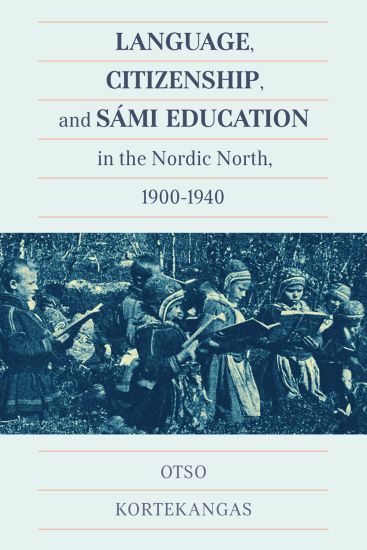
In the making of the modern Nordic states in the first half of the twentieth century, elementary education was paramount in creating a notion of citizenship that was universal and equal for all citizens. Yet these elementary education policies ignored, in most cases, the language, culture, wishes, and needs of minorities such as the indigenous Sámi. Presenting the Sámi as an active, transnational population in early twentieth-century northern Europe, Otso Kortekangas examines how educational policies affected the Sámi people residing in the northern parts of Norway, Sweden, and Finland. In this detailed study, Kortekangas explores what the arguments were for the lack of Sámi language in schools, how Sámi teachers have promoted the use of their mother tongue within the school systems, and how the history of the Sámi compares to other indigenous and minority populations globally. Timely in its focus on educational policies in multiethnic societies, and ambitious in its scope, the book provides essential information for educators, policy-makers, and academics, as well as anyone interested in the history of education, and the relationship between large-scale government policies and indigenous peoples.

Voices and Images of Nunavimmiut, Volume 2

Voices and Images of Nunavimmiut, Volume 2

Minnie Grey; Marianne Stenbaek

International Polar Institute Press
2011
sidottu
Second in the series based on articles originally published in the periodicals of Makivik Corporation beginning in 1974 with Taqralik Magazine and continuing through the current Makivik Magazine. The Makivik Corporation is the legal representative of Quebec's Inuit people, established in 1978 under the terms of the James Bay and Northern Quebec Agreement, the agreement that established the institutions of Nunavik. As such, it is the heir of the Northern Quebec Inuit Association which signed the agreement with the governments of Quebec and Canada. Its principal responsibility is the administration of Inuit lands. It also has a mandate to promote the economic and social development of Inuit society in Nunavik. The Makivik Corporation is empowered to negotiate new agreements with governments on behalf of the Quebec Inuit and to represent them. Makivik promotes the preservation of Inuit culture and language as well as the health, welfare, education and relief of poverty for Inuit in their communities. Beginning with the spoken word and tracing its evolution through the modernizing culture surrounding it, the people of Nunavik continue making themselves heard as the only true representatives for their needs and aspirations in the face of economic, cultural and environmental changes.