Kirjojen hintavertailu – 12 903 725 kirjaa ja 27 kauppaa

Kirjailija

Marie-Luise Angerer

Kirjat ja teokset yhdessä paikassa: 6 kirjaa, julkaisuja vuosilta 2014–2022, suosituimpiin kuuluu Ecology of Affect. Vertaile teosten hintoja ja tarkista saatavuus suomalaisista kirjakaupoista.

Nimi esiintyy myös muodoissa: Marie–luise Angerer

6 kirjaa

Kirjojen julkaisuvuodet: 2014–2022.

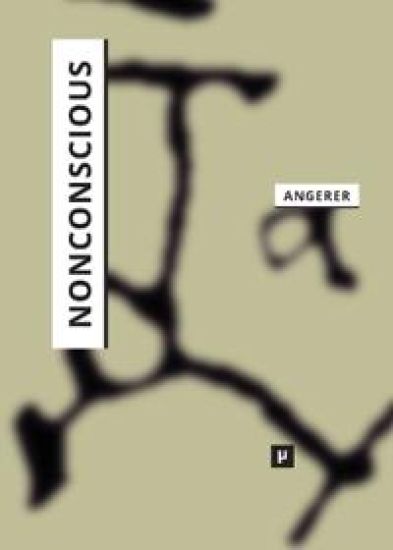
Nonconscious

Nonconscious

Marie-Luise Angerer

meson press eG
2022
pokkari
Growing numbers of nonhuman companions (smart objects, technical environments, sensor technologies used to augment the human body) are creating affective synching between human and nonhuman agency. Unlike the unconscious of psychoanalysis, this book argues, the resulting nonconscious is no longer coupled to a subject grounded in language, instead acting as an affective link between technical, mental, and physical processes. But how is this nonconscious to be understood? Is it something additional, a new zone intervening between the unconscious and consciousness? Or does it fundamentally call into question the distinction between the two?

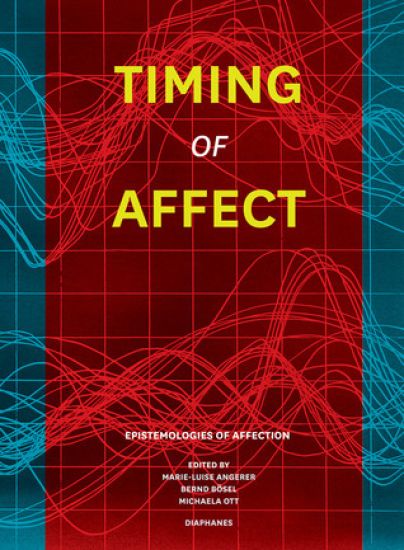
Timing of Affect – Epistemologies of Affection

Timing of Affect – Epistemologies of Affection

Marie–luise Angerer; Bernd Bosel; Michaela Ott

Diaphanes AG
2014
nidottu
Affect, or the process by which emotions come to be embodied, is a burgeoning area of interest in both the humanities and the sciences. For Timing of Affect, Marie-Luise Angerer, Bernd Bosel, and Michaela Ott have assembled leading scholars to explore the temporal aspects of affect through the perspectives of philosophy, music, film, media, and art, as well as technology and neurology. The contributions address possibilities for affect as a capacity of the body; as an anthropological inscription and a primary, ontological conjunctive and disjunctive process; as an interruption of chains of stimulus and response; and as an arena within cultural history for political, media, and psychopharmacological interventions. Showing how these and other temporal aspects of affect are articulated both throughout history and in contemporary society, the editors then explore the implications for the current knowledge structures surrounding affect today.
Desire After Affect

Desire After Affect

Marie-Luise Angerer

Rowman Littlefield International
2014
nidottu
Desire is a term often used in conjunction with the subject. This desire is directed towards the real, which is defined as the generic core of the linguistic order. As a result of the focus on affect, the three terms—desire, the subject, the real—have been fundamentally shaken up and called into question. Affect, in various forms, is now a matter of concern across a wide range of disciplines including neuroscience, psychology, the humanities, and social sciences. All of these fields have a declared interest in affect, in emotions and sensations, in pathos, passions, and the senses. Desire After Affect argues that this affective euphoria cannot be explained solely in terms of a repression of language, logos, and reason. It argues that the affective turn is symptomatic of a fundamental shift in modes of thinking about the human condition. It explores what this means for the human and the posthuman, animal and machine, and calls for a new theory of subjectivation, a philosophy of media affect.
Desire After Affect

Desire After Affect

Marie-Luise Angerer; Patricia T Clough

Rowman Littlefield International
2014
sidottu
Desire is a term often used in conjunction with the subject. This desire is directed towards the real, which is defined as the generic core of the linguistic order. As a result of the focus on affect, the three terms—desire, the subject, the real—have been fundamentally shaken up and called into question. Affect, in various forms, is now a matter of concern across a wide range of disciplines including neuroscience, psychology, the humanities, and social sciences. All of these fields have a declared interest in affect, in emotions and sensations, in pathos, passions, and the senses. Desire After Affect argues that this affective euphoria cannot be explained solely in terms of a repression of language, logos, and reason. It argues that the affective turn is symptomatic of a fundamental shift in modes of thinking about the human condition. It explores what this means for the human and the posthuman, animal and machine, and calls for a new theory of subjectivation, a philosophy of media affect.