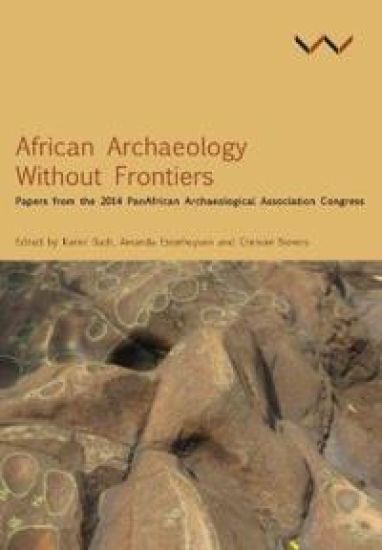
African Archaeology Without Frontiers
Chapurukha M Kusimba; Santores Tchandeu; Dirk Seidensticker; Adrianne Daggett; Marilee Wood; Laure Dussubieux; Forssman Tim; Kate Smuts; Nick Wiltshire; Akin Ogundiran; Davies Matthew; Caleb Adebayo Folorunso; Timothy Kipkeu Kipruto; Freda M’Mbogori; Henrietta L Moore; Emubosa Orijemie; Schoeman Alex; Festo W Gabriel; Elinaza Mjema; Philip de Barros; Gabriella Lucidi
Wits University Press
2016
nidottu
Confronting national, linguistic and disciplinary boundaries, contributors to African Archaeology Without Frontiers argue against artificial limits and divisions created through the study of `ages’ that in reality overlap and cannot and should not be understood in isolation. Papers are drawn from the proceedings of the landmark 14th PanAfrican Archaeological Association Congress held in Johannesburg in 2014, nearly seven decades after the conference planned for 1951 was relocated to Algiers following the National Party’s rise to power in South Africa. Contributions by keynote speakers Chapurukha Kusimba and AkinOgundiran encourage African archaeologists to practise an archaeology that collaborates across many related fields of study to enrich our understanding of the past. The nine papers cover a broad geographical sweep by incorporating material on ongoing projects throughout the continent, including South Africa, Botswana, Cameroon, Togo, Tanzania, Kenya and Nigeria. Thematically, the papers included in the volume address issues of identity and interaction, and the need to balance cultural heritage management and sustainable development derived from a continent racked by social inequalities and crippling poverty. Edited by three leading archaeologists, the collection covers many aspects of African archaeology, and a range of periods from the earliest hominins to the historical period.