Kirjojen hintavertailu – 12 859 824 kirjaa ja 27 kauppaa

Kirjailija

Marilyn Coleman

Kirjat ja teokset yhdessä paikassa: 9 kirjaa, julkaisuja vuosilta 1999–2024, suosituimpiin kuuluu Stepfamily Relationships. Vertaile teosten hintoja ja tarkista saatavuus suomalaisista kirjakaupoista.

9 kirjaa

Kirjojen julkaisuvuodet: 1999–2024.

What Works in Stepfamilies

What Works in Stepfamilies

Lawrence Ganong; Marilyn Coleman; Caroline Sanner

TAYLOR FRANCIS LTD
2024
sidottu
This book uses a strengths-based approach and resilience perspective to offer guidance on what works in creating effective stepfamily relationships, sharing findings and empirically supported best practices for stepfamily members and the family professionals that work with them. Drawing from over 2,500 studies, Ganong, Coleman, and Sanner present a comprehensive overview of research on what works to create positive and satisfying stepfamily relationships. Chapters address how to work with stepcouples, stepparents, biological parents, co-parents, stepsiblings and half-siblings, and biological and stepgrandparents, with illustrative case studies throughout. It emphasizes the diversity and complexity of stepfamilies, including work with LGBTQ+ stepfamilies, stepfamilies from various racial and ethnic groups, and stepfamily relationships across the life course, from childrearing stepfamilies to those formed later in life. This book is essential reading for students, researchers, and practitioners interested in strengthening stepfamily relationships, such as those studying or working in family science, marriage and family therapy, psychology, and social work.
What Works in Stepfamilies

What Works in Stepfamilies

Lawrence Ganong; Marilyn Coleman; Caroline Sanner

TAYLOR FRANCIS LTD
2024
nidottu
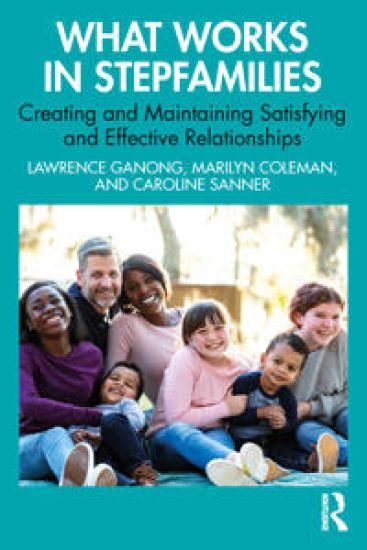
This book uses a strengths-based approach and resilience perspective to offer guidance on what works in creating effective stepfamily relationships, sharing findings and empirically supported best practices for stepfamily members and the family professionals that work with them. Drawing from over 2,500 studies, Ganong, Coleman, and Sanner present a comprehensive overview of research on what works to create positive and satisfying stepfamily relationships. Chapters address how to work with stepcouples, stepparents, biological parents, co-parents, stepsiblings and half-siblings, and biological and stepgrandparents, with illustrative case studies throughout. It emphasizes the diversity and complexity of stepfamilies, including work with LGBTQ+ stepfamilies, stepfamilies from various racial and ethnic groups, and stepfamily relationships across the life course, from childrearing stepfamilies to those formed later in life. This book is essential reading for students, researchers, and practitioners interested in strengthening stepfamily relationships, such as those studying or working in family science, marriage and family therapy, psychology, and social work.
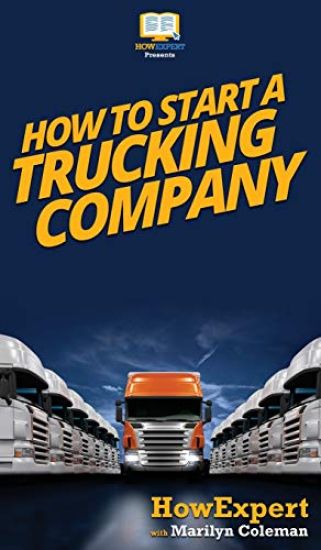
How To Start a Trucking Company

How To Start a Trucking Company

Howexpert; Marilyn Coleman

Howexpert
2020
sidottu
If you want to learn the basics of having a trucking company business, then get "How To Start a Trucking Company" which is written by a person with real life experience starting a trucking company business. How To Start a Trucking Company is a guide designed to help anyone who is interested in starting a trucking business. In this guide you will learn how to operate your company the right way. This guide will take you step by step through the whole process, from start to finish. Whether you decide to start with one truck or 150 trucks, you can use the information in this guide to put you on the right path. This guide discusses the first step to take after you have made the decision to open a trucking company. You will learn how to obtain the paperwork needed to apply for your company name as well as Employer Identification Number. You will be given tips on how to advertise your company and advertise for drivers. New rules for the trucking industry are in a section called CSA 2010, giving you the new information from FMCSA and how it will affect the way most companies are operated. Information pertaining to driver qualifications, physicals, and experience will be discussed. In this guide, you will find out how trucking software helps your company with dispatching, inventory control, personnel time sheets, drivers and equipment. This guide will show you how to obtain freight, the contract with certain customers and how to write a proposal to a company to haul their freight. Analyzing your competition is a great section that tells you how to search for the freight you want to haul and see what other companies are also moving freight for that customer. Before you do all that is mentioned above, you must first write a business plan and calculate you start up costs. This will be discussed in detail in the first section of this guide. You will find out what the differences between S Corp, C Corp, and LLC, which will be the best for your type of business. There will information on how to apply for financing from SBA and grants from other government agencies and private financing. By the time you get to the end of this guide, you should be able to follow each step and have your company ready to open within a month, if not sooner. Good luck About the Expert Marilyn Coleman is a former professional truck driver. She started out as an administrative assistant, but felt like something was missing. She followed her dreams of becoming a professional truck driver and became an owner-operator. After talking with her father, who drove for 25 years himself, she took the step and has been driving for 17 years. During her long career as a truck driver, Marilyn traveled all over the U. S., met some interesting people, visited some interesting places, and learned a lot about the industry. As an owner-operator, she ran a small business with just one truck. She learned how to dispatch and deal with brokers, shippers, receivers, and other drivers. She no longer drives, but still keeps up with changes in rules and regulations in the trucking industry so she can inform her friends about those changes. HowExpert publishes quick 'how to' guides on all topics from A to Z by everyday experts.
Stepfamily Relationships

Stepfamily Relationships

Lawrence Ganong; Marilyn Coleman

Springer-Verlag New York Inc.
2018
nidottu
This second edition synthesizes the emerging knowledge base on the diversity of stepfamilies, their inherent concerns, and why so relatively little is still known about them. Its extensive findings shed needed light on family arrangements relatively new to the literature (e.g., cohabitating stepparents), the effects of these relationships on different family members (e.g., stepsiblings, stepgrandparents), the experiences of gay and lesbian stepfamilies, and the stigma against non-nuclear families. Coverage reviews effective therapeutic and counseling interventions for emotional, familial, and social challenges of stepfamilies, as well as the merits of family education and self-help programs. The authors explore prevailing myths about marriage, divorce, and stepfamily life while expanding the limits of stepfamily research. Among the topics included: • The cultural context of stepfamilies.• Couple dynamics in stepfamilies.• Gay andlesbian couples in stepfamilies. • The dynamics of stepparenting. • Siblings, half-siblings, and stepsiblings. • Effects of stepfamily living on children.• Clinical perspectives on stepfamily dynamics. For researchers and clinicians who work with families, it enriches the literature as it offers insights and guidelines for effective practice as well as possible avenues for future research.
Stepfamily Relationships

Stepfamily Relationships

Lawrence Ganong; Marilyn Coleman

Springer-Verlag New York Inc.
2016
sidottu
This second edition synthesizes the emerging knowledge base on the diversity of stepfamilies, their inherent concerns, and why so relatively little is still known about them. Its extensive findings shed needed light on family arrangements relatively new to the literature (e.g., cohabitating stepparents), the effects of these relationships on different family members (e.g., stepsiblings, stepgrandparents), the experiences of gay and lesbian stepfamilies, and the stigma against non-nuclear families. Coverage reviews effective therapeutic and counseling interventions for emotional, familial, and social challenges of stepfamilies, as well as the merits of family education and self-help programs. The authors explore prevailing myths about marriage, divorce, and stepfamily life while expanding the limits of stepfamily research. Among the topics included: • The cultural context of stepfamilies.• Couple dynamics in stepfamilies.• Gay andlesbian couples in stepfamilies. • The dynamics of stepparenting. • Siblings, half-siblings, and stepsiblings. • Effects of stepfamily living on children.• Clinical perspectives on stepfamily dynamics. For researchers and clinicians who work with families, it enriches the literature as it offers insights and guidelines for effective practice as well as possible avenues for future research.
Changing Families, Changing Responsibilities

Changing Families, Changing Responsibilities

Marilyn Coleman; Lawrence Ganong

Psychology Press Ltd
2015
nidottu
This book explores the topic of family obligations following changes in family structure caused by divorce and remarriage. Family obligations are commonly defined as the rights and duties that accompany family roles. They have been described as the "glue" that connects generations, as well as the "oughts" and "shoulds" that surround individual family relationships. This book is primarily concerned with normative beliefs about what family members should do for each other. It differs from previous accounts of family obligation norms because it specifically focuses on family responsibilities after divorce and remarriage, two events that affect an increasing number of families today. The authors draw extensively upon the findings of 13 studies of normative beliefs regarding post-divorce intergenerational family obligations. This book fills a gap in the present literature concerning family obligation. It addresses the weaknesses of prior research by focusing on family transitions and by presenting data from studies that employ contextual methods. The content will provide guidance to policymakers and helping professionals who work with families, and the unique focus and procedures of the studies are likely to set the standard for future assessments of normative beliefs about family obligations.
Stepfamily Relationships

Stepfamily Relationships

Lawrence H. Ganong; Marilyn Coleman

Springer-Verlag New York Inc.
2012
nidottu
Stepfamily Relationships: Development, Dynamics, and Interventions offers what has so far been missing in the field - a comprehensive, multidisciplinary text that provides a state-of-the-art look at this important facet of family study. This volume examines the variety of relationships within step-households as well as between households, focusing on internal family dynamics while maintaining a cultural and historical viewpoint. The diversity and complexity of families is emphasized throughout, including gay and lesbian stepfamilies, stepfamilies of varying racial and ethnic backgrounds, and stepfamilies across the life course. It will be a welcome text and reference for all those who study and work with stepfamilies and families in general.
Family Life in 20th-Century America

Family Life in 20th-Century America

Marilyn Coleman; Lawrence H. Ganong; Kelly Warzinik

Greenwood Press
2007
sidottu
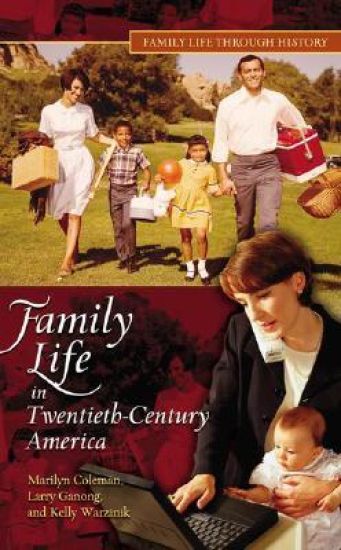
No other century promoted such rapid change in American families than the twentieth century did. Through most of the first half of the century families were two-parent plus children units, but by the 1980s and 1990s divorce was common in half of the homes and many families were single-parent or included step-parents, step-siblings and half-siblings. The major changes in opinions and even some laws on race, gender and sexuality during the 1960s and 1970s brought change to families as well. Some families were headed by gay parents, lived in communes or other non-traditional homes, were of mixed race, or had adopted children. Family life had changed dramatically in less than 50 years. The change in the core make-up of what was considered a family ushered in new celebrations and holidays, ways of cooking, eating, and entertainment, and even daily activities. In this detailed look at family life in America, Coleman, Ganong and Warzinick discuss home and work, family ceremonies and celebrations, parenting and children, divorce and single-parent homes, gay and lesbian families, as well as cooking and meals, urban vs. suburban homes, and ethnic and minority families. Reference resources include a timeline, sources for further reading, photographs and an index. Volumes in the Family Life in America series focus on the day-to-day lives and roles of families throughout history. The roles of all family members are defined and information on daily family life, the role of the family in society, and the ever-changing definition of the term family' are discussed. Discussion of the nuclear family, single parent homes, foster and adoptive families, stepfamilies, and gay and lesbian families are included where appropriate. Topics such as meal planning, homes, entertainment and celebrations, are discussed along with larger social issues that originate in the home like domestic violence, child abuse and neglect, and divorce. Ideal for students and general readers alike, books in this series bring the history of everyday people to life.
Changing Families, Changing Responsibilities

Changing Families, Changing Responsibilities

Marilyn Coleman; Lawrence Ganong

Psychology Press
1999
sidottu
This book explores the topic of family obligations following changes in family structure caused by divorce and remarriage. Family obligations are commonly defined as the rights and duties that accompany family roles. They have been described as the "glue" that connects generations, as well as the "oughts" and "shoulds" that surround individual family relationships. This book is primarily concerned with normative beliefs about what family members should do for each other. It differs from previous accounts of family obligation norms because it specifically focuses on family responsibilities after divorce and remarriage, two events that affect an increasing number of families today. The authors draw extensively upon the findings of 13 studies of normative beliefs regarding post-divorce intergenerational family obligations. This book fills a gap in the present literature concerning family obligation. It addresses the weaknesses of prior research by focusing on family transitions and by presenting data from studies that employ contextual methods. The content will provide guidance to policymakers and helping professionals who work with families, and the unique focus and procedures of the studies are likely to set the standard for future assessments of normative beliefs about family obligations.