Kirjailija
Marina Warner
Kirjat ja teokset yhdessä paikassa: 52 kirjaa, julkaisuja vuosilta 1983–2026, suosituimpiin kuuluu Love Stories. Vertaile teosten hintoja ja tarkista saatavuus suomalaisista kirjakaupoista.
52 kirjaa
Kirjojen julkaisuvuodet: 1983–2026.
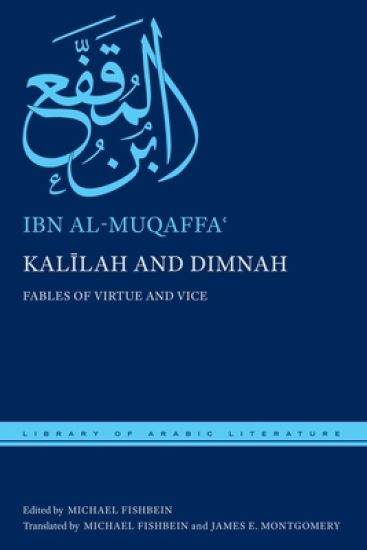
Timeless fables of loyalty and betrayal Like Aesop's Fables, Kalilah and Dimnah is a collection designed not only for moral instruction, but also for the entertainment of readers. The stories, which originated in the Sanskrit Panchatantra and Mahabharata, were adapted, augmented, and translated into Arabic by the scholar and state official Ibn al-Muqaffa? in the second/eighth century. The stories are engaging, entertaining, and often funny, from "The Man Who Found a Treasure But Could Not Keep It," to "The Raven Who Tried To Learn To Walk Like a Partridge" and "How the Wolf, the Raven, and the Jackal Destroyed the Camel." Kalilah and Dimnah is a "mirror for princes," a book meant to inculcate virtues and discernment in rulers and warn against flattery and deception. Many of the animals who populate the book represent ministers counseling kings, friends advising friends, or wives admonishing husbands. Throughout, Kalilah and Dimnah offers insight into the moral lessons Ibn al-Muqaffa? believed were important for rulers—and readers. A bilingual Arabic-English edition.
Rachel Kneebone
Roderick Mengham; Marina Warner; Timo Valjakka
Kustannusosakeyhtiö Parvs
2021
sidottu
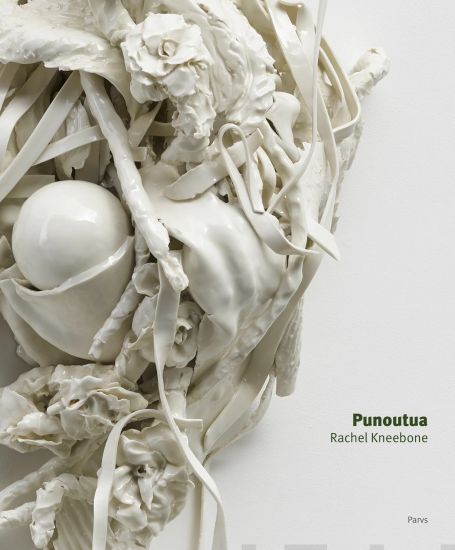
Englantilaistaiteilija Rachel Kneebonen arvoituksellisissa posliiniveistoksissa ihmiskehon fragmentit tuntuvat jatkuvasti kyseenalaistavan ajatuksen kokonaisesta, loppuun viedystä muodosta. Veistosten materiaali, valkoinen posliini, reagoi herkästi valoon ja näyttää välillä raskaalta ja kiinteältä, välillä kevyeltä ja läpikuultavalta. Myös Kneebonelle tärkeä tanssillinen liike määrittää veistoksia, joissa irralliset torsot ja raajat moninkertaistuvat ja punoutuvat toisiinsa. Kneebone tarkastelee taiteessaan ihmisyyttä, elämän kiertokulkua, muodonmuutoksia ja uudistumista. Kaikki on liikkeessä: rokokoon kepeys sekoittuu nykymaailman ongelmiin ja tulevaisuus sulautuu renessanssin optimismiin. Punoutua-kirja esittelee taiteilijan ensimmäistä kertaa Suomessa.
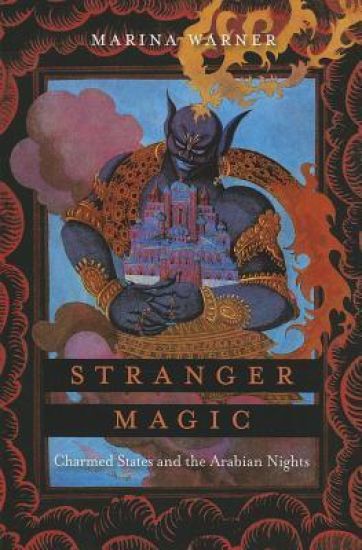
Our foremost theorist of myth, fairytales, and folktales explores the magical realm of the imagination where carpets fly, objects speak, dreams reveal hidden truths, and genies grant prophetic wishes. Stranger Magic examines the wondrous tales of the Arabian Nights, their profound impact on the West, and the progressive exoticization of magic since the eighteenth century, when the first European translations appeared. The Nights seized European readers' imaginations during the siecle des Lumieres, inspiring imitations, spoofs, turqueries, extravaganzas, pantomimes, and mauresque tastes in dress and furniture. Writers from Voltaire to Goethe to Borges, filmmakers from Raoul Walsh on, and countless authors of children's books have adapted its stories. What gives these tales their enduring power to bring pleasure to readers and audiences? Their appeal, Marina Warner suggests, lies in how the stories' magic stimulates the creative activity of the imagination. Their popularity during the Enlightenment was no accident: dreams, projections, and fantasies are essential to making the leap beyond the frontiers of accepted knowledge into new scientific and literary spheres. The magical tradition, so long disavowed by Western rationality, underlies modernity's most characteristic developments, including the charmed states of brand-name luxury goods, paper money, and psychoanalytic dream interpretation. In Warner's hands, the Nights reveal the underappreciated cultural exchanges between East and West, Islam and Christianity, and cast light on the magical underpinnings of contemporary experience, where mythical principles, as distinct from religious belief, enjoy growing acceptance. These tales meet the need for enchantment, in the safe guise of oriental costume.
Paula Rego
Deryn Rees-Jones; Marina Warner
Thames Hudson Ltd
2019
sidottu
Halvin toimitettuna 79,50 €
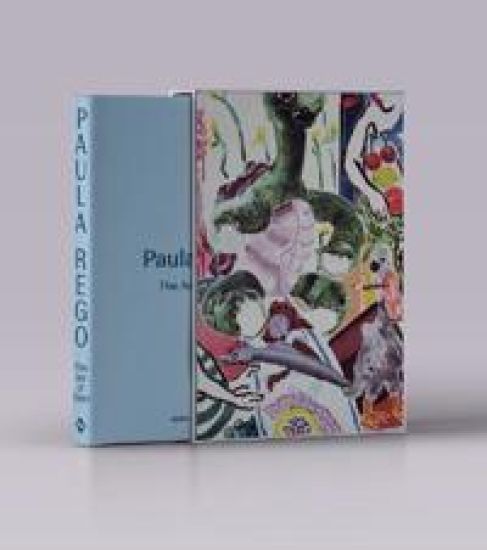
Paula Rego is an artist of astonishing power with a unique and unforgettable aesthetic. Taking its cues from the artist, this fascinating study invites us to reflect on the complexities of storytelling on which Rego’s work draws, emphasizing both the stories the pictures tell, and how it is that they are told. Deryn Rees-Jones sets interpretations of the pictures in the context of Rego’s personal and artistic development across sixty years. We see how Rego’s art intersects with the work of both the literary and the visual, and come to understand her rich and textured layering of reference: her use of the Old Masters; fiction, fairy tales and poems; the folk traditions of Rego’s native Portugal; and her wider engagement with politics, feminism and more. The result is a highly original work that addresses urgent and topical questions of gender, subject and object, self and other.
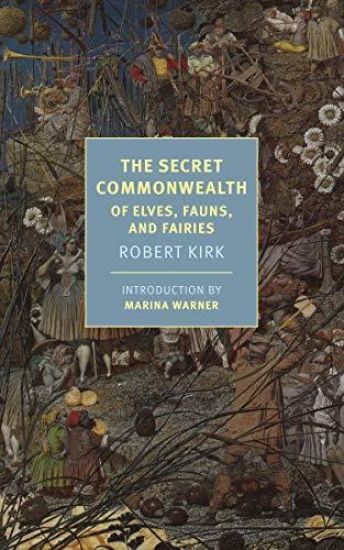
The Secret Commonwealth
Marina Warner; Robert Kirk
The New York Review of Books, Inc
2019
nidottu
Halvin toimitettuna 22,80 €
A classic, enchanting document of Scottish folklore about fairies, elves, and other supernatural creatures. Late in the seventeenth century, Robert Kirk, an Episcopalian minister in the Scottish Highlands, set out to collect his parishioners' many striking stories about elves, fairies, fauns, doppelgangers, wraiths, and other beings of, in Kirk's words, "a middle nature betwixt man and angel." For Kirk these stories constituted strong evidence for the reality of a supernatural world, existing parallel to ours, which, he passionately believed demanded exploration as much as the New World across the seas. Kirk defended these views in The Secret Commonwealth, an essay that was left in manuscript when he died in 1692. It is a rare and fascinating work, an extraordinary amalgam of science, religion, and folklore, suffused with the spirit of active curiosity and bemused wonder that fills Robert Burton's Anatomy of Melancholy and the works of Sir Thomas Browne. The Secret Commonwealth is not only a remarkable document in the history of ideas but a study of enchantment that enchants in its own right. First published in 1815 by Sir Walter Scott, then re-edited in 1893 by Andrew Lang, with a dedication to Robert Louis Stevenson, The Secret Commonwealth has long been difficult to obtain--available, if at all, only in scholarly editions. This new edition modernizes the spelling and punctuation of Kirk's little book and features a wide-ranging and illuminating introduction by the critic and historian Marina Warner, who brings out the originality of Kirk's contribution and reflects on the ongoing life of fairies in the modern mind.
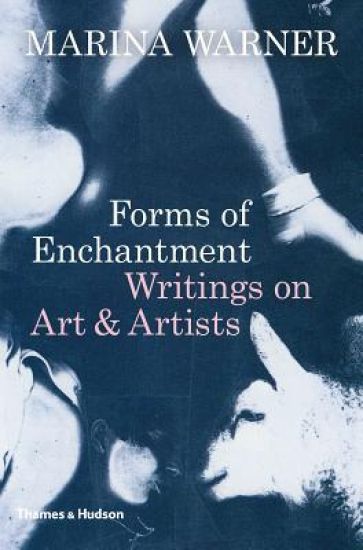
Art-writing at its most useful should share the dynamism, fluidity and passions of the objects of its enquiry, argues Marina Warner. In this new anthology of some of her most compelling work, she captures the visual experience of the work of several artists – with a notable focus on the inner lives of women – through an exploration of the range of stories and symbols to which they allude. Metamorphosis features vividly in the imagery, stories and media of the art that Warner has chosen to write about: in connection with animals in the work of Louise Bourgeois, for instance; with the Catholicism of Damien Hirst; and with performance as a medium of memory and resistance in the installations of Joan Jonas. Rather than drawing on connoisseurship, the author’s approach grows principally out of anthropology and mythology. She argues that art and aesthetics increasingly fulfil a magical social function – a principle that runs through these writings to give the collection a quality that is polemical as well as coherent. With an introductory essay and illustrations throughout, Marina Warner investigates how artists noted for their treatment of disturbing, uncanny material have reached beyond the visible, to express interior states. Truly inspiring, her writing unites the imagination of artist, writer and reader, creating a reading experience parallel to the intrinsic pleasure of looking at art.
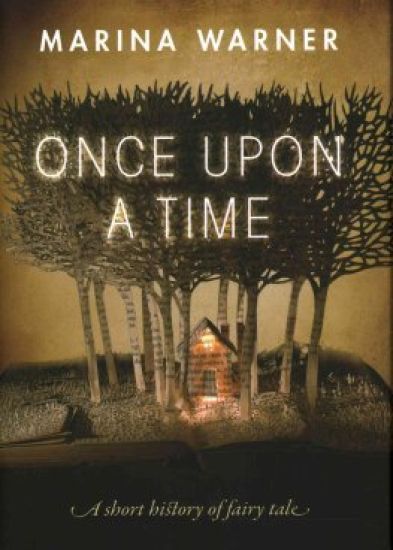
From wicked queens, beautiful princesses, elves, monsters, and goblins, to giants, glass slippers, poisoned apples, magic keys, and mirrors, the characters and images of fairy tales have cast a spell over readers and audiences, both adults and children, for centuries. These fantastic stories have travelled across cultural borders, and been passed on from generation to generation, ever-changing, renewed with each re-telling. Few forms of literature have greater power to enchant us and rekindle our imagination than a fairy tale. But what is a fairy tale? Where do they come from and what do they mean? What do they try and communicate to us about morality, sexuality, and society? The range of fairy tales stretches across great distances and time; their history is entangled with folklore and myth, and their inspiration draws on ideas about nature and the supernatural, imagination and fantasy, psychoanalysis, and feminism. In this Very Short Introduction, Marina Warner digs into a rich hoard of fairy tales in all their brilliant and fantastical variations, in order to define a genre and evaluate a literary form that keeps shifting through time and history. Drawing on a glittering array of examples, from classics such as Red Riding Hood, Cinderella, and The Sleeping Beauty, the Grimm Brothers' Hansel and Gretel, and Hans Andersen's The Little Mermaid, to modern-day realizations including Walt Disney's Snow White, Warner forms a persuasive case for fairy tale as a crucial repository of human understanding and culture. ABOUT THE SERIES: The Very Short Introductions series from Oxford University Press contains hundreds of titles in almost every subject area. These pocket-sized books are the perfect way to get ahead in a new subject quickly. Our expert authors combine facts, analysis, perspective, new ideas, and enthusiasm to make interesting and challenging topics highly readable.
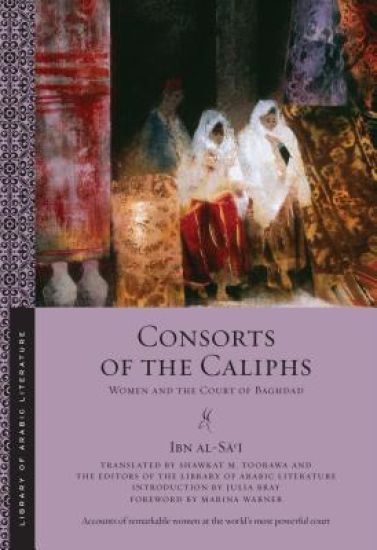
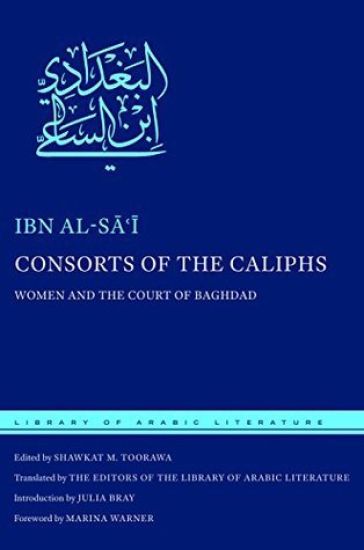
Consorts of the Caliphs is a seventh/thirteenth-century compilation of anecdotes about thirty-eight women who were, as the title suggests, consorts to those in power, most of them concubines of the early Abbasid caliphs and wives of latter-day caliphs and sultans. This slim but illuminating volume is one of the few surviving texts by Ibn al-Sa'i (d. 674/1276). Ibn al-Sa'i was a prolific Baghdadi scholar who chronicled the academic and political elites of his city, and whose career straddled the final years of the Abbasid dynasty and the period following the cataclysmic Mongol invasion of 656/1258. In this work, Ibn al-Sa'i is keen to forge a connection between the munificent wives of his time and the storied lovers of the so-called golden age of Baghdad. Thus, from the earlier period, we find Harun al-Rashid pining for his brother's beautiful slave, Ghadir, and the artistry of such musical and literary celebrities as 'Arib and Fadl, who bested the male poets and singers of their day. From times closer to Ibn al-Sa'i's own—when Abbasid authority was trying to reassert itself and Baghdad was again a major center of intellectual and religious activity—we meet women such as Banafsha, who endowed law colleges, had bridges built, and provisioned pilgrims bound for Mecca; slave women whose funeral services were led by caliphs; and noble Saljuq princesses from Afghanistan. Informed by the author's own sources, his insider knowledge, and well-known literary materials, these singular biographical sketches, though delivered episodically, bring the belletristic culture of the Baghdad court to life, particularly in the personal narratives and poetry of culture heroines otherwise lost to history. A bilingual Arabic-English edition.
The Debutante and Other Stories
Leonora Carrington; Marina Warner
Silver Press
2017
pokkari
Halvin toimitettuna 21,80 €
A debutante frees a hyena from the zoo so that it might take her place at her coming-out ball; an artist paints a portrait of a man s dead wife, but finds she has painted herself instead; a woman makes love to a boar underneath a mountain of cats; a chicken is roasted with the brains and livers of thrushes, truffles, crushed sweet almonds, rose conserve and drops of divine liqueur; two noble sisters wonder whether anybody can be a person of quality if they wash away their ghosts with common sense ; a psychoanalyst must decide what to do with the gift of a team of Russian rats trained to operate on humans. In this first complete edition of Leonora Carrington's short stories, written throughout her life from her early years in Surrealist Paris to her late period in Dirty War-era Mexico City, the world is by turns subversive, funny, sly, wise and disarming.
From wicked queens, beautiful princesses, elves, monsters, and goblins to giants, glass slippers, poisoned apples, magic keys, and mirrors, the characters and images of fairy tales have cast a spell over readers and audiences, both adults and children, for centuries. These fantastic stories have travelled across cultural borders, and been passed on from generation to generation, ever-changing, renewed with each re-telling. Few forms of literature have greater power to enchant us and rekindle our imagination than a fairy tale. But what is a fairy tale? Where do they come from and what do they mean? What do they try and communicate to us about morality, sexuality, and society? The range of fairy tales stretches across great distances and time; their history is entangled with folklore and myth, and their inspiration draws on ideas about nature and the supernatural, imagination and fantasy, psychoanalysis, and feminism. Marina Warner has loved fairy tales over a long writing life, and she explores here a multitude of tales through the ages, their different manifestations on the page, the stage, and the screen. From the phenomenal rise of Victorian and Edwardian literature to contemporary children's stories, Warner unfolds a glittering array of examples, from classics such as Red Riding Hood, Cinderella, and The Sleeping Beauty, the Grimm Brothers' Hansel and Gretel, and Hans Andersen's The Little Mermaid, to modern-day realizations including Walt Disney's Snow White and gothic interpretations such as Pan's Labyrinth. In ten succinct chapters, Marina Warner digs into a rich hoard of fairy tales in their brilliant and fantastical variations, in order to define a genre and evaluate a literary form that keeps shifting through time and history. Her book makes a persuasive case for fairy tale as a crucial repository of human understanding and culture.
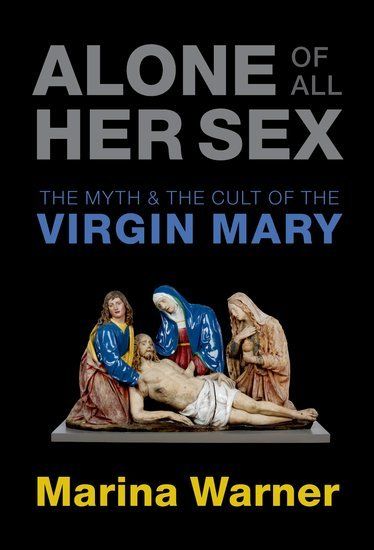
This unique study of the cult of the Virgin Mary offers a way of thinking about the interrelations of Catholicism and ideas of ideal femininity over the longue duree. An ambitious history of the changing symbolism of the Mother of God, Alone of All Her Sex holds up to the light different emphases occurring at different times, and highlights that the apparent archetype of a magna mater is constantly in play with social and historical conditions and values. Marina Warner's interesting perspective was forged in the aftermath of significant postwar developments in history, anthropology, and feminism and the book inspired fierce debates when it was first published in 1976. Alone of All Her Sex is also an emotive, personal statement, arising from Warner's own upbringing as a Catholic. It picks up on classic accounts such as Mary MacCarthy's Memoirs of a Catholic Girlhood and Antonia White's Frost in May, as well as the author's own experiences at a Catholic boarding school. Highly controversial in conservative quarters, the book's arguments were welcomed and recognised by many readers who shared Warner's experiences. In this new edition, Marina Warner has written a new preface which reviews the book in the light of the current debate about secularism, faith, nations, and social identities. She takes issue with her original mistaken conclusion that the modern age would see the cult of Mary fade away and revises it in the light of recent popes' enthusiasm for the Mother of God, a fresh wave of visions and revelations, a new generation of female saints, and the reorientation of theological approaches to the woman question.
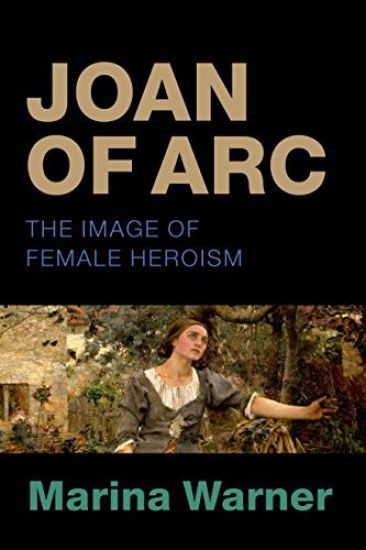
The fame of Joan of Arc began in her lifetime and, though it has dipped a little now and then, she has never vanished from view. Her image acts as a seismograph for the shifts and settlings of personal and political ideals: Joan of Arc is the heroine every movement has wanted as their figurehead. In France, anti-semitic, xenophobic, extreme right parties have claimed her since the Action Francaise in the 19th century. By contrast, Socialists, feminists, and liberal Catholics rallied to her as the champion of the dispossessed and the wrongly accused. Joan of Arc has also played a crucial role in changing visions of female heroism. She has proved an inexhaustible source of inspiration for writers, playwrights, film-makers, performers, and composers. In a single, brief life, several of the essential mythopoiec characteristics that throughout history have defined the charismatic leader and saint are powerfully and intensely condensed. Even while Joan of Arc was still alive, but far more so after her death, the heroic part of her story sparked narratives of all kinds, in pictures, ballads, plays, and also satires. This was only heightened in 1841-9 by the publication of the Inquisition trial which had examined Joan for witchcraft and heresy. The transcript of the interrogations gives us the voice of this young woman across the centuries with almost unbearable immediacy; her spirit leaps from the page, uncompromising in its frankness, good sense, courage, and often breathtaking in its simple effectiveness. Joan of Arc into one of the most fully and vividly present personalities in history, about whom a great more is known, in her own words and at first hand, than is, for example, about Shakespeare. However, this has not stopped the flow of fictions and fantasies about her. Marina Warner analyses the symbolism of the Maid in her own time and in her rich afterlife in popular culture. The cultural expressions are part of an ongoing historical struggle to own the symbol - you could say, the brand. In a new preface to her study, Marina Warner takes stock of the continuing contention, in politics and culture, for this powerful symbol of virtue. Joan of Arc's multiple resurrections and transformations show how vigorous the need for figures like her remains, and how crucial it is to meet that need with thoughtfulness. She argues that abandoning the search to identify heroes and define them, out of a kind of high-minded distaste for propaganda, lets dangerous political factions manipulate them to their own ends. When Marine Le Pen calls on Joan of Arc's name, she needs to be confronted about her bad faith and her abuse of history.

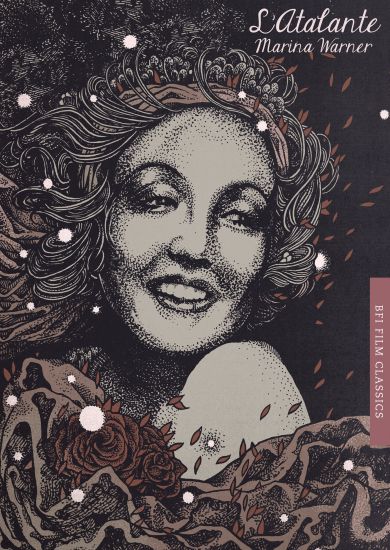
L'Atalante is the work of French director Jean Vigo. It is a study of romantic love, told in a style influenced by surrealism, but still Vigo's own. This text is part of the 'BFI Film Classics' series. Each volume in the series presents a personal commentary on the film, together with a brief production history and a detailed filmography, notes and bibliography.
Consorts of the Caliphs is a seventh/thirteenth-century compilation of anecdotes about thirty-eight women who were, as the title suggests, consorts to those in power, most of them concubines of the early Abbasid caliphs and wives of latter-day caliphs and sultans. This slim but illuminating volume is one of the few surviving texts by Ibn al-Sa'i (d. 674/1276). Ibn al-Sa'i was a prolific Baghdadi scholar who chronicled the academic and political elites of his city, and whose career straddled the final years of the Abbasid dynasty and the period following the cataclysmic Mongol invasion of 656/1258. In this work, Ibn al-Sa'i is keen to forge a connection between the munificent wives of his time and the storied lovers of the so-called golden age of Baghdad. Thus, from the earlier period, we find Harun al-Rashid pining for his brother's beautiful slave, Ghadir, and the artistry of such musical and literary celebrities as 'Arib and Fadl, who bested the male poets and singers of their day. From times closer to Ibn al-Sa'i's own—when Abbasid authority was trying to reassert itself and Baghdad was again a major center of intellectual and religious activity—we meet women such as Banafsha, who endowed law colleges, had bridges built, and provisioned pilgrims bound for Mecca; slave women whose funeral services were led by caliphs; and noble Saljuq princesses from Afghanistan. Informed by the author's own sources, his insider knowledge, and well-known literary materials, these singular biographical sketches, though delivered episodically, bring the belletristic culture of the Baghdad court to life, particularly in the personal narratives and poetry of culture heroines otherwise lost to history. A bilingual Arabic-English edition.
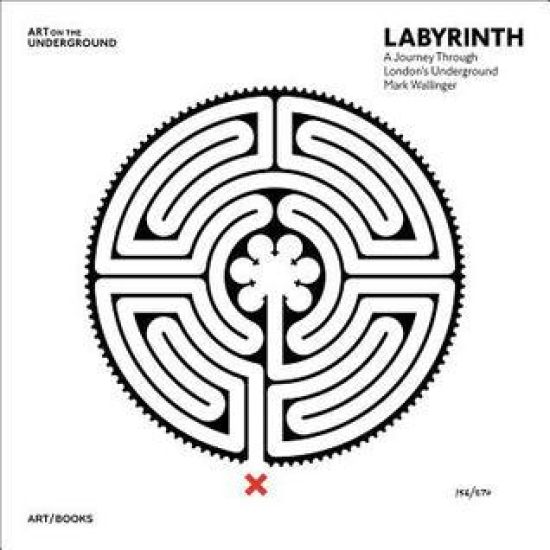
LABYRINTH
Tamsin Dillon; Will Self; Mark Wallinger; Marina Warner; Christian Wolmar
Art / Books
2014
sidottu
London's underground railways are an expression of the spread and diversity of the most international of capitals. Indeed, for many Londoners, the subterranean network is the very essence of the city, its arteries carrying the pulse of urban life from the heart of the metropolis out to its farthest extremities and beyond. How to capture that breadth in one work of art? How to celebrate a single system while also reflecting the millions of lives that it transports every day? That was the challenge facing Turner Prize-winning artist Mark Wallinger. His response was to create a vast, permanent work of public art across the entire network, layered with rich cultural and historical references. In each of the Underground's 270 stations, he placed a uniquely designed labyrinth, an ancient symbol representing spiritual and imaginative voyages akin to the countless circuitous journeys made on the Tube. Labyrinth: A Journey Through London's Underground by Mark Wallinger is a compelling record of this extraordinary project. But more than that, it is also a vivid celebration of the London Underground and of London itself. Striking photographs of all the labyrinths in situ reveal the diverse face and fabric of the network and its users, while fascinating facts about each station and their surrounds bring surprising perspectives to the daily commute. Transport historian Christian Wolmar tells the story of the emergence and development of London's subterranean rail network and the important role it has played in shaping the metropolis and those who live in it. Novelist Will Self responds to Wallinger's piece with a personal reflection that takes us into the depths of memory and through the disorientating effects of urban life; while writer and academic Marina Warner, in conversation with the artist, explores the historic and mythological significance of the labyrinth and places the project in the context of Wallinger's practice. Much more than a document of the creation of a work of art, this book is also a unique portrait of a system that keeps London going, the very lifeblood upon which it depends and thrives.
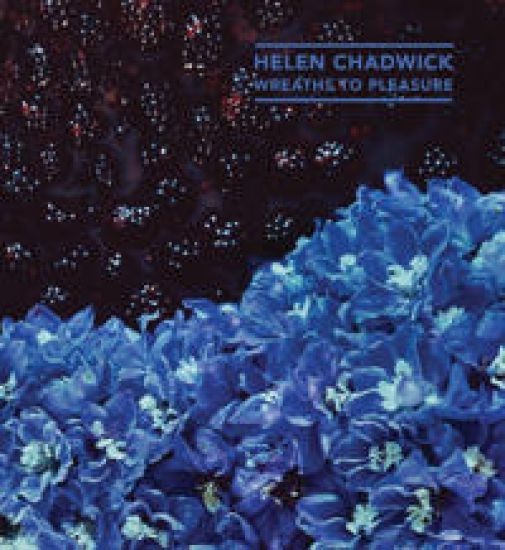
Published on the occasion of Helen Chadwick: Bad Blooms at Richard Saltoun Gallery, London (14 October–28 November 2014), this volume re- examines perhaps her most iconic series, Wreaths to Pleasure (1992–93). Consisting of 13 colour photographs of organic matter within household fluids, each is set within its own uniquely coloured steel frame. Illustrated in full colour, each work is accompanied by historical and posthumous installation images. A survey text by Sophie Raikes describes the inspiration, process, and creation of the Wreaths to Pleasure, alongside a foreword by David Notarius and Marina Warner’s funerary speech.
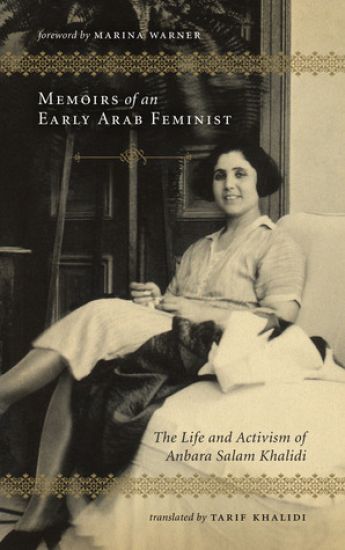
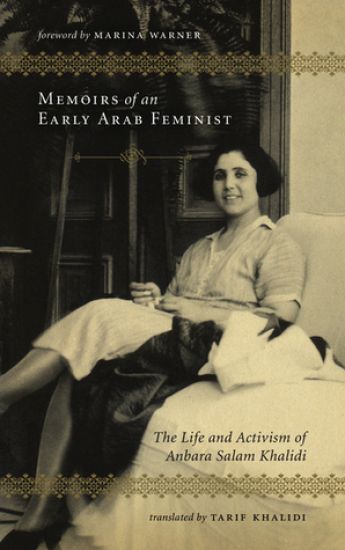
* Shortlisted for the Palestine Book Awards 2016* Memoirs of an Early Arab Feminist is the first English translation of the memoirs of Anbara Salam Khalidi, the iconic Arab feminist. At a time when the effects of the revolution and counterrevolution of the Arab Spring loom heavy over Middle Eastern politics, this book brings to life an earlier period of social turmoil and women's activism through one remarkable life. Anbara Salam was born in 1897 to a notable Sunni Muslim family of Beirut. She grew up in 'Greater Syria', in which unhindered travel and cross-cultural exchange between Beirut, Jerusalem and Damascus was possible. Her political activities caused countless scandals, from the series of newspaper articles calling on women to fight for their rights within the Ottoman Empire, to removing her veil during a 1927 lecture at the American University of Beirut. In later life she translated Homer and Virgil into Arabic and fled from Jerusalem to Beirut following the establishment of Israel in 1948. She died in Beirut in 1986. These memoirs have long been acclaimed by Middle East historians as an essential resource for the social history of Beirut and the larger Arab world in the 19th and 20th centuries.
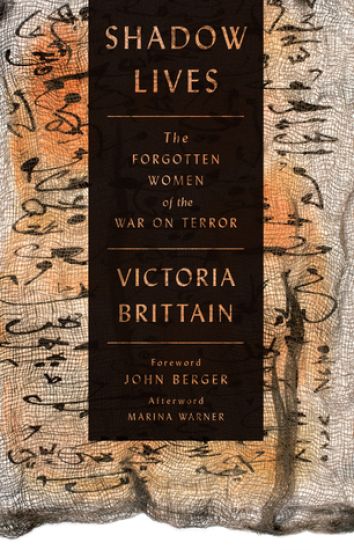
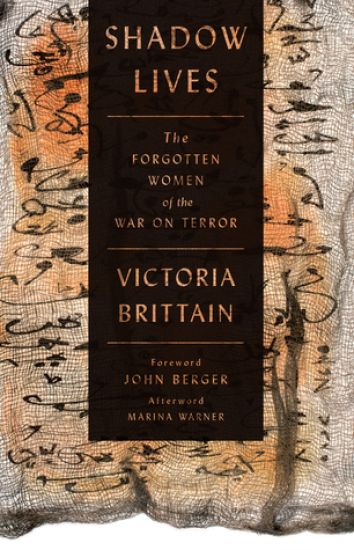
Shadow Lives reveals the unseen side of the '9/11 wars': their impact on the wives and families of men incarcerated in Guantanamo, or in prison or under house arrest in Britain and the US. Victoria Brittain shows how these families have been made socially invisible and a convenient scapegoat for the state in order to exercise arbitrary powers under the cover of the 'War on Terror'. A disturbing expose of the perilous state of freedom and democracy in our society, the book reveals how a culture of intolerance and cruelty has left individuals at the mercy of the security services' unverifiable accusations and punitive punishments. Both a j'accuse and a testament to the strength and humanity of the families, Shadow Lives shows the methods of incarceration and social control being used by the British state and gives a voice to the families whose lives have been turned upside down. In doing so it raises urgent questions about civil liberties which no one can afford to ignore.