
Kirjailija
Mario Vargas Llosa
Kirjat ja teokset yhdessä paikassa: 139 kirjaa, julkaisuja vuosilta 1983–2027, suosituimpiin kuuluu Maailmanlopun sota. Vertaile teosten hintoja ja tarkista saatavuus suomalaisista kirjakaupoista.
139 kirjaa
Kirjojen julkaisuvuodet: 1983–2027.
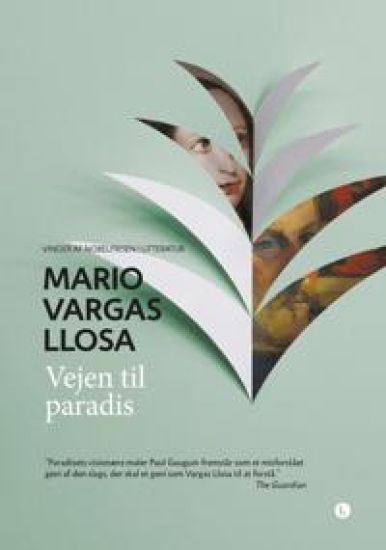
Maleren Paul Gauguin møder aldrig sin mormor Flora Tristán, fordi hun dør, før han bliver født. Han bliver som hun, men på hver deres måde, optaget af drømmen om det ideelle og frie samfund. Flora forlader sin voldelige ægtemand – fra hvem hun ikke tager meget andet med end en dyb afsmag for sex – og begiver sig af sted til Peru for at kræve sin retmæssige fædrene arv, som hendes magtfulde onkel har sat sig tungt på. Undervejs skriver hun dagbog og bliver engageret i kvindernes kamp for lige vilkår, og hun får øje på sammenhængen mellem den kamp og forholdene for de undertrykte klasser i Peru, England og Frankrig. Paul bor i Paris og er gift med en dansk kvinde, han er aktiehandler og børsspekulant, men forlader den vestlige civilisation og sin kone og børn. Han vil forfølge sin drøm om at male og udforske det vilde og simple liv og rejser til Fransk Polynesien. I denne enestående dobbeltroman viser Mario Vargas Llosa barnebarnet og mormorens livsforløb som tæt forbundne i kampen for at bryde fri af et konventionelt, borgerligt liv og finde et fælles paradis på jord.
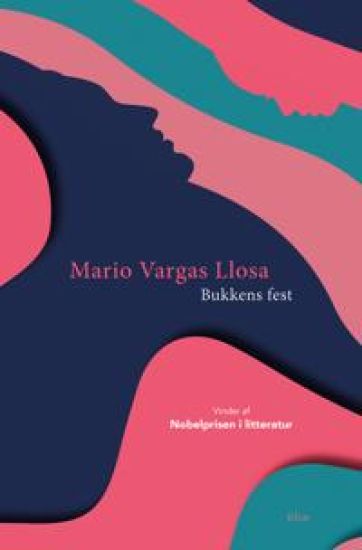
"Velgøreren". Sådan blev han kaldt, Rafael Leonidas Trujillo, som i 1930 ved et kup tog magten i Den Dominikanske Republik og fastholdt den i et brutalt jerngreb, indtil han blev myrdet af højtstående officerer i 1961. Romanen foregår i tiden omkring hans død - suppleret med erindringsglimt fra årene forud." Mario Vargas Llosas roman om den dominikanske diktator Trujillos død er en eksemplarisk fortælling om, hvad rettidig ondskab kan udrette." Lars Bonnevie, Weekendavisen
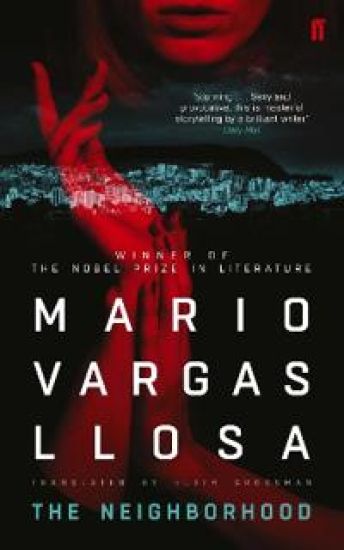
WINNER OF THE NOBEL PRIZE IN LITERATURE When a high-profile businessman is blackmailed by a notorious magazine editor, his comfortable life is threatened by the salacious exposé. While attempting to field the scandal, the businessman's wife, seeking comfort, begins a secret affair with the wife of his best friend. Then the editor is found murdered, and the two couples have no choice but to descend into the murkiest depths of Peruvian society, while the magazine's staff embarks on its greatest revelation yet . . .
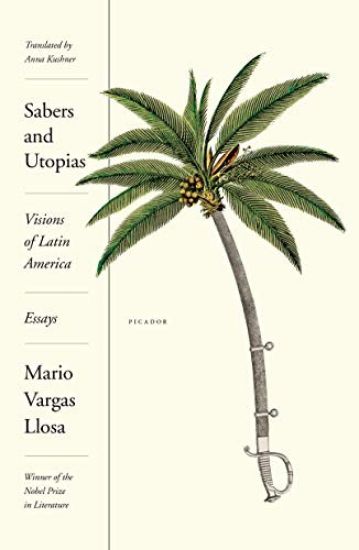
WINNER OF THE NOBEL PRIZE IN LITERATUREA landmark collection of essays on the Nobel laureate's conception of Latin America, past, present, and future Throughout his career, the Nobel Prize winner Mario Vargas Llosa has grappled with the concept of Latin America on a global stage. Examining liberal claims and searching for cohesion, he continuously weighs the reality of the continent against the image it projects, and considers the political dangers and possibilities that face this diverse set of countries. Now this illuminating and versatile collection assembles these never-before-translated criticisms and meditations. Reflecting the intellectual development of the writer himself, these essays distill the great events of Latin America's recent history, analyze political groups like FARC and Sendero Luminoso, and evaluate the legacies of infamous leaders such as Papa Doc Duvalier and Fidel Castro. Arranged by theme, they trace Vargas Llosa's unwavering demand for freedom, his embrace of and disenchantment with revolutions, and his critique of nationalism, populism, indigenism, and corruption. From the discovery of liberal ideas to a defense of democracy, buoyed by a passionate invocation of Latin American literature and art, Sabers and Utopias is a monumental collection from one of our most important writers. Uncompromising and adamantly optimistic, these social and political essays are a paean to thoughtful engagement and a brave indictment of the discrimination and fear that can divide a society.
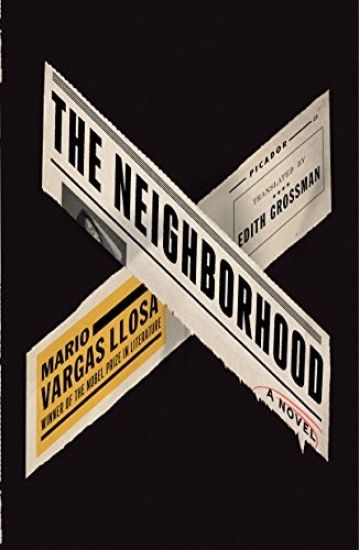
WINNER OF THE NOBEL PRIZE IN LITERATUREA thrilling tale of desire and Peruvian corruption swirls around a scandalous expos that leads to murder From the Nobel Laureate comes a politically charged detective novel weaving through the underbelly of Peruvian privilege. In the 1990s, during the turbulent and deeply corrupt years of Alberto Fujimori's presidency, two wealthy couples of Lima's high society become embroiled in a disturbing vortex of erotic adventures and politically driven blackmail. One day Enrique, a high-profile businessman, receives a visit from Rolando Garro, the editor of a notorious magazine that specializes in salacious expos s. Garro presents Enrique with lewd pictures from an old business trip and demands that he invest in the magazine. Enrique refuses, and the next day the pictures are on the front page. Meanwhile, Enrique's wife is in the midst of a passionate and secret affair with the wife of Enrique's lawyer and best friend. When Garro shows up murdered, the two couples are thrown into a whirlwind of navigating Peru's unspoken laws and customs, while the staff of the magazine embark on their greatest expos yet. Ironic and sensual, provocative and redemptive, the novel swirls into the kind of restless realism that has become Mario Vargas Llosa's signature style. A twisting, unpredictable tale, The Neighborhood is at once a scathing indictment of Fujimori's regime and a crime thriller that evokes the vulgarity of freedom in a corrupt system.
Notes on the Death of Culture: Essays on Spectacle and Society
Mario Vargas Llosa
Picador USA
2016
nidottu
WINNER OF THE NOBEL PRIZE IN LITERATUREA provocative essay collection that finds the Nobel laureate taking on the decline of intellectual lifeIn the past, culture was a kind of vital consciousness that constantly rejuvenated and revivified everyday reality. Now it is largely a mechanism of distraction and entertainment. Notes on the Death of Culture is an examination and indictment of this transformation--penned by Mario Vargas Llosa, who is not only one of our finest novelists but one of the keenest social critics at work today. Taking his cues from T. S. Eliot--whose essay "Notes Toward a Definition of Culture" is a touchstone precisely because the culture Eliot aimed to describe has since vanished--Vargas Llosa traces a decline whose ill effects have only just begun to be felt. He mourns, in particular, the figure of the intellectual: for most of the twentieth century, men and women of letters drove political, aesthetic, and moral conversations; today they have all but disappeared from public debate. A necessary gadfly, the Nobel laureate Vargas Llosa provides a tough but essential critique of our time and culture.
Winner of the Nobel Prize in Literature Felicito Yanaque has raised himself from poverty to ownership of a trucking business. His two sons work for him. He receives a threatening letter demanding protection money. The police don't take him seriously, Felicito refuses to pay up and gets sucked into a nightmare. He becomes a reluctant public hero. Then his mistress is kidnapped, and matters become seriously complicated. And he finds that his troubles have begun very close to home. His fate is interwoven with the story of Rigoberto, a wealthy Lima insurance executive. His boss and old friend, Ismael, suddenly announces that he is marrying his housekeeper, a chola from Piura, to the consternation of his twin sons, a pair of brutal wasters. Ismael escapes to Europe with his new bride, leaving Rigoberto to face the twins' threats, and their claims that he connived with a scheming woman to rob an old man of his fortune. Rigoberto is hounded by the press and TV. Meanwhile, his only son is having visions of a mysterious stranger who may or may not be the devil...
WINNER OF THE NOBEL PRIZE IN LITERATUREA tale of two cities--Piura and Lima--rocked by scandal, and the disintegrating bonds of loyalty between the generations Nobel laureate Mario Vargas Llosa's novel follows two fascinating characters whose lives are destined to intersect: neat, endearing Fel cito Yanaqu , a small businessman in Piura, Peru, who finds himself the victim of blackmail; and Ismael Carrera, a successful owner of an insurance company in Lima, who cooks up a plan to avenge himself against the two lazy sons who want him dead. Fel cito and Ismael are, each in his own way, quiet, discreet rebels: honorable men trying to seize control of their destinies in a social and political climate where all can seem set in stone, predetermined. They are hardly vigilantes, but each is determined to live according to his own personal ideals and desires--which means forcibly rising above the pettiness of their surroundings. The Discreet Hero is also a chance to revisit some of our favorite players from previous Vargas Llosa novels: Sergeant Lituma, Don Rigoberto, Do a Lucrecia, and Fonchito are all here in a prosperous Peru. Vargas Llosa sketches Piura and Lima vividly--and the cities become not merely physical spaces but realms of the imagination populated by his vivid characters. A novel whose humor and pathos shine through in Edith Grossman's masterly translation, The Discreet Hero is another remarkable achievement from the finest Latin American novelist at work today.
¿Quién mato a Palomino Molero? / Who Killed Palomino Molero?
Mario Vargas Llosa
Debolsillo
2015
pokkari
Mario Vargas Llosa crea en Quien mato a Palomino Molero? una intensa novela policial donde el suspense y la tension recorren toda la historia. En un escenario dominado por la corrupcion, y donde los prejuicios y desigualdades conforman la realidad social del pais, la verdad acaba convertida en verdades diversas que se c onfunden la una con la otra en un alucinante juego de espejos. A traves de una atmosfera que deslumbra y atrapa, este libro refleja fielmente el clima de una epoca y denuncia los excesos del poder. ENGLISH DESCRIPTION Mario Vargas Llosa creates an intensely woven detective story where tension and suspense travel through history. In a stage dominated by corruption, where prejudice and disparity constitute a country s social reality, truth becomes a confusing array of images in a hallucinatory game of mirrors. Through an ambiance that dazzles and captures the attention, this novel is a faithful reflection of the character of an era and a denunciation of the excesses of power. I wrote Quien mato a Palomino Molero? in outrage after the murder of a young airman from Talara s military base was red taped by the administration. "
La guerra del fin del mundo / The War of the End of the World
Mario Vargas Llosa
Debolsillo
2015
pokkari
Decada de los setenta en una pequena ciudad de California. "Bean" Holladay tiene doce anos y su hermana Liz quince cuando su madre las abandona "para encontrarse a si misma" y triunfar en la musica. Aunque les deja dinero para subsistir un mes o dos, las pequenas tienen miedo de acabar siendo recogidas por los servicios sociales y deciden viajar a Virginia, donde su tio Tinsley vive en la decadente mansion que ha sido la casa de su familia durante generaciones. Pero el pequeno pueblo en el que nacieron ha cambiado mucho, y la vida es muy diferente. Ante la escasez de dinero, las hermanas tendran que hacer pequenos trabajos para Jerry Maddox, el poderoso capataz de la algodonera. Las ninas deberan adaptarse para volver a empezar a la vez que descubriran la historia oculta de quien es su padre y por que su madre tuvo que abandonar Virginia. Jeannette Walls vuelve a conmover con una novela sobre la familia, la amistad y el triunfo de la justicia frente a la adversidad. Y sobre personas que encuentran un modo de amar a los demas y al mundo pese a todos sus defectos. ENGLISH DESCRIPTION Deep within the remote backlands of 19th century Brazil sits Canudos, a libertarian s paradise. Home of prostitutes, bandits, and beggars, Canudos embodies the revolutionary spirit in its purest and most apocalyptic form. In one of his most brilliant and tragic novels, Mario Vargas Llosa creates an unforgettable tale of passion, idealism, adventure, and man s struggle to be free. It is an exhaustively documented account of a historical event and a fundamental book in 20th century literature."
La casa verde / The Green House
Mario Vargas Llosa
Debolsillo
2015
pokkari
Halvin toimitettuna 26,60 €
Novela ejemplar en la historia del boom latinoamericano, "La casa verde" es una experiencia ineludible para todo aquel que quiera conocer en profundidad la obra narrativa de Mario Vargas Llosa. Cual es el secreto que encierra "La casa verde"? Con motivo del 50 aniversario de Alfaguara, este titulo ha sido elegido como uno de los 50 imprescindibles de la historia de la editorial." La casa verde" ocurre en dos lugares muy alejados entre si, Piura, en el desierto del litoral peruano, y Santa Maria de Nieva, una factoria y mision religiosa perdida en el corazon de la Amazonia. Simbolo de la historia es la mitica casa de placer que don Anselmo, el forastero, erige en las afueras de Piura." La casa verde" (1965) recibio al ano siguiente de su publicacion el Premio de la Critica y, en 1967, el Premio Internacional de Literatura Romulo Gallegos a la mejor novela en lengua espanola. Resena: -"La casa verde" es maravillosa.-Julio Cortazar ENGLISH DESCRIPTION Don Anselmo builds a brothel on the outskirts of the town while he charms its innocent people, setting in motion a chain reaction with extraordinary consequences. This brothel, called the Green House, brings together the innocent and the corrupt: Bonificia, saved by the nuns only to become a prostitute; Father Garcia, struggling for the church; and four best friends drawn to both excitement and escape."
Cartas a un joven novelista / Letters to a Young Novelist
Mario Vargas Llosa
Debolsillo
2015
pokkari
El escritor siente ntimamente que escribir es lo mejor que le ha pasado y puede pasarle, pues significa para l la mejor manera posible de vivir. Mario Vargas Llosa dirige a todos aquellos que tienen la ilusi n de llegar a ser escritores unas magn ficas reflexiones en forma epistolar acerca del arte de narrar. C mo comenzar a cristalizar esa vocaci n en obras literarias, por d nde empezar esa aventura, de d nde salen las historias que cuentan las novelas... son algunas de las preguntas a las que el Premio Nobel de Literatura da respuesta en este libro, que se convierte as en una lecci n magistral del oficio de escribidor. Detr s de esas aventuras ficticias que encienden la imaginaci n de los lectores y los conmueven, hay no s lo intuici n, fantas a, invenci n y una pizca de locura, sino tambi n terquedad, disciplina, organizaci n, estrategia, trampas y silencios, y una urdimbre compleja que levanta y sostiene en vilo la ficci n. ENGLISH DESCRIPTION Written as a collection of letters, in these magnificent reflections on the art of narrating, the Nobel Laureate responds to such questions as how to transform this calling into tangible literary works, where to begin the journey, how the plot of a novel is created, and where does a novelist find inspiration.
Marito is a young Peruvian who toils away at his local radio station, dreaming of becoming a writer, before his life is torn apart by two arrivals. The first is his recently divorced Aunt Julia, with whom he begins an affair which he must hide from his family. The second is Pedro Camacho, an eccentric scriptwriter whose radio dramas are keeping the whole city enthralled. This hilarious and mischievous novel interweaves the story of Marito's life with Pedro Camacho's increasingly insane tales to masterfully depict both Peru and the act of growing up in the 1950s. Mario Vargas Llosa won the Nobel Prize in Literature in 2010, and Aunt Julia and the Scriptwriter is a perfect introduction to one of South America's most popular and lauded writers.
Spanish Description Mario Vargas Llosa contrapone con extraordinario virtuosismo tecnico dos mundos que parecen vivir enfre ntados, el de las sociedades modernas y el de los pueblos que viven en armonia con la naturaleza. A su vez conduce al lector a un viaje vertiginoso por el imaginario colectivo de los indios machiguengas, que le sirve para desarrollar, una vez mas, una de sus obsesiones: el papel de la ficcion en la vida de los hombres."