

Kirjailija
Marion Roberts
Kirjat ja teokset yhdessä paikassa: 13 kirjaa, julkaisuja vuosilta 1998–2026, suosituimpiin kuuluu Living in a Man-Made World. Vertaile teosten hintoja ja tarkista saatavuus suomalaisista kirjakaupoista.
13 kirjaa
Kirjojen julkaisuvuodet: 1998–2026.


After becoming attuned to the songs of the forest and setting up a successful social media nature channel, Alberta Bracken and Mikki Watanabe are determined to pull out all the stops to save their local grove of trees in this thoroughly enjoyable novel for young readers. Eleven-year-old Alberta Bracken is having a terrible summer. After a bike-riding accident, caused by the local bully, her arm's in a cast so she can't do her most favorite activity: boogie boarding at the local beach. And her little sister Clementine is EXTREMELY ANNOYING. To make matters worse, her mom (bestselling author of Tammy Bracken's Guide to Modern Manners) has sent her dad packing - after discovering his behavior has been far from...well-mannered. So when budding filmmaker Mikki Watanabe suggests they start a YouTube channel about the secret life of trees - Alberta is ALL IN. And when they discover their trees are earmarked for removal by the local council it's suddenly a race against time to save them. Funny, warm and a little offbeat, this highly entertaining novel hits all the right notes for middle-fiction readers.

After becoming attuned to the songs of the forest and setting up a successful social media nature channel, Alberta Bracken and Mikki Watanabe are determined to pull out all the stops to save their local grove of trees in this thoroughly enjoyable novel for young readers.
This companion to Introducing Urban Design: Interventions and Responses shows how the principles and concepts of urban design can be applied and implemented in a range of real-world settings.

Bringing together a diverse team of leading scholars and professionals, this book offers a variety of insights into ongoing gender mainstreaming policies in Europe with a focus on urban/spatial planning. Gender mainstreaming was first legislated for in the European Union with the Treaty of Amsterdam in 1999 and, although many interesting developments have occurred throughout the decade that followed, there is still much to do in terms of policy, knowledge production, dissemination and education. This work contributes to all three objectives, by advancing the state of knowledge, as well as providing educational and professional tools in the field of gender sensitive planning in Europe. The volume begins by explaining the concept of gender mainstreaming in relation to its origins in the 'second wave' of the women's movement and critiques of planning, architecture, transport planning and other built environment disciplines. It then provides a brief history of how gender mainstreaming was incorporated into European law, before focussing on the theoretical issues and questions that surround the concept of gender mainstreaming as they relate to urban space and the planning of cities and regions, including a discussion of the persistence of inequalities between the sexes in their access to urban space and services. In particular, the division between waged and unwaged work and its impact on the social construction of gender and of the physical built environment is considered. The differences between definitions of feminism and their implications for action in planning and design are also explored, paying regard to the tensions between a feminist vision of a transformation of gender relations and the requirements of gender mainstreaming to accommodate the different needs of women and men in their everyday lives in urban space. Throughout the book, key issues recur, such as the importance of time and space in the experience of urbanism, resistances to change on the part of institutions and social structures, and the importance of networks. Education and training also appear as common themes, as do citizen participation and the structures of governance. The chapters are organised into four sections: concepts, structures, empowerment and spatial quality. Contributors demonstrate a variety of approaches to the intersections of gender, women, cities, and planning, dealing with substantive and procedural issues in planning, at both local and regional scales. They stress the links between environmental sustainability and gender-sensitive urban development. The book concludes by putting forward an outlook for future action.
Introducing Urban Design: Interventions and Responses is a new departure in the town planning series under the editorship of Clara Greed. The dynamic new subject and profession of urban design straddles the fields of town planning, architecture, landscape architecture and transport planning. This book recognises that a key feature of modern urban design practice is the ability to integrate a concern with the visual and aesthetic aspects of urban form, with a strong social awareness of the need of user groups, plus a sensitivity to wider environmental and sustainability issues. In this it continues the themes already introduced in earlier volumes, such as the changing nature of the profession, social problems and the means of implementing policy. Written by a team of eminent urban designers, architects and planners under the joint editorship of Clara Greed and Marion Roberts, the book introduces the reader to the subject through a discussion of current issues, approaches and user responses. Introducing Urban Design: Interventions and Responses is an ideal resource for undergraduate courses in town planning, architecture, landscape architecture, estate management and housing studies. It is also suitable as an introductory text for first year diploma and masters programmes in urban design and suitable for RTPI, RICS, CIOH, CIOB, ASI, ISVA and RIBA courses and will be of interest to professional practioners in the urban design field.
Bringing together a diverse team of leading scholars and professionals, this book offers a variety of insights into ongoing gender mainstreaming policies in Europe with a focus on urban/spatial planning. Gender mainstreaming was first legislated for in the European Union with the Treaty of Amsterdam in 1999 and, although many interesting developments have occurred throughout the decade that followed, there is still much to do in terms of policy, knowledge production, dissemination and education. This work contributes to all three objectives, by advancing the state of knowledge, as well as providing educational and professional tools in the field of gender sensitive planning in Europe. The volume begins by explaining the concept of gender mainstreaming in relation to its origins in the 'second wave' of the women's movement and critiques of planning, architecture, transport planning and other built environment disciplines. It then provides a brief history of how gender mainstreaming was incorporated into European law, before focussing on the theoretical issues and questions that surround the concept of gender mainstreaming as they relate to urban space and the planning of cities and regions, including a discussion of the persistence of inequalities between the sexes in their access to urban space and services. In particular, the division between waged and unwaged work and its impact on the social construction of gender and of the physical built environment is considered. The differences between definitions of feminism and their implications for action in planning and design are also explored, paying regard to the tensions between a feminist vision of a transformation of gender relations and the requirements of gender mainstreaming to accommodate the different needs of women and men in their everyday lives in urban space. Throughout the book, key issues recur, such as the importance of time and space in the experience of urbanism, resistances to change on the part of institutions and social structures, and the importance of networks. Education and training also appear as common themes, as do citizen participation and the structures of governance. The chapters are organised into four sections: concepts, structures, empowerment and spatial quality. Contributors demonstrate a variety of approaches to the intersections of gender, women, cities, and planning, dealing with substantive and procedural issues in planning, at both local and regional scales. They stress the links between environmental sustainability and gender-sensitive urban development. The book concludes by putting forward an outlook for future action.
The night-time economy represents a particular challenge for planners and town centre managers. In the context of liberalised licensing and a growing culture around the '24-hour city', the desire to foster economic growth and to achieve urban regeneration has been set on a collision course with the need to maintain social order. Roberts and Eldridge draw on extensive case study research, undertaken in the UK and internationally, to explain how changing approaches to evening and night-time activities have been conceptualised in planning practice. The first to synthesise recent debates on law, health, planning and policy, this research considers how these dialogues impact upon the design, management, development and the experience of the night-time city. This is incisive and highly topical reading for postgraduates, academics and reflective practitioners in Planning, Urban Design and Urban Regeneration.
The night-time economy represents a particular challenge for planners and town centre managers. In the context of liberalised licensing and a growing culture around the '24-hour city', the desire to foster economic growth and to achieve urban regeneration has been set on a collision course with the need to maintain social order. Roberts and Eldridge draw on extensive case study research, undertaken in the UK and internationally, to explain how changing approaches to evening and night-time activities have been conceptualised in planning practice. The first to synthesise recent debates on law, health, planning and policy, this research considers how these dialogues impact upon the design, management, development and the experience of the night-time city. This is incisive and highly topical reading for postgraduates, academics and reflective practitioners in Planning, Urban Design and Urban Regeneration.
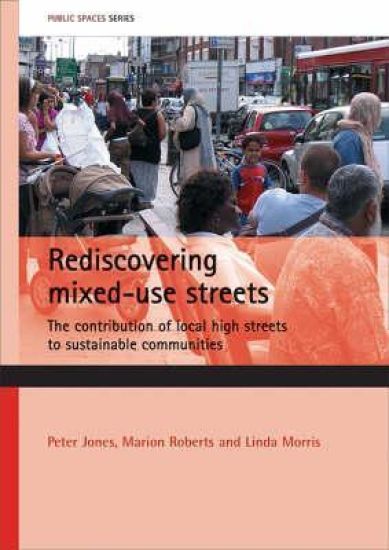
Local urban high streets have frequently suffered from neglect in comparison to town centres and out-of-town retail. Yet they have the potential to meet contemporary policy aspirations with regard to sustainability, social inclusion and place making. Rediscovering mixed-use streets is the first in-depth investigation of local mixed-use high streets. Drawing on case-studies in three different locations in England, the report provides a wealth of data and findings produced from a variety of sources, both quantitative and qualitative. In particular, the report offers a comprehensive view of local high streets, from the point of view of transport, local residents, visitors, businesses and practitioners; provides a series of suggestions for their improvement and demonstrates how local high streets belong to future sustainable communities. Providing a significant contribution to current interest in mobility, urban design and social inclusion, the findings have particular relevance for 'Sustainable Communities', 'Cleaner, Safer, Greener', and 'Place Matters' policies. The study will be of interest to policy makers and practitioners involved in the making and managing of streets and those with an interest in regeneration.
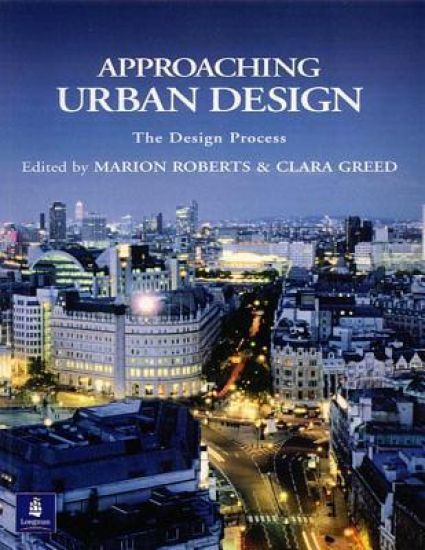
This companion to Introducing Urban Design: Interventions and Responses shows how the principles and concepts of urban design can be applied and implemented in a range of real-world settings.
Introducing Urban Design: Interventions and Responses is a new departure in the town planning series under the editorship of Clara Greed. The dynamic new subject and profession of urban design straddles the fields of town planning, architecture, landscape architecture and transport planning. This book recognises that a key feature of modern urban design practice is the ability to integrate a concern with the visual and aesthetic aspects of urban form, with a strong social awareness of the need of user groups, plus a sensitivity to wider environmental and sustainability issues. In this it continues the themes already introduced in earlier volumes, such as the changing nature of the profession, social problems and the means of implementing policy. Written by a team of eminent urban designers, architects and planners under the joint editorship of Clara Greed and Marion Roberts, the book introduces the reader to the subject through a discussion of current issues, approaches and user responses. Introducing Urban Design: Interventions and Responses is an ideal resource for undergraduate courses in town planning, architecture, landscape architecture, estate management and housing studies. It is also suitable as an introductory text for first year diploma and masters programmes in urban design and suitable for RTPI, RICS, CIOH, CIOB, ASI, ISVA and RIBA courses and will be of interest to professional practioners in the urban design field.