
Kirjojen hintavertailu – 12 903 724 kirjaa ja 27 kauppaa

Kirjailija

Marion Wittler

Kirjat ja teokset yhdessä paikassa: 2 kirjaa, julkaisuja vuosilta 1987–2012, suosituimpiin kuuluu European Food Composition Tables in Translation. Vertaile teosten hintoja ja tarkista saatavuus suomalaisista kirjakaupoista.

2 kirjaa

Kirjojen julkaisuvuodet: 1987–2012.

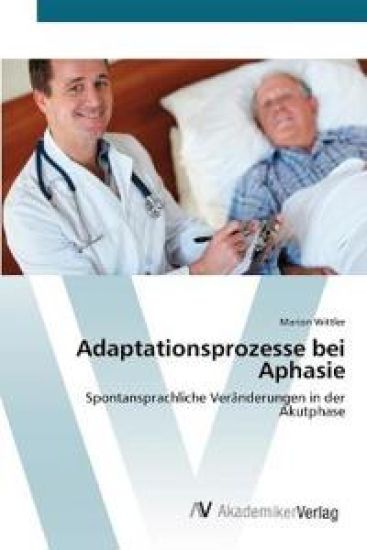
Adaptationsprozesse bei Aphasie

Adaptationsprozesse bei Aphasie

Marion Wittler

AV Akademikerverlag
2012
pokkari
Inhaltlich unver nderte Neuauflage. Thematischer Schwerpunkt des vorliegenden Buches ist die Klassifikation aku-ter Aphasien auf Grundlage der Fl ssigkeit von Spontansprache. Die Klassifi-kation aphasischer Sprachproduktion in fl ssig und nichtfl ssig hat eine lan-ge Tradition. Obwohl die Termini fl ssig und nichtfl ssig oft genutzt werden, um aphasische Sprachproduktion zu beschreiben, herrscht keine konsistente Nutzung der Begriffe vor. Insbesondere in der Akutphase von Aphasien (4-6 Wochen nach Insult) ist eine strikte Einteilung der aphasischen Sprach-pro-duk-tion in fl ssig/nicht-fl s-sig oft nicht m glich. Dennoch wird diese Art der orientierenden Diagnostik in der Praxis immer wieder genutzt, um Patienten zu beschreiben. Im Rahmen der vorliegenden Studie soll daher untersucht werden, welche Fak-toren f r das Konstrukt "Fl ssigkeit" relevant sind, inwieweit eine Zu-ord-nung akutaphasischer Patienten in diese Dichotomie berhaupt m glich ist und mit welcher Beurteiler bereinstimmung diese gelingt. Dar ber hinaus wird analysiert, inwieweit Adaptationsprozesse auf die Fl ssigkeit der Sprach-pro-duktion akutaphasischer Patienten Einfluss nehmen. Das Buch richtet sich an Kliniker und Wissenschaftler aus dem Bereich der Aphasiologie.

European Food Composition Tables in Translation

European Food Composition Tables in Translation

Leonore Arab; Marion Wittler; Gotthard Schettler

Springer-Verlag Berlin and Heidelberg GmbH Co. K
1987
nidottu
The limited resources available for chemical analyses of components of interest in food has forced scientists to bor­ row data from published food composition works of other countries. Due to language barriers, this is often undertaken without due knowledge of the background and the instruc­ tions for use. This collection of introductions, translated in­ to English, of frequently cited, published food tables has been compiled with the assistance and cooperation of many collaborators throughout the world. We hope that the result will facilitate a more appropriate and extensive use of foreign food tables for scientific purposes. Lenore Arab Marion Wittler Gotthard Schettler Introduction The following is a compilation of the introductory material included in the most recent edition of 19 of the published food composition tables of 14 European countries. In most cases these translations were graciously provided by the pro­ ducers of the tables or native-speaking people working closely with the information concerned. Recognition of the authors is given on each of the title pages. The title page also includes full publication details of the various tables and summary information on the number of foods contained in the latest edition as well as the number of food components within the tables. It should be noted that a complete list of components is not always given for each food, either because the component is not present, or data is not avail­ able.