Kirjojen hintavertailu – 12 903 725 kirjaa ja 27 kauppaa

Kirjailija

Mariselle Melendez

Kirjat ja teokset yhdessä paikassa: 4 kirjaa, julkaisuja vuosilta 2011–2025, suosituimpiin kuuluu Mapping Diversity in Latin America. Vertaile teosten hintoja ja tarkista saatavuus suomalaisista kirjakaupoista.

Nimi esiintyy myös muodoissa: Mariselle Meléndez

4 kirjaa

Kirjojen julkaisuvuodet: 2011–2025.

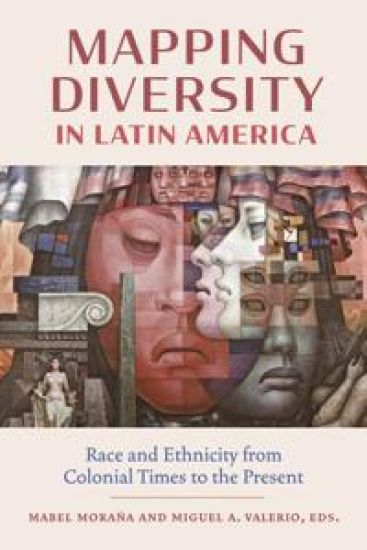
Mapping Diversity in Latin America

Mapping Diversity in Latin America

Bárbara I. Abadía-Rexach; Gonzalo Aguiar; Marta Elena Casaus Arzú; Amber Brian; Patricia Arroyo Calderón; Ignacio López-Calvo; Ariel Camejo; Marcel Velázquez Castro; Mónica Díaz; Christian Elguer; Tracy Devine Guzmán; Ruth Hill; Ariana Huberman; Stephanie Kirk; Agustin Lao-Montes; Mariselle Meléndez; Bahia Munem; Carlos Alberto Valderrama Renteria; Iván Fernando Rodrigo Mendizábal; Jorge Daniel Vásquez

VANDERBILT UNIVERSITY PRESS
2025
nidottu
Mapping Diversity in Latin America offers ample critical coverage of recent approaches to the historical study of race and ethnicity in Latin America since the arrival of Spanish and Portuguese colonizers to the present. Bringing together the work of leading scholars, this volume presents readers with a thorough and updated examination of the formation and evolution of ideas surrounding race and ethnicity, social movements, and political processes in Latin America that provides multiple routes for future research on the topic. The book’s nineteen chapters establish the basis for a productive comparative analysis of racial developments in the whole continent to allow for a combination of diachronic and synchronic study of regional processes. Both the scope of the book and the historical and geocultural coverage on these topics are unique in the field of Latin American Studies. Taking an interdisciplinary approach to understanding issues of collective identity, otherness, alterity, and the like, Mapping Diversity in Latin America sheds light on histories that have been traditionally overlooked in texts on race in Latin America, such as the rich history of diasporic Asian, Syrian Lebanese, and Jewish communities, and the more recent emergence of Latinx populations in the United States. The book includes a critical examination of fundamental concepts such as mestizaje, mulataje, creolization, negritud, and blanquitud, as well as critical and theoretical approaches to the study of these issues in postcolonial societies.
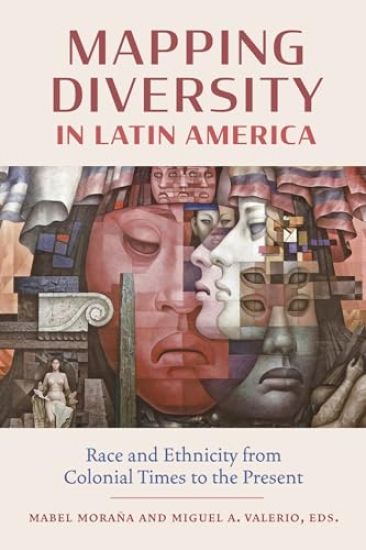
Mapping Diversity in Latin America

Mapping Diversity in Latin America

Bárbara I. Abadía-Rexach; Gonzalo Aguiar; Marta Elena Casaus Arzú; Amber Brian; Patricia Arroyo Calderón; Ignacio López-Calvo; Ariel Camejo; Marcel Velázquez Castro; Mónica Díaz; Christian Elguer; Tracy Devine Guzmán; Ruth Hill; Ariana Huberman; Stephanie Kirk; Agustin Lao-Montes; Mariselle Meléndez; Bahia Munem; Carlos Alberto Valderrama Renteria; Iván Fernando Rodrigo Mendizábal; Jorge Daniel Vásquez

VANDERBILT UNIVERSITY PRESS
2025
sidottu
Mapping Diversity in Latin America offers ample critical coverage of recent approaches to the historical study of race and ethnicity in Latin America since the arrival of Spanish and Portuguese colonizers to the present. Bringing together the work of leading scholars, this volume presents readers with a thorough and updated examination of the formation and evolution of ideas surrounding race and ethnicity, social movements, and political processes in Latin America that provides multiple routes for future research on the topic. The book’s nineteen chapters establish the basis for a productive comparative analysis of racial developments in the whole continent to allow for a combination of diachronic and synchronic study of regional processes. Both the scope of the book and the historical and geocultural coverage on these topics are unique in the field of Latin American Studies. Taking an interdisciplinary approach to understanding issues of collective identity, otherness, alterity, and the like, Mapping Diversity in Latin America sheds light on histories that have been traditionally overlooked in texts on race in Latin America, such as the rich history of diasporic Asian, Syrian Lebanese, and Jewish communities, and the more recent emergence of Latinx populations in the United States. The book includes a critical examination of fundamental concepts such as mestizaje, mulataje, creolization, negritud, and blanquitud, as well as critical and theoretical approaches to the study of these issues in postcolonial societies.
Deviant and Useful Citizens

Deviant and Useful Citizens

Mariselle Melendez

Vanderbilt University Press
2021
nidottu
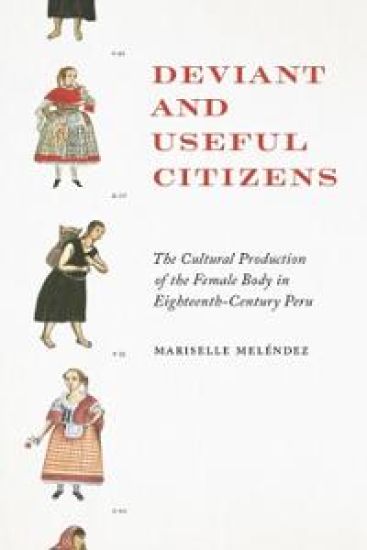
Deviant and Useful Citizens explores the conditions of women and perceptions of the female body in the eighteenth century throughout the Viceroyalty of Peru, which until 1776 comprised modern-day Peru, Bolivia, Chile, Argentina, Uruguay, and Paraguay. Mariselle Melendez introduces the reader to a female rebel, Micaela Bastidas, whose brutal punishment became a particularly harsh example of state response to women who challenged the system. She explores the cultural representation of women depicted as economically productive and vital to the health of the culture at large. The role of women in religious orders provides still another window into the vital need to sustain the image of women as loyal and devout -- and to deal with women who refused to comply. The book focuses on the different ways male authorities, as well as female subjects, conceived the female body as deeply connected to notions of what constituted a useful or deviant citizen within the Viceroyalty. Using eighteenth-century legal documents, illustrated chronicles, religious texts, and newspapers, Mariselle Melendez explores in depth the representation of the female body in periods of political, economic, and religious crisis to determine how it was conceived within certain contexts. Deviant and Useful Citizens presents a highly complex society that relied on representations of utility and productivity to understand the female body, as it reveals the surprisingly large stake that colonial authorities had in defining the status of women during a crucial time in South American history.
Deviant and Useful Citizens

Deviant and Useful Citizens

Mariselle Melendez

Vanderbilt University Press
2011
sidottu
Deviant and Useful Citizens explores the conditions of women and perceptions of the female body in the eighteenth century throughout the Viceroyalty of Peru, which until 1776 comprised modern-day Peru, Bolivia, Chile, Argentina, Uruguay, and Paraguay. Mariselle Melendez introduces the reader to a female rebel, Micaela Bastidas, whose brutal punishment became a particularly harsh example of state response to women who challenged the system. She explores the cultural representation of women depicted as economically productive and vital to the health of the culture at large. The role of women in religious orders provides still another window into the vital need to sustain the image of women as loyal and devout -- and to deal with women who refused to comply. The book focuses on the different ways male authorities, as well as female subjects, conceived the female body as deeply connected to notions of what constituted a useful or deviant citizen within the Viceroyalty. Using eighteenth-century legal documents, illustrated chronicles, religious texts, and newspapers, Mariselle Melendez explores in depth the representation of the female body in periods of political, economic, and religious crisis to determine how it was conceived within certain contexts. Deviant and Useful Citizens presents a highly complex society that relied on representations of utility and productivity to understand the female body, as it reveals the surprisingly large stake that colonial authorities had in defining the status of women during a crucial time in South American history.