Kirjailija
Marjorie Mayo
Kirjat ja teokset yhdessä paikassa: 16 kirjaa, julkaisuja vuosilta 1994–2026, suosituimpiin kuuluu Community Action for Change. Vertaile teosten hintoja ja tarkista saatavuus suomalaisista kirjakaupoista.
16 kirjaa
Kirjojen julkaisuvuodet: 1994–2026.
What was the significance of community action to the Labour movement in Britain during the 1980s? Ray Lees and Marjorie Mayo explore this question in Community Action for Change (first published in 1984), arguing that the Labour movement needed to revitalize its strength in response to the growing dominance of the New Right. They propose that this renewal could be achieved by developing social values rooted in the social needs often expressed through community action. Through a series of case studies focused on local community resource centres, the authors examine the contributions, challenges, and limitations of this approach. These case studies address key issues such as employment and unemployment, housing, planning and tenants’ activism, as well as information campaigns. Lees and Mayo’s analysis of these activities remains highly relevant for shaping future community interventions and broader campaigns, particularly in light of the political climate of the 1980s under a Conservative government.
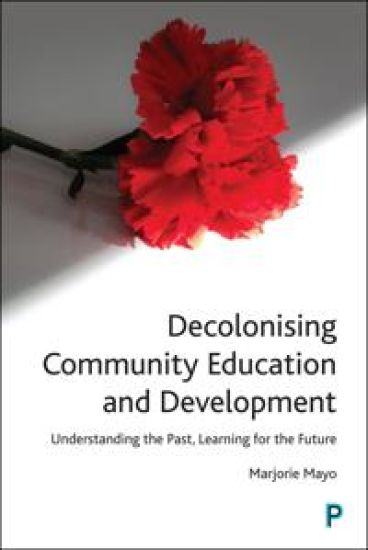
Decolonising Community Education and Development
Marjorie Mayo
Bristol University Press
2024
sidottu
It is vital that we decolonise community education and development – learning from the past in order to challenge current discrimination and oppression more effectively. In this book, Marjorie Mayo identifies ways of developing more inclusive policies and practices, working towards social justice for the future. She also tackles the pervasive influence of the ‘culture wars’ undermining work in communities, including the denial of problematic colonial legacies. Inspired by movements such as Black Lives Matter and labour solidarity, the book includes case studies from the US, UK and the Global South, outlining the lessons that can be applied to community education and development training and practice.
Decolonising Community Education and Development
Marjorie Mayo
Bristol University Press
2024
nidottu
It is vital that we decolonise community education and development – learning from the past in order to challenge current discrimination and oppression more effectively. In this book, Marjorie Mayo identifies ways of developing more inclusive policies and practices, working towards social justice for the future. She also tackles the pervasive influence of the ‘culture wars’ undermining work in communities, including the denial of problematic colonial legacies. Inspired by movements such as Black Lives Matter and labour solidarity, the book includes case studies from the US, UK and the Global South, outlining the lessons that can be applied to community education and development training and practice.
UNITE History Volumes 1-6
Mary Davis; John Foster; Roger Seifert; Marjorie Mayo; Adrian Weir
LIVERPOOL UNIVERSITY PRESS
2024
nidottu
Sold as a multi-volume set – the individual volumes are also available for purchase. This is the complete collection of six paperback volumes on the history of the Transport & General Workers’ Union (now called UNITE), from 1880 to 2010. The history of the TGWU is the core of this collection, with a significant emphasis on the union’s regions, as well as several key themes, such as equality, internationalism, the wider labour movement, and its attitude to the conflict between capital and labour.
Sold as a multi-volume set – the individual volumes are also available for purchase. This is the third volume on the history of the Transport and General Workers' Union (TGWU), covering the period 1945 to 1960, and starting with an extraordinary moment in its history. There were such high hopes with the election of Attlee’s Labour government, committed to a series of radical reforms, establishing the Welfare State and nationalising key sectors of the economy. These reforms seemed to offer unique opportunities to move forwards towards what Nye Bevan, the main architect of the NHS, saw as a ‘new world both at home and abroad’. Or did it? This volume explores the challenges as well as the opportunities for radical reform, as these played out between 1945 and 1960. There was renewed industrial unrest, with disputes in the docks and transport industries, despite the best efforts of the Labour Government to contain them. Much remained to be achieved in terms of equalities, and there were challenges when it came to calls for international solidarity in the Cold War context. But still, there had been major developments in terms of trade union education. The T&G had become a much more democratic organisation, and, overall, was a more powerful, progressive force by the end of this period. This volume explores issues with continuing relevance for the trade union and labour movement.
The rise of Far Right populism poses major challenges for communities, exacerbating divisions, hate speech and hate crime. This book shows how communities and social justice movements can effectively tackle these issues, working together to mitigate their underlying causes and more immediate manifestations. Showing that community-based learning is integral to the development of strategies to promote more hopeful rather than more hateful futures, Mayo demonstrates how, through popular education and participatory action research, communities can develop their own understandings of their problems. Using case studies that illustrate education approaches in practice, she shows how communities can engineer democratic forms of social change.
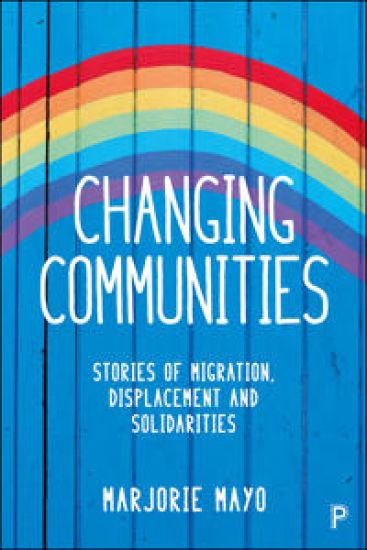
Issues of displacement and dispossession have become defining characteristics of a globalised 21st century. People are moving within and across national borders, whether displaced, relocated or moving in search of better livelihoods. This book brings theoretical understandings of migration and displacement together with empirical illustrations of the creative, cultural ways in which communities reflect upon their experiences of change, and how they respond, including through poetry and story-telling, photography and other art forms, exploring the scope for building communities of solidarity and social justice. The concluding chapters identify potential implications for policy and professional practice to promote communities of solidarity, addressing the structural causes of widening inequalities, taking account of different interests, including those related to social class, gender, ethnicity, age, ability and faith.
Challenging The Third Sector
Sue Kenny; Marilyn Taylor; Jenny Onyx; Marjorie Mayo
Policy Press
2016
nidottu
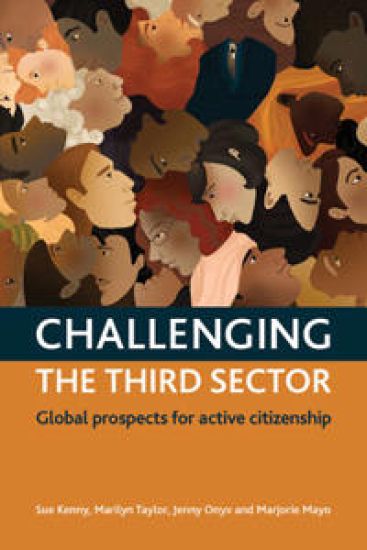
This is the first book to explore the different relationships between active citizenship and civil society, particularly the third sector within civil society. In what ways can the third sector nurture active citizenship? How have the third sector and active citizenship been constructed and reconstructed both locally and internationally, over recent years? To what extent have new kinds of social connectedness, changing forms of political engagement and increasingly complex social and environmental problems influenced civil society action? Written by experts in the field, this important book draws on a range of theory and empirical studies to explore these questions in different socio-political contexts and will be a useful resource for academics and students as well as practitioners.
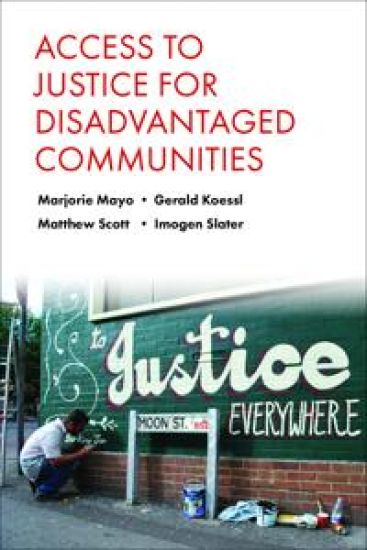
EPUB and EPDF available Open Access under CC-BY-NC-ND licence. Access to justice for all, regardless of the ability to pay, has been a core democratic value. But this basic human right has come under threat through wider processes of restructuring, with an increasingly market-led approach to the provision of welfare. Professionals and volunteers in Law Centres in Britain are struggling to provide legal advice and access to welfare rights to disadvantaged communities. Drawing upon original research, this unique study explores how strategies to safeguard these vital services might be developed in ways that strengthen rather than undermine the basic ethics and principles of public service provision. The book explores how such strategies might strengthen the position of those who provide, as well as those who need, public services, and ways to empower communities to work more effectively with professionals and progressive organisations in the pursuit of rights and social justice agendas more widely.
Challenging The Third Sector
Sue Kenny; Marilyn Taylor; Jenny Onyx; Marjorie Mayo
Policy Press
2015
sidottu
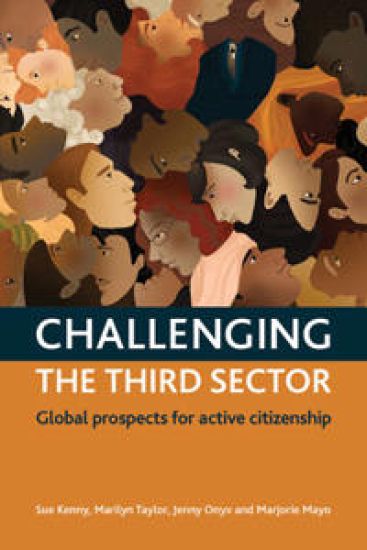
This is the first book to explore the different relationships between active citizenship and civil society, particularly the third sector within civil society. In what ways can the third sector nurture active citizenship? How have the third sector and active citizenship been constructed and reconstructed both locally and internationally, over recent years? To what extent have new kinds of social connectedness, changing forms of political engagement and increasingly complex social and environmental problems influenced civil society action? Written by experts in the field, this important book draws on a range of theory and empirical studies to explore these questions in different socio-political contexts and will be a useful resource for academics and students as well as practitioners.
Access to justice for all, regardless of the ability to pay, has been a core democratic value. But this basic human right has come under threat through wider processes of restructuring, with an increasingly market-led approach to the provision of welfare. Professionals and volunteers in Law Centres in Britain are struggling to provide legal advice and access to welfare rights to disadvantaged communities. Drawing upon original research, this unique study explores how strategies to safeguard these vital services might be developed in ways that strengthen rather than undermine the basic ethics and principles of public service provision. The book explores how such strategies might strengthen the position of those who provide, as well as those who need, public services, and ways to empower communities to work more effectively with professionals and progressive organisations in the pursuit of rights and social justice agendas more widely.
The dilemmas of development work
Paul Hoggett; Marjorie Mayo; Chris Miller
Policy Press
2008
nidottu
Social development work takes place in the grey area between government and the voluntary and community sectors. This book, written by three well-known educators and researchers in the social policy and development field, explores the ways in which front-line professionals working with communities identify and address the dilemmas inherent in the current policy context. Drawing upon original material, the authors examine how 'community engagement' workers negotiate the ethical and emotional challenges they face; how they work through problems of community representation at interpersonal and team levels; how they manage the conflicting roles of local activist and paid worker and what role colleagues, management and others play when responding to such challenges. The dilemmas of development work reconnects to, and updates, an important tradition in social policy which explores the dilemmas of 'street-level' work. It draws on contemporary political theory and current debates concerning the modernisation of governance and psycho-social perspectives on identity, values and agency. Combining theory and practice, it will appeal to practitioners, policy makers and undergraduates in social and public policy.
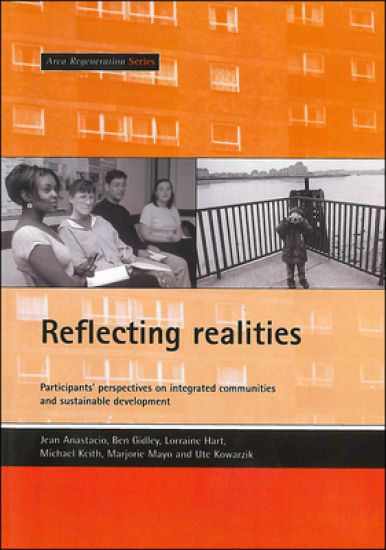
Reflecting realities
Jean Anastacio; Lorraine Hart; Michael Keith; Marjorie Mayo; Ute Kowarzik; Ben Gidley
Policy Press
2000
nidottu
Government rhetoric increasingly emphasises the importance of community participation in area regeneration programmes; however, it is far less clear how much those involved are able to effectively influence practice and future policy making. Community knowledge is an important resource; participants need to be actively involved in monitoring and evaluation at every stage of the regeneration process. Through analysis of four case study areas with a history of participation and interviews with community representatives and key stakeholders, Reflecting realities explores participants' perspectives on: participation structures; capacity building and the technical and professional support available; systems for monitoring and evaluating regeneration programmes. It also considers: the impact of the diverse nature of communities on involvement; the difficulty in truly representing 'community' opinion; the pressure of competing for scarce resources; the wider role of the community and voluntary sector. The report concludes with recommendations for national and regional government, local authorities and community organisations, as well as providing notes on the good practice highlighted throughout the report. Reflecting realities can be read independently or alongside Auditing community participation - the practical workbook for the evaluation of community involvement - which was developed from the same research (The Policy Press/Joseph Rowntree Foundation, 2000). The reports are essential reading for all those involved in community-led regeneration groups, policy makers, local authorities and regional and national government, as well as anyone with an interest in community-led regeneration practice.
Communities and Caring explores the theoretical background of social policy debates around the mixed economy of welfare in relation to community participation and community development. Whilst providing a critical analysis of New Right Theories, the book explores alternative approaches based on increasing accountability and democratic pluralism, within the framework of active community participation. Drawing upon different experiences both in Europe (including Eastern, as well as Western Europe), in the United States and in the Third World, Marjorie Mayo emphasises the importance of continuing public sector support and resources for community participation and development; without such underlying public sector support, community participation will be unable to meet community needs.