Kirjojen hintavertailu – 12 903 725 kirjaa ja 27 kauppaa

Kirjailija

Mark Beeson

Kirjat ja teokset yhdessä paikassa: 15 kirjaa, julkaisuja vuosilta 1999–2025, suosituimpiin kuuluu Search for Security. Vertaile teosten hintoja ja tarkista saatavuus suomalaisista kirjakaupoista.

15 kirjaa

Kirjojen julkaisuvuodet: 1999–2025.

Search for Security

Search for Security

Mark Beeson; Kanishka Jayasuriya; Sian Troath

MELBOURNE UNIVERSITY PRESS
2025
nidottu
In September 2021 the Morrison government committed Australia to the single greatest security investment in the nation's history: the AUKUS partnership with the United States and the United Kingdom to build nuclear-powered submarines and collaborate on advanced technologies. Yet there are growing doubts about who will build the submarines and whether they can be delivered at all. There are also growing concerns about the role the US plays in the world. Search for Security brings together a diverse and expert group of scholars to explain the politics of AUKUS and place it in the context of wide-ranging global transformations. We explore the development and implications of AUKUS at a time of great international uncertainty. It is a timely contribution to a crucial debate about Australian foreign and domestic policy in a period of intensifying militarism.
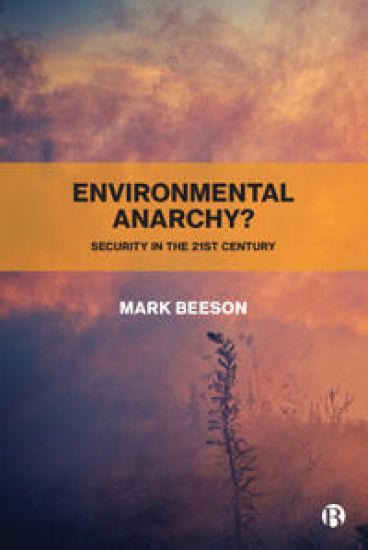
Environmental Anarchy?

Environmental Anarchy?

Mark Beeson

Bristol University Press
2021
nidottu
What does it mean to be secure in the 21st century? Mark Beeson argues that some of the most influential ideas about national and even global security reflect untenable, anachronistic strategic views that are simply no longer appropriate for contemporary international circumstances. At a time when climate change poses an existential threat to the continuation of life itself, Beeson argues that there is an urgent need to rethink security priorities while we still can. Providing an explanation of the failures and dangers of the conventional wisdom, he outlines the case for a new approach that takes issues like environmental and human security seriously.
Environmental Anarchy?

Environmental Anarchy?

Mark Beeson

Bristol University Press
2021
sidottu
What does it mean to be secure in the 21st century? Mark Beeson argues that some of the most influential ideas about national and even global security reflect untenable, anachronistic strategic views that are simply no longer appropriate for contemporary international circumstances. At a time when climate change poses an existential threat to the continuation of life itself, Beeson argues that there is an urgent need to rethink security priorities while we still can. Providing an explanation of the failures and dangers of the conventional wisdom, he outlines the case for a new approach that takes issues like environmental and human security seriously.
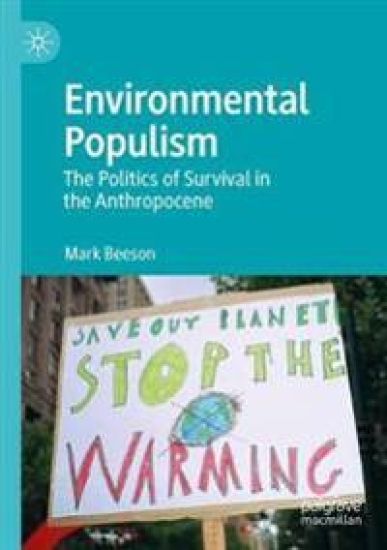
Environmental Populism

Environmental Populism

Mark Beeson

Springer Verlag, Singapore
2019
nidottu
This book evaluates climate change and populism, two ideas that do not generally go together. The author argues that perhaps they should if policymakers are to be galvanized into action before it is too late. Although populism is usually associated with right-wing authoritarianism, there is growing interest in more progressive forms of populist politics. Across the world, young people in particular are mobilizing to demand change from an older generation that appears to be incapable of action or is hostage to powerful vested interests and outdated ideas. In this book, the author explains why populist forms of political action may yet provide the key to effective policies, which are often discussed but less frequently implemented. Accessible and trenchantly argued, this book presents a primer for the politics of survival.
Rethinking Global Governance

Rethinking Global Governance

Mark Beeson

Red Globe Press
2019
nidottu
The world currently faces a number of challenges that no single country can solve. Whether it is managing a crisis-prone global economy, maintaining peace and stability, or trying to do something about climate change, there are some problems that necessitate collective action on the part of states and other actors. Global governance would seem functionally necessary and normatively desirable, but it is proving increasingly difficult to provide. This accessible introduction to, and analysis of, contemporary global governance explains what it is and the obstacles to its realization. Paying particular attention to the possible decline of American influence and the rise of China and a number of other actors, Mark Beeson explains why cooperation is proving difficult, despite its obvious need and desirability. This is an essential text for undergraduate and postgraduate students studying global governance or international organizations, and is also important reading for those working on political economy, international development and globalization.
Issues in 21st Century World Politics

Issues in 21st Century World Politics

Mark Beeson; Nick Bisley

Red Globe Press
2016
nidottu
The third edition of this popular textbook offers a comprehensive and authoritative introduction to the key questions that will confront anyone interested in world politics for decades to come. This text is a collation of topical chapters, each authored by experts in their own field and written in a clear and balanced manner. The issues which endure, as well as new and unexpected issues, are all covered within this text, with cross-referencing between chapters and to external work. New chapters cover the major developments of this era, including the impact of the financial crisis, climate change, the refugee crisis, the rise of China and Russia. Beeson and Bisely hone this text with their careful editorship. They place this text within the context of the key questions that arise from these issues: to what extent can policy makers cope with fundamental changes to politics, what will the impact of non-state actors be, what can we predict about future world politics, to name a few. This makes the text indispensable to students wishing to understanding contemporary world politics. Being wide-ranging and completely up-to-date, this is the ideal companion for both undergraduates and postgraduate students of internationals relations and politics. The text has been written in a clear and approachable manner to make it accessible to students unfamiliar with the topic.
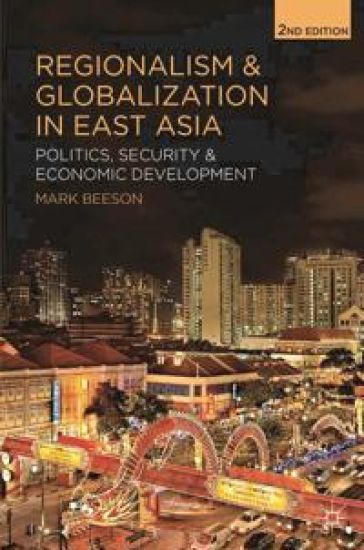
Regionalism and Globalization in East Asia
This book examines the distinctive evolution of the political and economic relationships of East Asia. It does this by placing East Asian development in the unique historical circumstances that have underpinned its rise to power over the last few decades. This detailed analysis provides the basis for an assessment of a unified East Asian region.
Regionalism and Globalization in East Asia
This book examines the distinctive evolution of the political and economic relationships of East Asia. It does this by placing East Asian development in the unique historical circumstances that have underpinned its rise to power over the last few decades. This detailed analysis provides the basis for an assessment of a unified East Asian region.
Securing Southeast Asia

Securing Southeast Asia

Mark Beeson; Alex Bellamy

Routledge
2009
nidottu
This book uniquely applies the security reform agenda to Southeast Asia. It investigates recent developments in civil-military relations in the region, looking in particular at the impact and utility of the agenda on the region and assessing whether it is likely to help make the region more stable and less prone to military interventions. It provides an historical overview of the region’s civil-military relations and goes on to explore the dynamics of civil-military relations within the context of the security sector reform framework, focusing on the experiences of four of the region’s militaries: Malaysia, Thailand, the Philippines and Indonesia. It argues that although regional militaries have not necessarily followed a ‘Western’ model, significant developments have occurred that are broadly in keeping with the security sector reform agenda, and which suggests that the prospects for stable civil-military relations are brighter than some sceptics believe.
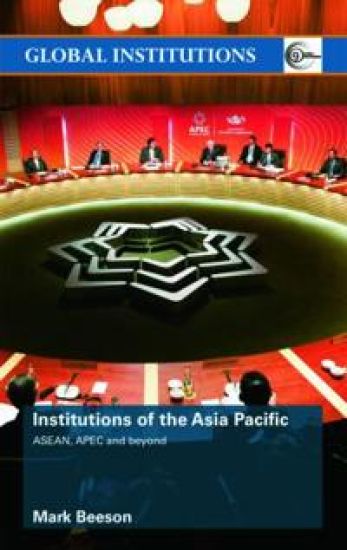
Institutions of the Asia-Pacific
The Asia-Pacific is arguably the most important, but also the most complex and contested, region on the planet. Containing three of the world’s largest economies and some of its most important strategic relationships, the region’s capacity of regional elites to promote continuing economic development whilst simultaneously maintaining peace and stability will be one of the defining challenges of the twenty-first century international order. Intuitively, we might expect regional institutions to play a major role in achieving this. Yet one of the most widely noted characteristics of the Asia-Pacific region has been its relatively modest levels of institutional development thus far. However, things are changing: as individual economies in the Asia-Pacific become more deeply integrated, there is a growing interest in developing and adding to the institutions that already exist. Institutions of the Asia-Pacific examines how this region is developing, and what role established organisations like APEC and new bodies like ASEAN Plus Three are playing in this process. An expert in the field, Mark Beeson introduces the contested nature of the very region itself – should it be the ‘Asia-Pacific’ or ‘East Asia’ to which we pay most attention and expect to see most institutional development. By placing these developments in historical context, he reveals why the very definition of the region remains unsettled and why the political, economic and strategic relations of this remarkably diverse region remain fraught and difficult to manage.
Institutions of the Asia-Pacific
The Asia-Pacific is arguably the most important, but also the most complex and contested, region on the planet. Containing three of the world’s largest economies and some of its most important strategic relationships, the region’s capacity of regional elites to promote continuing economic development whilst simultaneously maintaining peace and stability will be one of the defining challenges of the twenty-first century international order. Intuitively, we might expect regional institutions to play a major role in achieving this. Yet one of the most widely noted characteristics of the Asia-Pacific region has been its relatively modest levels of institutional development thus far. However, things are changing: as individual economies in the Asia-Pacific become more deeply integrated, there is a growing interest in developing and adding to the institutions that already exist. Institutions of the Asia-Pacific examines how this region is developing, and what role established organisations like APEC and new bodies like ASEAN Plus Three are playing in this process. An expert in the field, Mark Beeson introduces the contested nature of the very region itself – should it be the ‘Asia-Pacific’ or ‘East Asia’ to which we pay most attention and expect to see most institutional development. By placing these developments in historical context, he reveals why the very definition of the region remains unsettled and why the political, economic and strategic relations of this remarkably diverse region remain fraught and difficult to manage.
Securing Southeast Asia

Securing Southeast Asia

Mark Beeson; Alex Bellamy

Routledge
2007
sidottu
This book uniquely applies the security reform agenda to Southeast Asia. It investigates recent developments in civil-military relations in the region, looking in particular at the impact and utility of the agenda on the region and assessing whether it is likely to help make the region more stable and less prone to military interventions. It provides an historical overview of the region’s civil-military relations and goes on to explore the dynamics of civil-military relations within the context of the security sector reform framework, focusing on the experiences of four of the region’s militaries: Malaysia, Thailand, the Philippines and Indonesia. It argues that although regional militaries have not necessarily followed a ‘Western’ model, significant developments have occurred that are broadly in keeping with the security sector reform agenda, and which suggests that the prospects for stable civil-military relations are brighter than some sceptics believe.
Reconfiguring East Asia

Reconfiguring East Asia

Mark Beeson

RoutledgeCurzon
2002
nidottu
Focuses both on specific regional organizations like ASEAN, The Asian Development Bank and APEC, as well as on key institutions such as East Asian legal systems, the media, organized labour, Asian business systems, and the developmental state.
Reconfiguring East Asia

Reconfiguring East Asia

Mark Beeson

RoutledgeCurzon
2002
sidottu
Focuses both on specific regional organizations like ASEAN, The Asian Development Bank and APEC, as well as on key institutions such as East Asian legal systems, the media, organized labour, Asian business systems, and the developmental state.
Competing Capitalisms

Competing Capitalisms

Mark Beeson

Palgrave Macmillan
1999
sidottu
Since the end of the Cold War capitalism has become the dominant form of economic and political organization across the globe. This does not mean, however, that all forms of capitalism are the same. Competing Capitalisms explains why some countries have developed very different forms of capitalism and what happens when they interact. The book considers the distinctive experiences of Australia's market-based, and Japan's state-led forms of capitalism and explains what this means for future international economic competition.