
Kirjailija
Mark Berry
Kirjat ja teokset yhdessä paikassa: 9 kirjaa, julkaisuja vuosilta 2005–2025, suosituimpiin kuuluu Headspace. Vertaile teosten hintoja ja tarkista saatavuus suomalaisista kirjakaupoista.
9 kirjaa
Kirjojen julkaisuvuodet: 2005–2025.
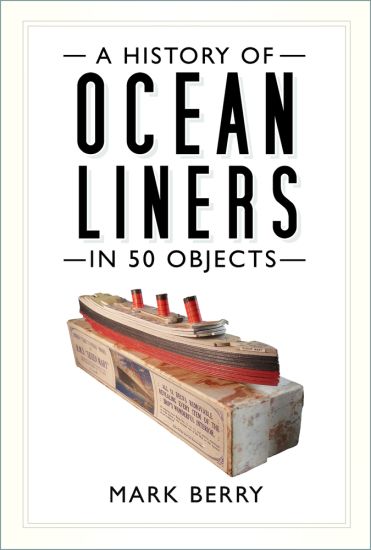
Explore the history of ocean liners through the objects that bring them to life. Liners represented the ambitions of their nations in peace and war; their design, interiors and fittings incorporated the finest contemporary technological and artistic features. In peacetime they carried celebrities, vacationers and emigrants; while in war they carried thousands of troops – and then war brides seeking new lives. A History of Ocean Liners in 50 Objects takes in evolving technology, supreme luxury and fine cuisine, as well as hardship and the burning hope for a better life. There is peril, disaster and death, international pride and competition, glory and war. The objects tell a fascinating story, showing how the functional sea voyage has evolved from the late nineteenth and early twentieth century to the huge cruise industry we have today.
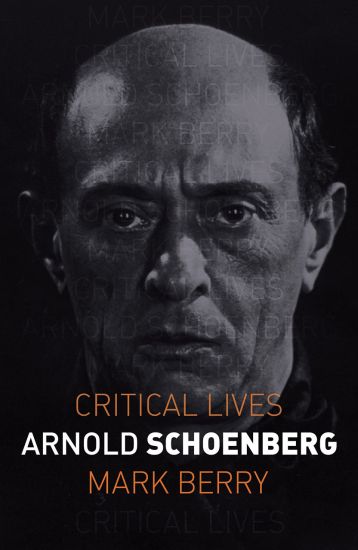
The most radical and divisive composer of the twentieth century, Arnold Schoenberg remains a hero to many, and a villain to many others. Born in the Jewish quarter of his beloved Vienna, Schoenberg’s early career took him to Berlin, as a leading light of Weimar culture, before he fled in the dead of night from Hitler’s Third Reich. He found himself in the United States, settling in Los Angeles, where he would inspire composers from George Gershwin to John Cage. Schoenberg’s revolutionary approach to musical composition incorporated Wagnerian late Romanticism and the brave new worlds of atonality and serialism, and it changed the history of music forever. In this refreshingly balanced biography, Mark Berry tells the story of Schoenberg’s life and work within the wider context of nineteenth- and twentieth-century history. He also introduces all of Schoenberg’s major musical works, from his very first compositions such as String Quartet in D Major to his invention of the 12-tone method. This book is essential reading for all those with an interest in the music and history of the twentieth century.
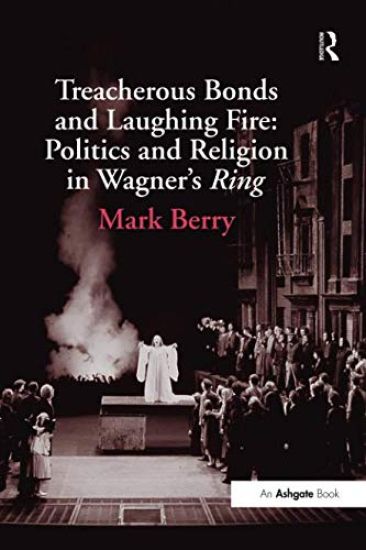
Treacherous Bonds and Laughing Fire: Politics and Religion in Wagner's Ring
Mark Berry
Routledge
2016
nidottu
Mark Berry explores the political and religious ideas expounded in Wagner's Ring through close attention to the text and drama, the multifarious intellectual influences upon the composer during the work's lengthy gestation and composition, and the wealth of Wagner source material. Many of his writings are explicitly political in their concerns, for Wagner was emphatically not a revolutionary solely for the sake of art. Yet it would be misleading to see even the most 'political' tracts as somehow divorced from the aesthetic realm; Wagner's radical challenge to liberal-democratic politics makes no such distinction. This book considers Wagner's treatment of various worlds: nature, politics, economics, and metaphysics, in order to explain just how radical that challenge is. Classical interpretations have tended to opt either for an 'optimistic' view of the Ring, centred upon the influence of Young Hegelian thought - in particular the philosophy of Ludwig Feuerbach - and Wagner's concomitant revolutionary politics, or for the 'pessimistic' option, removing the disillusioned Wagner-in-Swiss-exile from the political sphere and stressing the undoubtedly important role of Arthur Schopenhauer. Such an 'either-or' approach seriously misrepresents not only Wagner's compositional method but also his intellectual method. It also sidelines inconvenient aspects of the dramas that fail to 'fit' whichever interpretation is selected. Wagner's tendency is not progressively to recant previous 'errors' in his oeuvre. Radical ideas are not completely replaced by a Schopenhauerian world-view, however loudly the composer might come to trumpet his apparent 'conversion'. Nor is Wagner's truly an Hegelian method, although Hegelian dialectic plays an important role. In fact, Wagner is in many ways not really a systematic thinker at all (which is not to portray him as self-consciously unsystematic in a Nietzschean, let alone 'post-modernist' fashion). His tendency, rather, is agglomerative,
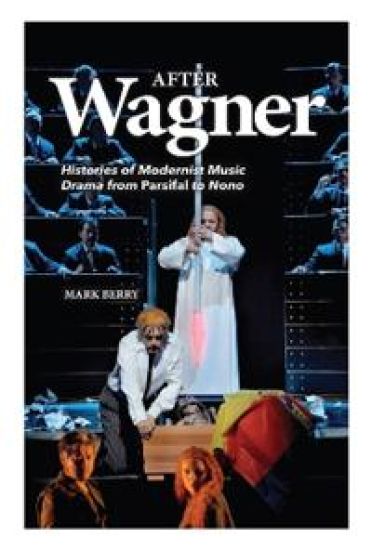
Offers histories of music drama beginning with Wagner's Parsifal and then looking at works by Arnold Schoenberg, Richard Strauss, Luigi Dallapiccola, Luigi Nono and Hans Werner Henze. This book is both a telling of operatic histories 'after' Richard Wagner, and a philosophical reflection upon the writing of those histories. Historical musicology reckons with intellectual and cultural history, and vice versa. The 'after' of the title denotes chronology, but also harmony and antagonism within a Wagnerian tradition. Parsifal, in which Wagner attempted to go beyond his achievement in the Ring, to write 'after' himself,is followed by two apparent antipodes: the strenuously modernist Arnold Schoenberg and the æstheticist Richard Strauss. Discussion of Strauss's Capriccio, partly in the light of Schoenberg's Moses und Aron, reveals amore 'political' work than either first acquaintance or the composer's 'intention' might suggest. Then come three composers from subsequent generations: Luigi Dallapiccola, Luigi Nono, and Hans Werner Henze. Geographical context is extended to take in Wagner's Italian successors; the problem of political emancipation in and through music drama takes another turn here, confronting challenges and opportunities in more avowedly 'politically engaged' art. A final section explores the world of staging opera, of so-called Regietheater, as initiated by Wagner himself. Stefan Herheim's celebrated Bayreuth production of Parsifal, and various performances of Lohengrin are discussed, before looking back to Mozart (Don Giovanni) and forward to Alban Berg's Lulu and Nono's Al gran sole carico d'amore. Throughout, the book invites us to consider how we might perceive the æsthetic and political integrity of the operatic work 'after Wagner'. After Wagner will be invaluable to anyone interested in twentieth-century music drama and its intersection with politics and cultural history. It will also appeal to those interested in Richard Wagner's cultural impact on succeeding generations of composers. MARK BERRY is Senior Lecturer in Music at Royal Holloway, University of London.
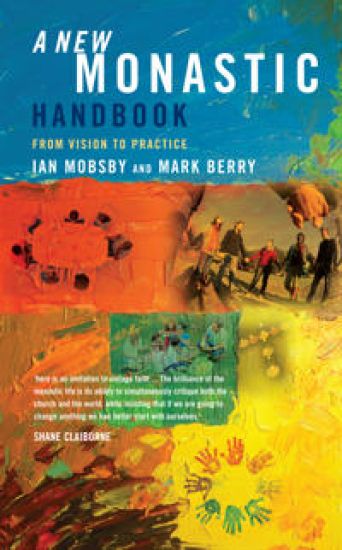
Two leading practitioners of new monasticism open up the movement’s spiritual landscape and its distinctive calling and gifts within today’s church. Practical experiences and stories are set alongside reflection and liturgies as a creative resource for all who are already involved in, or are exploring intentional living in community. Focusing on new monasticism's key characteristics of prayer, mission and community, this book explores: • continuity with traditional religious life • innovations, such as its use of social networking technology • potential for spiritual formation • preference for the abandoned places of society • transformative approach to mission • blend of the traditional and experimental in worship • growing international presence
Two leading practitioners of new monasticism open up the movement’s spiritual landscape and its distinctive calling and gifts within today’s church. Practical experiences and stories are set alongside reflection and liturgies as a creative resource for all who are already involved in, or are exploring intentional living in community. Focusing on new monasticism's key characteristics of prayer, mission and community, this book explores: • continuity with traditional religious life • innovations, such as its use of social networking technology • potential for spiritual formation • preference for the abandoned places of society • transformative approach to mission • blend of the traditional and experimental in worship • growing international presence
Treacherous Bonds and Laughing Fire: Politics and Religion in Wagner's Ring
Mark Berry
Ashgate Publishing Limited
2005
sidottu
Mark Berry explores the political and religious ideas expounded in Wagner's Ring through close attention to the text and drama, the multifarious intellectual influences upon the composer during the work's lengthy gestation and composition, and the wealth of Wagner source material. Many of his writings are explicitly political in their concerns, for Wagner was emphatically not a revolutionary solely for the sake of art. Yet it would be misleading to see even the most 'political' tracts as somehow divorced from the aesthetic realm; Wagner's radical challenge to liberal-democratic politics makes no such distinction. This book considers Wagner's treatment of various worlds: nature, politics, economics, and metaphysics, in order to explain just how radical that challenge is. Classical interpretations have tended to opt either for an 'optimistic' view of the Ring, centred upon the influence of Young Hegelian thought - in particular the philosophy of Ludwig Feuerbach - and Wagner's concomitant revolutionary politics, or for the 'pessimistic' option, removing the disillusioned Wagner-in-Swiss-exile from the political sphere and stressing the undoubtedly important role of Arthur Schopenhauer. Such an 'either-or' approach seriously misrepresents not only Wagner's compositional method but also his intellectual method. It also sidelines inconvenient aspects of the dramas that fail to 'fit' whichever interpretation is selected. Wagner's tendency is not progressively to recant previous 'errors' in his oeuvre. Radical ideas are not completely replaced by a Schopenhauerian world-view, however loudly the composer might come to trumpet his apparent 'conversion'. Nor is Wagner's truly an Hegelian method, although Hegelian dialectic plays an important role. In fact, Wagner is in many ways not really a systematic thinker at all (which is not to portray him as self-consciously unsystematic in a Nietzschean, let alone 'post-modernist' fashion). His tendency, rather, is agglomerative,